
The silent, invisible seep of methane (CH4) from freshwater ecosystems into our atmosphere represents one of the most significant and vexing challenges in contemporary climate science. As a potent greenhouse gas with a global warming potential over 80 times that of carbon dioxide on a 20-year horizon, understanding and accurately quantifying its sources is paramount. Among these sources, lakes and reservoirs are now recognized as major contributors. However, a critical portion of their emissions—potentially over 50%—occurs not through steady diffusion but through erratic, explosive bursts of gas bubbles rising from the sediment, a process known as ebullition. This pathway is notoriously difficult to measure due to its extreme spatial and temporal heterogeneity. A bubble may erupt at a specific spot one minute, and the location may remain silent for days. In open water, capturing the full scope of these “hotspots” is like mapping fireworks in a vast, dark sky with a single, stationary camera.
This fundamental measurement problem is where the unique conditions of winter and the transformative technology of Unmanned Aerial Vehicles (UAVs), or drones, converge to offer a revolutionary solution. In temperate and boreal regions, including vast parts of China, northern North America, and Europe, lakes and reservoirs undergo a seasonal metamorphosis: they freeze. During the ice-cover period, which can last for several months, the growing ice sheet acts as a giant, temporal sampler. Methane bubbles generated in the organic-rich sediments of shallow areas, particularly near inlets, are trapped as they ascend and become encapsulated within the ice matrix. These “ice-bubbles” or “ice-trapped bubbles” are frozen in time and space, creating a visible, semi-permanent record of ebullition activity that occurred during the freeze-over and ice-growth period.
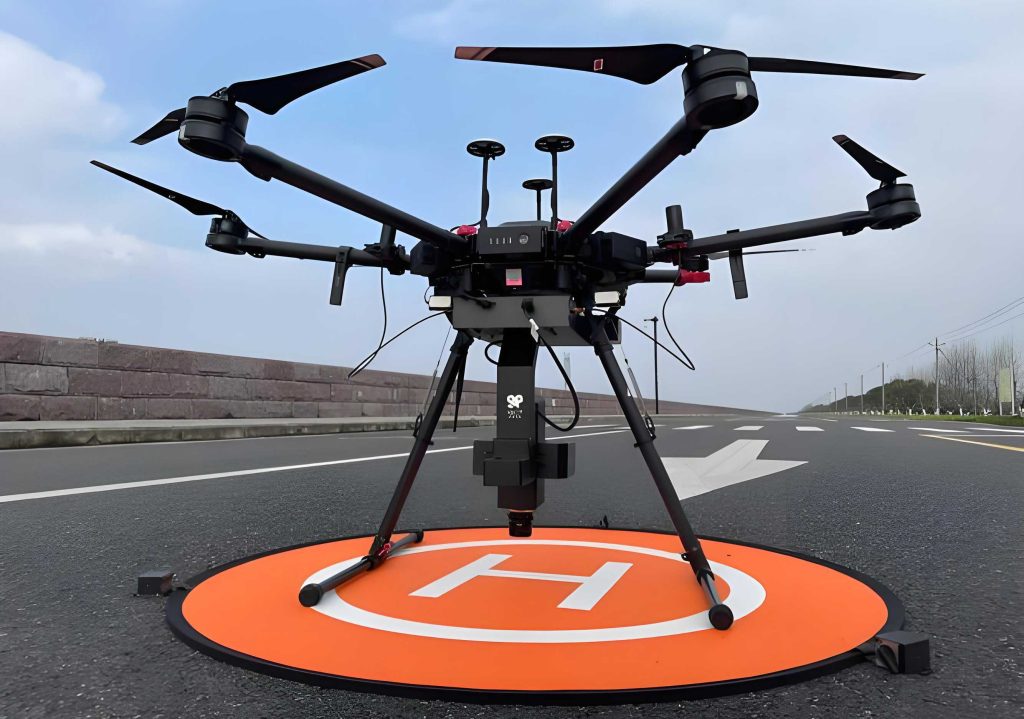
This phenomenon transforms an ephemeral, chaotic process into a stable, mappable landscape feature. The distribution, size, and density of these ice-bubbles across a frozen lake surface are direct proxies for the spatial pattern of methane ebullition. For the first time, we have the potential to see the “footprint” of methane emissions at a basin scale. Manual ground surveys of these bubbles are possible but are severely limited by time, safety on the ice, and the inability to cover large areas with high resolution. This is where the China UAV drone revolution becomes indispensable. Modern drones equipped with high-resolution RGB or multispectral cameras can systematically capture centimeter-level imagery over entire frozen water bodies in a matter of hours. The synergy of ice-bubble phenomenon and UAV technology enables a paradigm shift: from point-based, sporadic measurements to basin-wide, high-resolution spatial analysis of emission patterns.
The core challenge then evolves from data collection to data interpretation. The vast datasets of ultra-high-resolution imagery require robust, automated methods to distinguish ice-bubbles from other ice features like cracks, snow patches, or discolorations. This is where object-based image analysis (OBIA) and advanced spatial statistics come into play, allowing us to not only count bubbles but to understand their fundamental spatial organization and identify true emission hotspots.
The Grand Challenge of Aquatic Methane
Globally, inland waters are supersaturated with methane and act as net sources to the atmosphere. The estimated flux is substantial, with some studies suggesting it could offset a significant portion of the carbon sink provided by terrestrial ecosystems. Within these systems, ebullition is often the dominant pathway, especially in productive, eutrophic waters and in shallow zones where hydrostatic pressure is insufficient to keep gas dissolved. The problem with ebullition is its stochastic nature. Emissions are driven by a complex interplay of factors:
- Sediment Biochemistry: Methanogenic archaea activity, which is influenced by temperature, organic matter quality and quantity, and redox conditions.
- Sediment Physics: Gas storage capacity, pore structure, and the critical pressure required to fracture the sediment matrix and release a bubble.
- Hydrostatic Pressure: Changes in water level, even by centimeters, can trigger large releases of stored gas.
- Biophysical Triggers: Passage of boats, wave action, or even swimming fish can disturb sediments and release bubbles.
Traditional methods, such as floating chambers (for diffusion) and inverted funnels (“traps”) for bubble collection, are inadequate for capturing this variability. A funnel may be placed over a hotspot and record enormous fluxes, while another placed just meters away may record nothing. Scaling up such point measurements to the whole ecosystem introduces enormous uncertainty. The pressing scientific need is for a method that can integrate across space, providing a synoptic view of where emissions are concentrated and where they are absent.
Aerial Intelligence: The UAV-Driven Methodology
The proposed methodology is a multi-stage pipeline that leverages the unique capabilities of modern China UAV drone platforms. The goal is to move from raw aerial imagery to quantified, spatially explicit knowledge of ebullition hotspot zones.
1. Mission Planning and Data Acquisition:
The first step involves strategic flight planning. A typical mission for a frozen reservoir, such as those found across northeastern China, employs a two-tiered approach:
| Flight Tier | Altitude | Ground Sampling Distance (GSD) | Purpose | Platform Example |
|---|---|---|---|---|
| Reconnaissance | 80-120 m | 2-3 cm | Rapid mapping of entire water body to identify potential bubble-rich zones. | DJI Phantom 4 RTK, DJI M300 |
| High-Resolution Mapping | 15-30 m | 0.3-0.6 cm | Detailed imaging of targeted zones for precise bubble extraction and analysis. | DJI Phantom 4 Pro, SenseFly eBee X |
Flights are conducted during stable weather conditions, preferably under diffuse light (cloudy days) to minimize glare and sharp shadows on the ice, which complicate image processing. High overlap (80% frontlap, 70% sidelap) is crucial for generating high-quality orthomosaics and digital surface models.
2. Image Processing and Orthomosaic Generation:
The hundreds or thousands of images are processed using photogrammetric software (e.g., Agisoft Metashape, Pix4Dmapper) to generate a seamless, georeferenced orthomosaic image of the ice surface. A critical pre-processing step often required is illumination normalization. Due to sun angle and ice reflectivity, images can suffer from vignetting and uneven brightness. A morphological top-hat transform is highly effective here. This operation, which subtracts a morphologically opened version of the image (the “background”) from the original, can be expressed as:
$$ T_{hat}(f) = f – (f \circ b) $$
where $f$ is the original image, $b$ is the structuring element, and $\circ$ denotes the opening operation. This efficiently suppresses large-scale brightness gradients while enhancing local features like bubbles and fine cracks.
3. Ice-Bubble Extraction via Object-Based Image Analysis (OBIA):
Pixel-based classification struggles with the texture and contextual information needed for this task. OBIA, implemented in software like eCognition, segments the image into meaningful image objects before classifying them. The workflow is:
- Multi-Resolution Segmentation: Groups pixels into objects based on scale, color, and shape parameters. The scale parameter is tuned to ensure individual bubbles form distinct objects.
- Feature Space Definition: Objects are described by spectral, geometric, and textual features. Key distinguishing features between bubbles and ice-cracks include:
Feature Ice-Bubble (Typical Range) Ice-Crack (Typical Range) Distinguishing Power Brightness/Mean Digital Number High (e.g., >180) Very High (e.g., >220) Moderate (cracks are brighter) Length/Width Ratio Low (~1.0 – 2.0) Very High (~5.0 – 50+) High Compactness (Shape Index) High (more circular, ~0.5-0.8) Low (elongated, ~0.1-0.4) Very High Density (Area/Perimeter) High Low High Local Context (Neighbor Objects) Often clustered with similar objects Often linear, connected High - Classification: A rule-based or supervised classification (e.g., using Random Forest or SVM) is applied using the defined feature space to create a thematic map with classes: “Ice,” “Bubble,” “Crack,” and potentially “Snow.”
- Accuracy Assessment: Using stratified random sampling, reference points are compared to the classified map to generate an error matrix and calculate overall accuracy, user’s accuracy, and producer’s accuracy. In successful applications, overall accuracy for bubble extraction consistently exceeds 85%.
4. Spatial Pattern Analysis and Hotspot Identification:
The final and most insightful step is analyzing the spatial distribution of the extracted bubble objects. Simple density maps can be created. However, to rigorously identify statistically significant clusters (hotspots and coldspots), spatial autocorrelation analysis is employed. The global Moran’s I index assesses the overall clustering pattern:
$$ I = \frac{N}{W} \frac{\sum_i \sum_j w_{ij} (x_i – \bar{x}) (x_j – \bar{x})}{\sum_i (x_i – \bar{x})^2} $$
where $N$ is the number of spatial units (e.g., grid cells), $w_{ij}$ is the spatial weight between units $i$ and $j$, $W$ is the sum of all weights, $x$ is the variable of interest (e.g., bubble area percentage), and $\bar{x}$ is its mean. A value significantly greater than 0 indicates clustering.
More importantly, Local Indicators of Spatial Association (LISA), such as Local Moran’s I, are calculated to map the location of clusters:
$$ I_i = \frac{(x_i – \bar{x})}{S^2} \sum_j w_{ij} (x_j – \bar{x}) $$
where $S^2$ is the variance. This yields a map categorizing each location as:
- High-High (HH): A hotspot. A location with high bubble density surrounded by locations with high density.
- Low-Low (LL): A coldspot. A location with low bubble density surrounded by locations with low density.
- High-Low (HL) & Low-High (LH): Spatial outliers (e.g., an isolated bubble patch).
The areas classified as HH clusters are defined as the statistically significant methane ebullition hotspots. The power of this approach is that it moves beyond simple visual identification to a quantitative, repeatable, and statistically robust delineation of critical source zones.
Revealing the Hidden Landscape: Applications and Insights
The application of this China UAV drone-OBIA-spatial statistics pipeline has profound implications for carbon cycling science and environmental management.
1. Quantifying Spatial Heterogeneity and Scaling Emissions:
The most immediate finding from such studies is the extreme spatial concentration of ebullition. It is not uncommon to find that over 90% of the total ice-bubble area (and by inference, ebullition potential) is contained within less than 5% of the total lake/reservoir area. For example, a study might reveal that three distinct hotspot zones, covering a cumulative area of 20,000 m², contain bubbles representing a CH4 storage equivalent, while the remaining 1,000,000 m² of the water body is essentially devoid of significant bubble features. This allows for a stratified scaling approach. Rather than applying a single average flux to the entire area, we can assign a high flux value to hotspot zones (HH clusters) and a low or near-zero flux to background areas (LL clusters). The total ecosystem flux $F_{total}$ can be estimated as:
$$ F_{total} = (A_{HH} \times F_{HH}) + (A_{LL} \times F_{LL}) + (A_{outlier} \times F_{outlier}) $$
where $A$ represents the area of each zone and $F$ its characteristic flux. This dramatically reduces the uncertainty in whole-system flux estimates derived from limited point measurements.
2. Linking Bubble Patterns to Environmental Drivers:
By overlaying the hotspot map with other spatial data, we can investigate the controlling factors. GIS analysis can correlate hotspot locations with:
- Water depth (historically and at freeze-up).
- Proximity to inflows (sources of organic matter and nutrients).
- Sediment type and organic carbon content (from sediment core surveys).
- Historical land-use (e.g., flooded vegetation, agricultural land).
This moves the science from describing *where* emissions are high to explaining *why*. It may reveal, for instance, that the primary hotspots are not in the deepest part of a reservoir but in the shallow, deltaic regions of major tributaries where sedimentation and organic matter loading are highest. This insight is invaluable for predicting emissions from unstudied systems and for managing watersheds to mitigate methane production.
3. Assessing Ice-Melt Pulse Potential:
The ice-bubbles represent a store of greenhouse gases accumulated over the winter. During the spring melt, these gases are released rapidly, potentially causing a large “pulse” emission. By quantifying the total bubble volume (estimated from area and assumed shape) and knowing the typical CH4 concentration in such bubbles (from ground sampling), the potential magnitude of this pulse can be estimated:
$$ M_{CH_4} = (V_{bubble} \times \rho_{ice}) \times C_{CH_4} $$
where $M_{CH_4}$ is the mass of stored methane, $V_{bubble}$ is the total bubble volume in the ice, $\rho_{ice}$ is the density of ice, and $C_{CH_4}$ is the methane concentration in the gas. This provides a crucial constraint for annual carbon budgets, which have often poorly constrained or missed this important emission phase.
4. Benchmarking and Validating Other Methods:
The synoptic bubble maps serve as a “ground truth” for validating other remote sensing techniques. For instance, the relationship between ice-bubble density and backscatter characteristics in Synthetic Aperture Radar (SAR) data can be calibrated. This could enable the use of satellite-based SAR to map ebullition hotspots over vast, remote regions like the Arctic, where UAV access is limited but satellite coverage is available. Furthermore, it provides a spatial framework for designing efficient and representative traditional monitoring networks—telling scientists exactly where to place their floating chambers or bubble traps for optimal results.
Advantages and Future Trajectory of UAV-Based Monitoring
The adoption of China UAV drone technology for this purpose offers compelling advantages over traditional approaches:
| Aspect | Traditional Point Sampling | UAV-Based Mapping |
|---|---|---|
| Spatial Coverage | Extremely limited (a few m²) | Comprehensive (entire water body) |
| Spatial Resolution | Coarse (integrates over trap area) | Very High (individual bubbles) |
| Temporal Snapshot | Instantaneous or integrated over days | Integrated over freeze-up period (weeks/months) |
| Hotspot Identification | Chance-based, highly uncertain | Systematic, statistically robust |
| Safety & Access | Risky manual work on ice | Remote, safe operation |
| Cost & Time Efficiency | High labor, low area coverage | Low labor per area, rapid coverage |
The future of this field is bright and points towards greater integration and automation:
- Multi-Sensor Payloads: Beyond RGB cameras, integrating lightweight thermal sensors could help identify thin ice or areas of groundwater inflow, which are often associated with gas seepage. Hyperspectral sensors could potentially detect spectral signatures unique to gas-saturated ice.
- AI-Driven Analysis: Deep learning models (e.g., Convolutional Neural Networks) can be trained to segment and classify ice-bubbles directly, potentially outperforming rule-based OBIA and handling more complex scenes with snow cover.
- 4D Monitoring (Spatial + Temporal): Repeated drone surveys over a single winter can track the formation and evolution of bubble clusters, providing insights into the dynamics of gas accumulation in the ice. Long-term annual surveys can track how hotspots shift in response to changing climate, water level management, or watershed conditions.
- Integration with Eddy Covariance and Sensors: The spatial maps from drones can be directly used to interpret and partition flux data from tower-based eddy covariance systems, which measure the total exchange from a large footprint but cannot attribute it to specific source processes or locations.
Conclusion
The marriage of seasonal ice phenomena with advanced China UAV drone technology has effectively turned a major scientific limitation into a powerful opportunity. By freezing the elusive process of methane ebullition into a tangible, mappable form, nature provides the sample. By providing the tools to map, measure, and analyze this sample at unprecedented scales and resolutions, drone technology provides the solution. The methodological pipeline of UAV photogrammetry, object-based image analysis, and spatial statistics moves the field from speculative extrapolation of point data to confident, spatially explicit quantification.
The key revelations are consistent: methane ebullition is not a diffuse, widespread phenomenon but is intensely focused in discrete hotspots controlled by sediment characteristics and hydrological setting. Quantifying the area and configuration of these hotspots is the key to accurate ecosystem-scale flux estimation. This approach has direct applications for improving global carbon budget models, informing climate change predictions related to permafrost thaw and reservoir creation, and developing targeted mitigation strategies. As drone technology continues to advance in affordability, autonomy, and sensor capability, its role as an essential tool for environmental geoscience will only solidify, allowing us to finally see, measure, and understand the invisible forces shaping our planet’s greenhouse gas balance.
The quantification process can be summarized in a consolidated formula that links observable drone data to an annual emission estimate:
$$ E_{annual} = \left( \frac{\sum (A_{bubble} \times d_{ice})}{A_{total}} \times f_{gas} \times [CH_4] \times \rho_{gas} \right) + F_{diffusion} + F_{spring\ pulse} $$
Where:
$E_{annual}$ = Total annual CH4 emission (g),
$A_{bubble}$ = Area of ice-bubbles from UAV classification (m²),
$d_{ice}$ = Ice thickness (m),
$A_{total}$ = Total water surface area (m²),
$f_{gas}$ = Volume fraction of gas in bubble-rich ice,
$[CH_4]$ = Methane concentration in bubbles,
$\rho_{gas}$ = Density of methane gas,
$F_{diffusion}$ = Estimated diffusive flux from ice-free season,
$F_{spring\ pulse}$ = Estimated flux from immediate ice-melt release.
This framework, enabled by the spatial data from China UAV drone surveys, represents a more physically grounded and accurate approach to solving a critical piece of the climate puzzle.