
In the realm of modern technology, scenario-driven innovation plays a pivotal role in advancing cutting-edge developments. The rapid evolution of unmanned aerial vehicles, particularly quadrotor drones, has opened new frontiers across numerous domains. These agile, cost-effective, and easily deployable systems have become indispensable in applications ranging from logistics and transportation to data acquisition. The inherent advantages of a quadrotor drone—such as high maneuverability, low cost, strong concealment, and simple deployment—make it an ideal platform for automated tasks in complex environments like warehouses. Traditionally, inventory management in such settings relies heavily on manual labor, which is time-consuming and prone to errors. Our work addresses this challenge by designing and implementing an autonomous quadrotor drone system capable of performing visual inventory checks. This system leverages computer vision technology to identify and tally goods on shelves, thereby reducing human intervention and operational costs. The core of our approach lies in integrating a quadrotor drone with an OpenMV module for real-time image processing, enabling precise, automated cargo盘点 in dynamic settings.
The proliferation of quadrotor drone technology has been fueled by its adaptability to diverse scenarios. In logistics, for instance, a quadrotor drone can navigate tight spaces to deliver packages or inspect stock. In surveillance and data collection, its ability to hover and capture high-resolution imagery is invaluable. Our focus is on enhancing the autonomy of such drones by equipping them with robust sensing and processing capabilities. The system we developed is centered around a TM4C123GH6PM microcontroller, which serves as the flight controller, coordinating data from various sensors and executing control algorithms. By fusing inputs from an MPU6050 inertial measurement unit, a TOFSense laser rangefinder, an N10 lidar, and an OpenMV camera, the quadrotor drone can maintain stable flight, avoid obstacles, and recognize target objects. This integration exemplifies how a quadrotor drone can transcend simple remote-controlled operation to become an intelligent agent in automated workflows. The following sections detail the hardware architecture, software design, and testing outcomes of our quadrotor drone image recognition system, emphasizing the technical innovations that enable reliable performance.
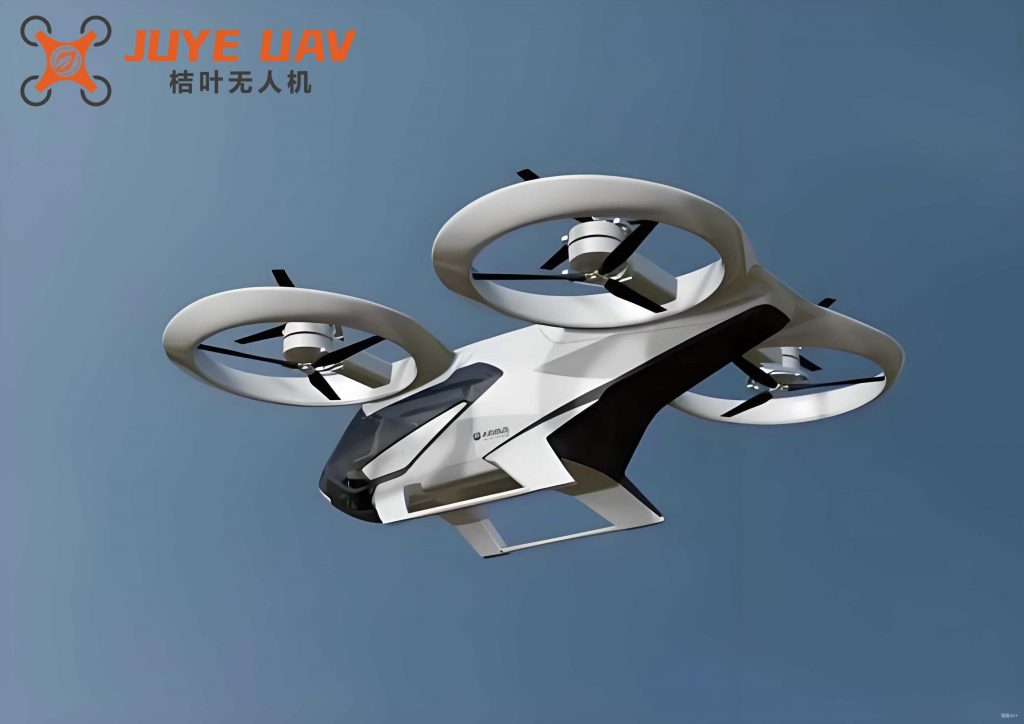
The hardware foundation of our quadrotor drone image recognition system is built upon several key components that work in concert to achieve autonomous flight and visual perception. At the heart of the system is the TM4C123GH6PM microcontroller, a low-power, high-performance chip based on the ARM Cortex-M4F core. This processor handles real-time sensor data fusion, attitude estimation, and motor control, ensuring the quadrotor drone responds swiftly to environmental changes. Surrounding the main controller are specialized sensors: the MPU6050 provides inertial data for orientation, the TOFSense laser offers precise altitude measurements, the N10 lidar enables spatial mapping and localization, and the OpenMV module captures visual information for object detection. Each component was selected for its reliability and accuracy in demanding conditions. For example, the quadrotor drone operates in warehouse aisles where lighting may vary and obstacles abound; thus, sensors with high resolution and fast update rates are crucial. Table 1 summarizes the specifications of these hardware elements, highlighting their roles in the quadrotor drone ecosystem.
| Component | Key Specifications | Role in Quadrotor Drone |
|---|---|---|
| TM4C123GH6PM Microcontroller | 80 MHz ARM Cortex-M4F, 64 pins, FPU, multiple PWM/UART/SPI/I2C/CAN interfaces | Central processing unit for flight control and data integration |
| MPU6050 IMU | 6-axis (3-axis gyroscope + 3-axis accelerometer), digital output, built-in filter | Measures angular velocity and linear acceleration for attitude estimation |
| TOFSense Laser Rangefinder | Range: 1 cm to 5 m, resolution: 1 mm, update rate: 10 Hz, accuracy: 0.02% | Provides accurate altitude data for height control |
| N10 Lidar | 360° scan, range up to 12 m, accuracy: ±3 cm | Enables localization and environment mapping for autonomous navigation |
| OpenMV4Plus Camera | ARM Cortex-M7 processor, OV7725 sensor, built-in vision algorithms | Captures and processes images for object recognition |
In designing the quadrotor drone, we prioritized modularity to facilitate testing and upgrades. The TM4C123GH6PM communicates with sensors via standard protocols like I2C for the MPU6050 and UART for the lidar and OpenMV. This setup allows the quadrotor drone to gather multidimensional data: the MPU6050 outputs raw gyroscope and accelerometer readings, which are filtered and fused to compute the drone’s pitch, roll, and yaw angles. Simultaneously, the TOFSense laser measures the distance to the ground, enabling the quadrotor drone to maintain a consistent hover height during inventory scans. The N10 lidar constructs a real-time map of the surroundings, helping the quadrotor drone avoid collisions and navigate predefined paths. Finally, the OpenMV camera, mounted on a gimbal for stability, captures video frames of storage shelves. Its onboard processor runs machine vision algorithms to detect and decode QR codes attached to goods. This hardware synergy ensures that the quadrotor drone operates autonomously, making decisions based on a comprehensive sensory picture.
The software architecture of our quadrotor drone image recognition system is designed to translate sensor data into stable flight and accurate visual identification. It revolves around two core algorithms: a PID controller for flight stabilization and a computer vision pipeline for object recognition. The PID algorithm continuously adjusts the motor speeds to correct deviations from desired attitudes, while the OpenMV routines process imagery to extract target information. Both components are implemented in C and MicroPython, respectively, running on the main controller and OpenMV module. The overall software flow begins with sensor initialization, followed by a calibration phase where the quadrotor drone establishes a reference pose. During operation, the system enters a loop: sensor readings are acquired, filtered, and fed into the PID controller to generate PWM signals for the electronic speed controllers (ESCs). In parallel, when the quadrotor drone reaches a waypoint, the OpenMV camera is activated to capture and analyze images. Recognition results are transmitted via serial communication to a ground station for display. This modular approach ensures that the quadrotor drone can perform complex tasks reliably, even in environments with variable lighting or obstacles.
Flight stability is paramount for any quadrotor drone, especially when carrying out precise maneuvers like hovering in front of shelves. We employ a cascaded PID control structure, with inner loops managing angular rates and outer loops regulating angles and position. The PID controller computes an error signal by comparing measured values with setpoints, then applies proportional, integral, and derivative terms to produce a control output. Mathematically, the continuous-time PID control law is expressed as:
$$u(t) = K_p e(t) + K_i \int_0^t e(\tau) d\tau + K_d \frac{de(t)}{dt}$$
where \( u(t) \) is the control signal, \( e(t) \) is the error, and \( K_p \), \( K_i \), and \( K_d \) are the tuning parameters. For digital implementation on our quadrotor drone, we use a discrete-time version:
$$u[n] = K_p e[n] + K_i \sum_{k=0}^{n} e[k] \Delta t + K_d \frac{e[n] – e[n-1]}{\Delta t}$$
where \( \Delta t \) is the sampling interval. The quadrotor drone has multiple PID loops for roll, pitch, yaw, and altitude, each with independently tuned parameters. Table 2 lists the optimized coefficients we derived through extensive testing, which ensure responsive yet damped control of the quadrotor drone.
| Control Loop | Proportional Gain \( K_p \) | Integral Gain \( K_i \) | Derivative Gain \( K_d \) |
|---|---|---|---|
| Roll Rate | 1500 | 3000 | 300 |
| Pitch Rate | 1500 | 3000 | 300 |
| Yaw Rate | 1600 | 1000 | 300 |
| Roll Angle | 5500 | 0 | 0 |
| Pitch Angle | 5500 | 0 | 0 |
| Yaw Angle | 5500 | 0 | 0 |
Tuning these parameters was iterative. We started by setting \( K_i \) and \( K_d \) to zero and increasing \( K_p \) until the quadrotor drone exhibited oscillations. Then, we introduced \( K_d \) to dampen overshoot, and finally adjusted \( K_i \) to eliminate steady-state error. This process was repeated for each axis to achieve a balanced flight performance. The quadrotor drone’s attitude estimation relies on sensor fusion: raw data from the MPU6050 is filtered using a complementary filter that combines gyroscope and accelerometer readings. The filter equations are:
$$\theta_{\text{filtered}} = \alpha (\theta_{\text{gyro}} + \omega \Delta t) + (1 – \alpha) \theta_{\text{accel}}$$
where \( \theta \) represents an angle (pitch or roll), \( \omega \) is the angular rate from the gyroscope, and \( \alpha \) is a weighting factor (typically 0.98). This fusion provides smooth, drift-free orientation estimates, crucial for the PID loops. Additionally, the quadrotor drone uses data from the TOFSense and lidar for altitude and position control. The lidar’s point cloud is processed via a simultaneous localization and mapping (SLAM) algorithm to update the quadrotor drone’s coordinates in real time, enabling it to follow a preplanned inventory route without external guidance.
On the vision side, the OpenMV module executes a streamlined algorithm for recognizing QR codes on goods. When the quadrotor drone arrives at a scan position, the camera captures a frame, converts it to grayscale, and applies thresholding to enhance contrast. The image is then searched for QR codes using a built-in detector. For each detected code, the payload is extracted and checked against a list of previously identified items to avoid duplicates. The payload, typically a string encoding product information, is packaged into a data packet and sent over UART to the ground station. The core logic can be summarized in pseudocode:
- Initialize camera and UART.
- Create an empty set for sent payloads.
- Loop:
- Capture image.
- Find all QR codes in image.
- For each code:
- payload = code.payload()
- If payload not in sent_payloads:
- Add payload to sent_payloads.
- Construct packet with payload.
- UART_Send(packet).
This approach ensures that the quadrotor drone logs each item only once, even if it appears in multiple frames. The OpenMV’s onboard processing reduces latency, allowing the quadrotor drone to move swiftly between targets. To handle varying lighting in warehouses, we implemented adaptive thresholding based on histogram analysis. The threshold \( T \) is computed as:
$$T = \mu + k \sigma$$
where \( \mu \) is the mean intensity, \( \sigma \) is the standard deviation, and \( k \) is an empirical constant (set to 0.5). This dynamic adjustment improves recognition rates under different illumination conditions, making the quadrotor drone robust in real-world settings.
Extensive testing validated the performance of our quadrotor drone image recognition system. We conducted experiments in a controlled warehouse模拟 environment, where the quadrotor drone was tasked with scanning 24 distinct items placed on shelves. The testing phase included two main parts: PID parameter tuning and integrated system trials. For PID tuning, we used step-response analysis, measuring rise time, overshoot, and settling time for each axis. The final parameters, shown in Table 2, yielded a stable quadrotor drone with minimal oscillation and fast error correction. In integrated tests, the quadrotor drone was launched autonomously from a home point, flew along a predefined path, paused at each shelf to capture images, and then landed. We recorded metrics such as recognition accuracy, completion time, and landing precision over multiple runs. Table 3 summarizes the results from six representative trials, demonstrating consistent improvement as we refined the algorithms.
| Trial No. | Hover Height (cm) | Successful Recognitions | Failed Recognitions | Time Elapsed (s) | Landing Error (cm) |
|---|---|---|---|---|---|
| 1 | 150 | 21 | 3 | 152 | 51 |
| 2 | 150 | 23 | 1 | 176 | 46 |
| 3 | 150 | 22 | 2 | 163 | 32 |
| 4 | 150 | 23 | 1 | 167 | 21 |
| 5 | 150 | 24 | 0 | 159 | 9 |
| 6 | 150 | 24 | 0 | 150 | 5 |
The data indicates that the quadrotor drone achieved perfect recognition in later trials, with total time decreasing from 176 seconds to 150 seconds. This improvement stems from optimizing the flight path and vision algorithm parameters. For instance, we adjusted the quadrotor drone’s hover time at each stop to ensure the OpenMV module had sufficient frames to detect QR codes, balancing speed and accuracy. Landing error also reduced significantly, thanks to finer altitude control using the TOFSense laser. The quadrotor drone’s ability to operate without human intervention underscores its reliability for automated inventory tasks. We further analyzed the system’s robustness by introducing disturbances, such as gentle winds or temporary obstructions. The quadrotor drone successfully recovered using its PID controllers and lidar-based obstacle avoidance, highlighting the resilience of the design.
Beyond basic functionality, we explored enhancements to expand the quadrotor drone’s capabilities. One avenue was integrating deep learning models for object recognition beyond QR codes. While the OpenMV supports neural network inference, we focused on classical computer vision for simplicity and real-time performance. However, we developed a theoretical framework for future upgrades, where a convolutional neural network (CNN) could classify goods directly from images. The CNN output \( y \) for an input image \( x \) can be expressed as:
$$y = f(W * x + b)$$
with \( W \) as weights, \( b \) as biases, and \( f \) as activation functions. This could allow the quadrotor drone to identify items without markers, though it would require more computational resources. Another improvement involved multi-drone coordination. By deploying a swarm of quadrotor drones, inventory checks could be parallelized. We modeled this using a consensus algorithm where each quadrotor drone shares its map data via wireless communication. The position update for drone \( i \) in a swarm is given by:
$$p_i[t+1] = p_i[t] + \sum_{j \in N_i} (p_j[t] – p_i[t])$$
where \( N_i \) is the set of neighboring drones. Such coordination could further reduce operation time in large warehouses, showcasing the scalability of quadrotor drone-based systems.
In conclusion, our quadrotor drone image recognition system demonstrates a practical and efficient solution for autonomous inventory management. By combining robust hardware like the TM4C123GH6PM microcontroller and OpenMV camera with advanced software algorithms including PID control and computer vision, the quadrotor drone achieves stable flight and accurate object identification. Testing results confirm high reliability and performance, with perfect recognition rates and reduced operation times after optimization. The system’s design emphasizes modularity and adaptability, allowing for future enhancements such as AI-based recognition or swarm operations. This work underscores the potential of quadrotor drones as intelligent agents in industrial automation, paving the way for broader adoption in logistics, warehousing, and beyond. The success of this quadrotor drone system in competitive scenarios further validates its technical merit and real-world applicability.