
In recent years, quadcopters have gained significant attention due to their versatility in applications such as aerial photography, surveillance, and delivery. However, achieving precise trajectory tracking for quadcopters under external disturbances remains a challenging problem. Traditional control methods often struggle with nonlinearities, uncertainties, and actuator limitations. In this work, we propose a fast adaptive super-twisting sliding mode control (FASTSMC) strategy to enhance the trajectory tracking performance of quadcopters. The approach integrates adaptive mechanisms with a modified super-twisting algorithm to address unknown disturbance bounds and improve convergence speed. We begin by deriving the dynamic model of the quadcopter, followed by the design of the controller and stability analysis using Lyapunov theory. Numerical simulations demonstrate the effectiveness of our method in comparison to existing techniques.
The dynamic model of a quadcopter is essential for controller design. We consider the inertial frame and body frame transformations, with the rotation matrix given by:
$$ R = \begin{bmatrix} c\theta c\psi & s\phi s\theta c\psi – c\phi s\psi & c\phi s\theta c\psi + s\phi s\psi \\ c\theta s\psi & s\phi s\theta s\psi + c\phi c\psi & c\phi s\theta s\psi – s\phi c\psi \\ -s\theta & s\phi c\theta & c\phi c\theta \end{bmatrix} $$
where \( c\cdot \) and \( s\cdot \) denote cosine and sine functions, respectively. The control inputs are defined as:
$$ U_1 = F_1 + F_2 + F_3 + F_4 $$
$$ U_2 = (F_4 – F_2)l $$
$$ U_3 = (F_3 – F_1)l $$
$$ U_4 = (F_1 + F_3 – F_2 – F_4)l $$
Here, \( F_i \) represents the thrust from each motor, and \( l \) is the arm length. The equations of motion for the quadcopter are:
$$ \ddot{x} = \frac{1}{m} [U_1 (\cos\phi \sin\theta \cos\psi + \sin\phi \sin\psi)] + d_x $$
$$ \ddot{y} = \frac{1}{m} [U_1 (\cos\phi \sin\theta \sin\psi – \sin\phi \cos\psi)] + d_y $$
$$ \ddot{z} = \frac{1}{m} [U_1 (\cos\phi \cos\theta) – mg] + d_z $$
$$ \ddot{\phi} = \frac{1}{I_x} [U_2 + (I_y – I_z)\dot{\theta}\dot{\psi}] $$
$$ \ddot{\theta} = \frac{1}{I_y} [U_3 + (I_z – I_x)\dot{\phi}\dot{\psi}] $$
$$ \ddot{\psi} = \frac{1}{I_z} [U_4 + (I_x – I_y)\dot{\phi}\dot{\theta}] $$
where \( m \) is the mass, \( g \) is gravity, \( I_x, I_y, I_z \) are moments of inertia, and \( d_x, d_y, d_z \) are external disturbances. The quadcopter model is underactuated, with six degrees of freedom and four control inputs, making trajectory tracking a complex task.
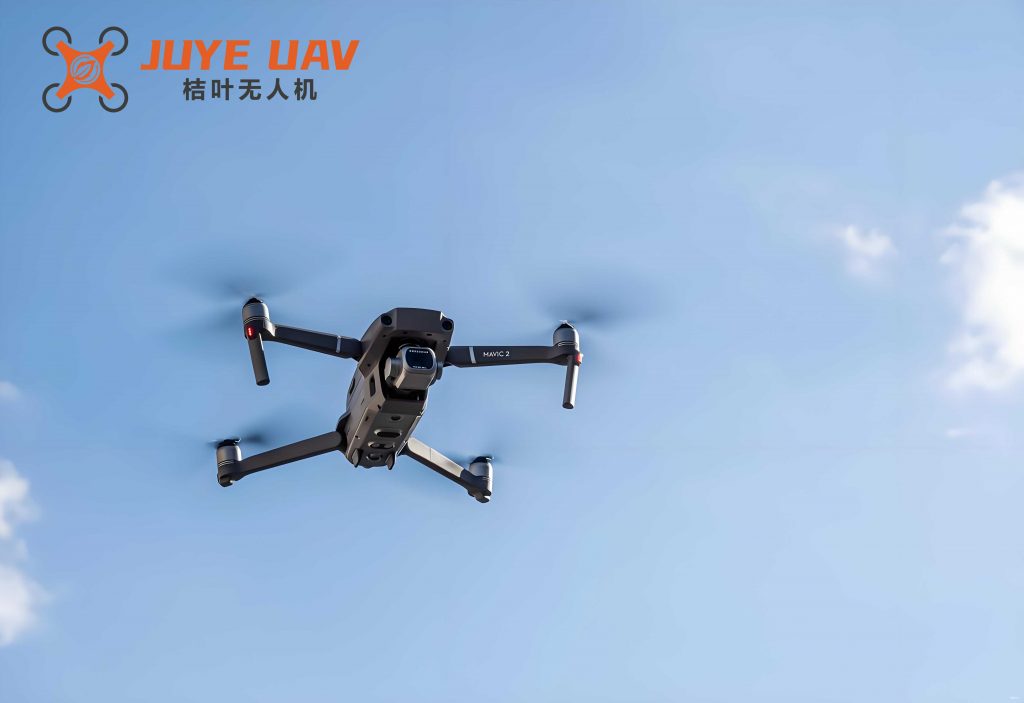
To design the controller, we first define the tracking errors for position and attitude subsystems. For position tracking, the errors are:
$$ e_x = x – x_d, \quad e_y = y – y_d, \quad e_z = z – z_d $$
Similarly, for attitude tracking:
$$ e_\phi = \phi – \phi_d, \quad e_\theta = \theta – \theta_d, \quad e_\psi = \psi – \psi_d $$
The sliding surfaces for the position and attitude subsystems are chosen as:
$$ s_i = k_{Pi} e_i + k_{Di} \dot{e}_i, \quad i = x, y, z $$
$$ s_j = k_{Pj} e_j + k_{Dj} \dot{e}_j, \quad j = \phi, \theta, \psi $$
where \( k_{Pi} \) and \( k_{Di} \) are positive gains. The derivative of the sliding surface leads to the control law design. We propose a modified super-twisting algorithm with adaptive gains to handle unknown disturbance bounds. The adaptive super-twisting reaching law is:
$$ \dot{s} = -b |s|^\tau \tanh(s/\kappa) – k s + v $$
$$ \dot{v} = -c \tanh(s/\kappa) $$
Here, \( b \) and \( c \) are adaptive gains, \( \tau = 0.5 \), \( \kappa \) is a smoothing parameter, and \( k \) is a convergence term. The adaptive laws for \( b \) and \( c \) are designed as:
$$ \dot{b} = \begin{cases} -\eta_1 \tanh(s) & \text{if } |s| > \delta \\ 0 & \text{otherwise} \end{cases} $$
$$ c = \frac{1}{2} (b + \sqrt{b^2 + 4\mu}) $$
where \( \eta_1, \delta, \mu \) are positive constants. This adaptation mechanism ensures that the gains adjust dynamically to disturbances without prior knowledge of their bounds.
The control laws for the position and attitude subsystems are derived as follows. For position control:
$$ u_x = \frac{m}{U_1} \left[ k_{Px} e_x + k_{Dx} \dot{e}_x – b_x |s_x|^\tau \tanh(s_x/\kappa) – k_x s_x + v_x \right] + \ddot{x}_d – d_x $$
$$ u_y = \frac{m}{U_1} \left[ k_{Py} e_y + k_{Dy} \dot{e}_y – b_y |s_y|^\tau \tanh(s_y/\kappa) – k_y s_y + v_y \right] + \ddot{y}_d – d_y $$
$$ u_z = \frac{m}{U_1} \left[ k_{Pz} e_z + k_{Dz} \dot{e}_z – b_z |s_z|^\tau \tanh(s_z/\kappa) – k_z s_z + v_z \right] + \ddot{z}_d – d_z + g $$
For attitude control:
$$ U_2 = I_x \left[ k_{P\phi} e_\phi + k_{D\phi} \dot{e}_\phi – b_\phi |s_\phi|^\tau \tanh(s_\phi/\kappa) – k_\phi s_\phi + v_\phi \right] + (I_y – I_z) \dot{\theta} \dot{\psi} $$
$$ U_3 = I_y \left[ k_{P\theta} e_\theta + k_{D\theta} \dot{e}_\theta – b_\theta |s_\theta|^\tau \tanh(s_\theta/\kappa) – k_\theta s_\theta + v_\theta \right] + (I_z – I_x) \dot{\phi} \dot{\psi} $$
$$ U_4 = I_z \left[ k_{P\psi} e_\psi + k_{D\psi} \dot{e}_\psi – b_\psi |s_\psi|^\tau \tanh(s_\psi/\kappa) – k_\psi s_\psi + v_\psi \right] + (I_x – I_y) \dot{\phi} \dot{\theta} $$
The stability of the closed-loop system is proven using Lyapunov theory. Consider the Lyapunov function candidate:
$$ V = \frac{1}{2} s^2 + \frac{1}{2\eta_1} (b – b^*)^2 + \frac{1}{2\eta_2} (c – c^*)^2 $$
where \( b^* \) and \( c^* \) are ideal gains. Taking the derivative and substituting the adaptive laws, we obtain:
$$ \dot{V} \leq -k s^2 – \frac{1}{2} (b – b^*)^2 – \frac{1}{2} (c – c^*)^2 \leq 0 $$
This ensures that the sliding surface \( s \) converges to zero in finite time, guaranteeing trajectory tracking for the quadcopter.
To validate the proposed FASTSMC method, we conduct numerical simulations in MATLAB/Simulink. The quadcopter parameters are listed in Table 1.
| Parameter | Value | Unit |
|---|---|---|
| Mass (m) | 2 | kg |
| Gravity (g) | 9.8 | m/s² |
| Arm Length (l) | 0.3 | m |
| Moment of Inertia (I_x) | 0.004 | kg·m² |
| Moment of Inertia (I_y) | 0.004 | kg·m² |
| Moment of Inertia (I_z) | 0.008 | kg·m² |
The controller parameters are summarized in Table 2.
| Parameter | Value |
|---|---|
| \( b_x, b_y, b_z \) | 5, 7, 1 |
| \( b_\phi, b_\theta, b_\psi \) | 8, 8, 12 |
| \( k_x, k_y, k_z \) | 6, 7, 8 |
| \( k_\phi, k_\theta, k_\psi \) | 2, 2, 2 |
| \( k_{Px}, k_{Py}, k_{Pz} \) | 8, 9, 3 |
| \( k_{P\phi}, k_{P\theta}, k_{P\psi} \) | 10, 10, 10 |
| \( k_{Dx}, k_{Dy}, k_{Dz} \) | 0.8, 1.2, 0.2 |
| \( k_{D\phi}, k_{D\theta}, k_{D\psi} \) | 1, 1, 1 |
| \( c_x, c_y, c_z \) | 0.1, 0.1, 0.1 |
| \( c_\phi, c_\theta, c_\psi \) | 0.1, 0.1, 0.1 |
We compare FASTSMC with three other methods: robust global fast sliding mode control (RGFSMC), classical super-twisting sliding mode control (STSMC), and fast super-twisting sliding mode control (FSTSMC). The desired trajectory is set to \( x_d = \cos(t) \), \( y_d = \sin(t) + 1 \), \( z_d = 5 + t \), and \( \psi_d = \frac{\pi}{3} \). Initial conditions are \( [x_0, y_0, z_0, \phi_0, \theta_0, \psi_0] = [0.8, 0.8, 4.7, 0, 0, 0] \).
In the first simulation, no external disturbances are applied. The position tracking errors for all methods are shown in Table 3, using the mean absolute error (MAE) metric:
$$ \text{MAE} = \frac{1}{n} \sum_{i=1}^{n} |e_d – e| $$
| Method | MAE_x | MAE_y | MAE_z |
|---|---|---|---|
| RGFSMC | 0.017 | 0.025 | 0.039 |
| STSMC | 0.021 | 0.032 | 0.052 |
| FSTSMC | 0.010 | 0.021 | 0.046 |
| FASTSMC | 0.009 | 0.017 | 0.029 |
FASTSMC achieves the lowest MAE values, indicating superior tracking accuracy. The adaptive gains \( b \) and \( c \) adjust smoothly, ensuring rapid convergence without chattering.
In the second simulation, sinusoidal disturbances \( d_x = \sin(t) \), \( d_y = \sin(t) \), \( d_z = \sin(t) \) are introduced. The MAE results under disturbances are presented in Table 4.
| Method | MAE_x | MAE_y | MAE_z |
|---|---|---|---|
| RGFSMC | 0.044 | 0.049 | 0.056 |
| STSMC | 0.021 | 0.043 | 0.052 |
| FSTSMC | 0.010 | 0.031 | 0.046 |
| FASTSMC | 0.009 | 0.029 | 0.029 |
FASTSMC maintains the best performance, demonstrating strong robustness to disturbances. The adaptive mechanisms effectively compensate for unknown disturbances, highlighting the advantage of our approach for quadcopter trajectory tracking.
In conclusion, we have developed a fast adaptive super-twisting sliding mode control strategy for quadcopter trajectory tracking. The method addresses unknown disturbance bounds through adaptive gain tuning and ensures finite-time convergence via a modified super-twisting algorithm. Lyapunov stability analysis confirms the robustness of the closed-loop system. Simulation results show that FASTSMC outperforms existing methods in terms of tracking accuracy and disturbance rejection. Future work will focus on optimizing controller parameters and extending the approach to multi-quadcopter formations.