
The rapid integration of Unmanned Aerial Vehicles (UAVs) into modern policing has created a critical demand for skilled operators. Training programs for police UAV pilots are intensive, combining complex theoretical knowledge with precise, high-stakes flight maneuvers. Drawing from my firsthand experience in managing and observing multiple cohorts within such training ecosystems, I have identified recurrent psychological and performance-related challenges that trainees face. These challenges are not static; they evolve distinctly across the training timeline. This article presents a stage-based framework for analyzing these trainee problems, supported by conceptual models, and proposes targeted, actionable countermeasures. The ultimate goal is to optimize the training process, enhance learning outcomes, and contribute to building a more robust and effective police UAV operational force.
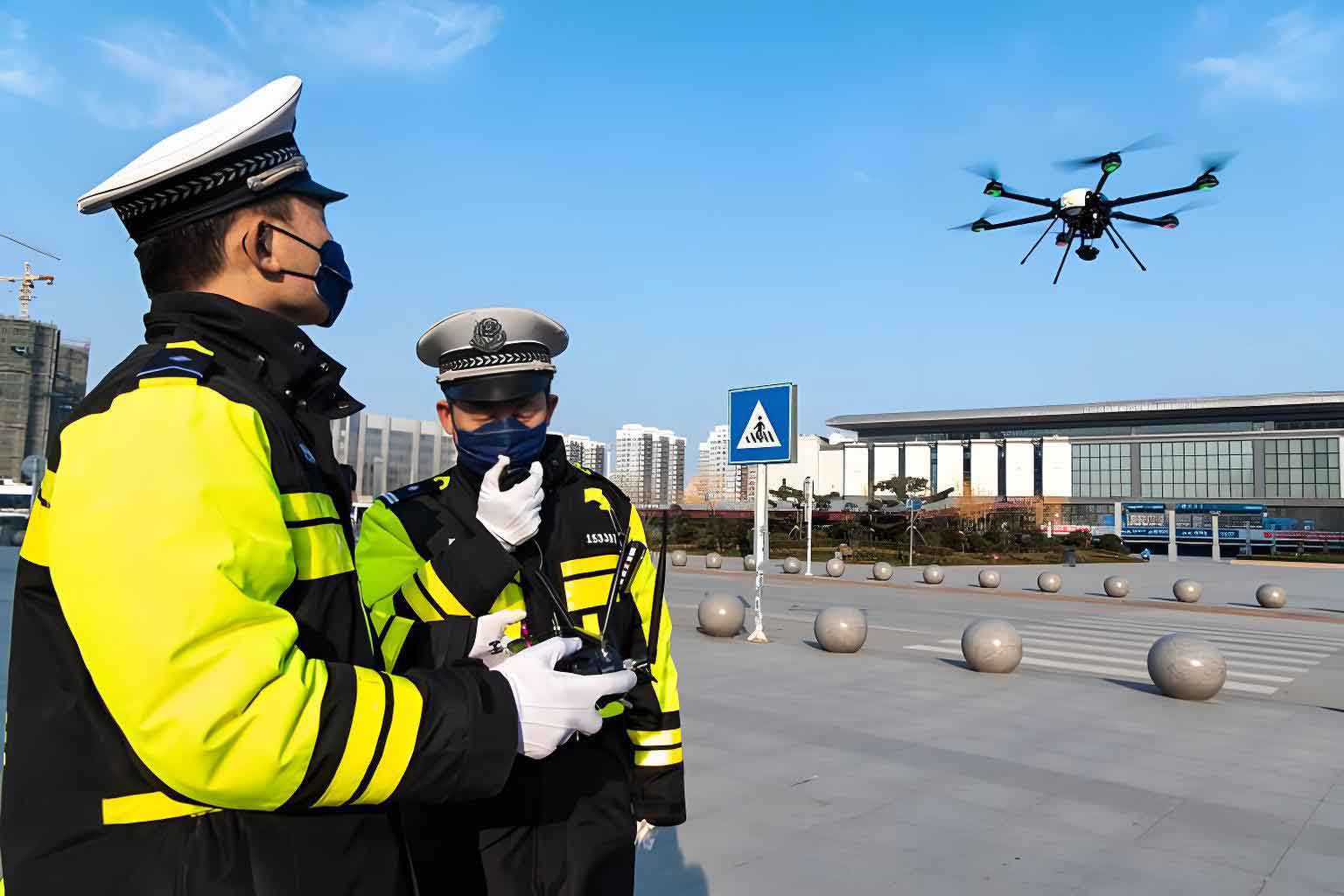
The efficacy of a police UAV program hinges entirely on the competency of its pilots. Unlike many other law enforcement training courses, police UAV certification is intensely results-oriented, with a definitive pass/fail examination governing both theory and practical flight skills. This pressure, combined with the novelty of the subject and the condensed training schedule, creates a unique psychological journey for trainees. A one-size-fits-all approach to trainee management is insufficient. By deconstructing the training arc into defined phases, instructors and administrators can proactively anticipate issues and implement stage-specific interventions, transforming potential points of failure into opportunities for growth and consolidation.
Theoretical Underpinnings: Stress, Performance, and Learning Curves
To systematically analyze trainee issues, it is useful to reference established models of stress and performance. The Yerkes-Dodson Law posits an inverted U-shaped relationship between arousal (or stress) and performance. Optimal performance occurs at a moderate level of arousal, while both insufficient and excessive arousal lead to degraded performance. This model is directly applicable to police UAV training, where trainees must navigate from low arousal (complacency) through optimal zones to high arousal (anxiety).
Furthermore, the skill acquisition process often exhibits a “learning plateau” or performance asymptote, where rapid initial progress slows down, creating a period of apparent stagnation that can be highly demotivating. This can be conceptually modeled. If we let $S(t)$ represent a trainee’s skill level at time $t$, initial learning might follow a steep curve, but later progress slows, approaching an asymptote $A$, representing a temporary ceiling: $$S(t) = A – C e^{-kt}$$ where $C$ and $k$ are constants related to initial skill deficit and learning rate, respectively. The derivative $dS/dt$ shows the learning rate, which decreases over time: $$\frac{dS}{dt} = kC e^{-kt}$$. Recognizing this non-linear progression is key to managing trainee expectations during mid-phase training.
Stage 1: Initial Foundational Learning – The Curiosity and Overconfidence Phase
The first few days of training are characterized by novelty. Trainees, often from diverse police units, enter a closed, immersive environment focused solely on police UAV operations. The primary challenges here are not of skill but of perception and attitude.
| Observed Trainee Mindset | Manifested Problems | Underlying Cause |
|---|---|---|
| “Rest & Relaxation” View | Low engagement, treating theory sessions passively. | Misperception of training as a respite from regular duty rather than a critical skill acquisition. |
| Mandate Resentment | Passive participation, minimal proactive learning. | Being assigned to training without personal buy-in or understanding of its value. |
| Operational Anxiety | Heightened nervousness, hesitation during early simulator use. | Fear of the unknown, awareness of operational risks (e.g., crash, privacy issues). |
| Illusory Superiority | Disregard for basic instructions, careless mistakes in foundational drills. | Prior casual drone experience leading to underestimation of the precision required for police UAV piloting. |
This phase corresponds to the left side of the Yerkes-Dodson curve. For some, arousal is too low (complacency); for others, it is already tipping into detrimental anxiety. The key intervention is cognitive framing. A formal orientation must unequivocally set expectations: clarifying the rigorous 25-day schedule, the pass/fail high-stakes exam, and the direct link between police UAV competency and future operational efficacy (e.g., search and rescue, surveillance, crowd monitoring). Demonstrating real-world case studies can replace vague curiosity with focused purpose.
Stage 2: Mid-Term Core Skill Acquisition – The Rollercoaster of Consolidation
This prolonged phase is where core flight competencies are built and refined. It can be subdivided into three psychological sub-phases, each with distinct challenges. Trainees transition from learning discrete maneuvers to integrating them into fluid flight patterns under varying conditions.
Sub-phase 2.1: Stabilization & Waning Novelty
As the routine sets in, initial excitement fades. The daily grind of repetitive practice—take-off, yaw rotation, figure-8 patterns, rectangular courses—can lead to mental fatigue. The perceived monotony clashes with the high concentration required for each repetition. Arousal levels risk falling below the optimal zone. Trainees may perform drills mechanically without active cognitive engagement, limiting skill depth. This is where introducing slight contextual variability is crucial. While the core maneuver remains the same, changing the practice location, adjusting environmental factors (e.g., mild wind), or linking the drill to a simple narrative (“navigate this pattern as if scanning a perimeter fence”) can reactivate cognitive focus.
Sub-phase 2.2: The攻坚克难期 (Difficulty-Conquering Period)
This is often the most challenging period. Theoretical knowledge deepens into aerodynamics, meteorology, and airspace regulations, while flight drills become more complex composite exercises. The trainee’s mental model is under significant strain.
| Primary Challenges in the Difficulty-Conquering Period | ||
|---|---|---|
| Challenge | Symptoms | Impact on Police UAV Training |
| Cumulative Fatigue & Homesickness | Decreased concentration during downtime, frequent personal communication. | Reduces quality of evening theoretical study and next-day flight readiness. |
| Skill Application Frustration | Increased error rate in previously mastered maneuvers when combined. | Erodes self-efficacy; trainees feel they are regressing, not progressing. |
| Pressure from Dual Roles | Trainees handling work/family matters remotely during breaks. | Fragment mental resources, preventing full immersion in police UAV training. |
The learning curve $S(t)$ here begins to flatten. The perceived effort-to-improvement ratio feels unbalanced, leading to frustration. Instructors must normalize this struggle. Explicitly teaching about the learning plateau, coupled with one-on-one micro-coaching sessions to break down composite maneuvers, is vital. Positive feedback should focus on effort and subtle improvements, not just perfect execution.
Sub-phase 2.3: The Fatigue Management & Plateau Period
The trainee now faces the full brunt of the asymptotic phase of learning. Progress in both theory test scores and flight smoothness becomes marginal. This is the peak risk period for demotivation and disengagement.
$$ \text{Motivation}(t) \approx M_0 – \alpha t + \beta I(t)$$
Here, $M_0$ is initial motivation, $\alpha$ is the demotivation rate due to fatigue and plateau, and $I(t)$ represents the instructor’s intervention function. Without effective $I(t)$, motivation dips critically.
Negative emotions like irritability and self-doubt peak. Trainees may question the practicality of the meticulously practiced patterns. Countermeasures must be multi-pronged: 1) Practical Application Teasers: Short, supervised demonstrations of advanced police UAV applications (e.g., photogrammetry, thermal imaging) reconnect training to tangible outcomes. 2) Peer-Learning Reinforcement: Structured peer-review sessions where trainees observe and gently critique each other’s flights can foster collaborative problem-solving and break the isolation of the plateau. 3) Ritual and Routine Adjustment: Minor, consensual changes to the daily schedule can restore a sense of agency.
Stage 3: Final Pre-Assessment – The Anxiety and Performance Optimization Phase
The final days before the official certification exam are characterized by a sharp spike in arousal, pushing many trainees to the right, detrimental side of the Yerkes-Dodson curve.
| Pre-Assessment Psychological Dynamics | |
|---|---|
| Psychological State | Risk to Police UAV Assessment Performance |
| Complex Duality (Pride vs. Fear) | Conflicted focus; pride in completion battles fear of failure, distracting from task execution. |
| Performance Polarization | Some thrive under pressure, others choke. Previously stable performers may unpredictably deteriorate. |
| Catastrophic Rumination | Overthinking the consequences of failure (“wasted time/expense”, “professional embarrassment”). |
The management strategy here shifts from skill-building to performance preservation and anxiety containment. The core principle is to maintain “calm readiness.”
- Structured Simulation: Conduct full, formal mock exams that replicate the assessment environment exactly. This desensitizes trainees to procedural novelty, allowing them to focus purely on performance. The debrief must be data-driven and constructive.
- Explicit Stress Inoculation: Teach and practice simple physiological stress-regulation techniques (e.g., tactical breathing: inhale 4s, hold 4s, exhale 6s). A pre-flight checklist that includes a “mental reset” step can be institutionalized.
- Logistical Perfection: Eliminate all external uncertainties. Ensure all equipment, batteries, and logbooks are in perfect, verified order. This reduces the cognitive load on the trainee on exam day.
- Symbolic Validation: Holding a brief closing ceremony or producing a cohort photograph before the final exam leverages group cohesion and professional pride to counterbalance individual anxiety, effectively modulating the arousal level $A$ in the performance function $P(A)$ back toward the optimum.
Synthesized Intervention Framework: A Proactive Training Management Matrix
The stage-specific issues necessitate a dynamic management approach. The following matrix summarizes the proactive strategies aligned with each training phase.
| Training Phase | Primary Trainee Challenge | Recommended Proactive Interventions | Goal (Yerkes-Dodson Adjustment) |
|---|---|---|---|
| Initial Foundation | Misaligned expectations, under/over-arousal. | Formal cognitive reframing; clear communication of standards & stakes; safety briefings. | Raise arousal from complacency; moderate arousal from anxiety through clarity. |
| Mid-Term Skill Building | Fatigue, frustration, learning plateau. | Introduce controlled variability; normalize the plateau; micro-coaching; peer review; applied scenario glimpses. | Maintain optimal arousal through engagement; prevent drop due to demotivation. |
| Final Pre-Assessment | High anxiety, performance volatility. | High-fidelity mock exams; stress-inoculation training; flawless logistics; symbolic validation. | Lower excessive arousal to optimal zone; stabilize performance. |
The effectiveness of these interventions can be conceptually modeled as an optimization problem. The training system aims to maximize the aggregate skill $S_{total}$ of the cohort at the time of assessment $T$, by applying the right intervention $I_i(t)$ at the right time to counteract the phase-specific problem function $P_i(t)$ for each trainee (indexed by $j$).
$$ \max \sum_{j=1}^{N} S_j(T) $$
$$ \text{where } dS_j(t)/dt = f(\text{baseline curriculum}, P_j(t), I(t)) $$
$$ \text{and } I(t) = \sum_{i} I_i(t) \cdot \mathbf{1}_{\{\text{phase}=i\}} $$
Here, $f$ is the skill acquisition function, and $\mathbf{1}$ is an indicator function activating the phase-specific intervention.
Conclusion: Towards a Resilient Police UAV Training Ecology
The journey to becoming a certified police UAV pilot is as much a psychological endeavor as a technical one. Trainees navigate a predictable landscape of emotional and cognitive hurdles—from initial overconfidence and anxiety, through the demoralizing “valley” of the learning plateau, to the peak anxiety of final assessment. A rigid, uniformly applied training regimen is ill-equipped to guide them through this terrain. By adopting a phase-sensitive lens, training administrators and instructors can transition from reactive problem-solvers to proactive performance architects.
This analysis advocates for a dynamic training management philosophy that prioritizes trainee metacognition—helping them understand their own learning process—and psychological readiness alongside flight proficiency. The proposed countermeasures, from initial cognitive framing to mid-phase normalisation of struggle and final-phase anxiety containment, are designed to keep the trainee’s psychological state within the optimal zone for learning and performance. Implementing such a structured, empathetic, and proactive framework will not only improve pass rates but, more importantly, foster the development of more confident, adaptable, and operationally effective police UAV pilots, thereby enhancing the safety and capabilities of the law enforcement agencies they serve. Future research should quantitatively validate this stage-based model across diverse training cohorts and explore the integration of biometric feedback (e.g., heart rate variability) to objectively tailor interventions in real-time.