
In recent years, cooperative control of unmanned aerial vehicle (UAV) swarms has garnered significant attention in multi-agent systems. Among various UAV types, quadcopters stand out due to their simple structure, vertical take-off and landing capabilities, high maneuverability, and low maintenance costs. These advantages make quadcopters ideal for both civilian and military applications, such as surveillance, search and rescue, and environmental monitoring. However, the limited effectiveness of a single quadcopter has driven research toward multi-quadcopter formation control, which enhances operational capabilities by expanding coverage, improving fault tolerance, and enabling complex task execution. This paper addresses the challenge of achieving prescribed performance optimization formation control for quadcopter swarms under switching communication topologies, where cumulative cooperative errors are constrained within predefined thresholds while ensuring asymptotic convergence of formation errors.
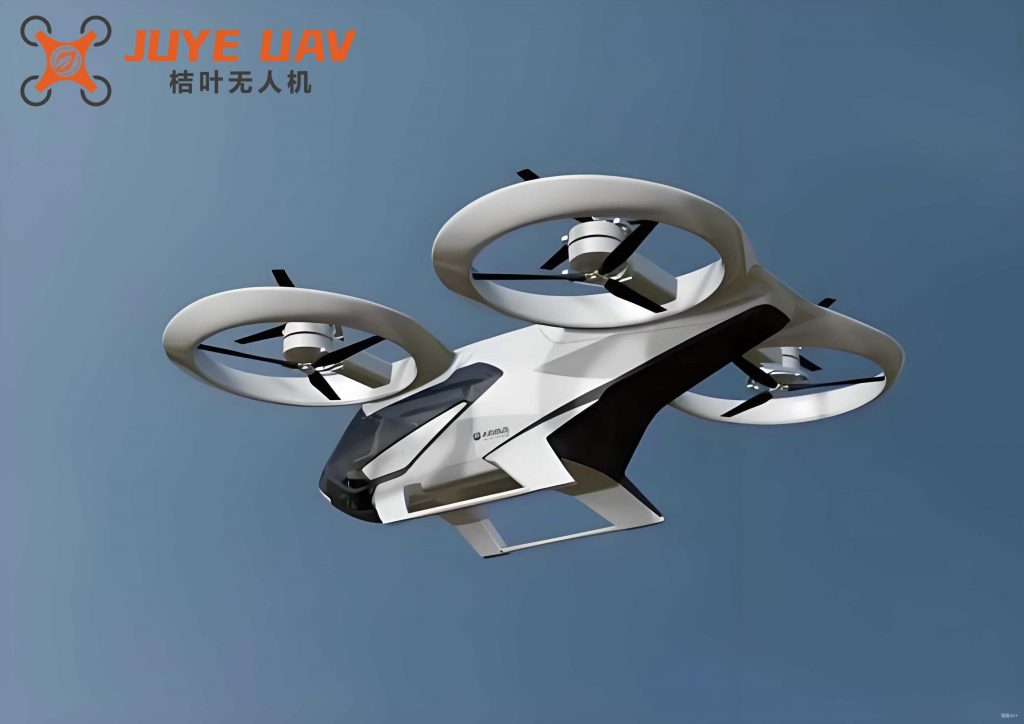
The dynamics of a quadcopter can be modeled as a second-order integrator system. For a swarm of N quadcopters, the state of the i-th quadcopter is represented by $x_i(t) = [p_i^T(t), v_i^T(t)]^T \in \mathbb{R}^6$, where $p_i(t) = [p_{ix}(t), p_{iy}(t), p_{iz}(t)]^T$ denotes the position and $v_i(t) = [v_{ix}(t), v_{iy}(t), v_{iz}(t)]^T$ denotes the velocity. The system matrices are defined as:
$$ A = \begin{bmatrix} 0 & 1 \\ 0 & 0 \end{bmatrix} \otimes I_3, \quad B = \begin{bmatrix} 0 \\ 1 \end{bmatrix} \otimes I_3 $$
where $\otimes$ represents the Kronecker product, and $I_3$ is the identity matrix of dimension 3. The communication topology among quadcopters is described by an undirected connected graph $G(V, E)$, where $V = \{\epsilon_1, \epsilon_2, \dots, \epsilon_N\}$ is the vertex set, and $E = \{(\epsilon_i, \epsilon_j) | \epsilon_i, \epsilon_j \in V\}$ is the edge set. The Laplacian matrix $L = [l_{ij}] \in \mathbb{R}^{N \times N}$ captures the connectivity, with $l_{ij} = -w_{ij}$ for $i \neq j$ and $l_{ii} = \sum_{j=1, j \neq i}^N w_{ij}$, where $w_{ij} = 1$ if quadcopters i and j communicate, and 0 otherwise. The topology may switch among a set of undirected connected graphs, denoted by $\kappa(t) = \phi$, with a minimum dwell time $T_d > 0$ between switches.
The desired time-varying formation for the quadcopter swarm is specified by $f(t) = [f_1^T(t), f_2^T(t), \dots, f_N^T(t)]^T \in \mathbb{R}^{6N}$, where $f_i(t)$ is piecewise continuously differentiable. The formation error for quadcopter i is defined as $\Gamma_i(t) = x_i(t) – f_i(t)$, and the relative error between quadcopters i and j is $\Gamma_{ij}(t) = \Gamma_i(t) – \Gamma_j(t)$. To achieve distributed formation control with prescribed performance, we propose a consensus-based control protocol:
$$ u_i(t) = K_u \sum_{j=1}^N w_{ij} \Gamma_{ij}(t) + K_c \Gamma_i(t) + s_i(t) $$
where $K_u, K_c \in \mathbb{R}^{3 \times 6}$ are gain matrices to be designed, and $s_i(t) \in \mathbb{R}^3$ is a formation compensation signal. The performance index function is defined as:
$$ J_p = \frac{1}{N} \sum_{i=1}^N \sum_{j=1}^N \int_0^\infty \Gamma_{ij}^T(t) Q \Gamma_{ij}(t) dt $$
where $Q = Q^T \in \mathbb{R}^{6 \times 6}$ is a positive definite weighting matrix. The objective is to ensure $J_p \leq J_p^*$ for a given performance preset $J_p^* > 0$, while achieving asymptotic formation convergence:
$$ \lim_{t \to \infty} (x_i(t) – f_i(t) – x_c(t)) = 0, \quad i = 1, 2, \dots, N $$
where $x_c(t)$ is the formation center function.
To analyze the system dynamics, we decompose the closed-loop system into formation error dynamics and formation center dynamics. Let $\Gamma(t) = [\Gamma_1^T(t), \Gamma_2^T(t), \dots, \Gamma_N^T(t)]^T$ and $s(t) = [s_1^T(t), s_2^T(t), \dots, s_N^T(t)]^T$. The closed-loop dynamics under the control protocol are:
$$ \dot{\Gamma}(t) = (I_N \otimes (A + B K_c) – L_{\kappa(t)} \otimes B K_u) \Gamma(t) + (I_N \otimes A) f(t) – (I_N \otimes I_6) \dot{f}(t) + (I_N \otimes B) s(t) $$
Since the communication topology is undirected and connected, the Laplacian matrix $L_{\kappa(t)}$ is symmetric positive semi-definite with one zero eigenvalue and N-1 positive eigenvalues. We construct an orthogonal matrix $U_{\kappa(t)} = [1/\sqrt{N}, \bar{U}_{\kappa(t)}]$ such that $U_{\kappa(t)}^T L_{\kappa(t)} U_{\kappa(t)} = \text{diag}\{0, \bar{U}_{\kappa(t)}^T L \bar{U}_{\kappa(t)}\}$, where $\bar{U}_{\kappa(t)} \in \mathbb{R}^{N \times (N-1)}$. Define $\delta(t) = (U_{\kappa(t)}^T \otimes I_6) \Gamma(t) = [\delta_1^T(t), \zeta^T(t)]^T$, where $\zeta(t) = [\delta_2^T(t), \delta_3^T(t), \dots, \delta_N^T(t)]^T$. The system decomposes into:
$$ \dot{\delta}_1(t) = (A + B K_c) \delta_1(t) + \frac{1}{\sqrt{N}} \left[ (1^T \otimes A) f(t) – (1^T \otimes I_6) \dot{f}(t) + (1^T \otimes B) s(t) \right] $$
$$ \dot{\zeta}(t) = \left( I_{N-1} \otimes (A + B K_c) – (\bar{U}_{\kappa(t)}^T L_{\kappa(t)} \bar{U}_{\kappa(t)}) \otimes B K_u \right) \zeta(t) + (\bar{U}_{\kappa(t)}^T \otimes A) f(t) – (\bar{U}_{\kappa(t)}^T \otimes I_6) \dot{f}(t) + (\bar{U}_{\kappa(t)}^T \otimes B) s(t) $$
The formation error dynamics are governed by $\zeta(t)$, and the formation center is derived from $\delta_1(t)$. The formation center function $x_c(t)$ is given by:
$$ x_c(t) = \frac{1}{N} \sum_{i=1}^N \left[ e^{(A + B K_c)t} x_i(0) – f_i(t) – \int_0^t e^{(A + B K_c)(t-\tau)} B (K_c f_i(\tau) – s_i(\tau)) d\tau \right] $$
The gain matrix $K_c$ independently regulates the motion modes of the formation center, while $K_u$ drives the quadcopters to achieve the desired formation. The formation compensation signal $s_i(t)$ is designed to satisfy the feasibility condition:
$$ B_2 A f_i(t) – B_2 \dot{f}_i(t) = 0 $$
where $B = [B_1^T, B_2^T]^T$ is a non-singular matrix with $B_1 B = I_6$ and $B_2 B = 0$. Then, $s_i(t) = B_1 \dot{f}_i(t) – B_1 A f_i(t)$.
To ensure prescribed performance, we derive a design criterion based on Lyapunov stability theory. If there exists a positive definite matrix $R$ satisfying the linear matrix inequality (LMI):
$$ \begin{bmatrix} (A + B K_c) R + R (A + B K_c)^T – 2 B B^T & R & 0 \\ R & -2 Q^{-1} & 0 \\ 0 & 0 & I_6 – \alpha_{\Gamma}^{-1} J_p^* R \end{bmatrix} < 0 $$
where $\alpha_{\Gamma} = \Gamma^T(0) ((I_N – N^{-1} 1 1^T) \otimes I_6) \Gamma(0)$, then the quadcopter swarm achieves prescribed performance optimization formation control with $K_u = \lambda_{\text{min}}^{-1} B^T R^{-1}$, where $\lambda_{\text{min}}$ is the minimum non-zero eigenvalue of the Laplacian matrices in the switching set.
The algorithm for designing the gain matrices involves the following steps:
- Select the weighting matrix $Q$ and performance preset $J_p^*$ based on the formation task requirements.
- Design $K_c$ to place the eigenvalues of $A + B K_c$ at desired locations in the complex plane to configure the formation center motion modes.
- Compute the non-singular matrix $\bar{B} = [B_1^T, B_2^T]^T$ and verify the feasibility condition $B_2 A f_i(t) – B_2 \dot{f}_i(t) = 0$. If not satisfied, the formation may not be achievable.
- Solve the optimization problem to find the minimal $\gamma_{\text{min}}$ and corresponding $R$ using LMI tools. If $J_p^* \geq \gamma_{\text{min}} \alpha_{\Gamma}$, proceed; otherwise, the prescribed performance cannot be guaranteed.
- Compute $K_u = \lambda_{\text{min}}^{-1} B^T R^{-1}$ and $s_i(t) = B_1 \dot{f}_i(t) – B_1 (A + B K_c) f_i(t)$.
We validate the proposed algorithm through simulation of a quadcopter swarm with five agents. The communication topology switches randomly among four undirected connected graphs, as shown in Table 1, with a switching interval of 0.5 seconds.
| Topology | Edges | Laplacian Eigenvalues |
|---|---|---|
| G1 | (1,2), (2,3), (3,4), (4,5), (5,1) | 0, 1.382, 1.382, 3.618, 3.618 |
| G2 | (1,2), (1,3), (2,4), (3,5), (4,5) | 0, 1.5858, 2.0, 3.4142, 4.0 |
| G3 | (1,2), (2,3), (3,4), (4,1), (4,5) | 0, 1.0, 3.0, 3.0, 5.0 |
| G4 | (1,2), (1,3), (1,4), (1,5), (2,3) | 0, 2.0, 4.0, 5.0, 5.0 |
The desired formation is a rotating pentagon defined by:
$$ f_i(t) = \begin{bmatrix} -4 \sqrt{2} \sin(kt + \frac{(2i-1)\pi}{N}) \\ 4 \sqrt{2} \cos(kt + \frac{(2i-1)\pi}{N}) \\ 8 \cos(kt + \frac{(2i-1)\pi}{N}) \\ -4k \sqrt{2} \cos(kt + \frac{(2i-1)\pi}{N}) \\ -4k \sqrt{2} \sin(kt + \frac{(2i-1)\pi}{N}) \\ -8k \sin(kt + \frac{(2i-1)\pi}{N}) \end{bmatrix} $$
with $k = 1$ rad/s. The initial states of the quadcopters are given in Table 2.
| Quadcopter | Position [m] | Velocity [m/s] |
|---|---|---|
| 1 | [-7.0447, 3.9924, -0.9045] | [0, 0, 0] |
| 2 | [-1.4545, -1.2086, -1.5634] | [0, 0, 0] |
| 3 | [-0.3504, -1.5651, 0.5591] | [0, 0, 0] |
| 4 | [-0.7946, -1.7721, -1.2803] | [0, 0, 0] |
| 5 | [-0.7482, -1.8510, 0.7081] | [0.8344, -0.5274, -0.5322] |
We set $J_p^* = 1.8 \times 10^4$ and $Q = I_6$. The matrix $K_c$ is designed to place the eigenvalues of $A + B K_c$ at $i, -i, i, -i, -0.1, -0.3$, resulting in:
$$ K_c = \begin{bmatrix} -1 & 0 & 0 & -3 & 0 & 0 \\ 0 & -1 & 0 & 0 & -3 & 0 \\ 0 & 0 & -0.03 & 0 & 0 & -0.4 \end{bmatrix} $$
Solving the LMI yields the positive definite matrix $R$ and $K_u = \lambda_{\text{min}}^{-1} B^T R^{-1}$ with $\lambda_{\text{min}} = 0.3820$. The simulation results demonstrate that the formation errors converge to zero within approximately 10 seconds, and the performance index $J_p$ converges to a value below $J_p^*$, validating the effectiveness of the proposed control strategy. The formation center trajectory aligns with the theoretical expression, and the quadcopters maintain the desired pentagon formation while rotating around the center.
In conclusion, this paper presents a distributed prescribed performance optimization formation control algorithm for quadcopter swarms under switching communication topologies. The control protocol incorporates self-feedback and compensation signals to decouple formation error dynamics and formation center dynamics, enabling independent regulation of the center’s motion modes. By embedding performance constraints into LMI conditions, the cumulative cooperative error is strictly bounded by the preset threshold. Future work will extend this approach to heterogeneous quadcopter swarms and integrate adaptive learning techniques for real-time gain adjustment. The proposed method enhances the reliability and efficiency of quadcopter formations in dynamic environments, paving the way for advanced applications in autonomous systems.