
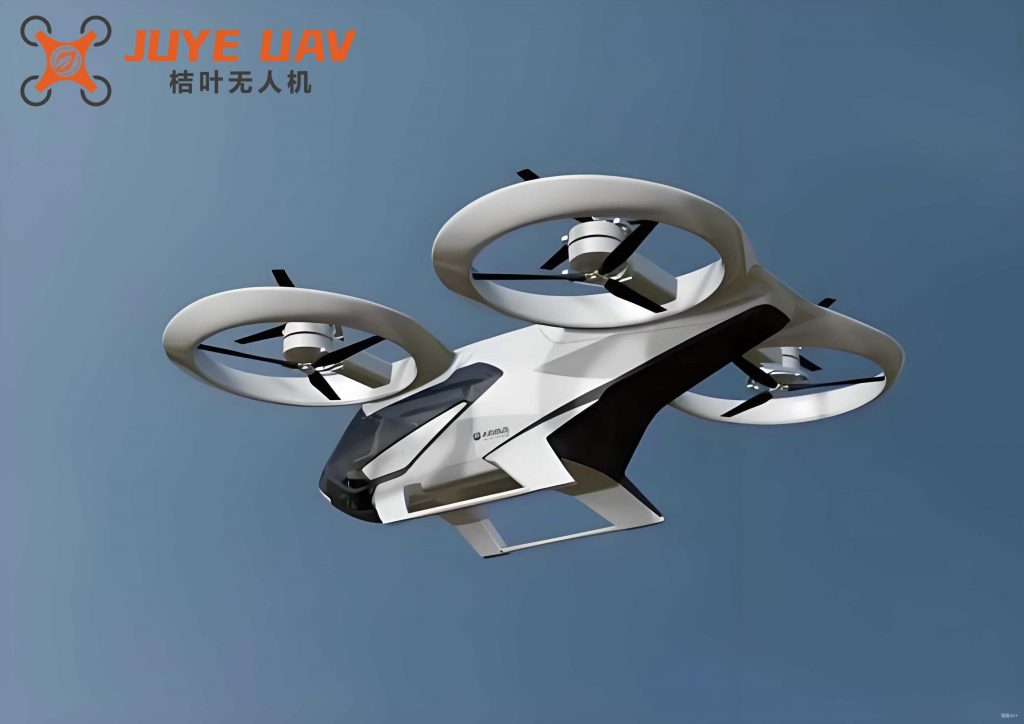
In this paper, I address the challenge of achieving asymptotic tracking for a quadrotor unmanned aerial vehicle (UAV) attitude system under actuator failures and time-varying payloads. The quadrotor platform is widely utilized in applications such as aerial photography, exploration, and transportation due to its agility and vertical take-off capabilities. However, practical scenarios often involve dynamic changes in system parameters, such as varying payloads during missions like pesticide spraying or rescue operations, which introduce time-dependent uncertainties. Additionally, actuator faults—resulting from motor wear or rotor damage—can degrade performance and stability. Traditional control methods, like PID or sliding mode control, often assume constant parameters and may not guarantee transient performance. To overcome these limitations, I integrate prescribed performance control (PPC) techniques with a freezing variable method to design an adaptive fault-tolerant controller that ensures asymptotic tracking while constraining tracking errors within predefined transient and steady-state bounds. The proposed approach accounts for partial actuator failures, time-varying inertia, and external disturbances, offering a robust solution for real-world quadrotor operations.
The quadrotor attitude dynamics are derived from the momentum theorem, considering a body-fixed frame and an inertial frame. The orientation is represented by Euler angles $\phi$, $\theta$, and $\psi$, while the angular velocities are denoted as $p$, $q$, and $r$. The time-varying inertia matrix $I(t) = \text{diag}[I_x(t), I_y(t), I_z(t)]$ captures the effects of changing payloads. The dynamics account for aerodynamic moments $\tau_{\text{air}} = [k_{f1} \dot{\phi}, k_{f2} \dot{\theta}, k_{f3} \dot{\psi}]^T$, external disturbances $\tau_d = [d_1(t), d_2(t), d_3(t)]^T$, and control moments $\tau_u = [u_1, u_2, u_3]^T$. Actuator failures are modeled with fault coefficients $\kappa_i$ and input uncertainties $\Delta u_i$, leading to the actual control moments $\tau_u’ = [\kappa_1 u_1^c + \Delta u_1, \kappa_2 u_2^c + \Delta u_2, \kappa_3 u_3^c + \Delta u_3]^T$. For small angles, the attitude dynamics are expressed as:
$$ \ddot{\phi} = -\frac{k_{f1} + \dot{I}_x(t)}{I_x(t)} \dot{\phi} – \frac{I_z(t) – I_y(t)}{I_x(t)} \dot{\theta} \dot{\psi} + \frac{\kappa_1 u_1^c}{I_x(t)} + \bar{d}_1(t) $$
$$ \ddot{\theta} = -\frac{k_{f2} + \dot{I}_y(t)}{I_y(t)} \dot{\theta} – \frac{I_x(t) – I_z(t)}{I_y(t)} \dot{\phi} \dot{\psi} + \frac{\kappa_2 u_2^c}{I_y(t)} + \bar{d}_2(t) $$
$$ \ddot{\psi} = -\frac{k_{f3} + \dot{I}_z(t)}{I_z(t)} \dot{\psi} – \frac{I_y(t) – I_x(t)}{I_z(t)} \dot{\phi} \dot{\theta} + \frac{\kappa_3 u_3^c}{I_z(t)} + \bar{d}_3(t) $$
Here, $\bar{d}_i(t)$ represent lumped uncertainties combining disturbance effects and actuator faults. To facilitate control design, I transform the system into a control-oriented model by defining state variables $x_{1,1} = \phi$, $x_{2,1} = \dot{\phi}$, $x_{1,2} = \theta$, $x_{2,2} = \dot{\theta}$, $x_{1,3} = \psi$, $x_{2,3} = \dot{\psi}$, and introducing terms $\eta_1 = x_{2,2} x_{2,3}$, $\eta_2 = x_{2,1} x_{2,3}$, $\eta_3 = x_{2,1} x_{2,2}$. The model is rewritten as:
$$ \dot{x}_{1,i} = x_{2,i} $$
$$ \dot{x}_{2,i} = a_{1,i}(t) x_{2,i} + a_{2,i}(t) \eta_i + b_i(t) u_i^c + d_i(t) $$
where $a_{1,i}(t)$, $a_{2,i}(t)$, and $b_i(t)$ are time-varying parameters with $b_i(t) > 0$, and $d_i(t)$ denotes the aggregated uncertainties. The control objective is to design inputs $u_i^c$ such that the outputs $x_{1,i}$ asymptotically track reference trajectories $x_{id}$ while ensuring tracking errors $e_i = x_{1,i} – x_{id}$ satisfy prescribed performance constraints. Key assumptions include bounded reference trajectories and their derivatives, bounded lumped uncertainties, and unknown but bounded time-varying parameters.
Prescribed performance is enforced using performance functions $\mu_i(t) = (\mu_{i0} – \mu_{i\infty}) e^{-h_i t} + \mu_{i\infty}$, where $\mu_{i0}$, $\mu_{i\infty}$, and $h_i$ are positive constants defining transient and steady-state bounds. The constraints are $ -m_i^- \mu_i(t) < e_i(t) < \bar{m}_i \mu_i(t) $, with $m_i^-$ and $\bar{m}_i$ as overshoot suppression parameters. To handle these constraints, I apply an error transformation:
$$ \epsilon_i = \frac{1}{2} \ln \left( \frac{\bar{m}_i (s_i + m_i^-)}{m_i^- (\bar{m}_i – s_i)} \right) $$
where $s_i(t) = e_i(t) / \mu_i(t)$. If $\epsilon_i$ remains bounded, the performance constraints are satisfied, and asymptotic tracking is achieved if $\lim_{t \to \infty} \epsilon_i = 0$. Differentiating $\epsilon_i$ yields:
$$ \dot{\epsilon}_i = R_i (\dot{e}_i – e_i \dot{\mu}_i / \mu_i) $$
with $R_i = \frac{1}{2\mu_i} \left( \frac{1}{s_i + m_i^-} – \frac{1}{s_i – \bar{m}_i} \right)$. I define sliding variables $S_i = \dot{\epsilon}_i + k_i \epsilon_i$ for $i = 1, 2, 3$, where $k_i > 0$ are design gains. The derivative of $S_i$ is derived as:
$$ \dot{S}_i = \ddot{\epsilon}_i + k_i \dot{\epsilon}_i = R_i \left[ -\ddot{x}_{id} + a_{1,i}(t) x_{2,i} + a_{2,i}(t) \eta_i + b_i(t) u_i^c + d_i(t) – \frac{\dot{e}_i \dot{\mu}_i + e_i \ddot{\mu}_i}{\mu_i} + \frac{e_i \dot{\mu}_i^2}{\mu_i^2} \right] + k_i R_i (\dot{e}_i – e_i \dot{\mu}_i / \mu_i) $$
To manage time-varying parameters, I employ the freezing variable method, approximating $a_{1,i}(t)$, $a_{2,i}(t)$, and $b_i(t)$ as constants $\bar{a}_{1,i}$, $\bar{a}_{2,i}$, and $\bar{b}_i$ at each instant, with deviations $\Delta a_{1,i}$, $\Delta a_{2,i}$, and $\Delta b_i$. The control input is designed as $u_i^c = \hat{\rho}_i \bar{u}_i^c$, where $\hat{\rho}_i$ estimates $1 / \bar{b}_i$, and:
$$ \bar{u}_i^c = -\frac{S_i R_i \alpha_i^2}{S_i^2 R_i^2 \alpha_i^2 + \sigma_{ui}^2(t)} $$
Here, $\alpha_i$ is a synthesized term:
$$ \alpha_i = c_i R_i^{-1} S_i + x_{2,i} \hat{a}_{1,i} + \Phi_i \hat{\vartheta}_i + \eta_i \hat{a}_{2,i} – \ddot{x}_{id} + k_i (\dot{e}_i – e_i \dot{\mu}_i / \mu_i) + R_i^{-1} \dot{R}_i (\dot{e}_i – e_i \dot{\mu}_i / \mu_i) – \frac{\dot{e}_i \dot{\mu}_i + e_i \ddot{\mu}_i}{\mu_i} + \frac{e_i \dot{\mu}_i^2}{\mu_i^2} $$
and $\Phi_i$ is defined as:
$$ \Phi_i = \frac{S_i R_i x_{2,i}^2}{S_i^2 R_i^2 x_{2,i}^2 + \sigma_{a1,i}^2(t)} + \frac{S_i R_i}{S_i^2 R_i^2 + \sigma_{di}^2(t)} + \frac{S_i R_i \eta_i^2}{S_i^2 R_i^2 \eta_i^2 + \sigma_{a2,i}^2(t)} $$
The adaptive laws for parameter estimates are:
$$ \dot{\hat{a}}_{1,i} = \gamma_{1,i} S_i R_i x_{2,i} $$
$$ \dot{\hat{a}}_{2,i} = \gamma_{2,i} S_i R_i \eta_i $$
$$ \dot{\hat{\rho}}_i = -\gamma_{3,i} S_i R_i \bar{u}_i^c $$
$$ \dot{\hat{\vartheta}}_i = \gamma_{4,i} S_i R_i \Phi_i $$
where $\gamma_{j,i} > 0$ are adaptation gains, and $\hat{\vartheta}_i$ estimates the bound $\vartheta_i = \max\{\delta, D_i\}$ on uncertainties. The time-varying functions $\sigma_{*}(t)$ are positive and integrable, ensuring boundedness.
Stability analysis is conducted using Lyapunov theory. I consider the Lyapunov function $V = \sum_{i=1}^3 V_i$ with:
$$ V_i = \frac{1}{2} S_i^2 + \frac{1}{2\gamma_{1,i}} \tilde{a}_{1,i}^2 + \frac{1}{2\gamma_{2,i}} \tilde{a}_{2,i}^2 + \frac{\bar{b}_i}{2\gamma_{3,i}} \tilde{\rho}_i^2 + \frac{1}{2\gamma_{4,i}} \tilde{\vartheta}_i^2 $$
where $\tilde{a}_{1,i} = \bar{a}_{1,i} – \hat{a}_{1,i}$, $\tilde{a}_{2,i} = \bar{a}_{2,i} – \hat{a}_{2,i}$, $\tilde{\rho}_i = 1/\bar{b}_i – \hat{\rho}_i$, and $\tilde{\vartheta}_i = \vartheta_i – \hat{\vartheta}_i$. Differentiating $V_i$ and substituting the control laws yields:
$$ \dot{V}_i \leq -c_i S_i^2 + \sigma_{ui}(t) + \vartheta_i (\sigma_{a1,i}(t) + \sigma_{a2,i}(t) + \sigma_{di}(t)) $$
This ensures that $S_i$ and parameter estimates are uniformly ultimately bounded. Barbălat’s lemma implies $\lim_{t \to \infty} S_i = 0$, leading to $\lim_{t \to \infty} \epsilon_i = 0$ and thus asymptotic tracking with prescribed performance.
To validate the approach, I conduct numerical simulations for a quadrotor with time-varying inertia matrices $I_x(t) = 0.5 + 0.4 \sin(2t)$, $I_y(t) = 0.5 + 0.4 \sin(2t)$, and $I_z(t) = 0.7 + 0.5 \sin(2t)$ in kg·m². Aerodynamic coefficients are $k_{f1} = k_{f2} = k_{f3} = 0.3$ N/rad·s⁻¹. Actuator faults are set with $\kappa_1 = 0.6$, $\kappa_2 = 0.7$, $\kappa_3 = 0.8$, and input uncertainties $\Delta u_1 = 0.1 \sin(5t)$, $\Delta u_2 = 0.1 \cos(10t)$, $\Delta u_3 = 0.1 \sin(5t)$. Disturbances are $d_1(t) = 0.1 e^{-0.3t} + 0.1$, $d_2(t) = 0.1 e^{-0.1t} + 0.1$, $d_3(t) = 0.1 e^{-0.3t} + 0.1$. Reference trajectories are $\phi_d = 0.5 \cos(0.2t)$, $\theta_d = 0.5 \sin(0.2t)$, $\psi_d = 0.5$. Initial conditions are $\phi(0) = 0.3$ rad, $\theta(0) = -0.3$ rad, $\psi(0) = 0$ rad. Performance functions are $\mu_i(t) = (2 – 0.05) e^{-t} + 0.05$ with $m_i^- = 0.5$ and $\bar{m}_i = 0.5$. Controller parameters are summarized in Table 1.
| Parameter | Value | Parameter | Value |
|---|---|---|---|
| $k_1$ | 20 | $\gamma_{3,1}, \gamma_{3,2}, \gamma_{3,3}$ | 0.1 |
| $k_2, k_3$ | 15 | $\gamma_{4,1}, \gamma_{4,2}, \gamma_{4,3}$ | 0.05 |
| $c_1, c_2$ | 20 | $\sigma_{ui}$ | $0.1 e^{-0.1t}$ |
| $c_3$ | 15 | $\sigma_{di}$ | $0.8 e^{-0.01t}$ |
| $\gamma_{1,1}, \gamma_{1,2}, \gamma_{1,3}$ | 0.1 | $\sigma_{a1,k}, \sigma_{a2,k}, \sigma_{a3,k}$ | $e^{-t}$ |
| $\gamma_{2,1}, \gamma_{2,2}, \gamma_{2,3}$ | 0.1 |
Simulation results demonstrate that the proposed controller achieves asymptotic tracking of $\phi_d$, $\theta_d$, and $\psi_d$ with errors converging to zero while adhering to performance constraints. Comparative analysis with a sliding mode PPC method shows superior transient performance, including reduced overshoot and faster convergence. The control inputs $u_i^c$ remain bounded, and adaptive parameters $\hat{a}_{1,i}$, $\hat{a}_{2,i}$, $\hat{\rho}_i$, and $\hat{\vartheta}_i$ converge to stable values, confirming the effectiveness of the freezing variable method in handling time-varying dynamics. This approach enhances the reliability of quadrotor systems in practical environments with uncertainties and faults.
In conclusion, I have developed a prescribed-performance fault-tolerant control scheme for quadrotor attitude systems subject to actuator failures and time-varying payloads. By combining PPC with adaptive techniques and the freezing variable method, the controller ensures asymptotic tracking with guaranteed transient performance. Lyapunov-based stability analysis proves uniform ultimate boundedness of all signals, and simulations validate the method’s robustness. Future work will explore extensions to trajectory tracking and multi-quadrotor coordination under similar constraints.