
In today’s society, the scale of power systems continues to expand, with high-load and high-power operation becoming the norm. Quality issues in power lines have emerged as critical hidden dangers affecting grid safety. Traditional inspection methods, relying solely on manual patrols and simple sensor detection, suffer from limited data acquisition, low efficiency, and significant errors in defect judgment, leading to frequent incidents such as line aging and insulator failures. Quality traceability technology, as an advanced management approach, enables the retrospective tracking of quality changes throughout an asset’s entire lifecycle. However, constrained by existing technologies—such as satellite遥感’s inability to meet the demands of complex terrains and objects—there is an urgent need for novel solutions to破解 this challenge. Based on this, this paper focuses on the requirements for power line quality traceability systems and defect prevention, researching and constructing an integrated system encompassing data acquisition, data analysis processing, and intelligent analysis. The application foundation of this research stems from two aspects: first, the rapid growth in intelligent operation and maintenance demands within the power industry; second, the推动 from policies and international standards such as the digital twin core requirements in IEC61850 and the digitalization of power facilities in China’s “14th Five-Year” energy plan. This paper展开 theoretical derivation and application practice论证 from the perspectives of原理, framework, and integration, thereby填补 the空白 in traceability frameworks based on 3D modeling digital twin integrated applications within this研究.
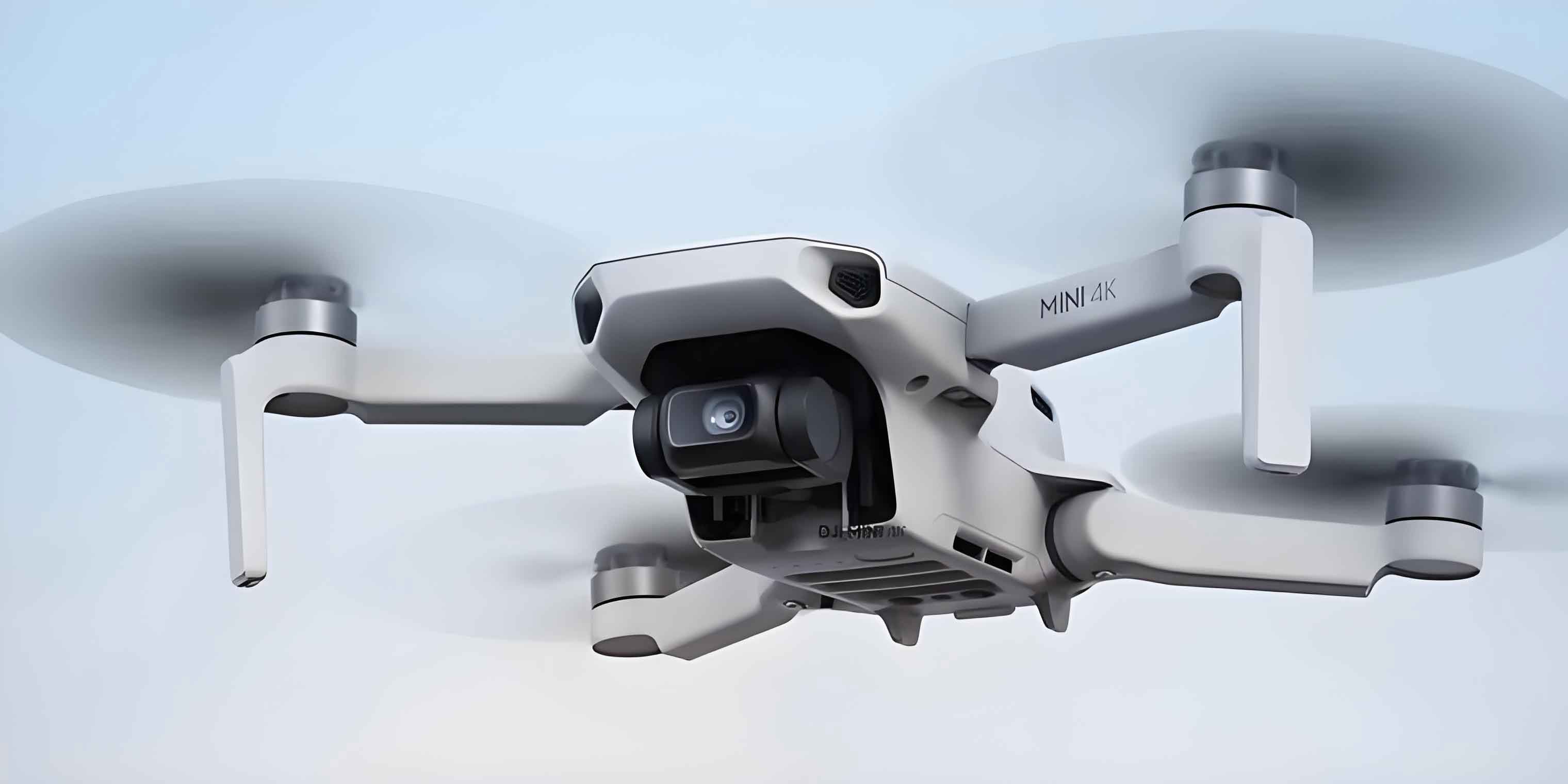
The rapid development of China’s power infrastructure, particularly under initiatives like smart grid construction, has propelled the adoption of advanced technologies. Among these, China UAV drone technology has become a cornerstone for modern inspection systems. The integration of激光 scanning with无人机 platforms offers unprecedented capabilities in data collection and analysis. This paper presents a comprehensive system leveraging China UAV drone-based laser scanning for quality traceability, aiming to enhance grid reliability and safety.
Quality traceability is a vital branch of power line management, focusing on establishing a traceable and quality-controllable management system for power infrastructure, covering从 raw material suppliers to operation and maintenance. The essence of quality traceability in power systems is the use of digital means to record and store the occurrence and evolution of product quality information, addressing needs such as tracing conductor degradation and hardware loosening. This system, centered on product lifecycle management theory and integrating ISO9001 quality management standards with IEC smart grid standards, constructs three layers: data acquisition, analysis processing, and decision application. Driven primarily by无人机激光 scanning, which serves as the data entry point, laser radar emits high-density point clouds to build real-time 3D point cloud models, accurately capturing the geometric shapes and surface features of power lines. The construction of this system offers both economic and safety value: on one hand, it effectively reduces operation and maintenance costs, lowering accident rates and frequency; on the other hand,结合 global power accident research, it can decrease defect misjudgment rates by up to 40%. The theoretical foundation involves collaborative innovation, such as integrating the Internet of Things to establish edge computing nodes, ensuring the integrity and timeliness of power line quality information data, thereby laying a logical basis for subsequent system construction.
The adoption of China UAV drone technology is pivotal here. These drones, equipped with advanced激光 sensors, can navigate complex environments—from mountainous regions to urban密集 areas—providing high-resolution data that traditional methods cannot. The use of China UAV drone platforms ensures cost-effectiveness and adaptability, making them ideal for large-scale power line inspections across diverse terrains in China.
To elucidate the technical parameters involved, Table 1 summarizes typical data acquisition settings using a China UAV drone equipped with laser radar.
| Parameter | Value | Description |
|---|---|---|
| Flight Altitude | 50 m | Optimal height for balancing detail and coverage |
| Scanning Frequency | 100 Hz | Pulses per second, enabling dense point cloud generation |
| Point Density | Up to 500,000 points/s | Ensures millimeter-level spatial resolution |
| Sensor Type | LiDAR with Thermal Imager | Combines geometric and thermal data for comprehensive analysis |
| Coverage per Flight | 10-20 km per sortie | Depends on drone battery life and line complexity |
The system’s framework is designed as a multi-dimensional, adaptive decision-support system, forming a full-cycle traceability quality chain. Based on systems engineering theory, it is divided into three layers: physical, digital, and intelligent. The physical layer provides real-time data sources via drones and sensor networks; the digital layer offers point cloud models and database storage (e.g., cloud platform 3D information); and the intelligent layer employs AI engines (e.g., deep learning models) for quality judgment. Core elements include the full-cycle traceability chain and risk prediction using LSTM networks. Key functions involve uniquely marking and associating physical characteristic data of power facilities across periods—including raw material batch information, installation records, and operational data—and embedding machine learning-based fault probability prediction models. Implementation begins with standardization, such as using JSON files to encapsulate historical states, followed by pilot project validation. For instance, a provincial grid pilot in China showed full-cycle traceability accuracy ≥97%. The design’s advantages include openness and generality, offering API interfaces for system integration and leveraging blockchain technology to enhance data credibility, effectively addressing industry pain points like data silos.
The mathematical foundation for point cloud processing often involves algorithms like the Iterative Closest Point (ICP) for registration. Given two point clouds \( P \) and \( Q \), the ICP algorithm minimizes the error \( E \) defined as:
$$E(R, t) = \sum_{i=1}^{n} || (R p_i + t) – q_i ||^2$$
where \( R \) is the rotation matrix, \( t \) is the translation vector, \( p_i \in P \), and \( q_i \in Q \) is the corresponding point. This ensures accurate alignment of scans from different times or angles, crucial for tracking geometric changes over time.
For defect identification, feature analysis techniques are employed. For example, surface roughness \( S_r \) of an insulator can be computed from point cloud data to detect contamination or cracks:
$$S_r = \frac{1}{n} \sum_{i=1}^{n} |z_i – \bar{z}|$$
where \( z_i \) is the height at point \( i \), and \( \bar{z} \) is the mean height. Deviations beyond a threshold indicate anomalies. Similarly, geometric curvature \( \kappa \) for导线 bending can be derived from 3D coordinates to assess deformation:
$$\kappa = \frac{|| \mathbf{r}'(t) \times \mathbf{r}”(t) ||}{|| \mathbf{r}'(t) ||^3}$$
where \( \mathbf{r}(t) \) is the parametric curve of the conductor. This allows precise identification of舞动 or sag issues.
In the context of China UAV drone applications, these algorithms are optimized for real-time processing onboard or via edge computing, reducing latency and enabling immediate feedback during inspections. The proliferation of China UAV drone technology in power line management underscores its role in achieving high-precision traceability.
Defect prevention models are built on predictive maintenance theory and machine learning optimization. The model comprises a prediction engine (e.g., SVM classifier), an optimization engine (e.g., genetic algorithm), and an execution engine linked to work order systems. Practically, algorithm design focuses on AI integration; for instance, CNN image recognition trained on point cloud models identifies early aging features, and decision trees generate prevention plans like coating reinforcement cycles. The model construction flow includes inputting defect特征 libraries, algorithm tuning (e.g., cross-validation to improve泛化能力), and outputting repair路径 maps. An innovation lies in coupling traceability data—such as tracking quality sources to determine root causes like supplier batch issues—before recommending replacement or reinforcement decisions, ensuring comprehensive treatment. Validation uses confusion matrices, with F1 scores reaching 0.92, indicating high robustness. In deployment, response times are reduced by 50%, demonstrating intelligent decision efficiency.
To quantify defect categories and their对应的 prevention strategies, Table 2 provides a summary based on data from China UAV drone inspections.
| Defect Type | Key Features from Point Cloud | Prevention Strategy | Risk Level |
|---|---|---|---|
| Insulator Contamination | Increased surface roughness, thermal hotspots | Regular cleaning based on pollution forecasts | High (A级) |
| Conductor Sagging | Excessive curvature beyond threshold \( \kappa > \kappa_{\text{max}} \) | Dynamic tension adjustment or replacement | Medium (B级) |
| Hardware Corrosion | Geometric distortion, color changes in fused data | Protective coating application every 5 years | High (A级) |
| Connection Loosening | Micro-displacements in sequential scans | Torque monitoring and pre-tightening schedules | Low (C级) |
The effectiveness evaluation method establishes quantitative and continuous assessment standards to ensure traceability results are trackable and iteratively improved. Evaluation combines quantitative indicators—such as a 30% reduction in accident counts and秒级追溯 response times—with qualitative scores like a 40-point increase in运维 customer satisfaction, forming a multi-dimensional metric set. By analyzing annual data trends, overall data curves are modeled. For low-performing dimensions, optimization suggestions are proposed, including technical enhancements (e.g., integrating infrared scanning and algorithm optimization to improve thermal defect detection rates and noise resistance) and management improvements (e.g., promoting跨专业协同 and industry standard unification for data format consistency and评估 model algorithm optimization, building incremental model adaptive iteration mechanisms). Additionally, to accommodate capacity growth, it is recommended to extend research to scenarios like typical ultra-high voltage line data volumes and wind farm grid-connected safety technologies, enhancing rapid response capabilities for grid security governance. Assessment results show significant improvements: through continuous optimization, technical and management measures drive sustained and常态化提升 in defect prevention, with overall efficiency提升 by 15%, ultimately forming a reusable and推广-worthy construction方案 for power line quality traceability and defect prevention systems.
The integration of China UAV drone technology has revolutionized this process. By deploying fleets of drones across vast networks, utilities in China can achieve near-real-time monitoring. For instance, a single China UAV drone can cover hundreds of kilometers of transmission lines per week, capturing data that feeds into centralized AI models for analysis. This scalability is crucial for China’s expansive and diverse power grid.
In conclusion, this paper constructs a holistic traceability model for power lines based on无人机激光 3D modeling. Through practical verification of on-site data acquisition, intelligent modeling processes, and precision defect治理 algorithms, the model’s importance in grid全息溯源 operations is clarified. Key research findings are as follows: in field applications, grid全息溯源 accuracy reaches over 97%, with全息治理 defect detection probability at 95%, effectively reducing power line failure rates while cutting outage maintenance costs by 20%, providing strong support for power enterprises in smart grid construction. Theoretically, the proposed integration方案 of 3D data modeling and full-lifecycle traceability填补 research gaps in related fields. Shortcomings include the need for redundant algorithm processing under恶劣 weather conditions and potential extensions to photovoltaic line全息溯源; moreover, by enhancing AI model泛化能力, further research on intelligent power全息溯源 can be conducted.
The future of power line management lies in the seamless fusion of digital twins and IoT. With China UAV drone technology at the forefront, systems can evolve to include autonomous repair drones and predictive analytics that preempt failures. The continuous advancement of China UAV drone capabilities—such as longer flight times, improved sensor accuracy, and better AI integration—will further solidify their role in ensuring grid resilience. As policies like China’s “Digital China” initiative gain momentum, the adoption of China UAV drone-based solutions is expected to accelerate, setting benchmarks for global power industries.
From a mathematical perspective, the optimization of maintenance schedules can be formulated as a resource allocation problem. Let \( C(t) \) represent the cost function over time \( t \), incorporating traceability data to minimize total expenses:
$$C(t) = \int_{0}^{T} \left( c_m m(t) + c_f f(t) \right) dt$$
where \( c_m \) is the maintenance cost rate, \( m(t) \) is the maintenance frequency derived from defect predictions, \( c_f \) is the failure cost rate, and \( f(t) \) is the failure probability estimated via LSTM models. By solving this using genetic algorithms or reinforcement learning, utilities can achieve optimal intervention timing.
In summary, the synergy between quality traceability, defect prevention, and China UAV drone technology represents a paradigm shift in power system运维. This paper’s framework not only addresses immediate operational challenges but also paves the way for a more intelligent and sustainable energy infrastructure, with China UAV drone innovations leading the charge towards a safer and more efficient grid.