
The evolution of unmanned aerial vehicles (UAVs) has fundamentally transformed operational doctrines across numerous fields, with law enforcement being one of the most significant beneficiaries. Today’s typical police UAV deployment often follows a “single-pilot, single-craft” paradigm, which, while effective for discrete tasks, imposes severe limitations on scalability and operational scope during complex incidents. The logical and necessary progression is towards the adoption of coordinated police UAV swarms. A swarm, in this context, represents a unified system of multiple UAVs capable of collaborative perception, decision-making, and action. This paradigm shift promises unprecedented gains in policing efficacy. A single officer could command a fleet of police UAV units, enabling wide-area persistent surveillance, adaptive communication relaying in coverage-denied environments, and multi-perspective rapid assessment of dynamic situations like public gatherings, search and rescue operations, or active fugitive pursuits. The core enabler of such sophisticated swarm behavior is not merely the physical drones themselves, but the robust, intelligent, and scalable command and control network that interconnects them and links them to human operators. This network must be resilient to dynamic changes, efficient in resource management, and secure in its communications. Constructing this command network for police UAV swarms requires the synergistic integration of several key technological pillars: adaptive networking, standardized communication, distributed systems software, and intelligent task allocation algorithms.
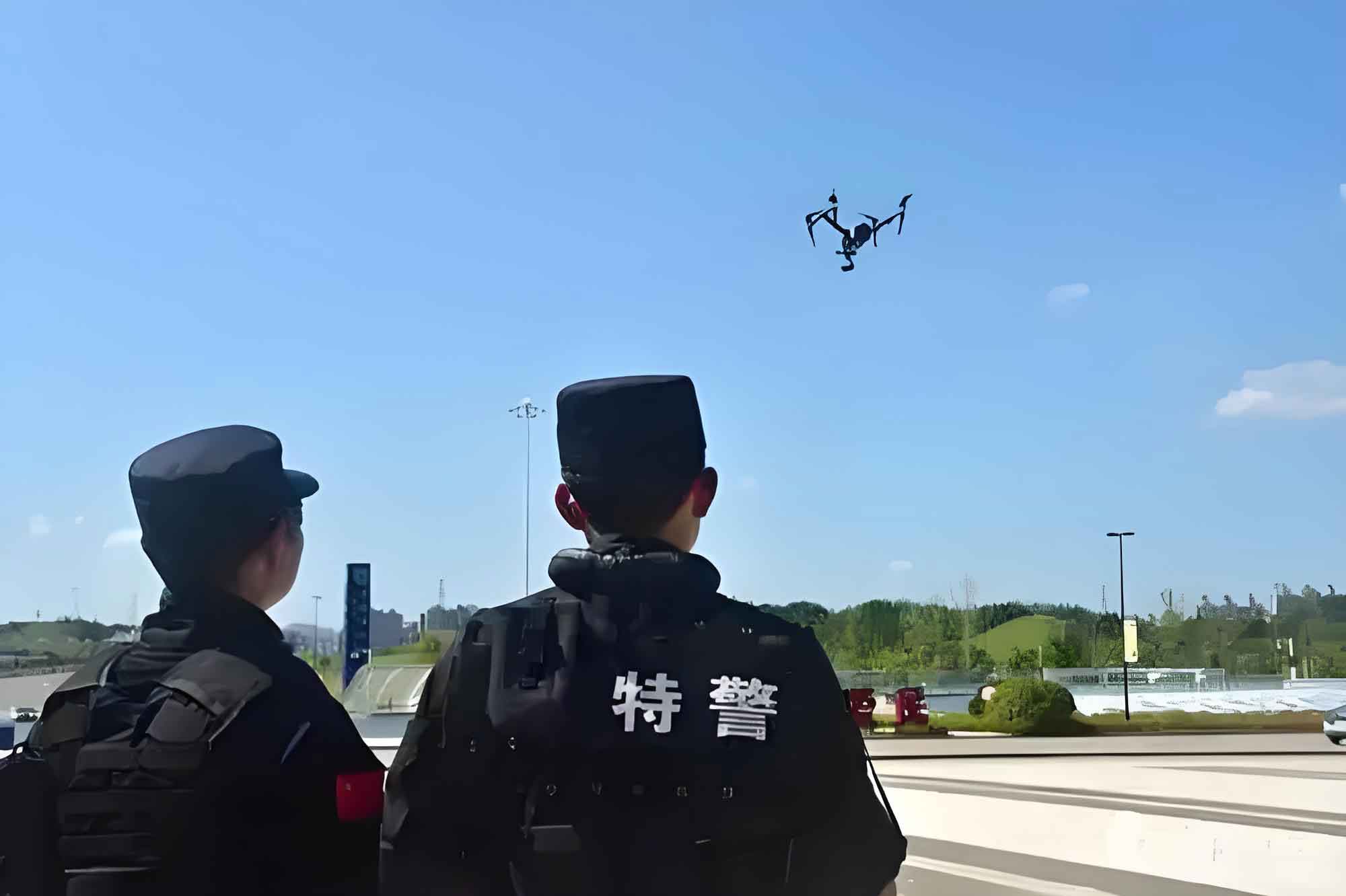
The advantages of a police UAV swarm over a single craft are not merely additive but multiplicative, stemming from emergent system-level capabilities. To clearly illustrate this, we can compare their characteristics across several critical operational dimensions.
| Operational Dimension | Single Police UAV | Police UAV Swarm |
|---|---|---|
| Spatial Coverage & Persistence | Limited by battery life and single sensor field-of-view. Requires physical movement to cover area, creating temporal gaps. | Can deploy units to cover vast areas simultaneously. Can implement relay/rotation strategies for near-persistent surveillance over a point or corridor. |
| Communications Resilience | Reliant on direct line-of-sight to ground control or existing cellular infrastructure. Severely hampered in urban canyons, indoors, or remote areas. | Can form an airborne mesh network, acting as communication relays for each other and for ground personnel, extending network reach into denied areas. |
| Fault Tolerance | Single point of failure. Loss of the UAV means complete mission failure. | Inherently redundant. The loss of one or several units can be compensated by others through network and task reconfiguration. |
| Operational Efficiency | One officer per UAV. Scaling operations requires linear scaling of human resources. | One officer or command station can manage an entire swarm, allowing a small team to achieve effects previously requiring a large force. |
| Situational Awareness | Provides a single, often narrow, perspective on a scene. | Can provide fused, multi-angle, and 3D situational awareness, crucial for tracking multiple targets or understanding complex scenes. |
Core Technological Pillars of the Swarm Command Network
1. Swarm Networking: The Ad-Hoc Wireless Mesh
The foundation of any police UAV swarm is its communication fabric. Traditional client-server network models like WiFi or 4G/5G, which rely on fixed infrastructure (routers, cell towers), are ill-suited for the dynamic, mobile, and potentially infrastructure-less environments where police UAVs operate. The solution lies in Mobile Ad-Hoc Network (MANET) technology, specifically the IEEE 802.11s amendment which standardizes wireless mesh networking. In an Ad-Hoc swarm network, every police UAV node acts not only as a communication endpoint but also as a router for other nodes. This creates a decentralized, peer-to-peer mesh topology.
The primary advantage is multi-hop routing. If police UAV A needs to send data to police UAV C but is out of direct radio range, it can route the data through an intermediate police UAV B that is within range of both. This enables the swarm to maintain connectivity over distances far greater than the range of any single radio and to navigate around physical obstructions. The network is self-forming and self-healing; as UAVs join, leave, or move, routing protocols (e.g., OLSR, BATMAN) dynamically update the network map to find the optimal paths. The probability of maintaining a connected network graph is crucial for swarm integrity. A simplified model for connectivity in a random geometric graph, often used to model MANETs, can be expressed as:
$$ P_{connected}(n, r) \approx 1 – n e^{- \pi \lambda r^2} $$
where $n$ is the number of nodes (police UAVs), $r$ is the transmission range, and $\lambda$ is the node density. This highlights the need for adequate density and range to ensure reliable swarm networking.
2. The Common Language: MAVLink Communication Protocol
While the Ad-Hoc network handles the raw delivery of data packets, the MAVLink protocol defines the structured language spoken by all entities in the police UAV swarm ecosystem. MAVLink is a lightweight, header-only message marshaling library designed for the resource-constrained environments of micro air vehicles. It operates on the application layer, typically using UDP at the transport layer for its low-latency, connectionless characteristics which suit real-time command and telemetry.
A MAVLink message is a byte stream with a precise format that ensures interoperability between different autopilots, ground control stations (GCS), and companion computers. The core structure of a MAVLink 2.3 packet is as follows:
| Field | Bytes | Description |
|---|---|---|
| STX (Start of Text) | 1 | Packet start marker (0xFD for MAVLink 2). |
| LEN (Length) | 1 | Length of the payload field (0-255 bytes). |
| INC FLAGS / COMPAT FLAGS | 1 / 1 | Protocol and compatibility flags. |
| SEQ (Sequence) | 1 | Packet sequence number for detecting lost packets. |
| SYS ID (System ID) | 1 | Unique ID of the originating system (e.g., a specific police UAV). |
| COMP ID (Component ID) | 1 | ID of the component within the system (e.g., autopilot, camera, gimbal). |
| MSG ID (Message ID) | 3 | Defines the type and meaning of the payload (e.g., `HEARTBEAT`, `GLOBAL_POSITION_INT`, `COMMAND_LONG`). |
| PAYLOAD | 0-255 | The actual data content of the message, format defined by MSG ID. |
| CRC-16 (Cyclic Redundancy Check) | 2 | Error-detecting code to ensure data integrity. Calculated over the entire packet up to the payload. The algorithm is: $$ CRC = \sum_{i=1}^{L+11} (Byte_i \ll 8) \mod G(x) $$ where $G(x)$ is the generator polynomial $x^{16} + x^{12} + x^5 + 1$, $L$ is the payload length, and $\ll$ denotes a left shift operation. |
| SIGNATURE (Optional) | 13 | Provides packet signing for authentication and tamper-proofing. |
This protocol allows a ground controller to send a `COMMAND_LONG` message with payload specifying `MAV_CMD_NAV_WAYPOINT` to the autopilot component (`COMP ID`) of a specific police UAV (`SYS ID`), directing it to fly to a specified coordinate. The swarm’s intelligence is built upon the continuous exchange of these structured messages.
3. The Swarm “Brain”: A Distributed Operating System
The Ad-Hoc network is the nervous system, and MAVLink is the language. The distributed operating system (OS) constitutes the brain of the police UAV swarm, providing the framework for resource management, task execution, and system reconfiguration. This OS is inherently a multi-agent system (MAS), where each police UAV is an intelligent agent with a degree of autonomy but is ultimately governed by swarm-level objectives.
The architecture of this OS is typically layered, distributed across a central Ground Control Station (GCS) and each individual UAV agent.
Ground Control Station (Master System Layer): This is the strategic command center. It hosts the primary mission planning interface, the global task decomposer, and the high-level swarm manager. Its responsibilities include:
- Global Task Reception & Decomposition: Accepting a high-level mission (e.g., “Search grid X for vehicle Y”) and breaking it down into atomic, assignable sub-tasks.
- Static Task Allocation: Performing the initial optimal mapping of sub-tasks to available police UAV agents based on their capabilities (sensor type, battery state, location).
- Global State Monitoring: Maintaining an overview of swarm health, task progress, and overall mission status.
UAV Agent (Daemon System Layer & Self-Organization Layer): Each police UAV runs a daemon that acts as its local executive.
- Daemon System Layer: Manages the UAV’s local resources, executes assigned atomic tasks (e.g., “fly to waypoint (lat, lon, alt)”), and reports status back to the Master System. It interprets MAVLink commands into low-level flight controller instructions.
- Self-Organization Layer: This is the core of swarm intelligence. It manages the local Ad-Hoc network links and participates in distributed coordination protocols. Its most critical function is swarm reconfiguration.
- Trigger: Reconfiguration is initiated by events like a UAV failure (mechanical, communication loss), a drastic change in the operational environment, or a new high-priority task.
- Process: Using local neighbor-to-neighbor communication, the swarm collaboratively adjusts its network topology and task assignments to compensate for the change. This process can be local (involving only a subset of the swarm) or global.
- Goal: To restore or maintain mission effectiveness with minimal disruption, embodying the swarm’s resilience.
The interaction between these layers follows a continuous cycle: The Master System issues tasks, the Daemon Systems execute and monitor, and the Self-Organization Layer adapts to perturbations, feeding status information back up the chain.
4. Intelligent Task Allocation: From Planning to Adaptation
Efficiently distributing work among the police UAV agents is a non-trivial optimization problem central to swarm performance. We categorize it into two phases: static allocation and dynamic re-allocation.
Static Task Allocation (Centralized Optimization): Performed at mission start by the Master System. Given a set of $m$ atomic tasks $T = \{t_1, t_2, …, t_m\}$ and a set of $n$ police UAV agents $U = \{u_1, u_2, …, u_n\}$ with associated capability vectors $\vec{C}_j$, the goal is to find an assignment mapping $A: T \rightarrow U$ that optimizes one or more objectives (e.g., total mission time, total energy consumed, balanced workload). This is a combinatorial optimization problem with $n^m$ possible assignments. It is often formulated as a Multi-Objective Optimization Problem (MOOP):
Minimize: $$ F(A) = [f_1(A), f_2(A), …, f_k(A)] $$
Subject to: $$ g_c(A) \leq 0, \quad c = 1, 2, …, C $$
where $f_i$ are objective functions (e.g., $f_1$ = makespan, $f_2$ = total distance) and $g_c$ are constraints (e.g., battery life, sensor compatibility). Algorithms like NSGA-II (Non-dominated Sorting Genetic Algorithm II) are commonly used to find Pareto-optimal solutions for such problems.
Dynamic Task Allocation (Distributed Coordination): During mission execution, the initial plan may become suboptimal due to the dynamic factors mentioned earlier. This is where distributed algorithms like the Contract Net Protocol (CNP) come into play within the Self-Organization Layer. When a UAV (acting as a manager) determines it cannot efficiently complete a task (due to low battery, obstacle blockage, etc.), it initiates a CNP cycle:
- Task Announcement: The manager broadcasts a “Call For Proposals” (CFP) message containing the task specification.
- Bidding: Neighboring UAVs (contractors) evaluate the task against their own state and compute a bid representing the estimated cost (time, energy) to perform it.
- Awarding: The manager collects bids, selects the best contractor (lowest cost), and awards the contract via an “Accept Proposal” message.
- Execution: The contractor executes the task and reports completion.
This market-based mechanism allows the police UAV swarm to dynamically rebalance its workload in a decentralized, robust manner without relying on constant central oversight.
Architecting the Three-Tier Police UAV Swarm Command Network
Synthesizing the pillars above, we can construct a holistic three-tier architecture for the police UAV swarm command network. This architecture delineates the functional layers from the physical network to the end-user application.
| Tier | Location | Components & Technologies | Primary Function |
|---|---|---|---|
| 1. Network Layer | All Nodes (GCS & UAVs) | IEEE 802.11s Ad-Hoc Mesh, MAVLink/UDP/IP Protocol Stack. | Provides the resilient, self-healing communication fabric for all data exchange within the swarm and with the ground station. |
| 2. System Layer | GCS: Master System, Static Allocator. UAVs: Daemon System, Dynamic Allocator (CNP). |
Distributed Swarm OS, Multi-Objective & Market-Based Task Allocation Algorithms. | Orchestrates swarm intelligence. Decomposes missions, allocates tasks, monitors execution, and manages adaptive reconfiguration. |
| 3. Application Layer | GCS (Integrated with Police Command Platform) | Mission-Specific Software Modules (Search, Track, Perimeter Patrol, Evidence Collection). | Provides the user interface for law enforcement officers. Translates operational intent (via maps, sketches, target descriptors) into high-level mission tasks for the System Layer. |
This tiered model ensures modularity and clarity. The Application Layer, potentially integrated via secure VPN into a department’s existing Computer-Aided Dispatch (CAD) or command platform, is where the human operator interacts. They define an area of interest and a target description. The Application Layer generates a “global task.” The System Layer’s Master System decomposes it, the Static Allocator assigns initial sub-tasks via MAVLink messages over the Network Layer. The UAV Daemons execute them, and the Self-Organization Layer with its CNP-driven Dynamic Allocator handles any necessary mid-mission adjustments.
Operational Application Scenarios for Police UAV Swarms
The true test of the command network lies in its application to real-world law enforcement scenarios. Let’s examine three interlinked core functions: wide-area search, persistent tracking, and live video feedback.
Scenario 1: Coordinated Wide-Area Search
Objective: Locate a missing person or a suspect vehicle within a large, defined geographical grid.
Process:
1. An officer at the command Application Layer defines the search polygon and inputs target descriptors (e.g., “red sedan,” “person in blue jacket”).
2. The Application Layer sends a `SEARCH_GRID` global task to the System Layer.
3. The Master System’s Static Allocator decomposes the grid into $n$ sub-cells, where $n$ is the number of available search-capable police UAVs. It solves an optimization to minimize total search time, considering UAV start positions. The assignment $A_{search}$ is derived.
4. Each UAV receives its assigned sub-cell coordinates via MAVLink (`MISSION_ITEM` messages) and begins a systematic coverage pattern (e.g., lawnmower pattern). On-board vision systems process video feed for the target descriptor.
5. Upon detection, the UAV’s Daemon System sends a `TARGET_FOUND` message with GPS coordinates and confidence score to the Master System.
6. The Application Layer displays all UAV positions and the found target location on the operational map for the commander.
Scenario 2: Dynamic Multi-Hop Tracking
Objective: Maintain continuous surveillance on a moving target after initial detection.
Process:
1. Following a successful search, the officer selects the target icon and issues a `TRACK_TARGET` command.
2. The System Layer identifies the UAV closest to the target (UAVtracker) and commands it to follow using its gimbal and vision-based tracking.
3. Simultaneously, the Self-Organization Layer continuously monitors the quality of the communication link between UAVtracker and the GCS. As the target moves, this link may degrade.
4. A key network metric, Link Quality (LQ), is assessed. If $LQ_{tracker \rightarrow GCS} < LQ_{threshold}$, the reconfiguration trigger is activated. The Self-Organization Layer uses a CNP-like mechanism to command other UAVs to reposition themselves to form an optimal multi-hop communication relay chain between UAVtracker and the GCS.
5. The tracking and relay chain adaptation is a continuous process, ensuring the command network maintains a reliable data pipeline from the moving tracker to the stationary command post.
Scenario 3: Intelligent Live Video Feed & Sensor Control
Objective: Provide stable, relevant live video and sensor data from the swarm to the ground commander.
Process:
1. The officer requests `LIVE_VIDEO` from the tracked target. The Application Layer sends a `VIDEO_START_REQUEST` to the UAVtracker.
2. UAVtracker‘s Daemon initiates H.264/265 video stream encoding and transmits it via the MAVLink `DATA_TRANSMISSION_HANDSHAKE` and subsequent `ENCAPSULATED_DATA` messages over the relay mesh network.
3. The System Layer implements view management logic. If the target moves such that it is at the edge of UAVtracker‘s camera frame, the Master System can send MAVLink `MAV_CMD_DO_GIMBAL_MOVE` commands to adjust the pitch/yaw, or even command a handover of the primary tracking and video role to a better-positioned UAV using the dynamic allocator.
4. For multi-sensor fusion (e.g., thermal imaging), the officer can request feeds from different UAVs. The System Layer manages these parallel data streams, ensuring network bandwidth is allocated appropriately to maintain the quality of service for the highest-priority feeds.
Conclusion and Future Trajectories
The construction of an effective command network is the pivotal step in transitioning from isolated police UAV tools to a cohesive force multiplier in the form of an intelligent police UAV swarm. This network, built upon the robust foundations of Ad-Hoc mesh networking, the MAVLink protocol, a distributed operating system, and adaptive task allocation algorithms, enables emergent capabilities that fundamentally enhance law enforcement’s operational reach, resilience, and efficiency. The three-tier architecture provides a clear blueprint for integrating this technology into existing command structures, allowing officers to manage complex, multi-agent missions through intuitive high-level commands.
The future development of police UAV swarm networks will likely focus on several frontiers. First, the integration of advanced Artificial Intelligence and Machine Learning (AI/ML) for fully autonomous cooperative behaviors, such as predictive target movement analysis and adaptive swarm formation flying in complex urban canyons. Second, enhancing cybersecurity is paramount; the MAVLink signature field and network encryption must be fortified against spoofing and jamming attacks targeting critical police UAV operations. Third, standardization of swarm interfaces and behaviors will be crucial for interoperability between different units, agencies, and manufacturers. Finally, research into human-swarm interaction (HSI) is needed to develop interfaces that allow a single operator to effectively command larger swarms without cognitive overload. As these advancements mature, the police UAV swarm, guided by its intelligent command network, will undoubtedly become an indispensable asset in public safety, enabling proactive policing and more effective responses to the dynamic challenges of modern law enforcement.