
From my perspective, the integration of Police Unmanned Aerial Vehicles (UAVs) into narcotics suppression, specifically for the detection and eradication of illicitly cultivated opium poppy, represents a significant paradigm shift in law enforcement methodology. As a tool, the police UAV has transitioned from a novel gadget to a cornerstone of modern, intelligence-led policing strategies against drug crop cultivation. This analysis aims to deconstruct the application of police UAV systems in this domain, examining their operational advantages, current implementation challenges, and proposing a multifaceted framework for enhancing their strategic efficacy. The core of this discussion will repeatedly emphasize the transformative role of the police UAV as a force multiplier.
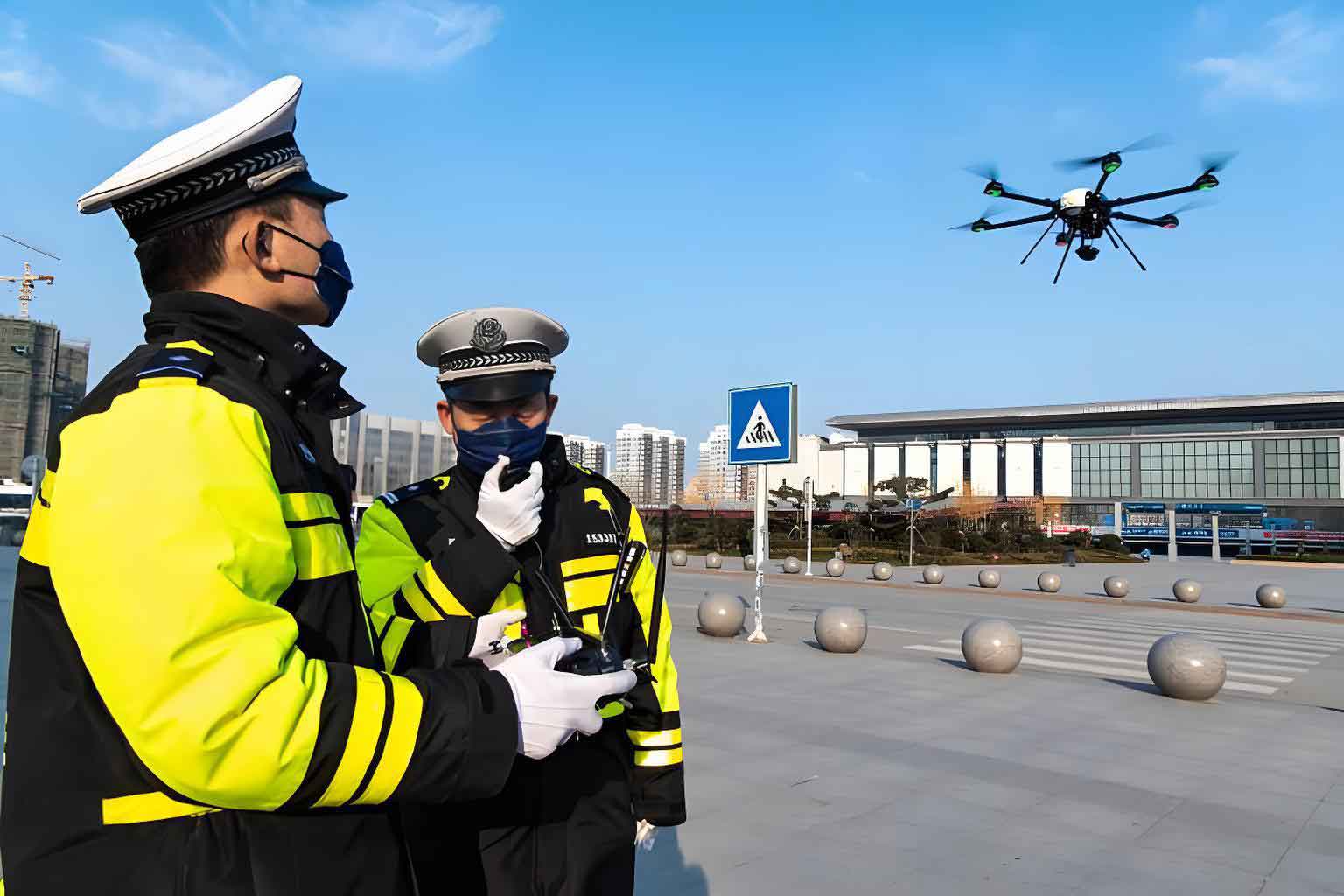
Conceptually, a police UAV system is far more than just the aerial vehicle itself. It is an integrated suite of subsystems designed for specific mission profiles. Based on technical standards, a typical system for poppy detection can be broken down as follows:
| Subsystem | Primary Components | Function in Poppy Detection |
|---|---|---|
| Flight & Control | Airframe, Propulsion, Flight Controller, Navigation (GPS/INS) | Provides stable, navigable platform for aerial surveillance over complex terrain. |
| Mission Payload | High-resolution Camera, Multispectral/ Hyperspectral Sensors, Gimbal | Captures visual and spectral data; the key sensor for identifying poppy signatures. |
| Ground Control | Remote Controller, Ground Station Computer, Display | Allows the pilot to maneuver the police UAV and monitor real-time data feeds. |
| Data Link & Processing | Radio Transmitter/Receiver, Data Storage, Processing Software | Transmits data to the ground, stores imagery, and enables preliminary analysis. |
The operational value of the police UAV in countering poppy cultivation is profound and multi-dimensional. Firstly, it creates a decisive “air-ground integration” strategy. Traditionally, ground teams were hindered by inaccessible terrain—dense forests, remote mountains, or fortified private properties. The police UAV negates these obstacles, offering a God’s-eye view and transforming the operational landscape from 2D to 3D. This capability allows for the formation of minimal tactical units (a pilot plus a few ground verification officers), replacing inefficient, labor-intensive sweeps.
Secondly, it institutionalizes a “Intelligence Gathering + Evidence Fixation + Rapid Response” workflow. The pre-UAV model was predominantly reactive, relying on tip-offs and haphazard manual searches. Now, the police UAV serves as an “aerial sentinel,” conducting systematic, wide-area reconnaissance. Upon detecting a suspicious signature, it can immediately geo-tag the location and capture high-resolution imagery for evidentiary purposes before dispatching a targeted ground team. This workflow, centered on the police UAV’s capabilities, enhances precision and relieves frontline pressure.
Mathematically, the efficiency gain can be conceptualized. Let the traditional manual search efficiency over an area \(A\) be \(E_m\), which is low and decreases with terrain complexity \(C_t\). The police UAV-assisted efficiency \(E_{uav}\) is significantly higher and less impacted by \(C_t\). The total operational effectiveness \(O\) can be modeled as a function of area coverage rate \(R_c\) and target identification accuracy \(A_i\):
$$ O = f(R_c, A_i) $$
For a police UAV with a sensor footprint width \(w\) and flight velocity \(v\), the theoretical coverage rate over time \(t\) is:
$$ R_{c(uav)} \approx w \cdot v \cdot t $$
Whereas for ground teams with number of personnel \(n\) and effective search front \(f\), it is:
$$ R_{c(m)} \approx n \cdot f \cdot t $$
Given that \(w\) for a UAV is orders of magnitude larger than \(n \cdot f\) for practical ground teams, the superiority of the police UAV in \(R_c\) is clear, directly boosting \(O\).
Thirdly, this technology enables a strategic shift from passive reaction to proactive prevention. The visible, recurring use of police UAV for surveillance acts as a powerful deterrent. Furthermore, the data collected over time allows law enforcement to analyze trends, identify high-risk zones, and allocate resources preemptively, fundamentally changing the nature of the counter-cultivation campaign.
However, the application landscape for police UAV in poppy detection, from my observation, presents a picture of rapid but uneven development. The adoption began scarcely over a decade ago but has accelerated with national anti-drug campaigns. Despite this growth, most applications remain in a nascent stage, heavily reliant on “aerial photography + manual visual identification.” Many units deploy commercial, off-the-shelf drones repurposed for police work, which lack the specialized sensors, endurance, and analytical software needed for efficient, large-scale detection. This leads to a critical dependency on the pilot’s skill in both flying and visually identifying poppies from often ambiguous imagery.
The distribution and utilization are also inconsistent. While economically developed or high-risk regions may have dedicated police UAV squads, others lack equipment entirely or face the “have but cannot use” dilemma due to budget constraints, lack of trained personnel, and inadequate maintenance frameworks. This disparity creates vulnerabilities. Moreover, management is often fragmented. There is a tendency towards “form over function,” where procurement focuses on hardware specs rather than integrated solutions, training, and the development of standard operating procedures (SOPs) tailored for the police UAV’s narcotics mission.
Delving deeper, several systemic problems hinder the optimal deployment of police UAVs in this field:
1. Regulatory and Legal Ambiguity: A robust legal framework specifically governing police UAV use is underdeveloped. Issues concerning flight authorization in different airspaces, privacy protections during surveillance, and the admissibility of UAV-gathered evidence in court require clearer statutes. The absence of nationwide, police-specific regulations leads to operational hesitation and potential legal challenges.
2. Systemic Isolation: Often, the police UAV operates as an isolated tool. The data it collects exists in a silo, not seamlessly integrated into broader police information and command systems. This disconnect prevents real-time situational awareness for command centers and hinders the aggregation of detection data for long-term, big-data analysis to predict cultivation patterns.
3. Low Level of Autonomy and Intelligence: The reliance on commercial-grade platforms means most systems lack advanced automation. Key functions like automated flight planning for complete area coverage, real-time on-board image analysis using AI to flag suspicious plants, and automatic report generation are missing. This keeps the human operator firmly in the loop for all cognitive tasks, limiting scale and speed.
4. Lack of Specialized Tactics, Techniques, and Procedures (TTPs): Effective use of a police UAV is not just about flying. It requires developed TTPs for different scenarios: how to systematically scan a village versus a forest, optimal flight patterns for slope coverage, techniques for identifying camouflaged plots intercropped with legal plants. The lack of formally documented and trained TTPs results in suboptimal and ad-hoc mission execution.
5. Critical Shortage of Qualified Personnel: There is a deficit of pilots who are both expert aviators and knowledgeable in narcotics cultivation patterns. Many operators receive only basic flight training, lacking expertise in mission planning, sensor exploitation, legal guidelines, and data management specific to the police UAV’s anti-poopy role.
To elevate the effectiveness of the police UAV in eradicating illicit poppy cultivation, a comprehensive, multi-layered enhancement framework is necessary. This framework must address legal, institutional, human resource, and technological dimensions.
A. Legal and Institutional Layer:
The cornerstone must be the establishment of a clear legal foundation. This involves enacting laws that define the lawful use of police UAV for surveillance, evidence collection, and the associated privacy safeguards. Concurrently, detailed internal SOPs must be developed, covering the entire lifecycle: from mission authorization and pre-flight checks to in-flight protocols, evidence handling chains of custody, and post-mission data storage. Institutionally, funding models need innovation. “UAV-as-a-Service” leases or public-private partnerships can make advanced police UAV capabilities accessible to smaller departments without large capital outlays. Furthermore, inter-agency collaboration (e.g., with forestry, agriculture) and community engagement during UAV operations can amplify deterrent and educational effects.
B. Human Resource Development Layer:
Investment in human capital is paramount. Police academies and universities should incorporate police UAV operations into their curricula, creating a pipeline of proficient operators. Training must go beyond stick skills to include legal aspects, mission-specific TTPs, basic sensor interpretation, and maintenance. A formal certification and rating system for police UAV pilots, similar to manned aviation, should be established. Partnerships with UAV manufacturers for train-the-trainer programs and recurrent training can ensure skills remain current with evolving technology.
C. Technological and Tactical Layer:
This is where the core capabilities of the police UAV can be radically enhanced. The workflow must be standardized and technology-infused.
| Phase | Key Actions | Technology/Tactic Enhancement |
|---|---|---|
| 1. Mission Planning | Define search area, schedule, resources based on risk analysis. | Use historical data & AI to create risk heat maps, optimizing patrol priority for the police UAV. |
| 2. Aerial Survey | Execute flight, capture data, perform real-time analysis. | Employ autonomous flight planning for full coverage. Use AI-powered real-time analytics to highlight poppy signatures (e.g., via flower color/ shape in visible spectrum or unique spectral fingerprint in multispectral data), reducing pilot workload. The effectiveness can be modeled by the AI’s precision \(P\) and recall \(R\): $$ A_i = \frac{2 \cdot P \cdot R}{P + R} $$ This F1-score directly influences the operational effectiveness \(O\). |
| 3. Ground Verification & Action | Dispatch team to confirmed location for eradication and investigation. | Integrated systems provide ground teams with precise coordinates, imagery, and navigation aid directly to tablets in the field. |
Furthermore, technological integration is critical. The isolated police UAV must become a node in a “Smart Policing” network. An integrated narcotics suppression platform should connect the UAV’s data feed directly to central command and cloud-based analytics engines. This allows for real-time monitoring, coordinated response, and, most importantly, the aggregation of data for predictive policing models. The future lies in intelligent, networked systems where a police UAV can autonomously patrol, detect, classify, report, and even track changes over time.
In conclusion, the police UAV has undeniably revolutionized the fight against illicit opium poppy cultivation, offering unmatched advantages in reach, efficiency, and deterrence. However, its full potential remains constrained by legal ambiguities, institutional gaps, a shortage of specialized talent, and technological limitations in autonomy and integration. By implementing a holistic framework that simultaneously strengthens the legal foundation, invests deeply in human capital, develops sophisticated TTPs, and pursues technological integration and intelligence, law enforcement agencies can transform the police UAV from a powerful tactical tool into the central pillar of a proactive, data-driven, and overwhelmingly effective strategic counter-cultivation campaign. The evolution of the police UAV in this domain is a continuous journey toward greater automation, connectivity, and intelligence, promising even more profound impacts on global narcotics suppression efforts.