
In modern agriculture, the adoption of advanced technologies has become crucial for enhancing crop protection and ensuring food security. As a researcher focused on agricultural innovation, I have observed the growing importance of crop spraying drones in addressing challenges related to pest and disease control, particularly in regions with complex terrain. This study aims to provide a comprehensive analysis of the performance of multi-rotor spraying UAVs in corn fields, emphasizing their efficiency, effectiveness, and economic benefits. Through field experiments and data-driven evaluations, we explore how these crop spraying drones outperform traditional methods, while also addressing existing limitations and proposing solutions for wider adoption.
The increasing prevalence of corn pests and diseases, such as corn borers and leaf blights, has heightened the need for precise and efficient control measures. Traditional manual spraying methods often fall short in terms of coverage and speed, especially in hilly or fragmented landscapes. In contrast, spraying UAVs offer a promising alternative by enabling uniform chemical application, reducing labor dependency, and improving overall crop health. This article delves into the operational aspects of crop spraying drones, including their design parameters, field performance, and impact on pest management strategies. By integrating quantitative analyses, such as tables and mathematical models, we aim to provide a detailed understanding of how spraying UAVs can revolutionize agricultural practices.
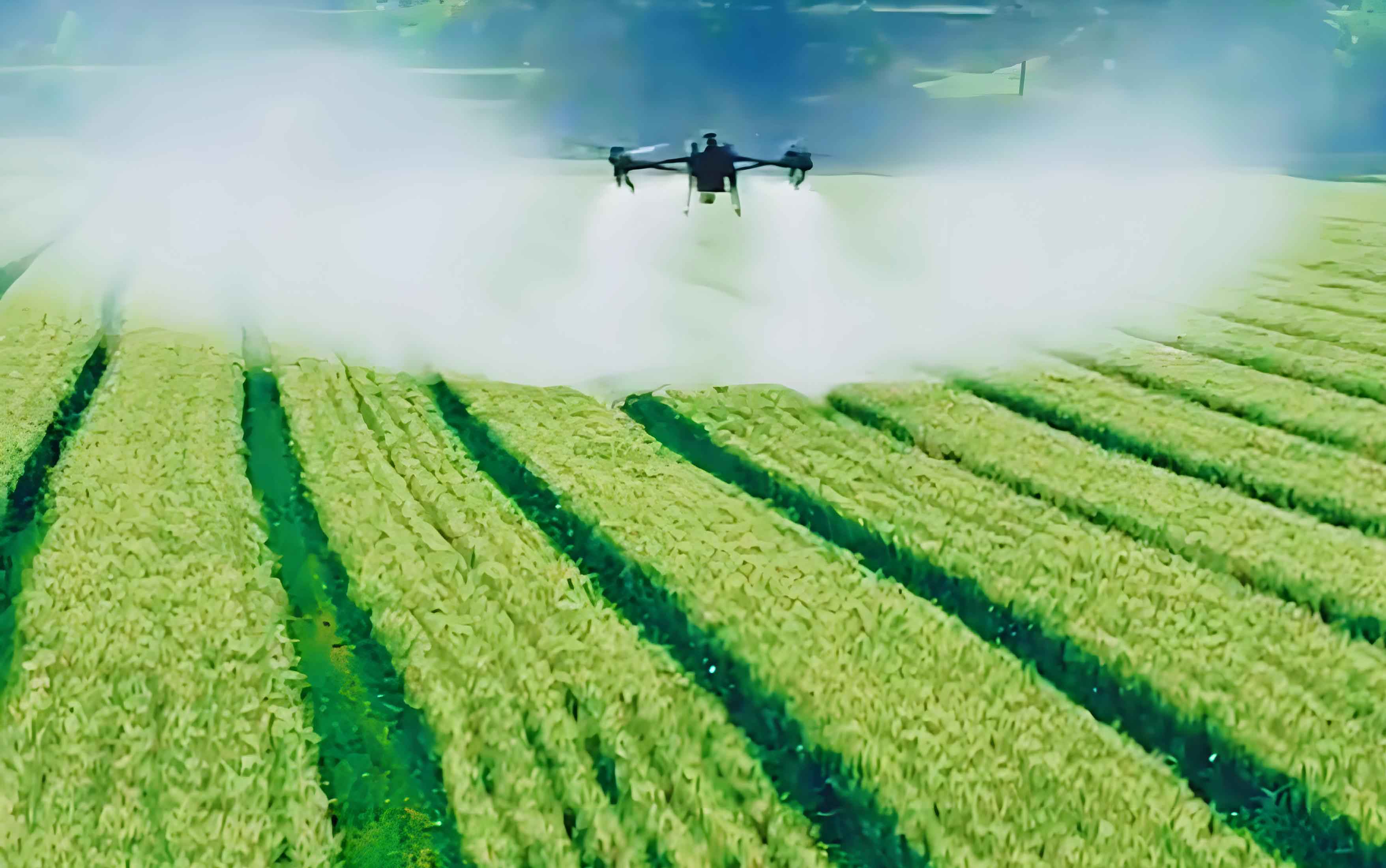
To assess the capabilities of crop spraying drones, we conducted a series of field trials in corn-growing areas characterized by varied topography. The primary objective was to compare the performance of a multi-rotor spraying UAV with conventional electric backpack sprayers. Key metrics included operational efficiency, droplet deposition patterns, pest and disease control efficacy, and cost-effectiveness. The spraying UAV used in this study featured advanced centrifugal nozzles and a robust downwash airflow system, which enhanced chemical penetration and coverage across different plant layers. Meanwhile, the traditional sprayer served as a baseline for evaluating improvements brought by drone technology.
The experimental setup involved dividing the study area into multiple plots, each subjected to different treatment methods: one managed with the crop spraying drone, another with manual spraying, and a control group without intervention. Data collection focused on parameters like flight speed, spray width, and application time for the spraying UAV, as well as labor inputs and chemical usage for manual methods. We employed water-sensitive papers placed at upper, middle, and lower sections of corn plants to capture droplet distribution, and we monitored pest incidence and disease severity over time to calculate control rates. Additionally, economic analyses factored in costs related to labor, energy, equipment depreciation, and chemical inputs.
In terms of operational efficiency, the crop spraying drone demonstrated significant advantages over manual methods. The table below summarizes key parameters and results from our trials, highlighting the time and area coverage differences. For instance, the spraying UAV achieved a much higher work rate due to its automated flight patterns and broader spray swath. This efficiency is particularly beneficial in large-scale or topographically challenging fields, where rapid response to pest outbreaks is critical. The data clearly show that the crop spraying drone reduces the time required per unit area, allowing farmers to cover more ground with less human effort.
| Parameter | Spraying UAV | Manual Sprayer |
|---|---|---|
| Total Area Covered (hectares) | 2.0 | 0.5 |
| Tank Capacity (L) | 50 | 20 |
| Flight/Speed (m/s) | 4 | N/A |
| Spray Width (m) | 8 | 4 |
| Time per Hectare (min) | 5 | 112.5 |
| Average Operation Time (min) | 20 | 200 |
Mathematically, the operational efficiency of a crop spraying drone can be expressed using the formula for effective coverage area: $$ E = v \times w \times t $$ where \( E \) is the effective coverage area in square meters, \( v \) is the flight speed in meters per second, \( w \) is the spray width in meters, and \( t \) is the operation time in seconds. For the spraying UAV in our study, with \( v = 4 \, \text{m/s} \), \( w = 8 \, \text{m} \), and \( t = 1200 \, \text{s} \) (20 minutes), the calculated coverage is: $$ E = 4 \times 8 \times 1200 = 38,400 \, \text{m}^2 $$ or approximately 3.84 hectares per session. This contrasts sharply with manual methods, which rely on slower, human-paced movements and narrower spray widths, resulting in lower overall efficiency.
Droplet deposition is a critical factor in determining the effectiveness of pesticide application. Our analysis revealed that the spraying UAV produced finer and more uniform droplets compared to the manual sprayer, leading to better penetration into the corn canopy. The distribution of droplets followed a pattern where density decreased from the upper to lower plant sections, but the drone’s downwash airflow improved coverage in middle and lower layers. This is essential for targeting pests like corn borers that inhabit lower plant regions. The data from water-sensitive papers were analyzed using a deposition model, where droplet density \( D \) at height \( h \) can be approximated by: $$ D(h) = D_0 e^{-k h} $$ Here, \( D_0 \) is the initial droplet density at the top, \( k \) is a decay constant influenced by airflow and nozzle design, and \( h \) is the height from the top. For the spraying UAV, \( k \) was lower, indicating better penetration, whereas manual spraying showed a steeper decay, reducing efficacy at lower heights.
The pest and disease control results further underscored the superiority of the crop spraying drone. As shown in the table below, the drone achieved higher prevention rates for both insect pests and fungal diseases compared to manual methods. This improvement is attributed to the precise chemical placement and enhanced droplet adhesion facilitated by the UAV’s technology. Over multiple observation periods, the drone-treated plots maintained lower pest populations and disease incidence, contributing to healthier crop yields. The control efficacy \( C \) can be calculated as: $$ C = \left(1 – \frac{P_t}{P_c}\right) \times 100\% $$ where \( P_t \) is the pest or disease index in treated plots and \( P_c \) is that in control plots. For the spraying UAV, \( C \) values exceeded 80% for both pests and diseases, demonstrating its reliability in integrated pest management programs.
| Treatment | Pest Control Efficacy (%) | Disease Control Efficacy (%) |
|---|---|---|
| Spraying UAV | 83.3 | 87.1 |
| Manual Sprayer | 76.7 | 83.9 |
| Control | 0 | 0 |
Economic analysis highlighted the cost-saving potential of adopting crop spraying drones. Although the initial investment in a spraying UAV is higher, the long-term benefits include reduced labor costs and increased crop yields. The table below breaks down the per-hectare costs for both methods, showing that the drone option is more economical over time. Key factors include lower manpower requirements and minimized chemical waste due to targeted application. The net economic benefit \( B \) can be derived from: $$ B = (Y_d – Y_m) \times P_y – (C_d – C_m) $$ where \( Y_d \) and \( Y_m \) are yields for drone and manual methods, respectively, \( P_y \) is the crop price per unit, and \( C_d \) and \( C_m \) are the total costs per hectare. In our study, the spraying UAV resulted in a positive \( B \), reinforcing its viability for farmers seeking sustainable practices.
| Cost Component | Spraying UAV (USD/ha) | Manual Sprayer (USD/ha) |
|---|---|---|
| Labor | 25 | 150 |
| Energy | 10 | 2.5 |
| Equipment Depreciation | 1.25 | 0 |
| Chemicals | 75 | 75 |
| Total Cost | 111.25 | 227.5 |
Despite these advantages, the widespread adoption of crop spraying drones faces several challenges. Limited battery life and payload capacity restrict operational duration, necessitating frequent recharging or battery swaps during large-scale applications. Environmental factors, such as wind and obstacles in complex terrains, can impede flight stability and safety. Additionally, the high upfront costs and need for specialized operator training pose barriers for small-scale farmers. To address these issues, we recommend investing in research to improve energy storage systems, such as developing higher-capacity batteries or hybrid power sources for spraying UAVs. Enhanced AI-based navigation and obstacle avoidance algorithms could also mitigate flight risks in varied landscapes.
Policy support and subsidies play a vital role in promoting the use of crop spraying drones. Governments and agricultural agencies should consider increasing financial incentives for farmers to adopt this technology, particularly through purchase subsidies and training programs. Furthermore, fostering professional drone operator networks can help build local capacity and ensure safe, effective deployments. By integrating spraying UAVs into broader agricultural extension services, we can facilitate knowledge transfer and maximize their impact on crop productivity. As technology evolves, continuous innovation in drone design and application techniques will be essential to overcome current limitations and unlock the full potential of crop spraying drones in global agriculture.
In conclusion, our evaluation confirms that multi-rotor spraying UAVs offer a transformative approach to corn pest and disease management. They excel in operational efficiency, droplet deposition accuracy, and economic returns compared to traditional methods. However, overcoming challenges related to续航, cost, and skills requires collaborative efforts among researchers, policymakers, and farmers. As we move forward, the continued refinement of crop spraying drone technology will undoubtedly contribute to more resilient and sustainable agricultural systems, ensuring food security in the face of growing environmental pressures.