
In modern military and civilian communication systems, medium-long wave bands (100 kHz to 300 kHz) offer unique advantages in terms of propagation stability, penetration capability, and anti-interference characteristics. However, conventional fixed-ground antenna stations for these bands suffer from low mobility, long construction periods, and vulnerability to physical attacks. To overcome these limitations, we propose a novel flexible antenna system deployed by an unmanned aerial vehicle (UAV), which is referred to as a China UAV suspended flexible antenna. This study investigates the steady-state deformation behavior and radiation performance of such an antenna when subjected to wind disturbances. Our work aims to provide a theoretical foundation for rapidly deployable, highly mobile, and robust medium-long wave communication systems.
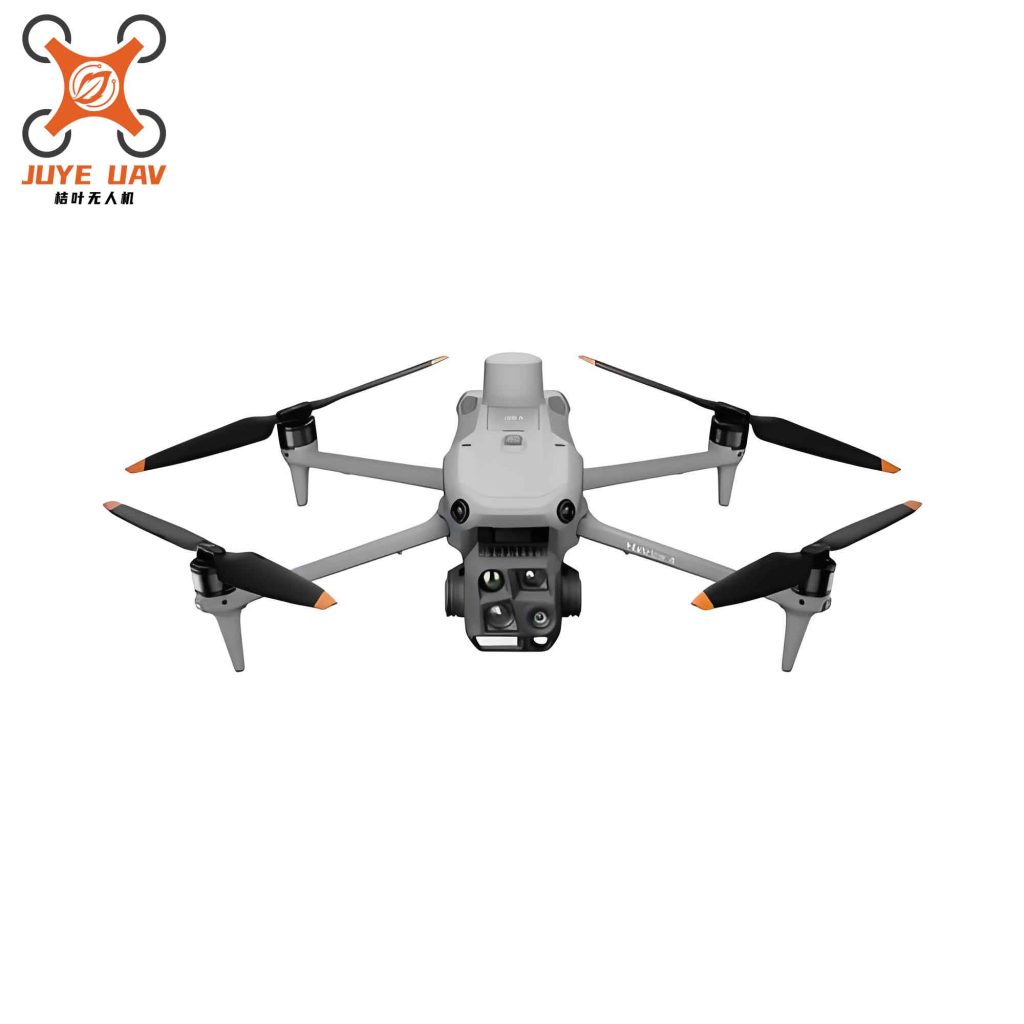
The proposed antenna system consists of three primary components: the China UAV platform, which serves as the suspension point; a bottom feed and equipment pod integrating the power amplifier and signal source; and the flexible antenna radiator made of copper wire with a diameter of 2 mm. The antenna length is selected as 350 m for operation at 200 kHz, corresponding to an electrical length of approximately 0.23λ. This length ensures effective impedance matching and avoids the formation of reverse currents that cause radiation pattern splitting when the electrical length exceeds 0.5λ.
Theoretical Foundation
We treat the vertically suspended flexible antenna as a lossy transmission line of length L, characteristic impedance Z₀, and propagation constant γ. For an open-circuit termination, the input impedance Zin is expressed as:
$$Z_{in} = \frac{Z_0}{\tanh(\gamma L)}$$
where γ = α + jβ, with β = 2π/λ being the phase constant and α the attenuation constant representing both ohmic and radiation losses.
The current distribution along the antenna is given by:
$$I(z) = \frac{I_0 \sin[k(h – z)]}{\sin(kh)}$$
where I₀ is the input current, h is the antenna physical height, and k is the wave number.
The effective height he, which directly influences the radiation resistance, is defined as:
$$h_e = \frac{1}{I_0} \int_0^h I(z) \, dz = \frac{1 – \cos(kh)}{k \sin(kh)} = \frac{\tan(kh/2)}{k/2}$$
When the antenna height h is much smaller than the wavelength (h << λ), the effective height can be approximated as:
$$h_e \approx \frac{h}{2}$$
The radiation resistance Rr is then given by:
$$R_r \approx 240\pi^2 \left( \frac{h_e}{\lambda} \right)^2 \approx 10\pi^2 \left( \frac{h}{\lambda} \right)^2$$
This relationship shows that the radiation resistance is proportional to the square of the physical height. The radiation efficiency η is expressed as:
$$\eta = \frac{P_r}{P_{in}} = \frac{R_r}{R_r + R_L}$$
where Pr is the radiated power, Pin is the input power, and RL is the loss resistance. These formulas are valid under the assumption of a perfectly conducting ground and specific size conditions.
Electromagnetic Simulation Analysis
We conducted electromagnetic simulations using FEKO software based on the Method of Moments (MoM). Various antenna lengths corresponding to electrical lengths of λ/20, λ/4, λ/2, and 3λ/4 were analyzed at 200 kHz. The simulation results are summarized in the following tables.
| Electrical Length (L/λ) | Current Distribution | Pattern Morphology |
|---|---|---|
| 0.05 | Nearly uniform, in-phase | Single main lobe, omnidirectional |
| 0.25 | Moderate taper, in-phase | Single main lobe, omnidirectional |
| 0.50 | Zero crossing at midpoint | Single lobe, onset of beam narrowing |
| 0.75 | Reverse current present | Main lobe splitting, pattern degradation |
The radiation pattern and current distribution analyses reveal that when L/λ exceeds 0.5, reverse currents appear on the antenna, leading to main lobe splitting and significant radiation performance deterioration. Therefore, we constrain the antenna electrical length to no more than 0.5λ for practical design.
We further investigated the impedance characteristics by sweeping antenna lengths from 250 m to 375 m at 200 kHz. The key results are presented below.
| Length (m) | Electrical Length (λ) | Input Resistance (Ω) | Input Reactance (Ω) | Reflection Coefficient (dB) |
|---|---|---|---|---|
| 250 | 0.17 | 12.4 | -1850 | -8.2 |
| 300 | 0.20 | 18.7 | -11.5 | |
| 340 | 0.23 | 24.1 | -520 | -18.3 |
| 345 | 0.23 | 25.0 | -490 | -19.8 |
| 350 | 0.23 | 25.8 | -460 | -18.6 |
| 355 | 0.24 | 26.5 | -430 | -17.0 |
| 360 | 0.24 | 27.3 | -400 | -15.5 |
| 375 | 0.25 | 30.1 | -320 | -12.0 |
The simulation results indicate that the antenna with a length of 345 m exhibits the lowest reflection coefficient at 200 kHz, indicating the best impedance matching. However, considering practical constraints of the China UAV platform’s winch mechanism and load capacity, we selected a total antenna length of 350 m. This length provides a 10 m operational margin for retraction and deployment adjustments, balancing performance and operational flexibility.
Dynamic Modeling of Wind-Induced Deformation
To quantify the effect of wind on the antenna’s shape and radiation performance, we established a nonlinear dynamic model based on the microelement method and catenary theory. The model incorporates the following assumptions: the China UAV maintains a fixed hovering altitude; the antenna is inextensible and remains tensioned; torsional degrees of freedom are neglected; and only steady-state aerodynamic loads from average wind are considered, ignoring instantaneous turbulence.
Two coordinate systems are defined: an inertial coordinate system Oxyz with origin at the ground connection point and Zg axis pointing upward, and a body coordinate system that moves with each antenna microelement, comprising tangential (τ), normal (η), and binormal (b) unit vectors. The force analysis for an infinitesimal element ds at position s along the antenna yields the dynamic equation from Newton’s second law:
$$\frac{\partial}{\partial s} \left[ T(s) \mathbf{g} \tau \right] + \mathbf{f}_g + \mathbf{f}_a = \rho_l \frac{\partial^2 \mathbf{R}}{\partial t^2}$$
where T(s) is the tension vector, τ is the tangential unit vector, fg = -ρlg k is the gravitational force per unit length, ρl is the linear mass density, g is gravitational acceleration, k is the unit vector along the Zg axis, fa is the aerodynamic force per unit length, and R(s,t) is the position vector.
For steady-state conditions (∂²R/∂t² = 0), the equation simplifies to:
$$\frac{d\mathbf{T}}{ds} + \mathbf{f}_g + \mathbf{f}_a = 0$$
The aerodynamic force fa is calculated using the Morison formula, neglecting tangential drag and retaining only normal drag:
$$\mathbf{f}_a = -\frac{1}{2} \rho_a C_D D |V_n| V_n$$
where ρa is air density, CD is the normal drag coefficient, D is the antenna equivalent diameter, and Vn is the normal component of the relative wind velocity.
We non-dimensionalize the governing equations by introducing the following dimensionless parameters:
$$\xi = \frac{s}{L}, \quad \mathbf{r} = \frac{\mathbf{R}}{L}, \quad t = \frac{\tau}{\rho_l g L}, \quad \mathbf{v}_w = \frac{V_w}{V_{ref}}$$
where L is the total antenna length and Vref is the characteristic wind speed. Substituting these into the steady-state equation yields the dimensionless form:
$$\frac{d\mathbf{t}}{d\xi} + \mathbf{k} + \frac{1}{2} \alpha |V_n| V_n = 0$$
where α = ρaCDDLV²ref / (2ρlgL) is the dimensionless aerodynamic parameter representing the relative importance of aerodynamic force to gravity, and k is the dimensionless gravity direction vector.
The boundary conditions are: at the ground end (ξ = 0), the position is fixed; at the UAV suspension end (ξ = 1), the position is determined by the China UAV’s hovering height h.
Wind Condition Modeling and Deformation Simulation
We simulated three typical wind conditions based on the Beaufort scale: light wind (3 m/s, Beaufort force 2), moderate wind (7 m/s, Beaufort force 4), and strong wind (12 m/s, Beaufort force 6). The wind speed variation with altitude is modeled using the power law:
$$V(z) = V_{ref} \left( \frac{z}{z_{ref}} \right)^\nu$$
where ν is the wind shear exponent. The steady-state antenna shapes under these conditions were numerically solved using the shooting method applied to the nonlinear dynamic model. The shape functions for each condition were obtained as parameterized equations.
For light wind conditions (3 m/s):
Horizontal displacement: u(ξ) = 17.5 × ξ × (1 – ξ²)
Vertical coordinate: v(ξ) = L × (ξ – 0.35 × ξ²)
For moderate wind conditions (7 m/s):
Horizontal displacement: u(ξ) = 52.5 × ξ × (1 – ξ1.5)
Vertical coordinate: v(ξ) = L × (ξ – 1.75 × ξ²)
For strong wind conditions (12 m/s):
Horizontal displacement: u(ξ) = 105 × ξ × (1 – ξ1.2)
Vertical coordinate: v(ξ) = L × (ξ – 4.2 × ξ²)
The numerical simulations produced the steady-state shape parameters summarized below.
| Wind Condition | Wind Speed (m/s) | Max Horizontal Offset (m) | Relative Horizontal Offset (%) | UAV Hovering Height (m) |
|---|---|---|---|---|
| Light | 3 | 2.6 | 0.74 | 349 |
| Moderate | 7 | 9.8 | 2.80 | 348 |
| Strong | 12 | 27.1 | 7.74 | 345 |
As wind speed increases, the horizontal offset grows significantly. Under light wind, the antenna remains nearly vertical with minimal deformation. Under moderate wind, a smooth curved shape emerges. Under strong wind, aerodynamic forces dominate, producing a pronounced arc in the lower and middle portions of the antenna. The China UAV’s hovering height is reduced from 349 m to 345 m to maintain antenna tension and constant physical length, ensuring the system remains in an effective operational state.
Impact of Wind-Induced Deformation on Radiation Performance
We imported the deformed antenna shapes obtained from the dynamic model into the FEKO electromagnetic simulation environment to analyze the effects of wind-induced deformation on radiation performance. The simulation results include E-plane and H-plane radiation patterns for all three wind conditions. The key performance parameters are presented below.
| Wind Condition | Voltage Standing Wave Ratio (VSWR) | Radiation Efficiency (%) | Maximum Gain (dBi) |
|---|---|---|---|
| Light (3 m/s) | 1.79 | 90.79 | 4.74 |
| Moderate (7 m/s) | 1.81 | 90.74 | 4.73 |
| Strong (12 m/s) | 1.82 | 90.61 | 4.72 |
The simulation results demonstrate that the antenna maintains robust performance across all three wind conditions. The E-plane radiation pattern shows that the main lobe structure remains intact, with no splitting or distortion. The H-plane pattern remains approximately omnidirectional, with minimal variation in gain across all azimuth angles. The maximum gain variation is less than 0.015 dBi, and the radiation efficiency remains above 90% even under strong wind conditions. The voltage standing wave ratio stays within the good matching range, increasing only slightly from 1.79 to 1.82.
The wind-induced bending alters the current distribution along the antenna, which in turn affects the radiation characteristics. However, the magnitude of these changes is small due to the relatively low horizontal offset (less than 8% of the total length). This demonstrates the excellent structural adaptability and radiation robustness of the proposed China UAV-mounted flexible antenna system under wind disturbances.
Discussion
The results confirm that the China UAV-mounted flexible antenna system can maintain stable morphology and reliable radiation performance under typical wind conditions. The maximum horizontal offset of 27.1 m under strong wind corresponds to only 7.74% of the total antenna length, indicating that the system does not experience uncontrolled large-amplitude swinging. This structural stability is critical for maintaining consistent communication links.
The slight degradation in radiation efficiency and gain with increasing wind speed is attributed to the change in effective electrical length caused by the curved shape. However, the variation is minimal, and the omnidirectional radiation characteristics are preserved, ensuring effective coverage in all horizontal directions. The voltage standing wave ratio remains within acceptable limits, indicating that impedance matching is not severely affected by the deformation.
To further enhance the system’s performance, we recommend the installation of a terminal stabilization device, such as a bell-shaped mass commonly used in airborne trailing antennas, at the lower end of the antenna. This would help maintain the antenna’s vertical orientation, especially under moderate to strong wind conditions. Additionally, the hovering altitude of the China UAV can be adjusted in real-time based on wind speed measurements to compensate for antenna shortening and maintain optimal performance.
Conclusion
In this study, we proposed and analyzed a flexible antenna system deployed by a China UAV for medium-long wave communication. The research established a nonlinear dynamic model to describe wind-induced deformation and used electromagnetic simulations to evaluate the radiation performance under various wind conditions. The key findings are as follows:
1. The antenna length of 350 m at 200 kHz provides good impedance matching and avoids reverse currents that cause pattern splitting. This length is suitable for the China UAV platform’s operational constraints.
2. Under wind speeds ranging from 3 m/s to 12 m/s, the maximum horizontal offset is controlled within 8% of the total antenna length, demonstrating excellent structural stability.
3. The wind-induced deformation does not cause significant degradation in radiation performance. The E-plane main lobe remains intact, and the H-plane maintains omnidirectional coverage. The maximum gain variation is less than 0.015 dBi, and the radiation efficiency remains above 90%.
4. The China UAV can adjust its hovering height to compensate for antenna deformation and maintain effective operation. The system shows robust performance across the entire wind speed range studied.
This research provides a feasible theoretical and technical reference for the design of rapidly deployable, highly mobile medium-long wave communication systems based on China UAV platforms. Future work will focus on incorporating the vector superposition effect of the China UAV’s flight speed and wind speed, establishing a dynamic model that includes vehicle motion parameters. This will enable the analysis of the antenna’s dynamic deformation and radiation response under different flight attitudes, bringing the system closer to real-world operational scenarios and further enhancing its environmental adaptability and communication reliability.