
The rapid evolution of modern warfare towards unmanned and intelligent systems has positioned Unmanned Aerial Vehicles (UAVs) as pivotal assets for battlefield reconnaissance and precision strikes, primarily due to their potential for zero crew casualties and high survivability. Within this global trend, China UAV drone development has seen significant acceleration, pushing the boundaries of performance, including extended endurance and heightened reliability. The control surface actuation system, functioning as the end-effector for UAV attitude control, is critical for flight stability and maneuverability. Its structural design directly influences the aircraft’s control authority and overall flight safety. Traditional design approaches often analyze individual components—such as the servo rocker, pushrod, and control surface rocker—in isolation to expedite development cycles. While efficient, this method simplifies the complex load-transfer and deformation interactions inherent in the interconnected system, potentially leading to insufficient safety margins and, consequently, in-flight failures. Statistical data indicates that control surface-related faults constitute a significant portion of mechanical failures in UAVs, manifesting as jamming, loose linkages, or dynamic response instability. Therefore, there is a pressing need for a structural analysis and optimization methodology that balances high-fidelity simulation with computational efficiency for China UAV drone applications.
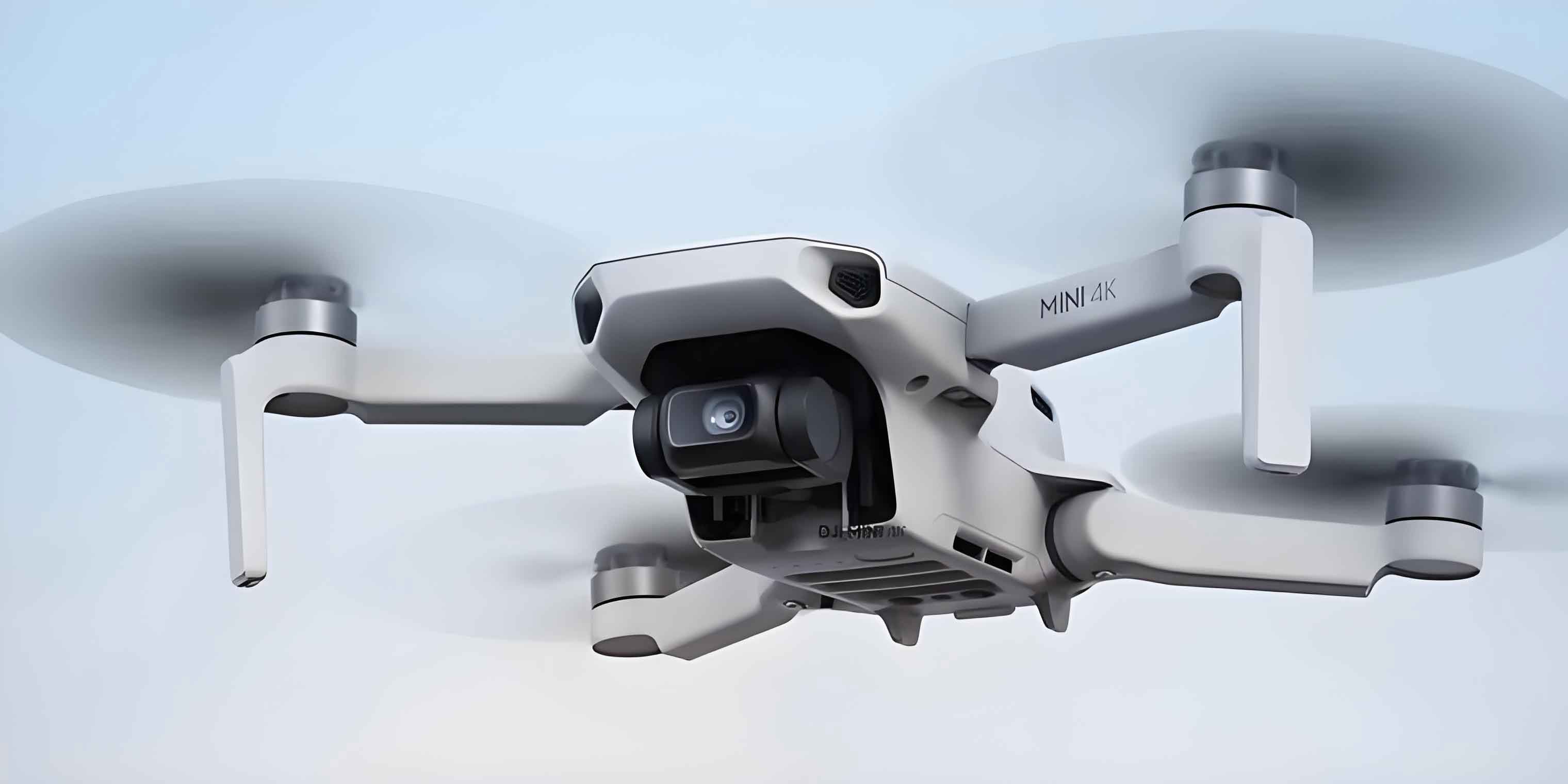
This article addresses this need by proposing an integrated, parametric framework for the structural analysis and optimization of UAV control surface actuation systems. The core innovation lies in combining high-fidelity finite element analysis with parametric modeling and scripting automation. Initially, a comprehensive multi-component finite element model is constructed, encompassing not only the actuation linkages but also the adjoining wing and control surface structures. This integrated approach allows for accurate simulation of load paths and deformation under extreme aerodynamic loads, which are derived from wind tunnel tests or Computational Fluid Dynamics (CFD) simulations, often amplified by dynamic factors. Subsequently, the entire analysis workflow is codified using Python scripting within the Abaqus software environment, enabling parameter-driven, automated modeling, solving, and post-processing. This methodology is then rigorously validated through a detailed case study of a control surface failure on a China UAV drone. Finally, leveraging the established parametric framework, a sensitivity analysis is conducted to identify key influential geometric parameters, followed by a multi-objective optimization to enhance structural strength, stiffness, and lightweight performance.
Methodology: Integrated Simulation and Parametric Automation
The proposed methodology is built upon two foundational pillars: high-reduction integrated modeling and parametric process automation.
Integrated High-Fidelity Modeling
Conventional piecewise analysis is replaced with a system-level model. The geometry includes the servo rocker, pushrod, control surface rocker, and simplified 3D solid models of the horizontal stabilizer and the rudder/elevator itself. While internal spars and ribs are omitted for focus, the mass properties of the wing and control surface are preserved by adjusting material density. Connections between linkage components are simulated using constraint equations that replicate pin-joint behavior, eliminating the need for explicit bolt modeling, thus reducing complexity while maintaining mechanical fidelity.
The critical loading condition for analysis is often the symmetric pull-up maneuver at maximum flight speed with the control surface at its maximum deflection. The aerodynamic pressure distribution is obtained from high-fidelity sources (e.g., CFD for a China UAV drone), fitted with polynomial functions, and applied to the model surface. A dynamic load factor is typically applied to account for gust and mechanical hysteresis. Boundary conditions include a fixed constraint at the wing root and symmetry conditions on the longitudinal plane for a half-model analysis. The primary failure criterion for the metallic components is the von Mises yield criterion. The von Mises equivalent stress $\sigma_{von}$ is calculated from the principal stresses ($\sigma_1$, $\sigma_2$, $\sigma_3$):
$$
\sigma_{von} = \sqrt{\frac{1}{2}\left[(\sigma_1 – \sigma_2)^2 + (\sigma_2 – \sigma_3)^2 + (\sigma_3 – \sigma_1)^2 \right]}
$$
Failure is predicted when $\sigma_{von}$ exceeds the material yield strength $\sigma_s$.
Parametric Modeling and Automation via Python Scripting
To overcome the efficiency bottleneck of manual finite element analysis (FEA), which spends over 95% of time on pre- and post-processing, a parametric automation framework is developed. The graphical user interface (GUI) operations of Abaqus/CAE are driven programmatically using its Python scripting interface. This allows the encapsulation of the entire FEA workflow—geometry creation, material assignment, meshing, loading, constraint application, job submission, and result extraction—into a single script.
The key advantage is the parameterization of geometric features. Variables are defined for critical dimensions, such as linkage lengths, rocker arm thicknesses, bracket heights, and actuation angles. Complex geometry generation, like defining airfoil profiles, and kinematic adjustments, such as positioning linkages after control surface deflection, are handled algorithmically. For instance, calculating the post-deflection position of all components becomes a solvable kinematic problem within the script, avoiding computationally expensive transient simulation for mere positioning.
The core of the automated pre-processing for a China UAV drone actuation system can be summarized by the following conceptual algorithm structure:
Pseudo-Code: Automated FEA Model Generation
Input: Geometric Parameter Set $X = (d_1, d_2, t_1, t_2, …)$, Load Case, Material Properties.
Output: Finite Element Model, Results (Stress, Displacement, Mass).
1. Function CREATE_GEOMETRY(X):
a. Generate points/sketches for servo rocker, pushrod, control rocker based on X.
b. Create simplified wing and control surface solids.
c. Assemble parts and define kinematic constraints for pin joints.
2. Function APPLY_LOAD_BC():
a. Apply fitted pressure load to control surface and wing.
b. Apply fixed constraint at wing root and symmetry constraint.
3. Function MESH_MODEL():
a. Assign fine mesh (hexahedral elements) to critical linkage parts.
b. Assign coarse mesh to wing and control surface solids.
4. Function SUBMIT_SOLVE():
a. Define material properties (e.g., 7050-T7451 Aluminum, Ti6Al4V).
b. Create and submit Abaqus Standard job.
5. Function EXTRACT_RESULTS():
a. Query output database for max $\sigma_{von}$ on each component.
b. Query max displacement of control surface tip.
c. Calculate total mass of actuation system components.
This scripted approach transforms the design analysis into a parameter-driven process, where evaluating a new design iteration requires only a change in the input parameter vector \(X\).
Case Study: Failure Analysis of a China UAV Drone
The effectiveness of the integrated method is demonstrated through a real-world investigation of a flight anomaly in a China UAV drone. The incident involved an unexpected pitch-up and climb during high-speed cruise, followed by a controlled descent after throttle reduction. Post-flight inspection revealed a fracture at the junction between the support base and the lug of the control surface rocker arm on both sides, with the control surfaces stuck in an upward-deflected position.
An integrated FEA model was constructed according to the described methodology. The mesh was refined around the critical linkage components, as detailed in Table 1.
| Component | Element Type | Element Size (mm) | Number of Elements |
|---|---|---|---|
| Control Surface Rocker | C3D8R | 0.5 | 14,510 |
| Pushrod | C3D8R | 0.5 | 22,536 |
| Servo Rocker | C3D8R | 0.5 | 13,568 |
| Control Surface | C3D8R | 10.0 | 10,932 |
| Horizontal Stabilizer | C3D8R | 25.0 | 8,536 |
The simulation applied the极限 aerodynamic loads corresponding to a pull-up maneuver at maximum speed with full control surface deflection. The results were conclusive. The maximum von Mises stress was found to be 449.14 MPa, localized precisely at the junction where the actual fracture occurred. This stress significantly exceeded the yield strength (440 MPa) of the 7050-T7451 aluminum alloy, resulting in a negative safety margin (\(MS = (440-449.14)/440 = -0.02\)). The control surface tip displacement was 4.77 mm, and the mass of the three linkage components was 29.51 g.
Failure Mechanism Analysis: The simulation validated the root cause: a structural design flaw in the control surface rocker led to severe stress concentration. During high-speed flight, the combination of high aerodynamic hinge moment and actuator force pushed the material at the critical junction beyond its yield point. The inherent free-play in the actuation system, common in China UAV drone mechanisms, likely induced high-frequency buffet under dynamic pressure. This created a low-cycle fatigue environment under alternating high stress, leading to crack initiation and eventual brittle fracture of the lug. The separation of the lug from the support base then allowed the control surface to float and deflect upward under aerodynamic forces, causing the unpiloted pitch-up and climb. Control was partially regained only after airspeed decreased, reducing the aerodynamic loads.
Sensitivity Analysis and Optimization Design
Building on the validated model, the parametric scripting framework was employed to systematically analyze the influence of geometric parameters and perform optimization. A set of ten key design variables \(X\) was defined, encompassing dimensions like rocker arm lengths (\(d_1, d_2\)), thicknesses (\(t_1, t_2, t_3, t_4\)), heights (\(h_1, h_2\)), and angles (\(\theta_1, \theta_2\)).
| Design Variable | Initial Value (mm or deg) | Range | Description |
|---|---|---|---|
| \(d_1\) | 75.0 | [30.0, 150.0] mm | Servo rocker arm length |
| \(d_2\) | 75.0 | [30.0, 150.0] mm | Control rocker arm length |
| \(t_1\) | 5.0 | [2.5, 7.5] mm | Servo rocker lug thickness |
| \(t_2\) | 2.0 | [1.0, 3.0] mm | Control rocker support wall thickness |
| \(t_3\) | 5.0 | [2.5, 7.5] mm | Control rocker arm thickness |
| \(t_4\) | 5.0 | [2.5, 7.5] mm | Pushrod thickness |
| \(h_1\) | 30.0 | [20.0, 60.0] mm | Servo rocker height |
| \(h_2\) | 0.0 | [0.0, 9.5] mm | Control rocker rib height |
| \(\theta_1\) | 20.0 | [0.0, 30.0] deg | Control surface deflection angle |
| \(\theta_2\) | 15.0 | [0.0, 30.0] deg | Servo rocker lug blend angle |
The optimization objectives were to minimize the system’s maximum von Mises stress (\(\sigma_{von-max}\)), the control surface’s maximum displacement (\(u_{max}\)), and the total mass (\(m\)) of the three linkage components. The optimization problem is formally stated as:
$$
\begin{aligned}
& \text{minimize} \quad f_1(X) = \sigma_{von-max}(X) = \max(\sigma_{von-a}, \sigma_{von-r}, \sigma_{von-w}) \\
& \text{minimize} \quad f_2(X) = u_{max}(X) \\
& \text{minimize} \quad f_3(X) = m(X) \\
& \text{subject to} \quad X^L \leq X \leq X^U
\end{aligned}
$$
where \(\sigma_{von-a}, \sigma_{von-r}, \sigma_{von-w}\) are the max stresses on the control rocker, pushrod, and servo rocker, respectively, and \(X^L, X^U\) are the lower and upper bounds from Table 2.
A sensitivity analysis using design-of-experiments techniques revealed key insights. The stress \(\sigma_{von-max}\) was always dominated by the control surface rocker stress. Parameters \(t_2\) (support wall thickness), \(h_1\), and \(h_2\) (rib height) had the most significant influence on structural strength. The displacement \(u_{max}\) correlated strongly with \(\sigma_{von-max}\), especially near yield. The mass \(m\) was influenced by all size parameters, but reducing \(h_1\) improved all three objectives simultaneously.
Guided by this analysis, a targeted design improvement was implemented. The weak control rocker was strengthened by increasing the critical wall thickness \(t_2\) from 2.0 mm to 3.0 mm and adding a full rib (\(h_2\) from 0.0 mm to 9.5 mm). The servo rocker height \(h_1\) was slightly reduced to 28.0 mm for mass benefit. Conversely, the oversized pushrod and servo rocker arm thicknesses (\(t_3, t_4\)) were reduced to 4.0 mm and 4.5 mm, respectively, leveraging their existing strength redundancy. The results, compared in Table 3, demonstrate a dramatic improvement.
| State | Key Changed Variables (mm) | Response Metrics | ||
|---|---|---|---|---|
| \(t_2\) / \(t_3\) / \(t_4\) / \(h_1\) / \(h_2\) | \(\sigma_{von-max}\) (MPa) | \(u_{max}\) (mm) | \(m\) (g) | |
| Initial Design | 2.0 / 5.0 / 5.0 / 30.0 / 0.0 | 449.14 | 4.77 | 29.51 |
| Optimized Design | 3.0 / 4.0 / 4.5 / 28.0 / 9.5 | 93.95 | 1.32 | 26.86 |
| Improvement | – | -79.08% | -72.32% | -8.98% |
The optimization achieved a 79.08% reduction in peak stress, a 72.32% reduction in control surface deflection, and an 8.98% mass reduction. Most importantly, the system’s safety margin increased from an unsafe -0.02 to a robust 3.68, fundamentally resolving the design flaw identified in the China UAV drone failure case.
Discussion and Conclusion
The research presented establishes a robust framework for the structural design and optimization of UAV control surface actuation systems. The integrated FEA approach moves beyond the limitations of component-isolation analysis, providing a true system-level assessment of stress, deformation, and load transfer. This high fidelity is crucial for accurately identifying failure modes, as proven by the precise correlation between simulation results and the physical fracture in the China UAV drone case study. The stress concentration at the rocker’s lug-support junction, a detail that might be overlooked in simplified analyses, was correctly identified as the root cause of a serious flight anomaly.
The integration of parametric modeling and process automation via Python scripting is the cornerstone for achieving both accuracy and efficiency. It transforms the traditionally tedious and error-prone FEA process into a rapid, reproducible, and scalable engineering tool. For China UAV drone developers, this means the ability to perform comprehensive design sweeps, sensitivity analyses, and optimization studies within practical timeframes, significantly accelerating the development cycle while enhancing reliability.
The sensitivity and optimization study yielded practical engineering insights. It confirmed that the control surface rocker is typically the critical load-bearing component, guiding focused reinforcement efforts. The addition of a stiffening rib (\(h_2\)) proved highly effective in mitigating stress concentration, a valuable design rule for similar structures. Furthermore, the ability to downsize non-critical components (\(t_3, t_4\)) based on accurate system-level stress data highlights the framework’s potential for intelligent lightweight design, a constant pursuit in China UAV drone engineering.
In conclusion, the proposed parametric modeling and integrated analysis method offers a significant advancement for the structural design of UAV control surface systems. It effectively bridges the gap between high-fidelity simulation and design iteration efficiency. The methodology is not limited to the specific configuration studied here; it can be readily adapted to various linkage topologies, different UAV control surfaces (ailerons, elevators, rudders), and extended to other structural subsystems like landing gear or wing boxes. By encapsulating expert knowledge into an automated script, this framework serves as a powerful computer-aided engineering tool that can enhance the safety, performance, and development speed of next-generation China UAV drones and unmanned systems worldwide.