
The pursuit of sustainable energy solutions within the built environment has become a critical imperative. In this context, academic institutions, with their extensive building portfolios and significant energy footprints, present a compelling opportunity for the adoption of photovoltaic (PV) systems. Buildings such as lecture halls and administrative blocks often feature large, unobstructed rooftops, making them prime candidates for solar energy harvesting. However, traditional planning methods for PV retrofits, relying on two-dimensional (2D) drawings and empirical judgment, frequently fall short in delivering optimal, cost-effective solutions. These methods struggle to accurately account for complex three-dimensional (3D) spatial geometries, dynamic shading patterns, and precise surface area calculations, often leading to suboptimal panel placement, inaccurate energy yield predictions, and ultimately, diminished project viability.
My research is dedicated to exploring and validating a modern, data-driven methodology that overcomes these limitations. I propose and demonstrate the integration of Unmanned Aerial Vehicle (UAV) drone-based aerial surveying with advanced 3D reality modeling software as a transformative workflow for planning PV retrofits on university buildings. The core hypothesis is that this synergy enables the rapid, accurate, and detailed digitization of building exteriors, providing an indispensable geospatial foundation for scientific planning, simulation, and decision-making.
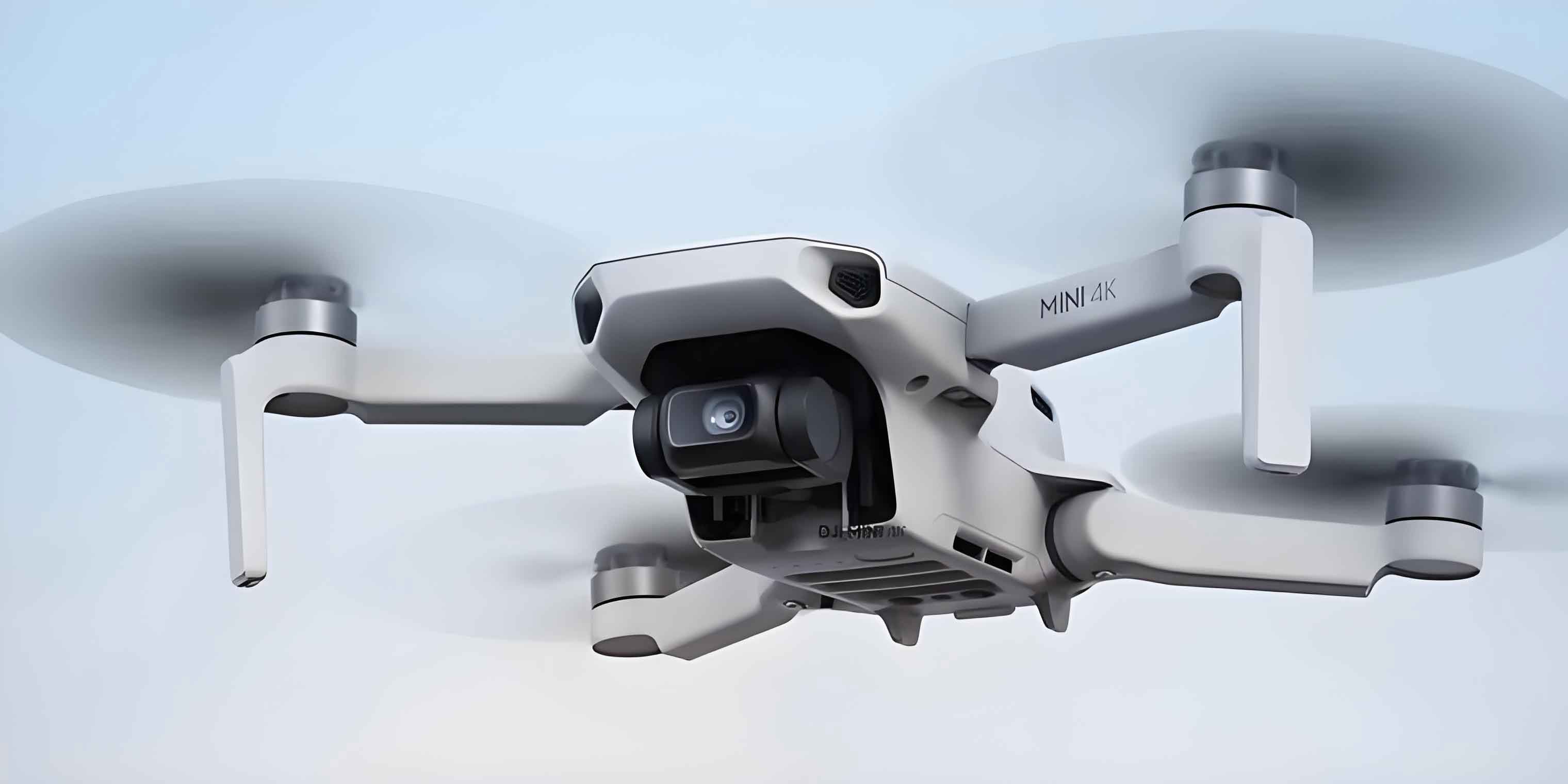
The significance of employing UAV drones in this domain is multifaceted. Firstly, UAV drones offer unparalleled efficiency and safety in data acquisition. They can systematically capture hundreds of high-resolution geotagged images of a building’s roof and facades within a single, brief flight mission, eliminating the need for hazardous manual roof inspections or scaffolding. Secondly, the data richness captured by UAV drones—including visual texture, geometric detail, and precise geo-referencing—feeds directly into photogrammetric processing engines. This allows for the generation of high-fidelity 3D models, known as digital twins, which serve as a single source of truth for all subsequent analyses. From these models, precise measurements for available area, tilt, and orientation can be extracted, and sophisticated solar irradiance simulations can be run to predict energy generation with high accuracy before any physical installation begins.
Technical Principles and Methodological Framework
The proposed methodology rests on two technological pillars: data acquisition via UAV drones and 3D model reconstruction through Structure-from-Motion (SfM) photogrammetry.
1. UAV Drone Data Acquisition Principles
Modern rotary-wing UAV drones, such as the DJI Mavic 3E, are equipped with high-resolution RGB cameras and, often, Real-Time Kinematic (RTK) or Post-Processed Kinematic (PPK) GNSS modules. The data collection is governed by the principles of aerial photogrammetry. The UAV drone follows a pre-planned autonomous flight path, capturing a series of overlapping images from multiple angles and altitudes. Critical parameters ensure data quality:
- Image Overlap: High overlap (typically 80% frontlap and 70% sidelap) is essential for the software to identify common points (tie points) across multiple images.
- Ground Sampling Distance (GSD): The physical size of a pixel on the ground, determined by flight altitude and camera sensor resolution. A lower GSD (e.g., 2 cm/pixel) yields a more detailed model. The required GSD can be calculated based on the desired level of detail for the project.
- Camera Angle: A combination of nadir (straight down) and oblique (angled) imagery is captured to model both roof surfaces and building facades effectively.
The flight planning for the UAV drone mission is critical. It involves defining the area of interest, setting the above parameters, and ensuring comprehensive coverage of all surfaces relevant to PV potential.
2. 3D Reality Modeling via Photogrammetry
The collected UAV drone imagery is processed using SfM software (e.g., DJI Terra, Pix4D, Agisoft Metashape). The process is automated and involves several key stages:
- Alignment and Sparse Point Cloud Generation: The software analyzes all images, detecting distinctive features (like corners or textures) and matching them across different photos. Using triangulation, it computes the 3D position of these features and the precise location and orientation of each camera for every shot, creating a sparse point cloud.
- Dense Point Cloud Generation: For every pixel in the aligned images, the software calculates its 3D coordinates, resulting in a dense, multi-million-point cloud that accurately represents the building’s geometry. The density of this cloud is a direct function of the image resolution and overlap from the UAV drone survey.
The point density ($D_p$) in a region can be conceptually related to GSD:
$$ D_p \propto \frac{1}{GSD^2} $$
- Mesh Generation and Texturing: The dense point cloud is converted into a continuous 3D triangular mesh (TIN). Finally, the original images from the UAV drone are projected onto this mesh, applying realistic textures and colors to create a photorealistic 3D model, often exported in formats like OBJ or OSGB.
Research Design and Applied Workflow
My applied research follows a structured, iterative workflow designed to translate raw UAV drone data into actionable insights for PV retrofit planning.
| Parameter Category | Specification / Setting | Purpose / Rationale |
|---|---|---|
| UAV Drone Platform | DJI Mavic 3E | High-resolution camera, RTK module for cm-level accuracy, compact and efficient. |
| Flight Altitude | 70-100 meters AGL | Balances detail (GSD ~2-3 cm) with flight efficiency and safety. |
| Image Overlap | 80% Frontlap, 75% Sidelap | Ensures robust feature matching for accurate 3D reconstruction. |
| Camera Angle | Nadir + 45° Oblique | Captures roof planes and building facades comprehensively. |
| Processing Software | DJI Terra / Agisoft Metashape | For SfM processing, dense cloud, mesh, and textured model generation. |
| Key Deliverable | Georeferenced 3D Textured Mesh | Serves as the foundational digital twin for all analyses. |
1. PV Potential Analysis and Area Quantification
The generated 3D model is the primary tool for analysis. Using the model within the modeling software or a compatible GIS/BIM environment, I perform the following:
- Surface Classification and Segmentation: The roof and relevant facade areas are isolated from the rest of the model.
- Precise Area Calculation: The true surface area of each roof plane and facade section is calculated directly from the 3D geometry, which is more accurate than using 2D projected area, especially for sloped or irregular surfaces. The available area ($A_{avail}$) for PV is derived by subtracting zones with obstructions (HVAC units, skylights, access paths) from the total roof/facade area.
- Solar Irradiance Simulation: The 3D model, with its accurate geometry and geo-location, is imported into solar simulation software (e.g., PVsyst, Helioscope). Using historical weather data (TMY files), the software simulates hourly solar irradiance on every surface throughout the year, accounting for self-shading, shading from nearby buildings, and trees captured by the UAV drone survey.
2. PV System Design and Layout Optimization
Based on the available area and solar potential maps, I proceed with the technical design:
- Panel Selection and System Sizing: Standard panel dimensions and efficiency are chosen. The maximum number of panels ($N_{panels}$) is estimated by dividing the available area by the area required per panel, including necessary spacing for maintenance and wind loading.
$$ N_{panels} = \frac{A_{avail}}{A_{panel} \times k_{spacing}} $$
where $k_{spacing} > 1$ is a spacing factor.
- 3D Layout Planning: Panels are virtually arranged on the 3D model. This allows for optimizing the layout to maximize panel count while respecting setbacks, avoiding shadows between rows (row-to-row spacing is calculated based on latitude and panel tilt), and planning conduit paths. The tilt angle ($\beta$) is often set to the local latitude for optimal annual yield or slightly lower for better summer/winter balance.
- Energy Yield Simulation: The final layout is simulated in PV software to predict the annual energy generation ($E_{annual}$). The simulation considers panel efficiency ($\eta$), inverter efficiency, system losses (soiling, wiring, etc.), and the detailed irradiance data.
A simplified formula for estimating annual energy output is:
$$ E_{annual} = G \times A_{system} \times \eta_{total} $$
where $G$ is the annual global in-plane irradiance (kWh/m²), $A_{system}$ is the total panel area ($N_{panels} \times A_{panel}$), and $\eta_{total}$ is the overall system efficiency.
Comprehensive Benefit Analysis
The application of UAV drone technology enables a rigorous, data-backed analysis of the project’s benefits, moving beyond guesswork to quantified outcomes.
| Cost Component | Percentage of Total | Description |
|---|---|---|
| PV Modules | ~50% | Cost of the solar panels themselves. |
| Inverters & Electrical Balance of System (BOS) | ~15% | Inverters, cabling, combiner boxes, monitoring systems. |
| Mounting Structure & Racking | ~10% | Aluminum or steel rails, clamps, anchors for roof/facade attachment. |
| Installation Labor & Engineering | ~20% | Costs for system design, permitting, installation labor, and commissioning. |
| Contingency & Miscellaneous | ~5% | Unforeseen expenses, insurance, administrative fees. |
| Total Estimated Installed Cost | 100% |
| Metric | Pre-Retrofit Baseline | Post-Retrofit Projection | Notes |
|---|---|---|---|
| Annual Electricity Consumption | Based on utility bills (e.g., 500,000 kWh) | Remaining grid draw after self-consumption | |
| Annual Electricity Generation | 0 kWh | Simulated yield (e.g., 300,000 kWh) | From PV system simulation |
| Annual Utility Cost | Full retail rate (e.g., $0.12/kWh = $60,000) | Reduced cost for net grid consumption | |
| Annual Energy Cost Savings | $0 | Savings from self-consumption + possible revenue from exported power (e.g., $25,000) | Depends on net metering policy |
| System Installed Capacity | 0 kW | Calculated from layout (e.g., 200 kWp) | $P_{rated} = N_{panels} \times P_{panel}$ |
1. Economic Viability
The financial metrics are calculated based on the simulated energy yield.
| Financial Metric | Formula | Example Calculation |
|---|---|---|
| Simple Payback Period (SPP) | $$ SPP = \frac{Total Installed Cost}{Annual Cost Savings} $$ | $$ SPP = \frac{\$400,000}{\$25,000/year} = 16 years $$ |
| Levelized Cost of Energy (LCOE) | $$ LCOE = \frac{\sum_{t=1}^{n} \frac{I_t + M_t}{(1+r)^t}}{\sum_{t=1}^{n} \frac{E_t}{(1+r)^t}} $$ where $I_t$=investment, $M_t$=O&M, $E_t$=energy, $r$=discount rate, $n$=lifetime. |
Calculated via financial model; allows comparison with grid electricity price. |
| Net Present Value (NPV) | $$ NPV = \sum_{t=1}^{n} \frac{C_t}{(1+r)^t} – I_0 $$ where $C_t$ is net cash flow in year t, $I_0$ is initial investment. |
A positive NPV indicates a profitable project. |
| Return on Investment (ROI) | $$ ROI = \frac{Net Profit}{Cost of Investment} \times 100\% $$ | Measured over the system’s lifetime. |
2. Environmental Impact Assessment
The environmental benefit is directly quantifiable based on the simulated clean energy generation, displacing fossil-fuel-based grid electricity.
The annual CO₂ emissions avoided ($\Delta CO_2$) can be estimated as:
$$ \Delta CO_2 = E_{annual} \times EF_{grid} $$
where $EF_{grid}$ is the regional grid electricity emission factor (kg CO₂/kWh).
| Environmental Metric | Calculation Example | Equivalent Impact |
|---|---|---|
| CO₂ Emissions Avoided | 300,000 kWh × 0.5 kg CO₂/kWh = 150,000 kg | Equivalent to ~15,000 gallons of gasoline not consumed. |
| SO₂ & NOx Reduction | Proportional reduction based on grid fuel mix. | Contributes to improved local air quality. |
3. Technical and Educational Benefits
Beyond economics, the UAV drone-driven approach yields significant technical and pedagogical advantages:
- Enhanced Design Accuracy: Eliminates measurement errors from manual surveys, leading to precise material ordering and reduced waste.
- Risk Mitigation: Identifies structural or accessibility issues (e.g., weak roof sections, obstructions) during the planning phase via detailed UAV drone inspection, reducing surprises during installation.
- Visualization for Stakeholder Engagement: The 3D model with integrated PV arrays provides a powerful visual tool for communicating the project’s intent and final appearance to university administrators, faculty, and students.
- Living Lab for Education: The entire process—from UAV drone operation and data processing to energy simulation and system design—creates a multidisciplinary “living lab” for students in engineering, architecture, environmental science, and data analytics.
Conclusion and Future Perspectives
My research substantiates that UAV drone technology is a cornerstone for modernizing and optimizing PV retrofit projects on academic campuses. The workflow from UAV drone data capture to 3D digital twin creation and subsequent solar analysis provides a robust, accurate, and efficient framework for planning. It transforms decision-making from an art based on approximations to a science grounded in precise geospatial data and sophisticated simulation. The ability to quantify economic payback, environmental benefits, and educational value with high confidence makes a compelling case for investment.
Looking forward, the integration of UAV drone data promises even greater advancements. Future research and application directions include:
- Multi-Sensor Fusion: Equipping UAV drones with thermal imaging cameras to identify roof insulation defects or with LiDAR sensors to penetrate vegetation canopy for more accurate shading analysis in densely wooded campuses.
- Automated Feature Extraction & BIM Integration: Developing AI-driven algorithms to automatically extract building features (eaves, ridges, obstructions) from UAV drone-generated point clouds and seamlessly convert them into Building Information Modeling (BIM) elements for integrated design and lifecycle management.
- Time-Series Analysis for Performance Validation: Using UAV drones for periodic post-installation inspections, capturing visual and thermal data to monitor panel soiling, detect hot spots (malfunctioning cells), and validate actual performance against simulated predictions.
- Campus-Wide Energy Planning: Scaling the UAV drone survey approach to create a digital twin of an entire university campus. This macro-model would enable holistic energy planning, optimizing PV placement across multiple buildings, analyzing micro-grid potential, and visualizing the campus’s pathway to carbon neutrality.
In conclusion, UAV drones are far more than just data collection tools; they are the enablers of a comprehensive, intelligent, and sustainable approach to building-integrated renewable energy. By adopting this technology, academic institutions can lead by example, not only reducing their operational carbon footprint and costs but also fostering a culture of innovation and providing invaluable hands-on learning experiences for the next generation of engineers and sustainability leaders.