
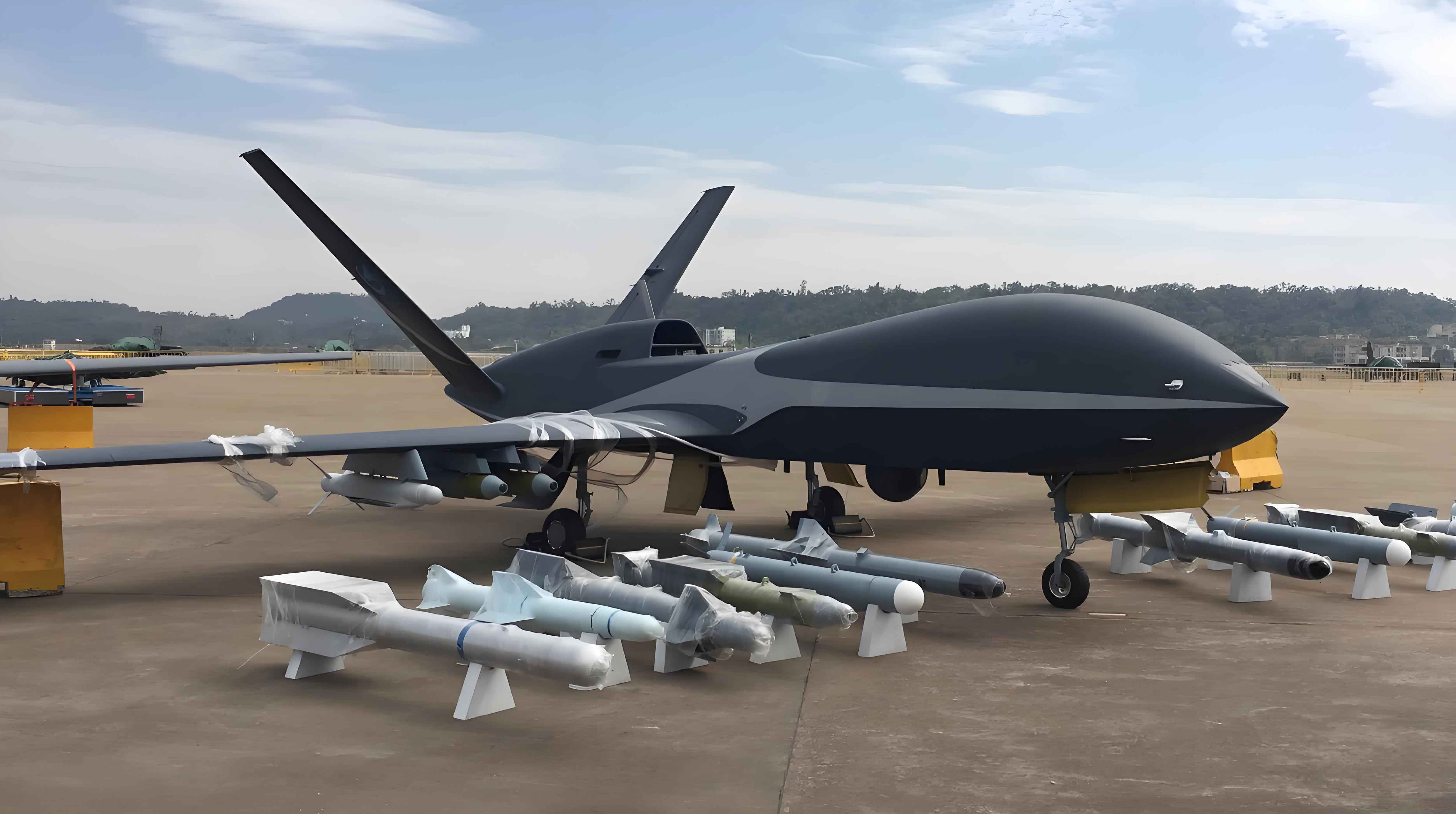
In the evolving landscape of modern warfare, the strategic and tactical importance of military drones has grown exponentially. These unmanned systems are now pivotal for reconnaissance, surveillance, target acquisition, and even direct engagement. However, the increased operational reliance on these complex systems brings forth significant challenges in maintenance and logistics support. As an engineer and analyst specializing in defense logistics, I have explored various tools to enhance the sustainment of military assets. Among these, the Systecon ILS software suite stands out as a powerful solution for optimizing the maintenance support of military drones. This article delves into the capabilities of Systecon ILS, particularly its Opus10 and SIMLOX modules, and presents a comprehensive framework for their application in military drone maintenance ecosystems. I will employ tables and mathematical models to elucidate key concepts, ensuring a detailed exploration that underscores the software’s potential to revolutionize how we support these critical assets.
The Systecon ILS software, developed over four decades by SYSTECON, is a specialized toolkit for logistics support analysis, maintenance simulation, and repair data analytics. Its adoption by major defense forces and aerospace contractors—such as the U.S. Air Force, Boeing, and Lockheed Martin—testifies to its efficacy. Reports indicate that using this software can reduce maintenance costs by 20–40% and spare parts expenses by 20–30%. For military drones, which often operate in demanding environments with high readiness requirements, such savings are not merely economical but operationally crucial. In this discussion, I will adopt a first-person perspective to share insights on how we can leverage Systecon ILS to address the unique maintenance challenges of military drone fleets.
To begin, let’s examine the core components of Systecon ILS relevant to maintenance support. The suite includes four independent tools: Opus10 for logistics and spare parts optimization, SIMLOX for system operation and maintenance simulation, MaDCAT for maintenance data classification and analysis, and CATLOC for life-cycle cost analysis. For military drone maintenance, the primary focus is on Opus10 and SIMLOX. Below, a table summarizes their key functionalities:
| Software Module | Primary Function | Key Features for Military Drone Support |
|---|---|---|
| Opus10 | Spare parts optimization and logistics modeling | Hierarchical system decomposition, inventory level optimization, cost-effectiveness analysis, support organization modeling. |
| SIMLOX | Discrete-event simulation for mission readiness | Mission profile simulation, resource utilization analysis, maintenance process modeling, availability assessment. |
Opus10 operates by constructing a detailed hierarchical model of the equipment system. For a military drone, this involves breaking down the drone into its constituent line-replaceable units (LRUs), shop-replaceable units (SRUs), and other components. The software supports unlimited hierarchical levels, allowing for a granular representation of the drone’s architecture. Each component is classified as repairable, non-repairable, or partially repairable, which directly influences maintenance strategies. The support organization model in Opus10 defines sites such as workshops (repair only), depots (repair and storage), warehouses (storage only), and operational sites (no repair or storage). This modeling flexibility is essential for tailoring support networks to military drone deployments, which may involve forward operating bases or carrier-based operations.
Mathematically, Opus10 optimizes spare parts inventory by balancing availability against cost. A fundamental formula used in such optimization is the expected backorders calculation, which can be expressed as:
$$E[B] = \sum_{i=1}^{n} \left( \lambda_i T_i – S_i + \sum_{k=0}^{S_i} (S_i – k) \frac{(\lambda_i T_i)^k e^{-\lambda_i T_i}}{k!} \right)$$
where \(E[B]\) is the expected number of backorders, \(\lambda_i\) is the failure rate of component \(i\), \(T_i\) is the replenishment time, and \(S_i\) is the stock level for component \(i\). For military drones, where component reliability data can be sourced from operational logs, this model helps determine optimal stock levels to minimize downtime. Additionally, Opus10 generates cost-effectiveness (C/E) curves, which plot availability against life-cycle cost. These curves aid in decision-making for military drone support, allowing commanders to choose inventory policies that meet readiness targets within budget constraints.
SIMLOX, on the other hand, employs discrete-event simulation to evaluate the mission readiness of equipment fleets. It models the entire maintenance ecosystem, including equipment breakdown structures, mission profiles, and support resources. For military drones, SIMLOX can simulate various operational scenarios—such as sustained surveillance missions or rapid deployment exercises—to assess how maintenance activities impact availability. The simulation framework incorporates queuing theory to handle repair processes, resource constraints, and supply chain delays. A critical metric in these simulations is operational availability (\(A_o\)), defined as:
$$A_o = \frac{MTBM}{MTBM + MDT}$$
where \(MTBM\) is the mean time between maintenance (including both corrective and preventive actions) and \(MDT\) is the mean downtime (encompassing repair time, logistics delay time, and administrative delay time). For military drones, high \(A_o\) is paramount to ensure they are mission-ready when needed. SIMLOX outputs detailed results, including graphs of availability over time, resource utilization rates, and spare parts consumption patterns.
The application of Systecon ILS to military drone maintenance can be structured into several key areas. First, optimizing personnel allocation for maintenance tasks. Military drones require specialized technicians for repair, and SIMLOX can analyze how varying numbers of personnel affect repair turnaround times. By inputting data on repair task durations and personnel skills, we can simulate different staffing levels and identify the optimal team size that minimizes wait times without overstaffing. This is crucial for military units where manpower is often limited. A table illustrating a sample simulation output for personnel optimization might look like this:
| Scenario | Number of Technicians | Average Repair Time (hours) | Drone Availability (%) | Personnel Utilization (%) |
|---|---|---|---|---|
| Baseline | 3 | 8.5 | 78.2 | 92 |
| Optimized | 4 | 5.2 | 88.7 | 85 |
| High-Staff | 6 | 4.8 | 89.5 | 72 |
Second, spare parts inventory optimization for military drones using Opus10. Drones consist of numerous high-value and high-failure-rate components, such as sensors, communication modules, and propulsion systems. Opus10 can classify these components based on criticality, cost, and demand patterns. For instance, we can categorize parts as:
| Component Type | Example in Military Drone | Demand Rate (failures/year) | Unit Cost ($) | Optimized Stock Level |
|---|---|---|---|---|
| Critical High-Cost | EO/IR Sensor | 0.5 | 50,000 | 2 |
| High-Demand Low-Cost | Propeller Blades | 12 | 200 | 15 |
| Long Lead Time | Flight Control Computer | 0.3 | 30,000 | 3 |
By running Opus10 analyses, we can determine the optimal mix of spare parts to be pre-positioned at various support echelons—from forward operating bases to central depots. This reduces the logistics footprint and ensures that military drones remain operational even in remote theaters. The optimization considers constraints like budget limits and storage capacity, which are common in military settings.
Third, developing tailored maintenance plans for military drones using SIMLOX. Based on historical failure data and mission profiles, SIMLOX can simulate different maintenance strategies to identify the most effective one. For example, we can compare preventive maintenance schedules (e.g., replacing parts after a set number of flight hours) versus condition-based maintenance (using health monitoring data). The simulation might incorporate a reliability function for a drone component, such as the Weibull distribution:
$$R(t) = e^{-(t/\eta)^\beta}$$
where \(R(t)\) is the reliability at time \(t\), \(\eta\) is the scale parameter, and \(\beta\) is the shape parameter. By inputting such reliability models into SIMLOX, we can predict failures and schedule maintenance proactively. The output can guide the creation of standardized repair procedures for common faults, which can be disseminated to maintenance crews in the field. This is especially valuable for military drone operators who may lack extensive technical documentation.
Fourth, facilitating collaboration between manufacturers and military units through Systecon ILS. Manufacturers can use the software to optimize the initial spare parts package delivered with each military drone system. They can also develop a database of maintenance scenarios—covering everything from routine inspections to battle damage repair—and update it based on feedback from field units. This creates a continuous improvement loop, enhancing the long-term sustainment of military drone fleets. For instance, manufacturers can run SIMLOX simulations to validate maintenance procedures before they are fielded, reducing the risk of errors during actual operations.
However, the effective application of Systecon ILS for military drone maintenance requires certain conditions. Users must possess a solid understanding of maintenance logistics principles to ensure that models reflect real-world constraints. Additionally, seamless data exchange between drone operators, maintenance teams, and manufacturers is essential to keep models updated with the latest failure rates and operational tempos. Without accurate input data, the software’s optimizations may lead to suboptimal outcomes. Therefore, training programs and integrated data systems are critical enablers.
To further illustrate the mathematical depth, consider a comprehensive optimization model for military drone spare parts inventory that combines Opus10 and SIMLOX insights. We can formulate a multi-objective problem aiming to maximize availability while minimizing cost:
$$\text{Maximize } A_o = f(S, \lambda, T)$$
$$\text{Minimize } C = \sum_{i} (c_i S_i + h_i E[I_i] + b_i E[B_i])$$
subject to:
$$\sum_{i} w_i S_i \leq W$$
$$S_i \geq 0 \text{ (integer)}$$
where \(C\) is the total cost, \(c_i\) is the unit cost of part \(i\), \(h_i\) is the holding cost, \(E[I_i]\) is the expected inventory level, \(b_i\) is the backorder cost, \(w_i\) is the weight or volume of part \(i\), and \(W\) is the storage capacity constraint. This formulation captures the trade-offs inherent in military logistics, where space and weight are often limited—especially for expeditionary operations involving military drones.
In terms of simulation, SIMLOX can model the entire maintenance queue for a fleet of military drones. Suppose we have \(m\) drones undergoing repair at a depot with \(n\) parallel service channels (technicians). The queue can be analyzed using an M/M/n model, where arrivals (failed drones) follow a Poisson process with rate \(\lambda\), and service times are exponentially distributed with mean \(1/\mu\). The steady-state probability of having \(k\) drones in the system, \(P_k\), is given by:
$$P_k = \begin{cases}
\frac{(\lambda/\mu)^k}{k!} P_0 & \text{for } 0 \leq k < n \\
\frac{(\lambda/\mu)^k}{n! n^{k-n}} P_0 & \text{for } k \geq n
\end{cases}$$
with $$P_0 = \left[ \sum_{j=0}^{n-1} \frac{(\lambda/\mu)^j}{j!} + \frac{(\lambda/\mu)^n}{n!(1-\rho)} \right]^{-1}$$ and \(\rho = \lambda/(n\mu) < 1\). From this, we can derive metrics like the average number of drones awaiting repair (\(L_q\)) and the average wait time (\(W_q\)), which directly impact the availability of military drones for missions.
The integration of these analytical and simulation approaches provides a robust framework for decision-making. For example, by varying parameters like the number of technicians or stock levels, we can perform sensitivity analyses to understand how changes affect overall system performance. This is vital for military planners who must allocate resources efficiently across multiple drone units.
In conclusion, the Systecon ILS software suite offers a transformative toolset for enhancing the maintenance support of military drones. Through its Opus10 module, we can optimize spare parts inventories to balance cost and readiness. With SIMLOX, we can simulate complex maintenance scenarios to improve mission availability and resource utilization. The iterative use of these tools—coupled with continuous data feedback from field operations—can lead to sustained improvements in military drone sustainment. As military drones continue to proliferate in defense arsenals, adopting such advanced logistics software will be key to maintaining operational superiority. I encourage further exploration and investment in these technologies to ensure our military drone fleets remain capable and resilient in the face of evolving threats.
To summarize key points in a final table, here is an overview of the proposed application framework:
| Application Area | Systecon ILS Tool | Benefit for Military Drones | Key Metric Improved |
|---|---|---|---|
| Personnel Allocation | SIMLOX | Reduces repair delays and optimizes manpower | Mean Downtime (MDT) |
| Spare Parts Optimization | Opus10 | Minimizes inventory costs while ensuring part availability | Cost per Flight Hour |
| Maintenance Plan Development | SIMLOX | Enables proactive scheduling and standardizes procedures | Operational Availability (\(A_o\)) |
| Manufacturer-Unit Collaboration | Opus10 & SIMLOX | Facilitates data-driven updates and initial support packages | Life-Cycle Cost (LCC) |
By embracing these methodologies, we can build a more agile and cost-effective maintenance ecosystem for military drones, ultimately enhancing their contribution to national security. The journey toward optimized military drone support is continuous, but with tools like Systecon ILS, we are well-equipped to navigate its complexities.