
As an educator in the field of vocational education, I have witnessed the rapid evolution of the drone industry and its increasing demand for skilled professionals. The implementation of the “1+X” certificate system, introduced by the State Council in 2019, represents a pivotal shift in fostering复合型 technical talents. This system, where “1” denotes the academic diploma and “X” represents various vocational skill等级 certificates, aims to bridge the gap between education and industry needs. In this context, drone application technology programs in higher vocational colleges face the urgent task of achieving “course-certificate integration” to enhance graduate employability. This article explores the current课程体系, analyzes its shortcomings, and proposes strategies for优化 based on the “1+X” framework, with a focus on强化 drone training initiatives.
The drone industry has expanded into diverse sectors such as agriculture, surveying, logistics, and entertainment, driving a surge in demand for qualified personnel. Higher vocational colleges play a crucial role in supplying this workforce, but their drone application technology programs often struggle with outdated课程体系. The “1+X” certificate system offers a solution by emphasizing the融合 of vocational standards into educational curricula. Through my experience, I believe that effective drone training must align with industry certifications to ensure students acquire relevant skills. This integration not only meets enterprise用人需求 but also boosts students’ competitiveness in the job market.
Currently, the课程体系 for drone application technology in many colleges comprises general education courses, professional platform courses, core courses, and elective方向 courses. Typically, students learn basic knowledge in their first year,专业基础 in the second year, and engage in practical训练 like internships in the third year. However, this structure often fails to reflect the hierarchical skill requirements of drone-related岗位. For instance, while core courses cover fundamentals, they may not adequately address advanced applications like data processing or client service. To illustrate the skill gaps, consider the following table summarizing common course components versus industry demands:
| Course Component | Typical Content | Industry Skill Demand | Gap Analysis |
|---|---|---|---|
| Professional Core Courses | Drone原理, flight basics, maintenance | Advanced操控, data analysis, project management | Limited emphasis on practical applications and soft skills |
| Practical Training | Short-term飞行 practice, simulation | Real-world mission planning, emergency handling | Insufficient hands-on experience in diverse scenarios |
| Elective Courses | Optional modules on摄影 or mapping | Cross-domain expertise (e.g., programming, electronics) | Lack of integrated, interdisciplinary approach |
From this analysis, it is evident that the课程体系 lacks alignment with the “1+X”证书制度’s goal of comprehensive skill development. The mismatch can be quantified using a skill alignment formula. Let $$ S_{align} = \frac{ |C \cap R| }{ |C \cup R| } $$ where \( C \) represents the set of skills taught in courses, and \( R \) represents the set of skills required by industry岗位. Ideally, \( S_{align} \) should approach 1, but in many programs, it remains low due to disjointed drone training elements.
Several key issues hinder effective course-certificate integration. First, the专业技能等级和岗位要求不相符, meaning that graduates often possess basic certificates but lack the proficiency needed for specialized roles. For example, while many students obtain Civil Aviation Administration drone licenses through short-term training, they may not master advanced操控 techniques required for complex missions. This discrepancy stems from a课程体系 that does not progressively build competency. Second, the课程体系未与技能等级相互匹配, leading to uneven skill distribution. Due to resource constraints, such as shared师资 across programs, courses are scheduled without regard to a logical skill hierarchy. This hampers students’ ability to advance in their drone training progressively.
Third,专业技能的相关培养标准未统一 across institutions. Colleges vary in硬件设施, software, and teaching quality, resulting in inconsistent graduate outcomes. The “1+X” system can mitigate this by providing national vocational standards. By integrating these standards into curricula, colleges can ensure a baseline of quality in drone training. Fourth,单一技能无法适应经济发展需求. The drone industry now seeks talents with multifaceted abilities, including technical expertise, client communication, and innovation. Traditional courses focusing solely on飞行 skills fall short. A more holistic approach is needed, which the “1+X”证书制度 promotes through its emphasis on复合型人才培养.
Fifth, the课程体系过于传统并缺乏新意, often based on fixed academic schedules rather than flexible, competency-based models. Typically, programs include 5-6专业基础 courses and 2-3专业技能 courses, with limited elective modules. This rigidity fails to accommodate the dynamic nature of drone technology. To address this, I propose a重构 of the课程体系 around the “1+X” framework, incorporating modular learning and continuous assessment. The effectiveness of such integration can be modeled using a training impact equation: $$ E_{train} = \alpha \cdot T_{practice} + \beta \cdot C_{theory} + \gamma \cdot I_{cert} $$ where \( E_{train} \) represents the overall effectiveness of drone training, \( T_{practice} \) is hands-on practice time, \( C_{theory} \) is theoretical knowledge coverage, \( I_{cert} \) is the influence of certificate integration, and \( \alpha, \beta, \gamma \) are weighting coefficients based on industry feedback.
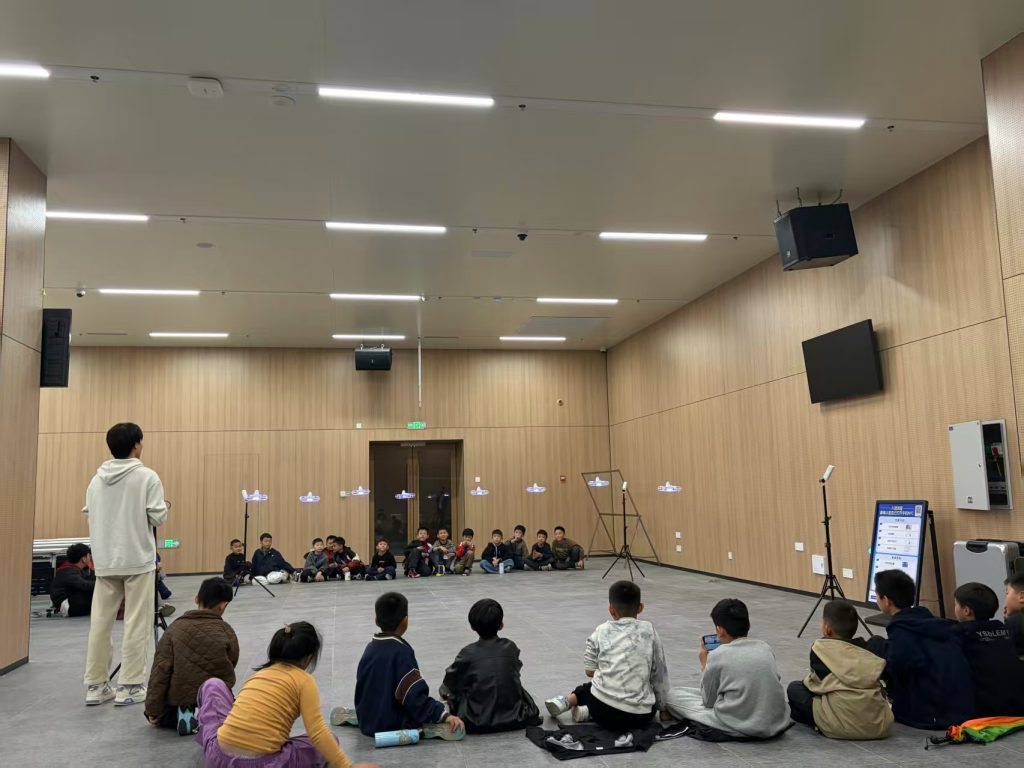
To build a融合课程体系 based on the “1+X”证书制度, three core strategies are essential. First, focus on以无人机“操控”为技术核心的课证融合. Drone操控 is the foundational skill for most industry roles, such as无人机驾驶员, which involves tasks like航线 planning, parameter adjustment, and data collection. By centering courses around操控 proficiency, colleges can align with certificate requirements from bodies like the Civil Aviation Administration. This involves embedding证书标准 into courses like “Advanced Flight Techniques” and “Mission Simulation,” ensuring that students gain both theoretical knowledge and practical expertise through structured drone training. A sample integrated course module is shown below:
| Course Name | “1+X” Certificate Link | Skill Objectives | Training Methods |
|---|---|---|---|
| Drone Flight Operations | Linked to UAV Pilot License | Master basic to advanced操控, emergency handling | Simulators, field practice, certification exams |
| Data Acquisition & Processing | Linked to Surveying Certificate | Learn data collection, software analysis, reporting | Project-based learning, software tools |
| Maintenance & Troubleshooting | Linked to Technician Certificate | Develop repair, calibration, and diagnostic skills | Hands-on workshops, industry partnerships |
Second, adopt以“项目导向”为引导加强专业团队合作. Drone applications often require interdisciplinary collaboration, as seen in competitions or innovation projects. By using project-based learning, students can work in teams that blend无人机技术 with electronics, programming, and design. This fosters a holistic drone training environment where skills are applied to real-world scenarios. For example, a project on “Drone-Based Agricultural Monitoring” might involve students from drone, agronomy, and data science backgrounds, mimicking industry workflows. The success of such projects can be evaluated using a collaboration metric: $$ C_{score} = \sum_{i=1}^{n} w_i \cdot S_i $$ where \( C_{score} \) is the team collaboration score, \( w_i \) are weights for skills like communication and technical贡献, and \( S_i \) are assessed skill levels. This approach not only enhances learning but also prepares students for the teamwork demanded in the workplace.
Third,以“1+X”证书制度为基础强化校企合作. Enterprises are key stakeholders in defining skill standards and providing practical training opportunities. Strengthening校企合作 allows colleges to incorporate industry insights into curricula, offer internships, and facilitate certificate acquisition. For instance, partnerships with drone companies can lead to订单委培 programs where students receive tailored drone training aligned with specific job roles. This collaboration ensures that courses remain relevant and that graduates are job-ready. The benefits can be summarized in a partnership efficiency model: $$ P_{eff} = \frac{ E_{input} + I_{resource} }{ C_{cost} } $$ where \( P_{eff} \) is partnership efficiency, \( E_{input} \) is enterprise input (e.g., training materials), \( I_{resource} \) is institutional resources, and \( C_{cost} \) is the overall cost. Higher \( P_{eff} \) indicates more sustainable合作, driving continuous improvement in drone training programs.
In implementing these strategies, colleges must overhaul their课程体系 to be more flexible and responsive. This involves redesigning人才培养方案 to include modular courses that correspond to different “X” certificates. For example, a semester could be structured around skill blocks, each culminating in a certification assessment. Additionally, continuous professional development for instructors is crucial to keep pace with technological advancements. By embracing the “1+X” philosophy, drone training can evolve from isolated skill acquisition to a comprehensive教育 ecosystem that nurtures innovation and adaptability.
The importance of regular assessment cannot be overstated. Using tools like pre- and post-training evaluations, colleges can measure skill progression. A proposed assessment framework might include quantitative metrics such as flight accuracy scores or data processing times, alongside qualitative feedback from industry mentors. This data can inform curriculum adjustments, ensuring that drone training remains aligned with market needs. Furthermore, the integration of digital platforms for模拟 training and remote learning can enhance accessibility and scalability, making drone training more inclusive.
From a broader perspective, the “1+X”证书制度 fosters a culture of lifelong learning. Students are encouraged to pursue multiple certificates beyond their diploma, deepening their expertise in areas like drone cinematography or inspection services. This not only increases their employability but also contributes to industry innovation. For colleges, this means designing pathways that support stacked credentials, where each certificate builds on previous ones. For instance, a student might start with a basic操控 certificate, advance to a specialized mapping certificate, and eventually earn an entrepreneurial certificate for drone business management. Such pathways can be mapped using a directed graph model: $$ G = (V, E) $$ where \( V \) represents证书 nodes and \( E \) represents prerequisite edges, guiding students through sequential drone training stages.
In conclusion, the optimization of course-certificate integration in drone application technology under the “1+X” system is imperative for meeting contemporary vocational education reforms. By addressing课程体系 issues through操控-centric design, project-oriented teamwork, and enhanced校企合作, colleges can create a dynamic learning environment that produces highly skilled graduates. The反复 emphasis on drone training throughout this process ensures that students gain practical competencies valued by employers. As the drone industry continues to grow, such integrated approaches will be key to sustaining talent pipelines and driving economic development. Through continuous reflection and adaptation, we can ensure that our educational offerings remain at the forefront of technological advancement, empowering students to thrive in an ever-evolving landscape.
To further illustrate the proposed integrated体系, consider the following comprehensive table outlining a sample curriculum aligned with “1+X” certificates:
| Academic Year | Course Module | Integrated “X” Certificate | Key Drone Training Activities | Learning Outcomes |
|---|---|---|---|---|
| Year 1 | Fundamentals of Drones | Basic UAV Safety Certificate | Introduction to flight, safety protocols, simulators | Understand drone components and basic operations |
| Year 1 | Electronics & Programming | Embedded Systems Certificate | Circuit design, coding for drone control | Develop technical skills for customization |
| Year 2 | Advanced Flight Techniques | Civil Aviation Pilot License | Mission planning, real-world flights, data collection | Achieve proficient操控 and problem-solving |
| Year 2 | Data Processing & Analysis | Geospatial Analysis Certificate | Software training, project work on mapping | Master data interpretation and reporting |
| Year 3 | Industry Internship | Enterprise-Specific Certificates | On-job training, mentorship, portfolio development | Gain practical experience and network |
| Year 3 | Capstone Project | Innovation Certificate | Team-based project, innovation challenge | Demonstrate comprehensive skills and creativity |
This curriculum emphasizes a phased approach to drone training, where each year builds on previous learning, integrating certificates seamlessly. Additionally, the use of mathematical models can help optimize resource allocation. For example, a linear programming formulation can be used to maximize training effectiveness: $$ \text{Maximize } Z = \sum_{j=1}^{m} c_j x_j $$ subject to constraints like $$ \sum_{j=1}^{m} a_{ij} x_j \leq b_i $$ for resources such as flight hours or instructor time, where \( x_j \) represents training activities, \( c_j \) their effectiveness scores, and \( a_{ij} \) resource usage. Such models aid in efficient drone training management.
Ultimately, the success of课证融通 hinges on a collaborative ecosystem involving colleges, enterprises, and certification bodies. By fostering open communication and shared goals, we can ensure that drone training programs are robust, relevant, and resilient. As I reflect on my experiences, it is clear that the “1+X”证书制度 is not merely a policy but a transformative force in vocational education. Through diligent implementation and ongoing evaluation, we can empower students to become leaders in the drone industry, equipped with the skills and certificates to navigate future challenges. The journey toward optimal course-certificate integration is continuous, but with commitment and innovation, we can achieve remarkable outcomes for all stakeholders involved.