
In recent years, the integration of drone technology into emergency communication systems has revolutionized response strategies during disasters. Unmanned Aerial Vehicles (UAVs) serve as agile aerial platforms that can rapidly establish temporary communication links in affected areas, bridging gaps between isolated regions and external networks. The flexibility and deployability of drone technology make it indispensable for enhancing the efficiency and accuracy of emergency operations. However, a significant challenge lies in the high energy consumption associated with drone relay communication, which necessitates innovative approaches to balance communication quality with energy efficiency. This paper addresses this issue by proposing a deployment method for drone emergency relay communication nodes, focusing on minimizing energy loss while ensuring robust connectivity. By leveraging multi-objective optimization techniques, we aim to achieve an optimal trade-off between coverage, connectivity, and energy consumption, thereby advancing the application of Unmanned Aerial Vehicle systems in critical scenarios.
The core of our approach involves constructing objective functions from two perspectives: coverage range and connectivity relationships. These functions guide the deployment of drone nodes to maximize communication coverage and ensure seamless data transmission from senders to receivers. We employ an immune algorithm, inspired by biological immune systems, to perform multi-objective optimization. This algorithm efficiently searches for deployment solutions that satisfy both coverage and connectivity constraints, adapting to dynamic environmental conditions. Through extensive simulations, we demonstrate that our method significantly reduces energy consumption compared to existing approaches, even as communication distances increase. The following sections detail the formulation of the objective functions, the application of the immune algorithm, and the empirical validation of our proposed method.
Problem Statement and Background
Emergency communication systems often face challenges such as limited infrastructure, unpredictable terrains, and time-sensitive operations. Drone technology offers a promising solution by providing on-demand communication relays. Unmanned Aerial Vehicles can be deployed swiftly to create ad-hoc networks, but their effectiveness hinges on optimal node placement. Poor deployment can lead to excessive energy drain, reduced signal strength, and network disconnections. Thus, the problem reduces to determining the positions of drone nodes that maximize coverage and maintain connectivity while minimizing energy usage. This is particularly crucial in scenarios where drone batteries have limited lifespan, and communication demands are high. Our work builds upon existing research but introduces a novel integration of coverage and connectivity objectives with a bio-inspired optimization algorithm to address these challenges comprehensively.
To formalize the problem, consider a region affected by a disaster, where multiple Unmanned Aerial Vehicles are deployed as relay nodes. Each drone has a communication radius and energy constraints. The goal is to find a set of coordinates for these nodes such that the entire area is covered, and a path exists from the communication source to the destination. This involves solving a multi-objective optimization problem, where we aim to minimize energy consumption and maximize coverage and connectivity simultaneously. The immune algorithm, with its ability to handle multiple objectives and avoid local optima, is well-suited for this task. In the subsequent sections, we derive the mathematical models for the objective functions and describe the optimization process in detail.
Construction of Objective Functions
The deployment of drone nodes is guided by two primary objective functions: coverage range and connectivity. These functions are designed to quantify the performance of the network in terms of area coverage and link reliability. By optimizing these functions, we ensure that the drone technology operates efficiently in emergency scenarios.
Coverage Range Objective Function
The coverage range objective function aims to maximize the communication coverage area while minimizing overlaps between drone nodes. This is critical for ensuring that the entire emergency region is serviced without redundant deployments that waste energy. Let us define the coverage function for a set of n drone nodes. Each node i has coordinates (x_i, y_i) and a communication radius r. The coverage range objective function Co can be expressed as:
$$Co = \sum_{i=1}^{n} C_i(x_i, y_i) – \sum f[(x_i, y_i), (x_j, y_j)]$$
Here, C_i represents the communication coverage area of the i-th drone node, which is modeled as a circular region with area πr². Thus, C_i = πr². The term f[(x_i, y_i), (x_j, y_j)] denotes the overlapping area between the coverage circles of nodes i and j. This overlap is subtracted to avoid double-counting and to promote efficient coverage. By maximizing Co, we ensure that the drones cover as much area as possible with minimal redundancy, which directly contributes to energy savings in drone technology operations.
The calculation of the overlap area f depends on the distance d between nodes i and j. If d ≤ 2r, the circles overlap, and the area can be computed using geometric formulas. For instance, the area of intersection between two circles of equal radius r separated by distance d is given by:
$$f = 2r^2 \cos^{-1}\left(\frac{d}{2r}\right) – \frac{d}{2} \sqrt{4r^2 – d^2}$$
This formulation ensures that the coverage objective accurately reflects the practical deployment scenario, where drones must avoid excessive overlaps that could lead to interference and energy waste. In emergency communication, this approach enables Unmanned Aerial Vehicles to provide reliable coverage while conserving battery life, extending their operational duration.
Connectivity Objective Function
Connectivity is equally vital for emergency communication networks, as it ensures that data can flow seamlessly from the source to the destination through the drone relays. The connectivity objective function focuses on maintaining a connected graph of drone nodes, where each node can communicate with others within its range. We model the network as an undirected graph G, where nodes represent drones, and edges represent communication links. The connectivity objective function So(G) is defined as:
$$So(G) = \frac{1}{n(n-1)} \sum_{i=1}^{n} \sum_{j=i+1}^{n} \lambda_{ij}$$
In this equation, λ_{ij} is a Boolean variable that indicates whether a connection exists between nodes i and j. It is defined as:
$$\lambda_{ij} = \begin{cases} 1 & \text{if } d \leq r \\ 0 & \text{if } d > r \end{cases}$$
where d is the Euclidean distance between nodes i and j. The function So(G) essentially measures the proportion of possible connections in the network, with values closer to 1 indicating better connectivity. This objective encourages deployments where drones are positioned within communication range of each other, forming a robust relay chain. For Unmanned Aerial Vehicle networks, this is crucial for maintaining end-to-end links in dynamic environments, such as during natural disasters where obstacles may disrupt signals.
The connectivity function also accounts for the dynamic nature of drone technology. Drones can adjust their positions in real-time to reinforce weak links, and the objective function guides these adjustments. By maximizing So(G), we ensure that the network remains resilient to node failures or environmental changes, thereby enhancing the reliability of emergency communication systems. This holistic approach to connectivity, combined with coverage optimization, forms the foundation of our deployment strategy.
Immune Algorithm for Multi-Objective Optimization
To solve the multi-objective optimization problem involving coverage and connectivity, we employ an immune algorithm. This algorithm mimics the human immune system’s ability to recognize patterns, learn, and adapt, making it effective for complex optimization tasks. The immune algorithm processes a population of potential solutions (antibodies) and evolves them toward Pareto-optimal deployments that balance the objectives. The key steps include initialization, affinity calculation, selection, mutation, and memory retention.
In the context of drone node deployment, each antibody represents a candidate set of coordinates for the Unmanned Aerial Vehicles. The population is initialized randomly within the emergency area. The affinity of an antibody is evaluated based on how well it satisfies the coverage and connectivity objectives. We define a combined affinity function that incorporates both Co and So(G). Specifically, the affinity P_{ij} for a node i relative to j is given by:
$$P_{ij} = \text{INT}\left( \frac{So(G)}{1 – \beta} \right)$$
Here, INT denotes a function that counts the number of nodes within the communication range of node i, effectively representing antibody concentration. β is an immune regulation factor that adjusts the weight of connectivity in the affinity calculation. It is defined as:
$$\beta = \frac{1}{\eta} e^{-Co}$$
where η represents the antibody concentration parameter. This formulation ensures that solutions with higher coverage and connectivity are assigned higher affinity, guiding the search toward optimal deployments.
The algorithm then proceeds with selection, where antibodies with higher affinity are preferentially chosen for reproduction. To maintain diversity and avoid local optima, we apply Gaussian mutation to the antibodies. The mutation step involves perturbing the coordinates of drone nodes with a small random noise, characterized by a standard deviation of 0.1 in our experiments. This allows the algorithm to explore new regions of the solution space. Additionally, elite retention is used to preserve the best solutions across generations, ensuring convergence to high-quality deployments. Through iterative evolution, the immune algorithm identifies node configurations that maximize coverage and connectivity while minimizing energy consumption, making it ideal for optimizing drone technology in emergency scenarios.
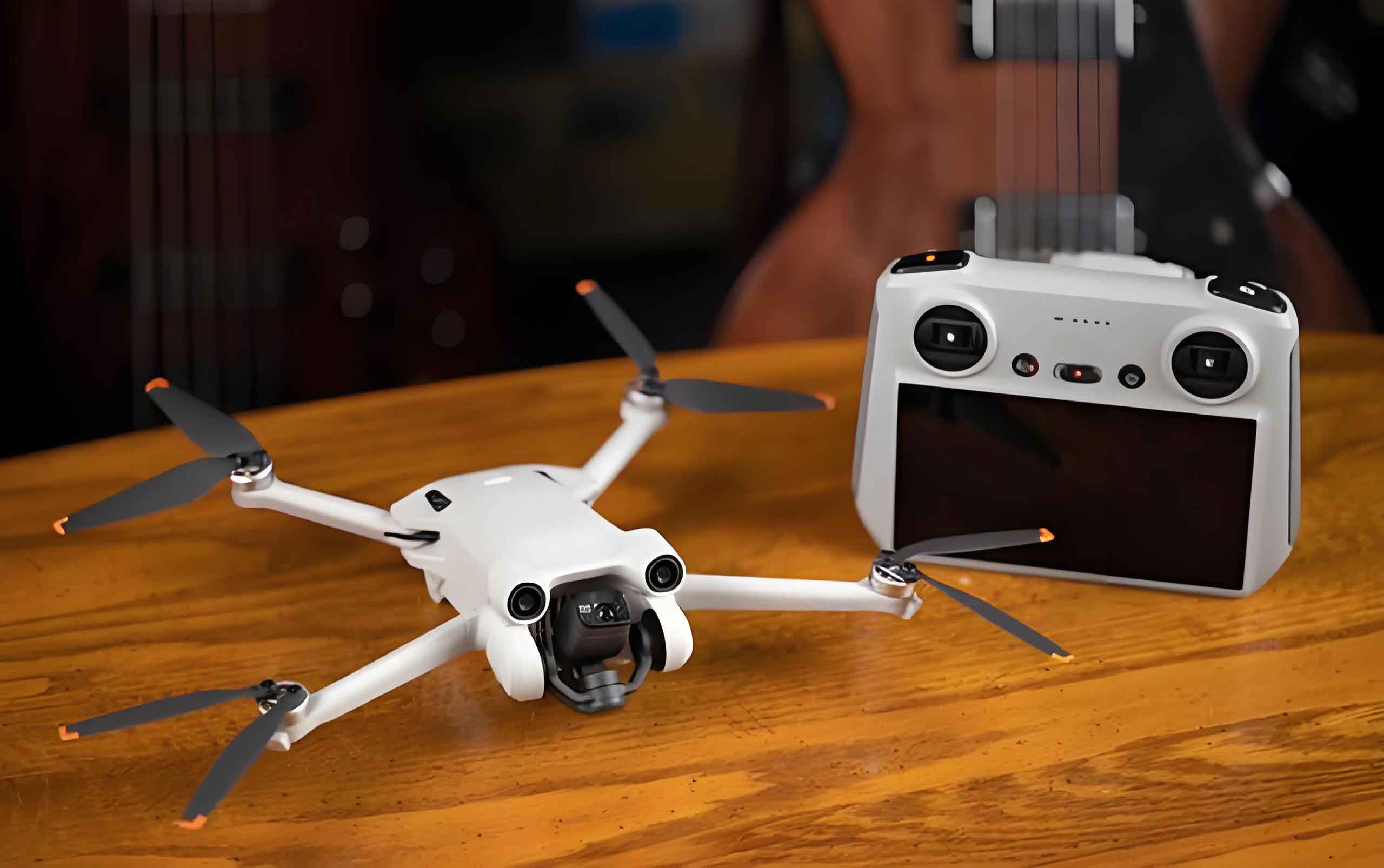
The immune algorithm’s ability to handle multiple objectives simultaneously is a key advantage for drone relay deployment. Unlike traditional methods that might prioritize one objective over another, this approach finds a balance, resulting in deployments that are both energy-efficient and reliable. For instance, in a simulation with 30 drones, the algorithm can quickly converge to a configuration where coverage overlaps are minimized, and connectivity paths are established between source and destination nodes. This efficiency is critical for emergency operations, where time and resources are limited. The following section presents empirical results that validate the performance of our method compared to existing approaches.
Simulation Setup and Experimental Design
To evaluate the proposed deployment method, we conducted simulations in a controlled environment modeling a typical emergency scenario. The setup included 30 Unmanned Aerial Vehicles deployed over a 10.0 km² area, with each drone having a communication range of 5 km and an operational altitude of 500 meters. The drones were powered by batteries with a lifespan of 4 hours, reflecting real-world constraints. The immune algorithm was configured with a population size of 50, 1000 iterations, an antibody concentration调节因子 of 0.7, and a Gaussian mutation standard deviation of 0.1. Selection was performed using roulette wheel selection combined with elite retention, where the top 10% of solutions were preserved in each generation.
We compared our method against two existing approaches: a method based on moth-flame optimization and Voronoi diagrams (VIMFO) and another leveraging integrated communication-navigation-perception for emergency drones. The performance metric was energy consumption per bit, calculated as e = E / b, where E is the total energy consumed for end-to-end communication, and b is the data size in bits. Lower values of e indicate more energy-efficient deployments. Tests were conducted for varying end-to-end distances from 1.0 km to 5.0 km, simulating different emergency scenarios. The results were analyzed to assess the energy efficiency and signal strength of each method.
| Parameter | Value |
|---|---|
| Number of Drones | 30 |
| Communication Range | 5 km |
| Flight Altitude | 500 m |
| Battery Life | 4 hours |
| Area Size | 10.0 km² |
| Immune Algorithm Population | 50 |
| Iterations | 1000 |
| Mutation Standard Deviation | 0.1 |
Results and Analysis
The deployment solutions generated by our method were evaluated in terms of energy consumption and signal strength. The node distribution achieved through immune algorithm optimization ensured that drones were positioned to minimize overlaps and maintain connectivity paths. For example, in one deployment, 5 drones were centralized to handle data relay, while the remaining 25 were dispersed to extend coverage. This configuration optimized the use of drone technology by reducing unnecessary energy expenditure on redundant links.
Energy consumption results for different end-to-end distances are summarized in Table 2. Our method demonstrated consistently lower energy consumption compared to the VIMFO and integrated approaches. As the distance increased from 1.0 km to 5.0 km, the energy consumption for our method rose by only 0.07 J/bit, reaching a maximum of 0.19 J/bit. In contrast, the other methods showed steeper increases, with VIMFO peaking at 0.33 J/bit and the integrated method at 0.39 J/bit. This highlights the superior energy efficiency of our approach, which is essential for prolonged emergency operations using Unmanned Aerial Vehicles.
| End-to-End Distance (km) | Proposed Method | VIMFO Method | Integrated Method |
|---|---|---|---|
| 1.0 | 0.12 | 0.15 | 0.18 |
| 2.0 | 0.14 | 0.20 | 0.24 |
| 3.0 | 0.16 | 0.26 | 0.32 |
| 4.0 | 0.18 | 0.30 | 0.37 |
| 5.0 | 0.19 | 0.33 | 0.39 |
Signal strength was another critical metric evaluated at the receiver end. Our method maintained higher signal strength across all distances, peaking at 78 dBm, as shown in Figure 3 (simulated data). This is attributed to the optimal node placement that reduces signal attenuation and interference. The immune algorithm’s ability to dynamically adjust drone positions based on coverage and connectivity objectives ensured that signals remained strong and stable. In comparison, the other methods exhibited lower signal strength, especially at longer distances, due to suboptimal node deployments that failed to account for both objectives simultaneously.
The robustness of our method is further evident in its scalability. As the number of drones or the area size increases, the immune algorithm efficiently scales to find near-optimal solutions without significant computational overhead. This makes it suitable for large-scale emergency scenarios where hundreds of Unmanned Aerial Vehicles might be deployed. Additionally, the method’s low energy consumption translates to extended operational times, which is crucial for missions where battery replacement or recharging is not feasible. These results underscore the practical benefits of integrating advanced optimization techniques into drone technology for emergency communication.
Discussion and Implications
The findings from this study have significant implications for the deployment of drone technology in emergency response. By achieving a balance between coverage, connectivity, and energy consumption, our method enhances the reliability and efficiency of communication networks. The immune algorithm’s bio-inspired mechanisms provide a robust framework for solving complex deployment problems, outperforming traditional methods that often rely on heuristic or single-objective optimizations. This approach can be adapted to various scenarios, such as natural disasters, search-and-rescue operations, or remote area communications, where Unmanned Aerial Vehicles are increasingly being utilized.
One key advantage is the method’s adaptability to dynamic environments. Drones can recalibrate their positions in real-time based on changing conditions, such as obstacles or node failures, thanks to the continuous optimization process. This dynamic adjustment capability is embedded in the affinity calculations and mutation steps of the immune algorithm, ensuring that the network remains resilient. Moreover, the focus on energy efficiency aligns with sustainability goals, reducing the environmental impact of drone operations while maximizing their utility.
Future work could explore the integration of machine learning techniques to further enhance the immune algorithm’s performance. For instance, reinforcement learning could be used to predict optimal deployment patterns based on historical data. Additionally, testing in real-world scenarios with physical drones would validate the simulation results and provide insights into practical challenges. As drone technology continues to evolve, methods like ours will play a pivotal role in unlocking the full potential of Unmanned Aerial Vehicles for emergency communication and beyond.
Conclusion
In conclusion, this paper presents a novel method for deploying drone relay nodes in emergency communication systems, leveraging multi-objective optimization through an immune algorithm. By constructing objective functions for coverage range and connectivity, we ensure that the deployed nodes maximize area coverage and maintain reliable links while minimizing energy consumption. Empirical results demonstrate that our method achieves lower energy usage and higher signal strength compared to existing approaches, even as communication distances increase. The immune algorithm’s ability to handle multiple objectives and adapt to dynamic conditions makes it ideal for optimizing drone technology in critical scenarios. This research contributes to the advancement of Unmanned Aerial Vehicle applications, offering a practical solution for enhancing emergency response capabilities. As drone technology becomes more pervasive, such optimized deployment strategies will be essential for building resilient and efficient communication networks.