
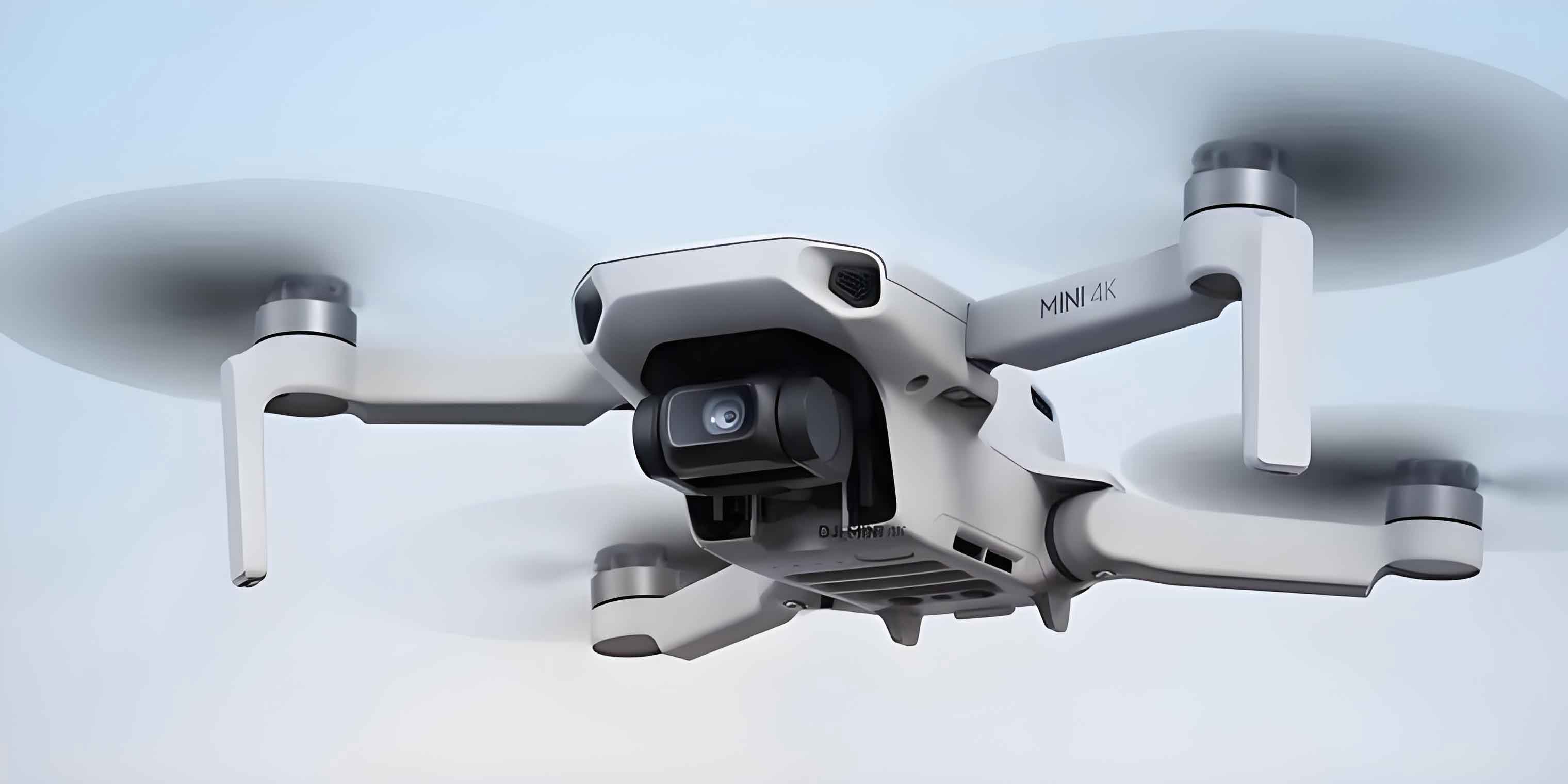
Trajectory planning represents a fundamental challenge in drone technology, requiring efficient navigation from start to goal while avoiding obstacles. Traditional Rapidly-exploring Random Trees Star (RRT*) algorithms exhibit significant limitations in Unmanned Aerial Vehicle applications, including slow convergence, computational inefficiency, and non-smooth path generation. To address these challenges, we integrate Artificial Potential Field (APF) methodology with RRT*, creating a hybrid global-local planning framework optimized for UAV operations.
The core innovation lies in modifying RRT*’s stochastic exploration using APF’s attraction-repulsion principles. We define the drone’s position as $P$, with the enhanced gravitational potential field expressed as:
$$U_{\text{att}}(p) = U_{\text{att1}}(p) + U_{\text{att2}}(p)$$
$$U_{\text{att1}} = \frac{1}{2}k_a\rho_{\text{ng}}^2, \quad U_{\text{att2}} = \frac{1}{2}k_b\rho_{\text{nr}}^2$$
where $k_a$ and $k_b$ denote gravitational gain coefficients for target and random points, while $\rho_{\text{ng}}$ and $\rho_{\text{nr}}$ represent Euclidean distances to goal and random sampling points respectively. The repulsive potential field is redesigned to prevent local minima:
$$U_{\text{rep}}(p) =
\begin{cases}
\frac{1}{2}k_r \left( \frac{1}{\rho(p_{\text{ner}}, p_{\text{obs}})} – \frac{1}{\rho_0} \right)^2 \rho_{\text{ng}}^n & \rho(p_{\text{ner}}, p_{\text{obs}}) \leq \rho_0 \\
0 & \rho(p_{\text{ner}}, p_{\text{obs}}) > \rho_0
\end{cases}$$
where $k_r$ is the repulsive gain coefficient, $\rho_0$ denotes the obstacle safety threshold, and $n$ is a positive integer. The resultant force vector guides RRT* expansion:
$$\vec{F}_{\text{total}} = \vec{F}_{\text{rep}} + \vec{F}_{\text{att}} = -\nabla U_{\text{rep}} – \nabla U_{\text{att}}$$
This directional bias accelerates convergence toward the goal while minimizing redundant node generation. Following initial path construction, we implement a two-stage optimization:
- Redundant Node Elimination: Apply greedy algorithm principles to remove extraneous waypoints through collision-checked linear shortcuts.
- B-spline Smoothing: Generate curvature-continuous trajectories using cubic B-splines for kinematic feasibility:
$$P(t) = \sum_{i=0}^{n} P_i F_{i,k}(t)$$
$$F_{i,k}(t) = \frac{t – t_i}{t_{i+k} – t_i} F_{i,k-1}(t) + \frac{t_{i+k+1} – t}{t_{i+k+1} – t_{i+1}} F_{i+1,k-1}(t)$$
For $k=3$, the basis functions simplify to:
$$\begin{bmatrix}
F_{0,3} \\
F_{1,3} \\
F_{2,3} \\
F_{3,3}
\end{bmatrix} = \frac{1}{6} \begin{bmatrix}
1 & -3 & 3 & -1 \\
4 & 0 & -6 & 3 \\
1 & 3 & 3 & -3 \\
0 & 0 & 0 & 1
\end{bmatrix} \begin{bmatrix}
1 \\
t \\
t^2 \\
t^3
\end{bmatrix}, \quad t \in [0,1]$$
We validated our APF-RRT* algorithm in 1000×1000 unit environments with circular obstacles. Comparative analysis against classical RRT* and APF-RRT included 20 trials per algorithm with consistent parameters ($\zeta=1$, $\eta=1$, $\text{step}=20$, $\rho=50$). Performance metrics encompassed path length, computation time, node count, and iterations.
| Algorithm | Path Length (units) | Time (s) | Nodes | Iterations |
|---|---|---|---|---|
| RRT* | 1624.7 | 13.67 | 55 | 804 |
| APF-RRT | 1651.2 | 9.47 | 57 | 1017 |
| APF-RRT* | 1379.8 | 8.69 | 34 | 653 |
Our enhanced approach demonstrated significant improvements:
- 15.07% shorter paths than RRT*
- 36.43% faster computation than RRT*
- 40.35% fewer nodes than APF-RRT
- 35.79% fewer iterations than APF-RRT
Physical validation employed Quanser QBot2e ground robots in 4m×4m arenas with obstacle configurations. Depth sensing via Kinect generated occupancy grids, with the proposed algorithm producing shorter, smoother trajectories than alternatives:
| Algorithm | Path Length (m) | Smoothness | Safety |
|---|---|---|---|
| RRT | 4.15 | Low | Low |
| APF-RRT | 3.42 | Low | High |
| APF-RRT* | 3.10 | High | High |
The integration of APF’s targeted guidance with RRT*’s asymptotic optimality, augmented by computational geometry optimizations, establishes a robust framework for UAV navigation. This methodology effectively balances exploration efficiency with trajectory quality, critical for energy-constrained drone operations in complex environments. Future work will extend this approach to 3D dynamic environments with moving obstacles and multi-drone coordination scenarios.
Advancements in drone technology continue to push the boundaries of autonomous systems, with our improved path planning framework demonstrating tangible performance gains in both simulated and real-world contexts. The versatility of this approach suggests applicability beyond UAVs to robotic manipulators, autonomous underwater vehicles, and other motion-constrained platforms requiring reliable navigation in unstructured environments.