
In the modern battlespace, the proliferation of unmanned aerial vehicles (UAVs) presents a significant threat to military and civilian infrastructure. As a researcher focused on countering these threats, I have dedicated efforts to developing a comprehensive operational view for anti-drone cyber-electromagnetic countermeasures. This view aims to systematically describe the mission requirements, combat objects, operational actions, command and control systems, essential elements, personnel, equipment, and the necessary command and coordination relationships to execute anti-drone operations effectively. The operational view encompasses several key components: the operational concept chart, organizational relationship chart, operational node connectivity chart, operational activity chart, operational state transition chart, and operational information exchange matrix. By elaborating on these elements, I seek to provide a structured framework that enhances the planning and execution of anti-drone campaigns, ensuring that cyber and electromagnetic means are integrated seamlessly to neutralize drone threats.
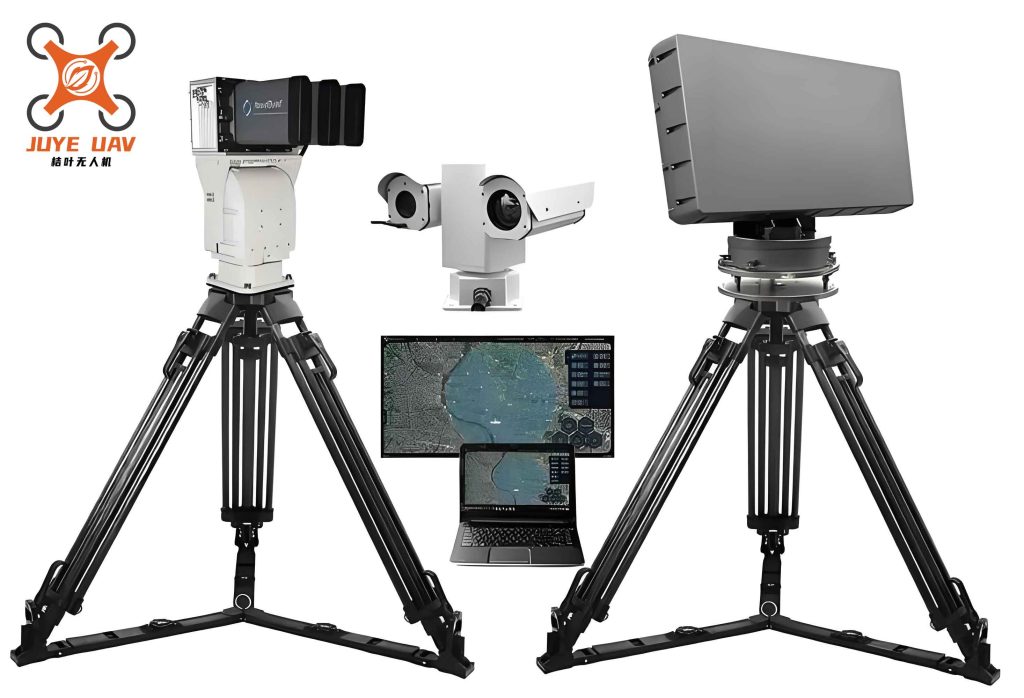
The foundation of any successful anti-drone operation lies in a clear operational concept. This concept outlines the high-level mission of eliminating drone threats, which relies on intelligence as the base, command as the core, and action as the key. In anti-drone cyber-electromagnetic countermeasures, operations are directed by command agencies that utilize intelligence from reconnaissance and early warning forces to conduct cyber-electromagnetic actions against drones. The operational concept involves four primary entities: the anti-drone command organization, reconnaissance and early warning forces, cyber-electromagnetic attack forces, and the incoming drones. The command organization, typically structured within an operations command center, includes positions for comprehensive planning, force control, and cyber-electromagnetic operations, along with an intelligence support unit. These units collaborate to analyze drone activities, assess countermeasure effectiveness, and devise anti-drone plans. Reconnaissance forces, comprising electronic warfare reconnaissance stations, technical reconnaissance stations, network reconnaissance, radar, infrared detection devices, optical and visual observation equipment, and acoustic monitoring devices, are responsible for gathering intelligence on drone types, patterns, positions, intentions, payload capabilities, and support systems. Cyber-electromagnetic attack forces, including electronic jamming units, electronic destruction units, network attack units, and camouflage deception units, execute actions based on command directives. The incoming drones, consisting of the platform, onboard payloads, and support systems, serve as the targets. This conceptual framework ensures that all elements are aligned to achieve the mission of threat elimination.
To translate the operational concept into actionable structures, the organizational relationship chart defines the command hierarchy and coordination within the anti-drone system. This chart employs a functional tree model to depict the relationships between various units. At the top is the anti-drone command agency, which oversees subordinate units. The command center’s cyber-electromagnetic operations position collaborates with the comprehensive planning position to develop cyber-electromagnetic schemes, then issues orders to the cyber-electromagnetic attack forces. Reconnaissance and early warning forces operate under the command agency’s direction, collecting and reporting drone intelligence. The cyber-electromagnetic attack forces, organized into specialized units, perform assigned tasks based on operational plans. This hierarchical structure ensures clear lines of authority and facilitates coordinated anti-drone efforts. For instance, the command agency may delegate tasks such as continuous monitoring to reconnaissance forces and targeted jamming to electronic attack units, all while maintaining oversight through regular reports and adjustments. The organizational chart emphasizes the integration of cyber and electromagnetic capabilities, highlighting how traditional electronic warfare and modern network operations converge in anti-drone contexts.
Building on the organizational framework, the operational node connectivity chart specifies the nodes involved in anti-drone operations and their interconnections. Nodes represent collections of personnel, equipment, and forces performing specific tasks. In anti-drone cyber-electromagnetic countermeasures, six key nodes are identified: the intelligence support position, comprehensive planning position, force control position, and cyber-electromagnetic operations position within the command center, along with the reconnaissance and early warning forces node and the cyber-electromagnetic attack forces node. These nodes are linked by requirement lines indicating command and coordination relationships. For example, the comprehensive planning node coordinates with the cyber-electromagnetic operations node to develop plans, while the cyber-electromagnetic operations node issues directives to the attack forces node. The reconnaissance node provides intelligence to the intelligence support node, which then feeds analyzed data to the command nodes. This connectivity ensures that information flows efficiently, enabling timely decisions and actions. The chart can be represented with nodes as circles and lines labeled with interaction types, such as “command,” “report,” or “coordinate.” To quantify these connections, we can define a connectivity matrix $C$ where $C_{ij} = 1$ if node $i$ interacts with node $j$, and $0$ otherwise. For a system with $n$ nodes, the matrix helps analyze network robustness and information flow efficiency in anti-drone operations.
The information exchange between nodes is detailed in the operational information exchange matrix, which specifies the content, media, attributes, and interoperability levels of interactions. This matrix refines the connectivity chart by listing all possible exchanges among nodes. Based on the operational activities, the matrix includes instructions, commands, requests, reports, coordination, and notifications. For instance, the cyber-electromagnetic operations node sends commands to the attack forces node, while the reconnaissance node reports drone sightings to the intelligence support node. The matrix ensures that all necessary information is shared to support anti-drone tasks. Below is a simplified table summarizing key information exchanges in anti-drone cyber-electromagnetic countermeasures. This table highlights the bidirectional nature of interactions, emphasizing that effective anti-drone operations rely on continuous feedback loops.
| Sequence | Source Node | Destination Node | Information Exchange Description |
|---|---|---|---|
| 1 | Comprehensive Planning Position | Force Control Position | Coordination on resource allocation |
| 2 | Comprehensive Planning Position | Cyber-Electromagnetic Operations Position | Coordination on scheme development |
| 3 | Comprehensive Planning Position | Intelligence Support Position | Coordination on intelligence requirements |
| 4 | Force Control Position | Reconnaissance Forces | Commands for surveillance tasks |
| 5 | Force Control Position | Cyber-Electromagnetic Attack Forces | Orders to execute jamming or attacks |
| 6 | Cyber-Electromagnetic Operations Position | Reconnaissance Forces | Instructions for targeted reconnaissance |
| 7 | Cyber-Electromagnetic Operations Position | Cyber-Electromagnetic Attack Forces | Directives for specific countermeasures |
| 8 | Intelligence Support Position | Comprehensive Planning Position | Reports on drone threat assessments |
| 9 | Reconnaissance Forces | Intelligence Support Position | Reports on drone detection data |
| 10 | Cyber-Electromagnetic Attack Forces | Force Control Position | Requests for mission updates |
Operational activities are decomposed in the operational activity chart, which describes the actions required to execute anti-drone cyber-electromagnetic countermeasures. These activities are grouped into four main categories: reconnaissance and early warning actions, command and control actions, cyber-electromagnetic attack actions, and operational effectiveness assessment actions. Each category is further divided into sub-activities. Reconnaissance actions include electronic reconnaissance, network reconnaissance, technical intelligence gathering, radar detection, photoelectric detection, optical and visual observation, and acoustic monitoring. Command and control actions encompass planning and decision-making, as well as control and coordination. Cyber-electromagnetic attack actions involve electronic jamming, electronic destruction, network attacks, and camouflage deception. Effectiveness assessment actions consist of data collection and evaluation conclusion determination. This hierarchical decomposition ensures that all tasks are systematically addressed. For example, electronic jamming may target drone communication links, described by a jamming effectiveness equation: $$J_e = \frac{P_j G_j}{P_d G_d} \cdot \frac{1}{L}$$ where $J_e$ is the jamming effectiveness, $P_j$ is the jamming power, $G_j$ is the jamming antenna gain, $P_d$ is the drone signal power, $G_d$ is the drone antenna gain, and $L$ is the path loss. Such formulas help quantify anti-drone measures and optimize resource allocation.
The sequence of activities is captured in the operational state transition chart, which models the dynamic progression of anti-drone operations. States represent distinct phases, and transitions occur based on conditions or events. In anti-drone cyber-electromagnetic countermeasures, six primary states are defined: Reconnaissance and Early Warning, Situation Analysis and Judgment, Decision Making and Planning, Control and Coordination, Cyber-Electromagnetic Attack, and Effectiveness Assessment. The transition between states follows a logical flow. Initially, operations begin with Reconnaissance and Early Warning, where drones are detected and tracked. This state transitions to Situation Analysis and Judgment when sufficient data is collected to assess the threat. Based on the analysis, the system moves to Decision Making and Planning, where anti-drone schemes are formulated. Once plans are approved, the Control and Coordination state directs forces to execute actions, leading to the Cyber-Electromagnetic Attack state. After attacks are conducted, the Effectiveness Assessment state evaluates outcomes. If the threat is neutralized, operations may end; otherwise, the cycle may repeat from an earlier state. This can be modeled as a Markov chain with states $S = \{S_1, S_2, S_3, S_4, S_5, S_6\}$ and transition probabilities $P_{ij}$ representing the likelihood of moving from state $i$ to state $j$. For instance, $P_{56}$ might be the probability of moving from Cyber-Electromagnetic Attack to Effectiveness Assessment, often close to 1 if attacks are executed as planned. The state transition diagram ensures that anti-drone operations are adaptive and responsive to changing conditions.
To deepen the analysis, let’s consider mathematical models for key anti-drone processes. For reconnaissance, the probability of detecting a drone can be expressed using radar range equations or sensor fusion techniques. Suppose we have $m$ sensors each with detection probability $p_i$. The combined detection probability $P_d$ for a drone at range $r$ might be: $$P_d = 1 – \prod_{i=1}^{m} (1 – p_i(r))$$ where $p_i(r)$ decreases with distance. This highlights the importance of layered sensing in anti-drone networks. For cyber attacks, the success rate of compromising a drone’s network can be modeled based on vulnerability assessments. If a drone system has $v$ vulnerabilities and each has an exploitation probability $q$, the overall compromise probability $C$ after $k$ attempts could be: $$C = 1 – (1 – q)^v$$ assuming independent vulnerabilities. Such models aid in risk assessment for anti-drone strategies. Additionally, the effectiveness of electronic jamming in disrupting drone control links can be analyzed using signal-to-interference-plus-noise ratio (SINR) calculations. For a drone receiving commands with signal power $S$, jamming power $I$, and noise power $N$, the SINR is: $$\text{SINR} = \frac{S}{I + N}$$ Successful jamming occurs when SINR falls below a threshold $\theta$, a common criterion in anti-drone electronic warfare.
Coordination among forces is critical in anti-drone operations, especially when dealing with swarms or multiple threats. The command and control system must balance resource allocation across different anti-drone units. This can be formulated as an optimization problem. Let $R$ be the set of reconnaissance assets, $A$ be the set of attack assets, and $T$ be the set of drone targets. Each asset has capabilities and costs, and each target has a priority score $w_t$. The objective is to maximize the total neutralized threat subject to constraints like time and resource limits. Mathematically, we might define decision variables $x_{rt}$ and $y_{at}$ indicating assignment of reconnaissance asset $r$ to target $t$ and attack asset $a$ to target $t$, respectively. The optimization model could be: $$\max \sum_{t \in T} w_t \cdot f_t(x, y)$$ subject to $$\sum_{t \in T} x_{rt} \leq 1 \quad \forall r \in R,$$ $$\sum_{t \in T} y_{at} \leq 1 \quad \forall a \in A,$$ and other operational constraints, where $f_t$ is a function representing the effectiveness against target $t$. This approach ensures efficient use of anti-drone resources.
Information fusion plays a pivotal role in enhancing situational awareness for anti-drone operations. Data from diverse sources—such as radar tracks, electronic signatures, and visual feeds—must be integrated to form a coherent picture. Techniques like Kalman filtering or Bayesian networks can be employed. For instance, the state of a drone (position, velocity) can be estimated using a Kalman filter that combines measurements from multiple sensors. The state update equations are: $$\hat{x}_{k|k-1} = F_k \hat{x}_{k-1|k-1},$$ $$P_{k|k-1} = F_k P_{k-1|k-1} F_k^T + Q_k,$$ where $\hat{x}$ is the state estimate, $P$ is the error covariance, $F$ is the state transition matrix, and $Q$ is the process noise covariance. The measurement update incorporates sensor data to refine the estimate. This fusion process reduces uncertainties and improves targeting accuracy for anti-drone measures. Moreover, machine learning algorithms can analyze patterns in drone behavior to predict future actions, enabling proactive anti-drone responses.
The cyber-electromagnetic attack actions in anti-drone operations require careful planning to avoid collateral damage and ensure legality. Electronic jamming, for example, must be precisely tuned to disrupt drone frequencies without affecting friendly communications. The jamming power required to achieve a desired interference level can be calculated using the Friis transmission equation: $$P_r = P_t G_t G_r \left( \frac{\lambda}{4\pi d} \right)^2$$ where $P_r$ is the received power at the drone, $P_t$ is the transmitted jamming power, $G_t$ and $G_r$ are antenna gains, $\lambda$ is the wavelength, and $d$ is the distance. By setting $P_r$ above a threshold, anti-drone jammers can effectively neutralize drones. For network attacks, penetration testing frameworks can identify vulnerabilities in drone control systems. Common techniques include spoofing GPS signals or hijacking communication channels. The success probability of such attacks depends on factors like encryption strength and network latency. In anti-drone scenarios, these attacks are often combined with electronic means to create synergistic effects.
Effectiveness assessment in anti-drone operations involves quantifying the impact of countermeasures. Key performance indicators (KPIs) include drone neutralization rate, time to intercept, and resource utilization. These can be analyzed using statistical methods. Suppose after an anti-drone campaign, $n$ drones were engaged, and $m$ were neutralized. The neutralization rate $R_n$ is: $$R_n = \frac{m}{n}$$ Confidence intervals can be computed to account for variability. Additionally, the time from detection to neutralization, $T$, is a critical metric. The cumulative distribution function $F(t)$ of $T$ can be estimated from historical data to improve future anti-drone responses. Simulation tools, such as discrete-event simulations, can model entire anti-drone processes to identify bottlenecks and optimize workflows. For instance, simulating the state transitions with random event times can reveal the average cycle time for an anti-drone engagement, helping commanders allocate resources more effectively.
Integration of emerging technologies is essential for advancing anti-drone capabilities. Artificial intelligence (AI) can automate decision-making in anti-drone systems, reducing human workload and response times. AI algorithms can classify drone types based on sensor data, predict flight paths, and recommend optimal countermeasures. For example, a neural network trained on drone signatures can achieve high classification accuracy, enhancing the speed of threat identification in anti-drone operations. Directed energy weapons, such as lasers or high-power microwaves, offer new avenues for anti-drone defense. The effectiveness of a laser system can be modeled by the energy deposition on the drone surface: $$E = \frac{P \cdot t}{A}$$ where $P$ is the laser power, $t$ is the exposure time, and $A$ is the spot area. If $E$ exceeds a damage threshold, the drone is disabled. These technologies complement traditional cyber-electromagnetic methods, creating a multi-layered anti-drone architecture.
Training and preparedness are vital for personnel involved in anti-drone operations. Simulation-based training programs can immerse operators in realistic scenarios, improving their skills in using anti-drone systems. These programs often include virtual environments where drones exhibit various behaviors, and operators must apply appropriate countermeasures. The training effectiveness can be measured through metrics like reaction time and decision accuracy. Regular exercises ensure that coordination between reconnaissance, command, and attack units is seamless, fostering a cohesive anti-drone team. Additionally, standard operating procedures (SOPs) should be developed based on the operational view, detailing steps for each activity and state transition. These SOPs help standardize responses and reduce errors during actual anti-drone engagements.
In conclusion, the operational view for anti-drone cyber-electromagnetic countermeasures provides a structured approach to understanding and executing drone defense operations. By detailing the operational concept, organizational relationships, node connectivity, information exchanges, activities, and state transitions, this view enables systematic planning and adaptation. Mathematical models and formulas, as discussed, offer quantitative insights into effectiveness and optimization. As drone threats evolve, continuous refinement of this operational view will be necessary, incorporating new technologies and lessons learned. Ultimately, a robust anti-drone framework enhances security and protects assets from emerging aerial threats, ensuring that cyber and electromagnetic countermeasures are deployed efficiently and effectively. The integration of all elements—from intelligence gathering to coordinated attacks—forms the backbone of successful anti-drone strategies, making this operational view indispensable for modern defense systems.