
In recent conflicts, the use of unmanned aerial vehicles (UAVs) has dramatically reshaped battlefield dynamics, with first-person view (FPV) drones emerging as a pivotal tool due to their unique capabilities. These FPV drones offer immersive surveillance and precision strike abilities, posing significant challenges to traditional defense systems. As a low-altitude, slow-flying, and small-sized (LSS) target, the FPV drone exhibits minimal radar cross-section (RCS) and weak infrared signatures, making detection and interception difficult. This analysis delves into the technical characteristics, operational applications, countermeasures, and future trends of FPV drones, providing insights into their growing role in warfare. We explore how these systems, originally designed for recreational purposes, have been adapted for military use, highlighting their impact on modern combat strategies.
The FPV drone operates by transmitting real-time video from an onboard camera to a operator wearing virtual reality (VR) goggles, enabling a “first-person” perspective that enhances situational awareness and control. Typically constructed from modular commercial components, such as high-speed motors, lightweight carbon fiber frames, and lithium-polymer batteries, these drones can be rapidly assembled and deployed. Key performance metrics include flight speeds ranging from 150 to 260 km/h, endurance of up to 20 minutes, and payload capacities that allow for customization with various munitions. The low cost and ease of production make FPV drones accessible to non-state actors and conventional forces alike, fostering asymmetric warfare tactics. For instance, the total cost of a basic FPV drone system can be as low as a few hundred dollars, compared to millions for traditional armored vehicles, leading to high cost-effectiveness in operations.
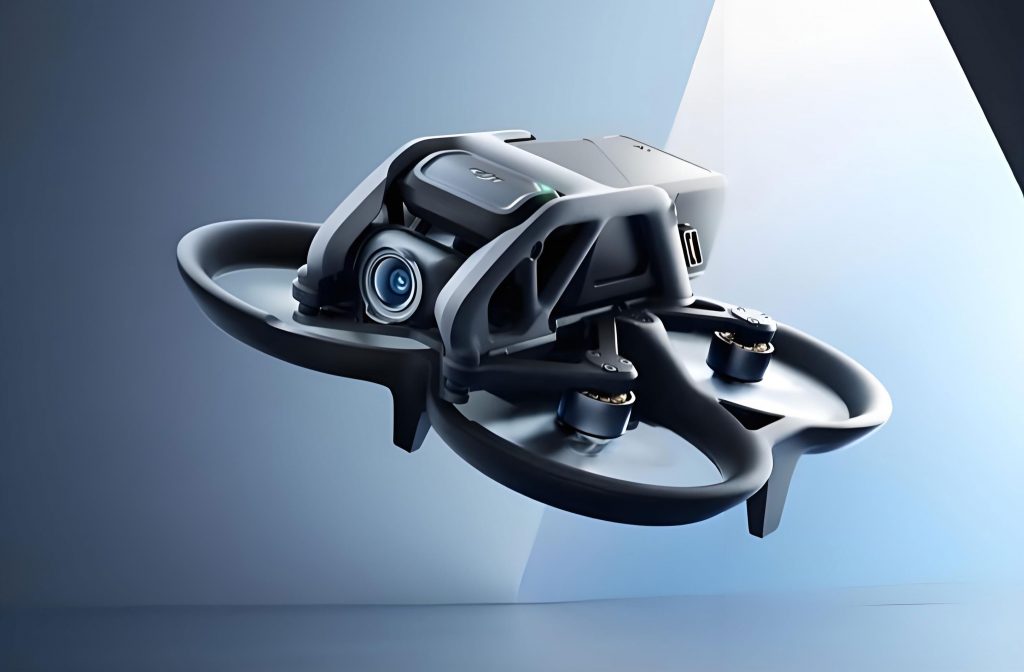
To better understand the technical specifications of typical FPV drones, Table 1 summarizes common parameters based on field observations and modular designs. These characteristics underline why FPV drones are classified as LSS targets and why they require specialized countermeasures.
| Parameter | Value Range | Description |
|---|---|---|
| Maximum Speed | 150–260 km/h | Enabled by high-RPM motors and aerodynamic design |
| Endurance | 15–30 minutes | Dependent on battery capacity and payload |
| Payload Capacity | 1–5 kg | Allows integration of explosives like RPG warheads |
| Operating Range | 5–20 km | Influenced by communication link stability |
| RCS | < 0.01 m² | Small size reduces radar detectability |
| Control Method | Manual via VR/RC | Requires skilled operator for precision strikes |
The operational utility of FPV drones stems from their adaptability in roles such as reconnaissance, target acquisition, and direct attack. In conflicts, these drones have been modified to carry high-explosive warheads, transforming them into low-cost loitering munitions. For example, the “SkyKnight” FPV drone incorporates modular components including inertial navigation systems, HD cameras, and interchangeable warheads, enabling it to engage both stationary and moving targets. Similarly, commercial FPV drone models have been outfitted with RPG rockets or shaped charges, capable of penetrating armor up to 500 mm thick. The effectiveness of such systems is often quantified by the probability of kill (P_k) against various targets, which can be modeled using equations that account for factors like impact angle and warhead potency. For instance, the kinetic energy upon impact can be expressed as:
$$ E_k = \frac{1}{2} m v^2 $$
where \( m \) is the mass of the FPV drone including its payload, and \( v \) is the velocity at impact. This energy, combined with the focused explosion of a warhead, contributes to the high lethality observed in engagements against armored vehicles. Operational data from recent battles indicate that FPV drones account for a significant proportion of destroyed hardware, with cost-benefit ratios favoring the attacker. Specifically, the cost efficiency can be represented as:
$$ C_{eff} = \frac{C_{target}}{C_{drone}} $$
where \( C_{target} \) is the value of the targeted asset (e.g., a multi-million dollar tank), and \( C_{drone} \) is the production cost of the FPV drone (often under $1000). This ratio frequently exceeds 1000:1, underscoring the economic advantage of employing FPV drones in swarm tactics or coordinated assaults.
In terms of combat employment, FPV drones typically operate in pairs: one operator controls the drone via a handheld transmitter and VR headset, while an observer monitors the feed and provides targeting cues. This teamwork allows for real-time adjustments and increases the likelihood of successful strikes. Notable engagements include the destruction of advanced armored vehicles like the BMPT-72 “Terminator,” where multiple FPV drones executed sequential attacks to exploit vulnerabilities in rear or top armor. The success rate in such scenarios often depends on environmental factors and electronic warfare conditions, which can be analyzed using probabilistic models. For example, the probability of a successful FPV drone strike under jamming can be approximated as:
$$ P_{success} = P_{detect} \times P_{track} \times P_{impact} $$
where \( P_{detect} \) is the probability of target detection by the FPV drone, \( P_{track} \) is the probability of maintaining track amidst countermeasures, and \( P_{impact} \) is the probability of accurate impact. Field reports suggest that with skilled operators, \( P_{success} \) can exceed 0.7 in permissive environments, but drops significantly against defended targets.
Countering the threat posed by FPV drones requires a multi-faceted approach, as traditional air defense systems like anti-aircraft guns and missiles are often ineffective due to the drones’ small size and low altitude. Instead, defenses are categorized into soft-kill and hard-kill methods. Soft-kill techniques involve electronic warfare (EW) to disrupt the FPV drone’s control links, navigation, and video feed. Common EW measures include jamming the command and control frequencies, typically in the 300 MHz to 6 GHz range, using high-power transmitters. The effectiveness of jamming can be modeled by the link budget equation:
$$ P_{r} = \frac{P_{t} G_{t} G_{r} \lambda^2}{(4\pi d)^2 L} $$
where \( P_{r} \) is the received power at the FPV drone, \( P_{t} \) is the jamming power, \( G_{t} \) and \( G_{r} \) are the antenna gains, \( \lambda \) is the wavelength, \( d \) is the distance, and \( L \) represents losses. If \( P_{r} \) falls below the receiver sensitivity, the FPV drone loses control and may crash. Systems like the Russian “Krasukha” or portable “Drone Defender” utilize this principle, with jamming powers up to 30 kW capable of neutralizing drones within several kilometers.
Hard-kill methods, on the other hand, physically destroy the FPV drone using directed energy weapons or kinetic interceptors. Laser weapons, such as the 50 kW system in the U.S. M-SHORAD, focus high-energy beams to thermally disable the drone’s components. The time to incapacitate a target can be estimated as:
$$ t_{kill} = \frac{E_{required}}{P_{laser} \cdot A_{spot}} $$
where \( E_{required} \) is the energy needed to damage critical parts, \( P_{laser} \) is the laser power, and \( A_{spot} \) is the beam spot area. High-power microwave (HPM) weapons, like the U.S. THOR system, emit broad-spectrum pulses to fry electronic circuits, offering area coverage against swarms. The peak power density required for HPM effectiveness is given by:
$$ S = \frac{P_{peak} G}{4\pi r^2} $$
where \( S \) is the power density at range \( r \), \( P_{peak} \) is the peak power, and \( G \) is the antenna gain. Values exceeding 10 W/m² can disrupt unshielded electronics at short ranges. Table 2 compares these countermeasures, highlighting their principles and limitations against FPV drones.
| Countermeasure Type | Mechanism | Effective Range | Advantages | Limitations |
|---|---|---|---|---|
| Soft-Kill (EW Jamming) | Disrupts control links | 1–10 km | Low collateral damage | Vulnerable to frequency hopping |
| Laser Weapons | Thermal ablation | 1–5 km | Atmospheric attenuation | |
| HPM Weapons | Electromagnetic pulse | 0.5–3 km | Limited by power requirements | |
| Kinetic Interceptors | Physical impact | 0.5–2 km | High cost, limited ammunition |
Looking ahead, the evolution of FPV drones is likely to focus on enhancing autonomy, range, and resilience. Artificial intelligence (AI) is being integrated to enable target recognition and terminal guidance, reducing reliance on continuous human control. For example, AI algorithms can process visual data to identify high-value targets even if the video link is jammed, using machine learning models trained on diverse datasets. The autonomy level can be quantified by the OODA loop (Observe, Orient, Decide, Act) time, where AI reduces the cycle to milliseconds. Additionally, extended range is being achieved through mothership drones that act as relays, effectively multiplying the operational radius. The maximum range \( R_{max} \) with a relay can be expressed as:
$$ R_{max} = R_{direct} + R_{relay} $$
where \( R_{direct} \) is the direct control range and \( R_{relay} \) is the additional distance provided by the relay. This approach could push engagement distances beyond 20 km, enabling deep strikes behind enemy lines. Furthermore, advancements in battery technology and alternative power sources, such as hydrogen fuel cells, may extend endurance, while stealth coatings could further reduce RCS. The continuous innovation in FPV drone technology suggests that they will remain a critical asset in future conflicts, necessitating ongoing development of adaptive countermeasures.
In conclusion, the FPV drone represents a transformative element in modern warfare, leveraging low cost, high speed, and modularity to challenge conventional military assets. Its operational success in roles from surveillance to direct attack underscores the need for integrated defense strategies that combine electronic warfare, directed energy, and physical barriers. As AI and networking capabilities advance, the FPV drone is poised to become even more autonomous and far-reaching, potentially operating in coordinated swarms that overwhelm traditional defenses. This analysis highlights the importance of understanding both the capabilities and vulnerabilities of FPV drones to effectively counter their threat and adapt to the evolving battlefield landscape.