
As technology matures, the industry for civilian drones is experiencing rapid global expansion. These versatile systems, characterized by their small size, flexibility, and ease of operation, have found applications across numerous sectors, demonstrating immense market potential. In an era defined by advanced Internet of Things (IoT) and internet technologies, civilian drones are poised to deliver even greater societal benefits. Many domestic enterprises have already achieved global leadership in technology R&D, product quality, and industrial chain development, laying a solid foundation for the sector’s growth. However, this swift advancement presents formidable challenges to existing airspace management legal systems and regulatory models, necessitating a paradigm shift from traditional, piloted aircraft-centric governance to an integrated approach for managing shared airspace.
The rapid proliferation of civilian drones has starkly exposed the tensions between fostering innovation and ensuring security. On one hand, national initiatives like low-altitude airspace reform, signaled by policy documents such as the “Opinions on Deepening the Reform of Low-Altitude Airspace Management,” aim to unlock airspace resources and promote the industry. On the other hand, frequent incidents of unauthorized flights (“black flights”) have led to stringent local “no-fly” policies. This dichotomy underscores that both open development and effective regulation must advance in lockstep, supported by concrete rules to fill the legal vacuum in drone airspace management. Only through accelerated legislative processes and refined air traffic control (ATC) rules can we progressively integrate civilian drones into the National Airspace System (NAS), ensuring air defense security while enabling high-quality industry growth.
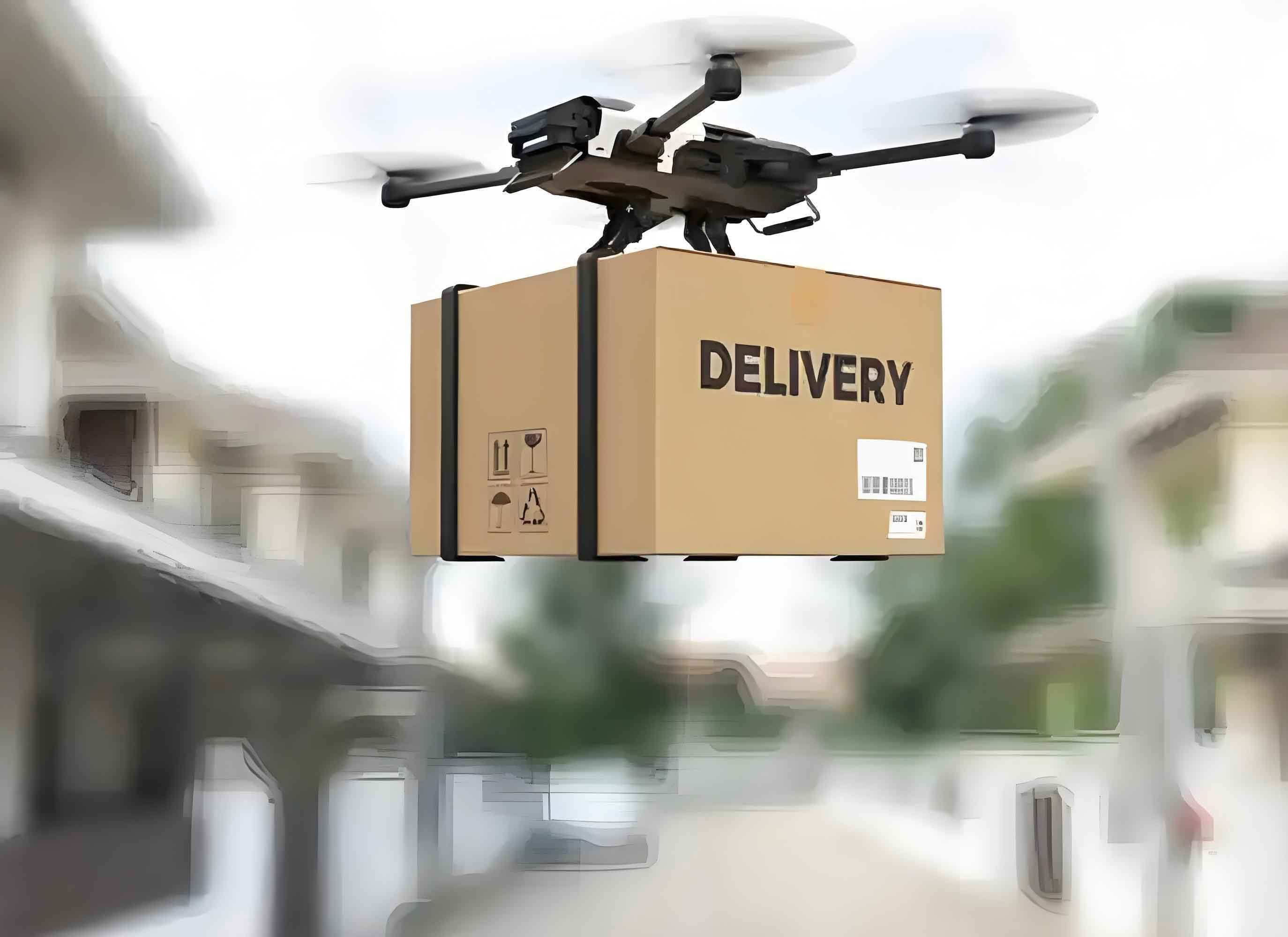
The fundamental task begins with clarifying basic concepts. A civilian drone, also termed an Unmanned Aircraft System (UAS) or Unmanned Aerial Vehicle (UAV), is defined as an aircraft operating without a pilot on board. The distinction from manned aircraft is profound: the physical separation of pilot and vehicle, reliance on potentially fallible remote control links, lack of innate “see-and-avoid” capability, and the small, discreet nature of some models which complicates tracking and accountability. These differences necessitate a uniquely tailored regulatory framework, moving beyond traditional ATC models to develop flexible and effective flight assurance手段.
The legal foundation for managing civilian drone airspace rests on two key doctrines: State Ownership of Airspace and Spatial Rights. Constitutional principles typically establish that natural resources, including airspace, belong to the state, representing a public trust for the people. This forms the public law basis for regulation. In private law, concepts like “spatial rights” are emerging. While civil codes may not recognize ownership of space itself, they increasingly acknowledge usufructuary rights to specific volumes of airspace above or below land. This legal recognition is crucial as civilian drones operationalize the economic value of low-altitude space, a resource as tangible and manageable as mineral deposits.
Current Legal Landscape and Identified Deficiencies
Currently, a dedicated, comprehensive law for civilian drone air traffic management is absent. The legislative landscape is instead a patchwork of revised aviation laws, trial provisions, consultation notices, and draft regulations issued by various national authorities. These documents touch upon low-altitude reform, airspace classification, UAS airworthiness, operational management, and UAS Traffic Management (UTM). While these efforts aim to fill regulatory gaps from multiple angles, systemic problems persist.
| Deficiency Area | Core Problem | Practical Consequence |
|---|---|---|
| Ambiguous Legal Definition | Lack of clear statutory definition for drones, their categories, and operational contexts. | Blurred boundaries for application, difficult liability attribution, regulatory arbitrage, and hindered market development. |
| Insufficient Flight Surveillance | Traditional ATC is ill-suited; dynamic monitoring of all drones, especially “light, small, slow, and low” models, is unfeasible. | Inability to fully monitor flight activities, leading to uncontrolled operations and elevated collision risks. |
| Unclear Jurisdictional Boundaries | Overlapping mandates among civil aviation, public security, industry, and other authorities. | Duplicative or contradictory regulation, management chaos, and enforcement gaps. |
| Recurrent Safety Incidents | Strict flight restrictions clash with user demand, encouraging non-compliance (“black flights”). | A vicious cycle: more violations prompt broader bans, stifling legitimate industry growth and innovation. |
| Difficulty in Liability Tracing | Fragmented oversight across production, sale, and use; weak enforcement of registration rules. | Challenges in identifying responsible parties after incidents, undermining accountability and compensation. |
The absence of a precise legal definition is particularly problematic. For instance, if aviation laws apply to “aircraft, helicopters, and balloons” without explicitly encompassing civilian drones, the applicable regulatory standards become uncertain. This ambiguity extends to specific operational rules. A stipulation that “unmanned aircraft shall fly according to prescribed routes, altitudes, times, and locations” remains ineffective without detailed specifications for those parameters.
Similarly, requiring permission to fly civilian drones in airport zones is meaningless without transparent criteria and procedures for obtaining such permission, creating management loopholes. The core challenge can be modeled as a function of regulatory clarity and enforcement efficacy determining the safety outcome $S$:
$$S = f(R_c, E_e, T_i)$$
where $R_c$ represents Regulatory Clarity, $E_e$ represents Enforcement Efficacy, and $T_i$ represents Technological Integration. Low values in any variable drastically reduce $S$.
Proposed Framework for a Coherent Legal System
To address these deficiencies and harness the potential of civilian drones, a multi-pronged, systematic approach to legislation and governance is essential. The goal is to establish a framework that ensures safety, security, and efficiency while enabling innovation.
1. Codifying Precise Legal Definitions
A foundational step is to enact clear, technology-agnostic legal definitions. The law must explicitly define a civilian drone (UAS/UAV) by its essential characteristic: the absence of a human pilot on board. This definition must be cascaded into a risk-based classification system, as outlined below, which directly informs operational rules.
| Category | Typical Max Take-Off Weight | Key Regulatory Pillars |
|---|---|---|
| Open Category (Low Risk) | e.g., < 25 kg | Basic registration, pilot competency standards, visual line-of-sight (VLOS) operation, predefined geo-zones. |
| Specific Category (Medium Risk) | Variable | Operational risk assessment, specific operational authorization (SAO), advanced pilot licenses, possibly BVLOS. |
| Certified Category (High Risk) | Large | Full type certification, licensed remote pilots, equipage mandates (e.g., ADS-B), approved flight plans. |
2. Enhancing Regulatory Efficacy Through Technology
Regulation must leverage technology to be effective. This involves a three-layer approach:
A. Robust Registration and Digital Identity: Mandate a digital registration platform linking every civilian drone to its owner/operator with a unique electronic ID. This forms the backbone for accountability.
B. Dynamic Airspace Management (UAS Traffic Management – UTM): Implement a UTM ecosystem where flight intentions are logged, and real-time authorizations are granted based on integrated airspace data (temporary restrictions, other traffic, weather). Compliance can be modeled as a function of system accessibility and utility:
$$C_u = \alpha A_s + \beta U_t$$
where $C_u$ is User Compliance, $A_s$ is System Accessibility, $U_t$ is Perceived Utility, and $\alpha$, $\beta$ are weighting coefficients.
C. Technical Enforcement (Remote ID & Geo-awareness): Legally mandate Remote ID (broadcasting identification, location, and trajectory) for all but the smallest civilian drones. Furthermore, require built-in geo-fencing capabilities that prevent flight into restricted zones (e.g., near airports, critical infrastructure).
3. Clarifying Jurisdiction and Establishing Coordinated Governance
A clear lead authority—typically the civil aviation administration—must be statutorily defined for overall airspace integration and safety regulation of civilian drones. A cross-departmental coordination mechanism is then vital to synchronize the roles of public security (law enforcement, security threats), industry regulators (spectrum, manufacturing standards), and other relevant bodies. The principle should be: “One lead for airspace rules, coordinated action for enforcement.” This eliminates duplication and fills gaps.
4. Building a Public-Private Collaborative Management Ecosystem
Given the scale of the civilian drone ecosystem, regulators cannot act alone. A synergistic model is required:
- Information-Sharing Platforms: Establish secure data exchange platforms between aviation, law enforcement, and military to share non-sensitive flight information and threat alerts.
- Leveraging Industry Solutions: Formally recognize and integrate reliable private UTM services and manufacturer-provided systems (e.g., flight monitoring clouds, geo-awareness databases) into the regulatory framework. Set interoperability standards for these private systems to feed essential data to the public oversight system.
- Industry Association Role: Empower industry associations to promote best practices, pilot training standards, and self-discipline among operators.
5. Instituting a Clear and Enforceable Liability Regime
A predictable liability framework is crucial for victim compensation and deterring negligence. The law must clarify:
- Strict Liability vs. Negligence: Consider applying strict liability for ground damage caused by civilian drones, similar to conventions for manned aircraft, given their inherent risk. Liability for mid-air collisions or privacy violations may follow a negligence or intent-based standard.
- Chain of Responsibility: Clearly define the circumstances under which liability may extend from the remote pilot to the owner, lessor, or even the manufacturer (e.g., in cases of proven product defect).
- Enforceable Registration: Strengthen registration laws with verified digital identities and significant penalties for non-compliance, ensuring the liability chain starts with an identifiable person or entity.
The financial risk $L$ for an operator can be expressed as a function of incident probability $P_i$ and the clear liability cost $C_l$:
$$L = P_i \times C_l$$
A well-defined $C_l$ directly incentivizes risk-mitigating behavior to lower $P_i$.
In conclusion, the transformative potential of civilian drones for economic growth and societal benefit is undeniable. Realizing this potential while safeguarding national airspace security requires a deliberate, sophisticated, and adaptive legal framework. The path forward lies in moving from reactive, piecemeal restrictions to a proactive, integrated system. This system must be built on precise definitions, risk-proportionate rules, technology-enabled oversight, coordinated governance, and unequivocal accountability. By establishing such a robust legal foundation, we can confidently unlock the low-altitude economy, ensuring that civilian drones operate as safely, seamlessly, and productively as their manned counterparts in our shared skies.