
The proliferation of civilian Unmanned Aerial Vehicles (UAVs) represents a paradigm shift in technology accessibility, offering transformative benefits across numerous sectors. However, this rapid integration into civil airspace and daily life necessitates a rigorous examination of their implications from a holistic national security perspective. The very characteristics that make civilian UAVs versatile and economical—their small size, low altitude operation, and ease of acquisition—also render them potential vectors for significant security threats. This analysis adopts a comprehensive security framework to dissect the multifaceted risks posed by the misuse or exploitation of civilian UAV technology to political, territorial, military, and social security. Furthermore, it proposes a multilayered governance model emphasizing legal standardization, multi-stakeholder collaboration, and technological resilience to mitigate these threats while fostering the responsible growth of the civilian UAV industry.
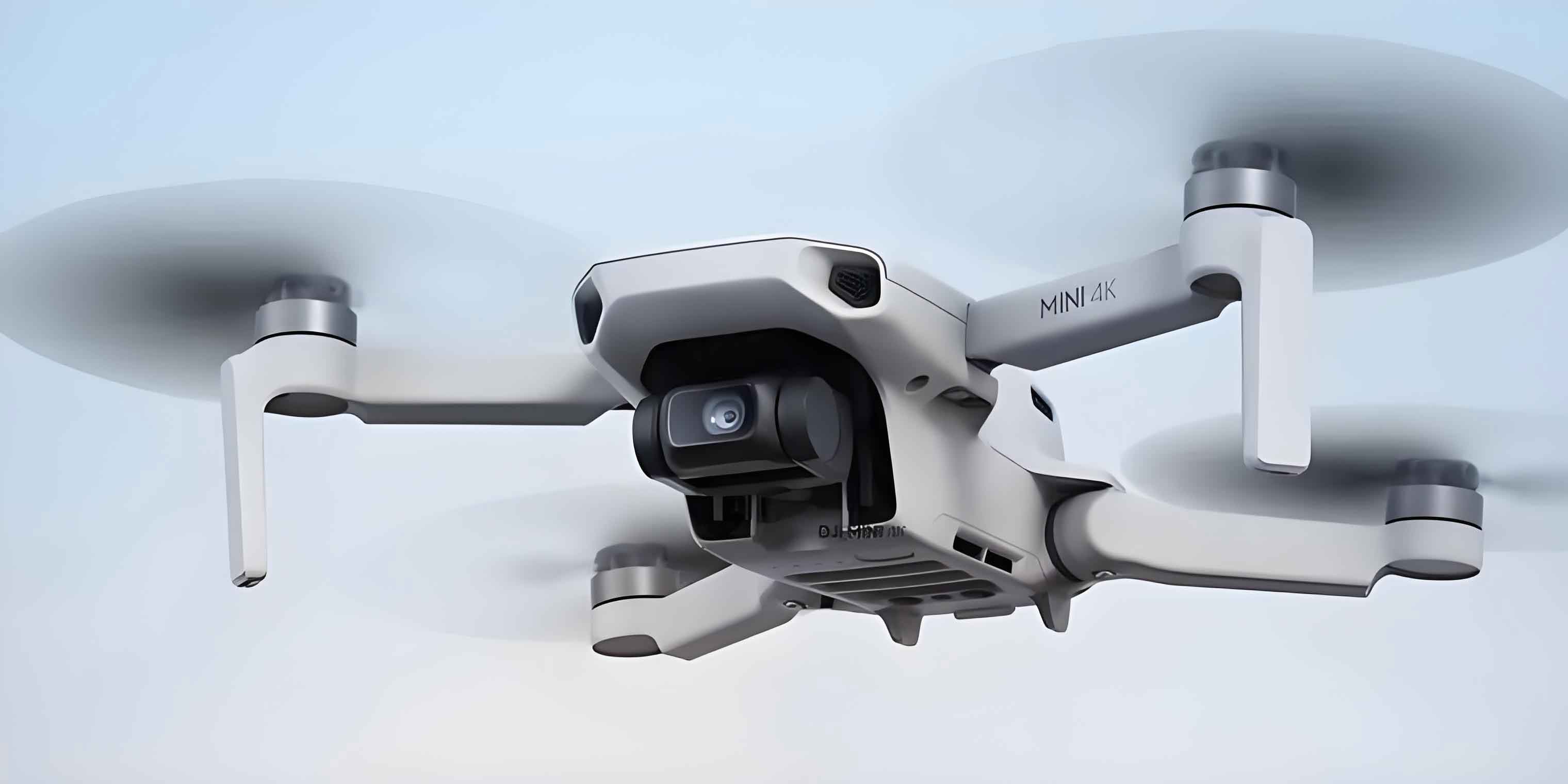
The journey of the civilian UAV is deeply rooted in military innovation. While rudimentary concepts emerged during the World Wars, significant technological maturation occurred throughout the Cold War and subsequent conflicts. The miniaturization of components, advances in wireless communication, and the commercialization of Global Positioning System (GPS) technology acted as critical enablers for the civilian market. Today, the civilian UAV sector has exploded, bifurcating into commercial-grade platforms for industrial applications and consumer-grade models for personal and professional use. The market trajectory is steep; projections indicate a massive expansion, underscoring the urgency for coherent security policies. The operational profile of a typical civilian UAV can be distilled into key, often dual-use, characteristics:
| Characteristic | Description | Security Implication |
|---|---|---|
| Low-Slow-Small (LSS) | Operates at low altitudes (<500m AGL), slow speeds, and has a small radar cross-section. | Difficult for traditional air defense radar to detect and track, enabling covert incursions or surveillance. |
| High Accessibility | Readily available through retail and online channels at decreasing cost points. | Low barrier to entry for malicious actors; challenges registration and oversight (“rogue” or “non-cooperative” UAVs). |
| Cyber-Physical Link | Relies on radio control, GPS, and onboard sensors for navigation and operation. | Vulnerable to electronic warfare: jamming, spoofing, and hijacking, leading to loss of control or data theft. |
| Remote & Non-Cooperative Operation | Piloted from a distance, often beyond visual line of sight (BVLOS). Operator identity is not physically tied to the airframe. | Creates significant attribution challenges following an incident; complicates legal accountability and enforcement. |
The security calculus for civilian UAVs must be viewed through a wide-angle lens that considers interconnected domains. A modern national security framework moves beyond traditional military defense to encompass political stability, territorial integrity, military readiness, and societal well-being. The following sections delineate the potential threats posed by civilian UAVs across these critical domains.
Political Security: Targeting Sovereignty and Stability
Political security concerns the stability of state institutions and the government’s ability to perform its core functions without interference or coercion. The misuse of civilian UAVs presents novel challenges to this domain.
First, the weaponization of consumer-grade platforms is a primary concern. While payload capacities are limited compared to military systems, even a few kilograms of explosives or chemical agents delivered by a modified civilian UAV can cause catastrophic damage and psychological terror at symbolic or densely populated locations. The threat equation here involves both capability and intent. The probability $P_a$ of a successful attack can be conceptualized as a function of technical feasibility $T$, resource availability $R$, and intent $I$:
$$P_a = f(T, R, I)$$
As $T$ increases with advancing technology and $R$ decreases with lower costs, the barrier for malicious actors lowers significantly, making mitigation of $I$ through intelligence and deterrence even more critical.
Second, civilian UAVs can be deployed as tools for political disruption. Intrusions into restricted airspace during major national events, international summits, or political gatherings can force security lockdowns, cause evacuations, and project an image of vulnerability. Such acts, whether motivated by activism, protest, or espionage, directly undermine state authority and the secure conduct of political life.
Territorial Security: Breaching the Sovereign Frontier
Territorial security focuses on the inviolability of national borders—land, sea, and air. The agility and small footprint of the civilian UAV make it an ideal tool for clandestine cross-border activities that threaten this inviolability.
The most salient threat is their use in contraband smuggling, particularly narcotics. On rugged border terrain where patrols are challenging, civilian UAVs offer a low-risk, high-reward method for trafficking. They can autonomously navigate pre-programmed routes, dropping payloads in designated zones without the smuggler ever crossing the border. This not only exacerbates drug-related social problems but also represents a direct breach of border control sovereignty. The economic driver for this can be modeled by comparing traditional risk $Risk_{tra}$ versus UAV-based risk $Risk_{uav}$:
$$Risk_{tra} = (P_{capture} \cdot C_{penalty})_{tra} + C_{logistics_{tra}}$$
$$Risk_{uav} = (P_{capture} \cdot C_{penalty})_{uav} + C_{logistics_{uav}} + C_{UAV}$$
Where $P_{capture}$ is the probability of interception, $C_{penalty}$ is the cost of punishment, and $C_{logistics}$ and $C_{UAV}$ are operational costs. The significant reduction in $P_{capture}$ for UAVs often makes $Risk_{uav} < Risk_{tra}$, incentivizing this method.
Military Security: Compromising Defense Capabilities
Military security pertains to the protection of a state’s defense infrastructure, secrets, and operational readiness. Civilian UAVs pose a ubiquitous and persistent intelligence, surveillance, and reconnaissance (ISR) threat to military installations.
Surreptitious surveillance is a major risk. High-resolution cameras and sensors fitted on commercially available civilian UAVs can be used to conduct detailed imagery intelligence (IMINT) collection over barracks, training grounds, naval docks, or sensitive research facilities. Malicious actors, including foreign intelligence services, can gather critical information on force dispositions, equipment, and daily routines. Perhaps more insidiously, well-meaning civilian enthusiasts or journalists operating near restricted areas may inadvertently capture and publicly disseminate sensitive imagery, causing unintentional but severe breaches.
Furthermore, specialized civilian UAVs equipped with mapping technologies like LiDAR pose a direct threat through illicit geospatial data collection. The unauthorized surveying of border regions, strategic transportation hubs, or other sensitive terrain violates laws protecting geospatial information and can compromise military planning and national defense postures.
| Military Security Threat Vector | Civilian UAV Capability Leveraged | Potential Impact |
|---|---|---|
| Physical Surveillance & IMINT | High-res cameras, optical zoom, low-observable flight. | Reveals troop movements, equipment details, base layouts. |
| Signals Intelligence (SIGINT) | Payloads for intercepting radio/radar emissions. | Compromises communication security and electronic order of battle. |
| Illegal Geospatial Surveying | GPS-guided flight with photogrammetry/LiDAR payloads. | Creates accurate maps of restricted areas for hostile planning. |
| Harassment & Provocation | Persistent loitering in training or operational airspace. | Disrupts exercises, tests response protocols, provokes incidents. |
Social Security: Undermining Public Safety and Order
Social security concerns the protection of citizens from harm and the maintenance of public order. The integration of civilian UAVs into shared spaces creates tangible risks to public safety and individual rights.
The most acute danger is to aviation safety. Near-misses and confirmed collisions between civilian UAVs and manned aircraft, particularly during critical landing and take-off phases, have escalated globally. A kinetic impact with an engine or windshield can be catastrophic. The risk probability is a function of airspace congestion and operator non-compliance. Furthermore, even the reported presence of a civilian UAV can lead to massive disruptions—grounding flights, diverting traffic, and causing significant economic losses and public distress.
At the community level, operational safety failures pose a direct threat. Pilot error, mechanical failure, or software glitches can cause a civilian UAV to lose control and crash into crowds, vehicles, or infrastructure, causing injury or property damage. The increasing experimentation with drone delivery for packages and food amplifies this risk, as falling payloads add to the potential kinetic energy of an incident.
Finally, the right to privacy faces a new challenge from the “eye in the sky.” Civilian UAVs equipped with cameras and microphones can easily be used for voyeurism, stalking, or unauthorized surveillance of private property, creating a pervasive sense of insecurity and violating fundamental civil liberties.
A Framework for Effective Security Governance of Civilian UAVs
Mitigating the multifaceted threats posed by civilian UAVs requires a balanced, proactive, and multi-pronged governance approach. The objective is not to stifle innovation but to establish a secure and predictable environment for the safe integration of civilian UAVs into national airspace and society. This framework rests on three interdependent pillars: Legal Foundation, Collaborative Governance, and Operational Resilience.
Pillar 1: Legal Foundation and Regulatory Standardization
The cornerstone of effective security governance is a clear, comprehensive, and enforceable legal framework. Legislation must evolve from reactive, piecemeal rules to a proactive, systemic code. Key elements include:
- Robust Registration and Identification: Mandatory, nationwide digital registration for all civilian UAVs above a minimal weight threshold, linked to a verified owner. This must be coupled with Remote ID standards, requiring civilian UAVs to broadcast identification and location signals in real-time, enabling authorities to identify cooperative and non-cooperative platforms.
- Dynamic Geofencing and Airspace Zoning: Laws should mandate and standardize the use of software-based geofencing to create virtual barriers around critical infrastructure (airports, power plants, government buildings), protected areas, and national borders. Flight permissions should be dynamically managed through digital authorization platforms (UAS Traffic Management – UTM).
- Stratified Licensing and Competency Testing: Regulatory frameworks must differentiate between recreational, commercial, and advanced operational categories. Licensing should require demonstrated knowledge of aviation regulations, airspace classifications, emergency procedures, and security awareness, with stricter requirements for higher-risk operations (e.g., BVLOS, flying over people).
- Clear Penalties and Enforcement Mechanisms: Laws must define severe and escalating penalties for violations such as illegal surveillance, smuggling, endangering aircraft, and operating in restricted zones without authorization, with provisions for asset seizure and criminal prosecution where applicable.
Pillar 2: Collaborative Multi-Stakeholder Governance
Security is a shared responsibility. A sustainable model requires active collaboration between government, industry, and civil society.
| Stakeholder | Primary Responsibilities |
|---|---|
| Government & Regulators | Establish and enforce laws; manage national airspace security; operate threat detection and counter-UAV systems for critical sites; facilitate inter-agency coordination. |
| Civilian UAV Manufacturers & Software Developers | Embed security-by-design (e.g., secure communication protocols, hardened GPS); implement mandated features (Remote ID, geofencing); participate in industry standards bodies; share threat intelligence. |
| Industry Associations & Standards Bodies | Develop and promote best practices, safety guidelines, and ethical codes of conduct; provide training and certification resources; act as a liaison between industry and government. |
| Civilian UAV Operators & the Public | Adhere to all regulations; pursue proper training; maintain situational awareness; report suspicious UAV activities; respect privacy and public safety. |
This ecosystem can be modeled as a feedback loop where policy influences design, operational data informs policy updates, and public engagement ensures legitimacy.
Pillar 3: Operational and Technological Resilience
Finally, security governance must be operationalized through detection, mitigation, and resilience technologies.
- Layered Detection: Protecting critical assets requires a mix of radar (optimized for LSS targets), radio frequency (RF) scanners, acoustic sensors, and electro-optical/infrared (EO/IR) cameras to detect and track civilian UAV incursions.
- Graduated Mitigation: Response protocols should be proportional. Options range from non-kinetic “soft-kill” methods like targeted RF jamming or GPS spoofing to guide the civilian UAV to a safe landing, to “hard-kill” methods such as net guns, intercept drones, or directed-energy weapons for extreme threats. The mitigation strategy $M$ for a detected threat can be expressed as:
$$M = \begin{cases}
\text{Track & Monitor} & \text{if } Threat_{level} = Low \\
\text{Soft-Kill / Seize Control} & \text{if } Threat_{level} = Medium \\
\text{Hard-Kill / Destroy} & \text{if } Threat_{level} = High
\end{cases}$$ - Cybersecurity for Civilian UAVs: As connected devices, civilian UAVs themselves must be protected. Regulations should encourage encryption of data links, secure firmware update mechanisms, and resistance to common cyber-attacks like hijacking and spoofing.
In conclusion, the civilian UAV revolution is irreversible, bringing immense societal and economic benefits. However, a clear-eyed assessment from a comprehensive national security perspective reveals substantial risks across political, territorial, military, and social domains. These risks stem from the inherent dual-use nature of the technology. The path forward lies not in prohibition, but in sophisticated, adaptive governance. By building a robust legal foundation, fostering genuine collaboration between all stakeholders, and deploying a spectrum of detection and mitigation technologies, nations can harness the potential of civilian UAVs while decisively protecting their sovereignty, security, and citizens. The goal is a secure sky where innovation and safety co-exist, ensuring that the freedom of flight does not become a freedom to threaten.