
From my perspective, the rapid proliferation of civilian unmanned aerial vehicles (UAVs), particularly micro drones, represents one of the most significant technological shifts of the past decade. I have observed how these devices have evolved from niche professional tools to ubiquitous consumer gadgets, capturing the imagination of hobbyists and industries alike. Yet, as an analyst deeply concerned with aviation safety and regulatory frameworks, I find the current state of governance for civilian UAVs to be alarmingly inadequate. The disconnect between technological advancement and regulatory maturity has created a precarious environment where safety risks are mounting. In this article, I will delve into the intricate dilemmas surrounding civilian micro UAV safety regulation and propose comprehensive countermeasures, drawing on technical analyses, comparative studies, and systemic thinking. My aim is to contribute to a discourse that balances innovation with public safety, ensuring that the skies remain secure for all.
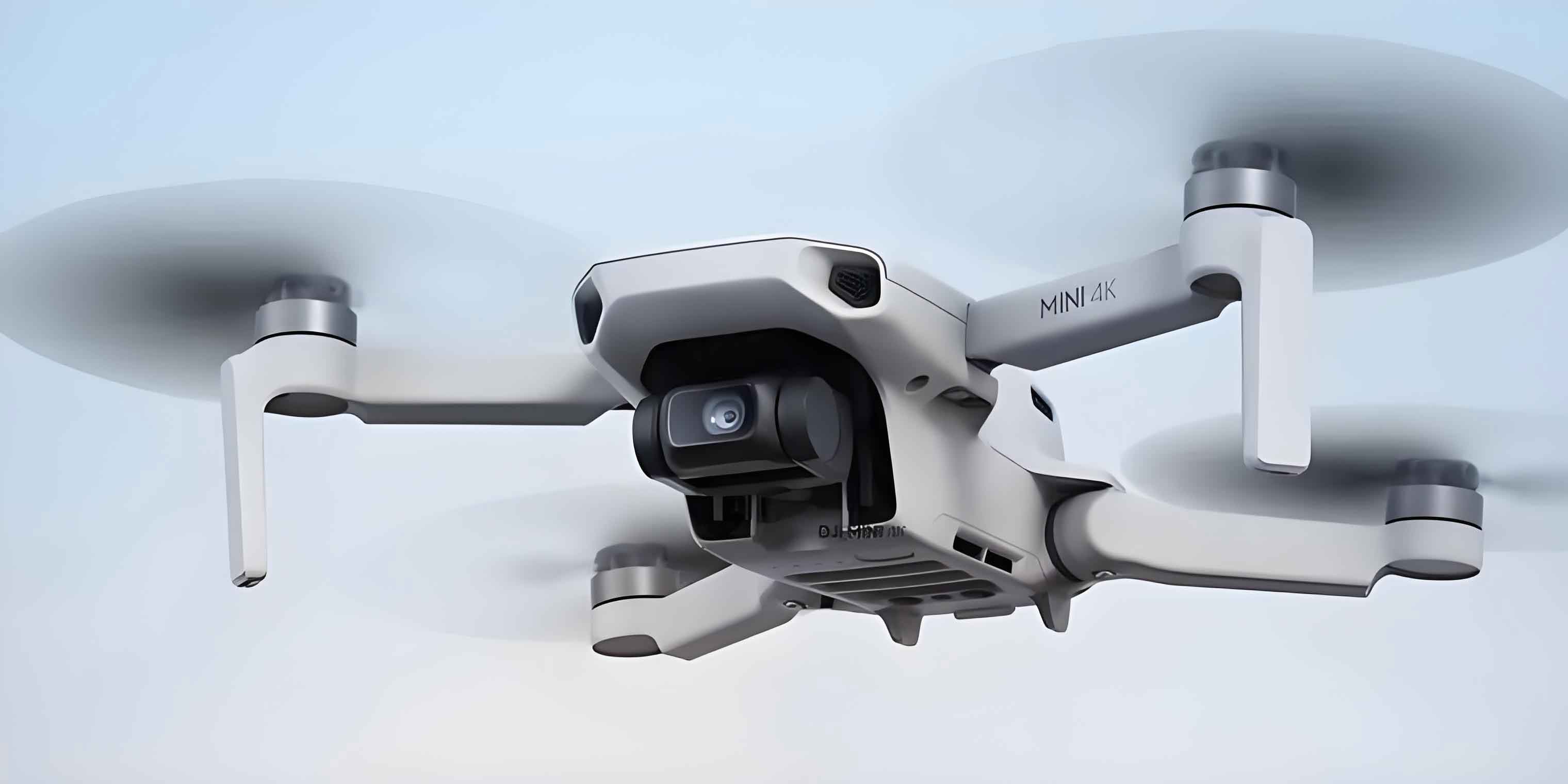
The global market for civilian UAVs has expanded at a staggering pace, with forecasts from over a decade ago projecting multi-billion-dollar growth—a prediction that has been overwhelmingly validated. I believe that civilian UAVs, especially micro models, are not merely toys or tools; they are complex cyber-physical systems that integrate advanced avionics, communication links, and autonomous capabilities. However, as I examine the regulatory landscape, it becomes clear that existing frameworks were designed for traditional manned aviation and are ill-suited to address the unique challenges posed by civilian UAVs. The core issue, in my view, is a regulatory lag that fosters an environment of ambiguity, non-compliance, and potential hazards. This analysis will explore these challenges in detail, employing tables and formulas to crystallize key points, and emphasizing the term “civilian UAV” throughout to underscore the focus on non-military, public-use aircraft.
To begin, let me outline the fundamental characteristics of a civilian UAV. Unlike model aircraft, a civilian UAV is typically defined by its ability to operate beyond visual line of sight (BVLOS), execute specific missions via onboard systems, and be managed through a ground control station. The rise of micro civilian UAVs—those with a mass of 7 kg or less—has blurred lines with traditional hobbies, complicating regulatory efforts. I see this as a pivotal challenge: without clear distinctions, effective governance is impossible. The following sections will dissect the regulatory gaps, management pitfalls, and strategic solutions, all while advocating for a proactive, science-based approach to civilian UAV safety.
1. The Fragmented Foundation: An Analysis of Current Civilian UAV Regulations
In my assessment, the regulatory framework for civilian UAVs is patchwork at best, consisting of scattered departmental notices and provisional guidelines that lack the force of comprehensive law. I have reviewed numerous documents, such as the 2003 “General Aviation Flight Control Regulations” in China, which initially focused on manned balloons but is often erroneously cited for civilian UAVs. This misperception highlights the confusion that plagues the sector. Similarly, the 2013 “Interim Provisions on the Management of Civil Unmanned Aircraft System Pilots” introduced a weight-based classification—micro, light, small, and large—but its provisions are non-binding and insufficient for today’s dynamic civilian UAV ecosystem.
To illustrate this fragmentation, I have compiled a table summarizing key regulatory milestones and their limitations. This table underscores how civilian UAV regulations are reactive rather than proactive, leaving gaps in critical areas like airspace access, pilot certification, and operational standards.
| Year | Regulatory Document | Key Provision | Limitations for Civilian UAVs |
|---|---|---|---|
| 2003 | General Aviation Flight Control Regulations | Governs general aviation flights, including airspace use. | Does not explicitly address civilian UAVs; based on manned aviation paradigms. |
| 2009 | Interim Provisions on Civil UAV Management | Preliminary rules on airworthiness and air traffic management. | |
| 2013 | Interim Provisions on Pilot Management | Classifies UAVs by weight; exempts micro civilian UAVs from license requirements under certain conditions. | |
| 2014 | Notice on Pilot Qualification Management | Authorizes associations to oversee pilot training for larger civilian UAVs. | |
| 2015 | Notice on Radio Frequency Usage | Allocates specific frequency bands for civilian UAV systems. |
From my standpoint, this regulatory patchwork fails to address the holistic lifecycle of a civilian UAV, which should encompass design, production, airworthiness, pilot competency, airspace integration, and operational oversight. I propose that a robust regulatory system can be modeled using a formula that accounts for these components. Let \( R \) represent the overall regulatory effectiveness for civilian UAVs, and let \( D \), \( P \), \( A \), \( C \), and \( O \) denote the regulatory strength in design standards, production controls, airworthiness certification, pilot competency, and operational oversight, respectively. Then, a simplified effectiveness metric could be:
$$R = \alpha \cdot D + \beta \cdot P + \gamma \cdot A + \delta \cdot C + \epsilon \cdot O$$
where \( \alpha, \beta, \gamma, \delta, \epsilon \) are weighting factors that reflect the relative importance of each domain for civilian UAV safety. Currently, in most jurisdictions, \( R \) is low due to deficiencies across multiple terms—particularly \( C \) and \( O \) for micro civilian UAVs, which are often exempted. I argue that this formula underscores the need for balanced, multi-faceted regulation to safeguard civilian UAV operations.
Moreover, the international dimension cannot be ignored. I have studied approaches in the United States, where the FAA Modernization and Reform Act of 2012 and subsequent drafts grapple with similar issues for civilian UAVs. The delays and debates there mirror global struggles, emphasizing that civilian UAV regulation is a nascent field requiring adaptive, evidence-based policies. In my view, comparing these frameworks reveals common pitfalls: over-reliance on legacy aviation norms and under-appreciation of the scalability and accessibility of civilian UAVs.
2. The Core Dilemmas: Regulatory Vacuums and Operational Chaos in Civilian UAV Usage
As I delve deeper, the management困境 for civilian UAVs become starkly apparent. The ambiguity in definitions, coupled with inadequate enforcement, has led to what I term “regulatory vacuums”—areas where no clear rules apply, or where rules are impractical. This is especially true for micro civilian UAVs, which account for the bulk of consumer sales. I identify several critical dilemmas that threaten public safety and hinder the responsible growth of the civilian UAV sector.
2.1. The Blurred Line: Civilian UAVs versus Model Aircraft
One of the most perplexing issues, from my analysis, is the fuzzy distinction between a civilian UAV and a model aircraft. Traditionally, model aircraft were defined by manual control within visual line of sight (VLOS) for recreational purposes, whereas civilian UAVs are characterized by autonomous capabilities, BVLOS operations, and mission-specific payloads. However, with technological convergence, micro civilian UAVs often resemble advanced model aircraft in size and appearance, leading to confusion. I contend that this blurring is not merely semantic; it has real-world consequences for oversight.
To clarify, I have developed a comparative table that highlights the technical and operational differences. This table is based on my review of specifications for popular devices like the DJI Phantom series, which exemplify modern civilian UAVs despite their micro classification.
| Feature | Civilian UAV (e.g., Micro UAV) | Model Aircraft |
|---|---|---|
| Primary Purpose | Commercial or professional tasks (e.g., aerial photography, surveillance). | Recreation, sport, or hobby. |
| Control System | Integrated flight control with GPS, autopilot, and telemetry links. | Manual radio control, often without autonomous aids. |
| Operational Range | Capable of BVLOS flights; ranges can exceed 2 km. | Strictly VLOS; typically within 500 m. |
| Payload Capacity | Designed to carry cameras, sensors, or other mission equipment. | Generally no payload beyond basic components for flight. |
| Regulatory Focus | Should require airworthiness, pilot licensing, and flight planning. | Often exempt from aviation regulations; managed as a sport. |
In my opinion, the key differentiator is the capability for BVLOS and task execution. A civilian UAV, even a micro one, can be modeled as a system with a probability of successful mission completion \( M \), given by:
$$M = P(\text{BVLOS}) \times P(\text{autonomy}) \times P(\text{payload function})$$
where \( P(\text{BVLOS}) \) is the probability of operating beyond visual line of sight, \( P(\text{autonomy}) \) is the probability of autonomous flight features being engaged, and \( P(\text{payload function}) \) is the probability of the payload performing its intended task. For model aircraft, these probabilities approach zero, while for civilian UAVs, they are significantly higher. This mathematical framing helps justify stricter oversight for civilian UAVs, regardless of size.
2.2. Jurisdictional Confusion and Regulatory Overlap
Another dilemma I have identified is the unclear division of authority. In many countries, civilian UAVs fall under aviation authorities, while model aircraft are overseen by sports associations. This split leads to “turf wars” and gaps, especially for micro civilian UAVs that might be claimed by both sides. I have seen instances where pilot certification for civilian UAVs is offered by multiple bodies with overlapping curricula, causing confusion among enthusiasts. This fragmentation undermines safety standards and erodes public trust in civilian UAV governance.
I propose that the regulatory jurisdiction should be determined by functionality, not just weight. Using a decision tree, we can assign oversight: if the device has BVLOS capability or is used for commercial tasks, it is a civilian UAV and should be regulated by aviation authorities; otherwise, it may be treated as a model aircraft. This approach, in my view, would streamline management and close existing vacuums.
2.3. Inflexible Rules and the “Black Flight” Phenomenon
The current regulations, where they exist, are often too rigid for the dynamic nature of civilian UAV operations. For example, requiring full flight plans for every micro civilian UAV sortie is impractical, leading to widespread non-compliance or “black flights.” I estimate that a significant percentage of civilian UAV flights occur without proper authorization, not out of malice, but due to bureaucratic hurdles. This creates a vicious cycle: lack of compliance reduces safety data, which in turn hampers evidence-based regulation.
To quantify this, consider a simple model for compliance rate \( C_r \) among civilian UAV operators:
$$C_r = \frac{N_{\text{legal}}}{N_{\text{total}}} = f(E, A, P)$$
where \( N_{\text{legal}} \) is the number of legally conducted flights, \( N_{\text{total}} \) is the total flights, and \( E \), \( A \), \( P \) represent the ease of regulatory process, awareness of rules, and perceived penalties, respectively. Currently, for micro civilian UAVs, \( E \) is low due to complex requirements, \( A \) is moderate, and \( P \) is minimal, resulting in a low \( C_r \). I argue that improving \( E \) through streamlined procedures is crucial to enhancing safety in the civilian UAV domain.
2.4. Inadequate Monitoring and Enforcement Resources
From my observations, aviation authorities are often under-resourced to monitor the sheer volume of civilian UAV flights, particularly micro drones that can be launched from anywhere. The traditional radar-based surveillance is ineffective for low-altitude civilian UAVs, and alternative technologies like geofencing are not universally mandated. This enforcement gap exacerbates risks, as incidents near airports or crowded events demonstrate.
I have conceptualized the monitoring challenge using a risk-density function \( \rho(x,y,t) \), which represents the spatial and temporal density of civilian UAV flight risks in a given area. The total risk \( R_{total} \) over a region \( \Omega \) and time period \( T \) is:
$$R_{total} = \int_{\Omega} \int_{T} \rho(x,y,t) \, dt \, dA$$
where \( \rho \) depends on factors like civilian UAV density, operator skill, and proximity to hazards. Without adequate monitoring, \( \rho \) is unmeasured and uncontrolled, leading to potential accidents. This formula highlights the need for scalable surveillance solutions, such as networked sensors or crowd-sourced reporting, tailored for civilian UAV environments.
3. Strategic Pathways: Toward a Coherent Safety Framework for Civilian UAVs
Having dissected the dilemmas, I now turn to proactive strategies. In my vision, a future-proof regulatory system for civilian UAVs should be based on clarity, adaptability, and collaboration. I present a multi-pronged approach that addresses the root causes of current failures while fostering innovation. The goal is to ensure that civilian UAVs can thrive safely, benefiting society without compromising security.
3.1. Precise Definitions and Tiered Classification
First and foremost, I advocate for a clear, technology-neutral definition of a civilian UAV. Drawing from the earlier analysis, I define a civilian UAV as: an unmanned aircraft system capable of sustained autonomous or remotely piloted flight beyond visual line of sight, designed to perform specific non-recreational tasks, and integrated with command-and-control links. This definition excludes simple model aircraft, even if they share similar aesthetics. To operationalize this, a tiered classification system should be established, as shown in the table below.
| Tier | Mass Range | Key Capabilities | Recommended Regulatory Requirements |
|---|---|---|---|
| Micro Civilian UAV | ≤ 7 kg | BVLOS possible; payload capacity for small sensors. | |
| Light Civilian UAV | 7–25 kg | Extended BVLOS; commercial use common. | |
| Small Civilian UAV | 25–150 kg | Advanced autonomy; used in industrial applications. | |
| Large Civilian UAV | > 150 kg | Similar to manned aircraft in complexity. |
This classification, in my view, aligns regulatory burden with risk, ensuring that micro civilian UAVs are not overlooked but subject to proportionate controls. I also propose a formula for determining the risk level \( L \) of a civilian UAV:
$$L = w_1 \cdot M + w_2 \cdot V + w_3 \cdot P + w_4 \cdot E$$
where \( M \) is mass, \( V \) is maximum speed, \( P \) is payload hazard index, \( E \) is operational environment risk, and \( w_1, w_2, w_3, w_4 \) are weights. For micro civilian UAVs, \( L \) might be moderate but non-negligible, justifying the aforementioned requirements.
3.2. Enhanced Regulatory Detailing and Dynamic Rules
Second, I call for细化规定—detailed, actionable regulations that evolve with technology. Instead of blanket rules, context-sensitive guidelines should govern civilian UAV flights. For example, micro civilian UAVs could be permitted in urban areas below 60 meters with automatic notification systems, while higher-risk operations require permits. I envision a digital platform for real-time flight authorization, where operators input parameters and receive instant clearance based on airspace congestion and risk algorithms.
Mathematically, this can be modeled as an optimization problem: maximize airspace utilization \( U \) for civilian UAVs subject to safety constraints \( S \). Let \( x_i \) represent the flight plan of the i-th civilian UAV, with associated risk \( r_i \). Then:
$$\text{Maximize } U = \sum_i u(x_i)$$
$$\text{Subject to } \sum_i r_i \leq S_{\text{max}}, \quad x_i \in \text{feasible set}$$
where \( u(x_i) \) is the utility of flight \( x_i \), and \( S_{\text{max}} \) is the maximum allowable risk threshold. Such dynamic management, enabled by AI, could revolutionize civilian UAV integration, making compliance seamless and safety-centric.
3.3. Multi-Stakeholder Collaboration and Technology-Driven Oversight
Third, I emphasize多方监管—a collaborative ecosystem involving government, industry, and the public. Aviation authorities alone cannot monitor every civilian UAV; instead, a network of local law enforcement, community groups, and technology providers should share responsibility. I propose the establishment of a national civilian UAV oversight center that aggregates data from manufacturers, operators, and sensors to create a common operational picture.
Manufacturers of civilian UAVs play a crucial role. By embedding safety features like geofencing, altitude limiters, and remote identification, they can preemptively mitigate risks. For instance, the automatic no-fly zone compliance in drones from companies like DJI demonstrates how design can aid regulation. I suggest a compliance score \( CS \) for civilian UAV models, calculated as:
$$CS = \sum_{j} f_j \cdot I_j$$
where \( f_j \) is the weight of the j-th safety feature (e.g., geofencing, parachute system), and \( I_j \) is an indicator of its implementation. Higher \( CS \) models could receive regulatory incentives, fostering a safety-by-design culture in the civilian UAV industry.
3.4. Public Education and Incident Response Frameworks
Finally, I believe that educating civilian UAV users is paramount. Awareness campaigns on safe flying practices, coupled with easy-to-access training modules, can reduce human error—a major cause of incidents. Additionally, a robust incident response protocol for civilian UAV-related accidents should be established, involving quick investigation and data sharing to prevent recurrences.
To measure the impact of education, consider a safety improvement index \( I_s \) over time \( t \):
$$I_s(t) = \frac{N_{\text{incidents}}(t_0) – N_{\text{incidents}}(t)}{N_{\text{flights}}(t)} \times 100\%$$
where \( N_{\text{incidents}} \) is the number of safety incidents involving civilian UAVs, and \( N_{\text{flights}} \) is the total flight count. By tracking \( I_s \), regulators can assess the effectiveness of educational initiatives and adjust strategies accordingly.
Conclusion: Charting a Safe Future for Civilian UAVs
In conclusion, the journey toward effective safety regulation for civilian UAVs, especially micro drones, is complex but imperative. From my perspective, the current困境 stem from outdated frameworks, ambiguous definitions, and insufficient resources. However, by embracing clear distinctions, detailed rules, collaborative oversight, and technological innovations, we can build a resilient system that protects public safety while nurturing the transformative potential of civilian UAVs. I urge policymakers, industry leaders, and the global community to prioritize this agenda, ensuring that the skies remain a shared, secure space for generations to come. The term “civilian UAV” must become synonymous with responsibility and innovation, not risk and chaos. Through concerted efforts, we can turn these challenges into opportunities, paving the way for a smarter, safer aerial future.
As I reflect on this analysis, I am reminded that the regulation of civilian UAVs is not just a technical or legal issue—it is a societal imperative. By fostering dialogue and evidence-based action, we can harness the benefits of civilian UAVs while safeguarding our collective well-being. Let this article serve as a call to action for all stakeholders invested in the promise of civilian unmanned aerial vehicles.