
The integration of civilian drones into logistics networks represents a paradigm shift in cargo delivery, promising unprecedented efficiency, cost reduction, and access to remote areas. As this sector experiences rapid growth, propelled by significant market forecasts, the imperative to address its inherent safety and legal challenges grows concurrently. The operational model of civilian drones, characterized by the physical separation of the aircraft from its operator, introduces unique vulnerabilities and complex liability scenarios not fully contemplated by traditional aviation law. My analysis focuses on the pressing legal ambiguities surrounding tort liability in civilian drone cargo operations, proposing a structured framework for determining liable parties, establishing appropriate liability principles, and formulating robust risk prevention strategies to safeguard the sustainable development of this innovative industry.
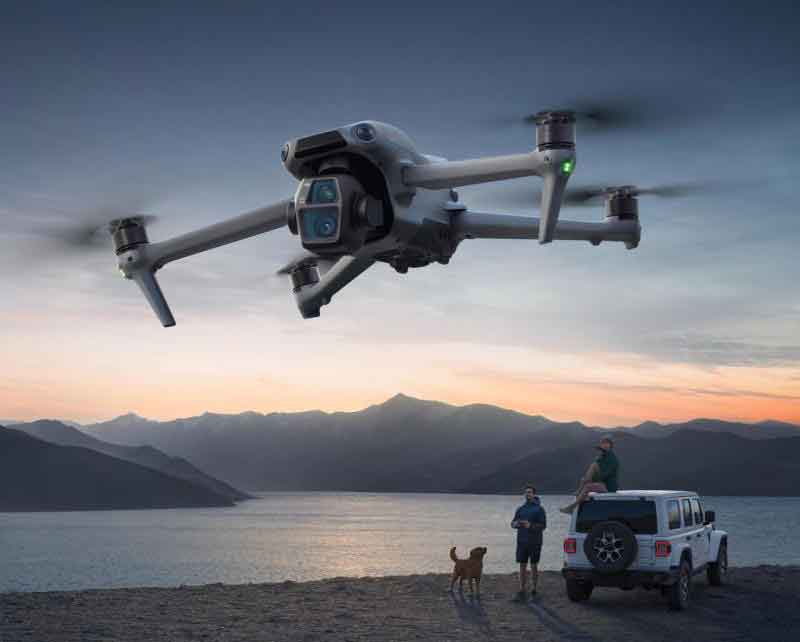
The foundational legal predicament lies in the ambiguous identification of liable entities. Current civil aviation and tort laws are inadequately equipped to delineate responsibility among the multiple actors involved in civilian drone logistics, such as the remote pilot (or “pilot-in-command”), the owner, the operator (or “keeper”), and the manufacturer. This ambiguity is exacerbated in scenarios involving third-party interference or product defects. Furthermore, the absence of clear liability principles—whether fault-based or strict—for different types of incidents (e.g., drone-to-drone collisions, damage to ground third parties, or conflicts with manned aircraft) creates legal uncertainty that can stifle innovation and leave victims without clear recourse. While existing frameworks like the tort liability section of China’s Civil Code offer general guidance, particularly concerning ultra-hazardous activities and product liability, they lack the specificity required for the nuanced ecosystem of civilian drone cargo. Therefore, a dedicated and precise legal architecture is essential.
I. Determining Liable Parties in Civilian Drone Cargo Incidents
Assigning tort liability requires a clear mapping of responsible parties, which varies significantly depending on the nature of the incident. We can categorize these into three primary scenarios.
A. Incidents Attributable to the Drone Operation Itself
When harm results from the normal or negligent operation of the cargo civilian drone, liability may fall upon several parties within the operational chain.
1. The Remote Pilot-in-Command: The individual controlling the civilian drone is a central figure. While not physically aboard, this pilot bears operational responsibility akin to a traditional aviator. The key question is under what circumstances they assume personal liability. Drawing an analogy from vehicular liability rules where the “user” is primarily responsible, the remote pilot should be liable for damages arising from their intentional acts or gross negligence during operation. However, if the pilot is acting under the explicit direction and control of an employer or operator (a “dispatched” relationship), primary liability may initially rest with the operating entity, with recourse against the pilot only in cases of deliberate misconduct or severe fault. This balances operational control with accountability.
2. The Registered Owner/Operator: Aviation law traditionally places liability on the “operator” or “keeper” of an aircraft—the entity that benefits from its use and exercises control over its operations. For civilian drones, this is often the logistics company registered as the operator. This entity holds “navigation control rights” and is best positioned to manage systemic risks and carry insurance. Therefore, as a default, the registered operator of the cargo civilian drone should bear liability for ground damage, consistent with principles governing manned aviation. This provides a clear and solvent target for victims.
3. The Owner in Cases of Unlawful Interference: A distinct challenge emerges when a civilian drone is hijacked or unlawfully controlled by a third party, causing damage. Here, the unlawful user is the primary tortfeasor. However, the original owner/operator may bear secondary liability if they failed to take “due care” in securing the drone against unauthorized access. This “due care” standard should be reasonable, requiring industry-standard cybersecurity and physical security measures, but not making the owner an absolute insurer against sophisticated hacking attacks. The liability, if any, would typically be joint and several with the unlawful user.
B. Incidents Caused by Third Parties
When damage to the cargo civilian drone or its payload is caused by the intentional or negligent act of an external third party, liability attribution follows general tort principles.
$$ \text{Liability}_\text{Third Party} = f(\text{Causation}, \text{Fault}) $$
If the third party’s action is the sole and proximate cause of the loss (e.g., deliberately shooting down a drone), they bear full liability. In cases of concurrent causation, where both the third party’s action and another factor (like a latent defect) contribute, liability may be apportioned or made joint and several, depending on the jurisdiction’s rules for contributory or comparative fault.
C. Incidents Arising from Product Defects
When an accident is caused by a manufacturing or design flaw in the civilian drone itself, product liability doctrines apply. This creates a chain of liability separate from operational fault. The injured party can typically seek compensation from either the manufacturer or the seller of the defective civilian drone under a strict liability regime (no need to prove negligence). The liable party, after compensating the victim, may then seek indemnity from others in the supply chain (e.g., a component manufacturer) based on their respective responsibility for the defect.
The following table summarizes the primary liable parties across these scenarios:
| Incident Scenario | Primary Liable Party | Potential Secondary/Contributory Parties | Legal Basis Analog |
|---|---|---|---|
| Operational Error (Pilot Fault) | Drone Operator / Employer | Remote Pilot (in cases of gross negligence/willful misconduct) | Employer Vicarious Liability; Vehicular “User” Liability |
| Ground Damage from Flight | Registered Drone Operator | None (Strict Liability Regime) | Aviation Law (Keeper’s Liability) |
| Unauthorized Third-Party Control & Damage | Unlawful User | Owner/Operator (if lack of due care in security) | Tort of Trespass; Negligence |
| Drone-to-Drone Collision | Faulty Operator’s Entity | Potentially both operators (comparative fault) | General Tort (Negligence) |
| Product Failure (Defect) | Manufacturer or Seller | Component Supplier (via indemnity) | Product Liability Law |
II. Establishing a Graded Liability Regime: From Fault to Strict Liability
A one-size-fits-all liability principle is unsuitable for civilian drone cargo. A graded approach, based on the nature of the interacting parties and the associated risks, is necessary.
A. Drone vs. Drone Collisions: The Fault Principle
In incidents involving two or more civilian drones, the parties are in a relatively equal position regarding risk creation and avoidance capability. Therefore, the fault principle ($\text{Liability} \propto \text{Proven Fault}$) is most appropriate. The injured party must prove that the other drone’s operator breached a duty of care (e.g., violated flight rules, failed to maintain proper separation), causing the collision. This principle encourages all operators to adhere to high standards of care. The burden of proof lies with the claimant, and liability is apportioned based on the degree of fault.
B. Drone vs. Manned Aircraft Conflicts: A Modified Fault Analysis with Cost-Benefit Insights
This interaction is asymmetrical. Manned aircraft pose a greater immediate risk to human life and often have less maneuverability and longer reaction times in certain phases of flight compared to agile civilian drones. Pure fault liability still applies, but determining who had the “last clear chance” or the duty to avoid collision is complex. A law-and-economics “cost-benefit” analysis provides a useful framework. The party that can avoid the collision at the lower marginal cost should bear the primary duty to maneuver.
$$ \text{Avoidance Duty} = \arg\min(\text{Cost}_\text{Drone Avoidance}, \text{Cost}_\text{Manned Aircraft Avoidance}) $$
Where cost includes factors like:
– $\text{Technological Capability}$: Ability to execute an evasive maneuver.
– $\text{Trajectory Disruption Cost}$: Risk and operational impact of altering course.
– $\text{Time to Calculate & Execute}$: Processing latency and reaction time.
A system like UAS Traffic Management (UTM) could calculate these parameters in real-time, providing standardized, data-driven right-of-way rules, moving beyond subjective fault assessments.
C. Drone to Ground Third-Party Damage: The Strict Liability Imperative
The operation of civilian drones, especially larger cargo models, over populated areas constitutes an “ultra-hazardous activity” under tort law principles. Ground parties are innocent bystanders with no ability to control or avoid the risk. Therefore, strict liability ($\text{Liability} \propto \text{Causation}$, independent of $\text{Fault}$) must apply for ground damage. This means the drone operator is liable for all harm caused by the drone’s flight, fall, or dropped cargo, even if the operator exercised all possible care. The policy rationale is to:
1. Ensure compensation for victims without the prohibitive burden of proving complex technical negligence.
2. Incentivize operators to internalize the full social cost of their operations, driving investment in safety.
3. Channel liability to a single, identifiable, and typically insured entity (the operator).
Defenses are limited, typically to victim’s intentional misconduct or, in some jurisdictions, an “act of God.”
| Incident Type | Recommended Liability Principle | Burden of Proof | Policy Justification |
|---|---|---|---|
| Drone vs. Drone | Fault-Based Liability | On claimant to prove defendant’s fault | Parties are in equitable positions; promotes mutual care. |
| Drone vs. Manned Aircraft | Fault-Based, guided by Least-Cost-Avoider principle | On claimant, aided by UTM/rule-based right-of-way | Manages asymmetry; uses economic efficiency for safety rules. |
| Drone vs. Ground Third Party | Strict Liability | On claimant to prove causation only | Protects vulnerable public; internalizes risk of ultra-hazardous activity. |
| Product Defect | Strict Product Liability | On claimant to prove defect & causation | Ensures manufacturer accountability for inherent safety. |
III. Learning from International Regulatory Experiments
Examining the evolving regulatory landscapes for civilian drones in key jurisdictions provides valuable comparative insights. The European Union and the United States have developed frameworks that, while distinct, share common goals of integrating drones safely into airspace.
The European Union’s Approach: The EU has established a comprehensive, risk-based regulatory structure under EASA. Key innovations include:
– Categorization: Drones are classified into ‘Open’, ‘Specific’, and ‘Certified’ categories based on risk (weight, operational scope). Cargo operations likely fall into ‘Specific’ (requiring operational authorization) or ‘Certified’ (akin to manned aircraft rules).
– U-Space: This is a visionary digital framework for managing drone traffic in dense environments. It provides services like e-identification, geo-awareness, and traffic information, which are crucial for deconflicting cargo civilian drones.
– Operator Registration & Pilot Competence: Emphasis on registering UAS operators and requiring remote pilots to demonstrate competency relevant to the operation’s risk category.
The United States’ Approach: The FAA regulates drones as aircraft. Its framework under Part 107 for small UAS is foundational, but it is evolving:
– Operational Rules: Part 107 sets rules for visual line-of-sight operations, including altitude limits, speed restrictions, and right-of-way yields to manned aircraft.
– Beyond Visual Line-of-Sight (BVLOS) & Airworthiness: For cargo and other advanced operations, the FAA is moving towards a performance-based regulatory path, focusing on airworthiness certification for the drone and operational approval for BVLOS flights.
– Remote ID: A forthcoming rule mandates a digital license plate for most civilian drones, crucial for accountability and security.
| Jurisdiction | Regulatory Philosophy | Key Mechanism for Integration | Relevance to Cargo Drones |
|---|---|---|---|
| European Union (EASA) | Risk-based, harmonized rules across member states. | U-Space (digital air traffic management for drones). | Essential for scalable, safe urban and suburban cargo delivery networks. |
| United States (FAA) | Integration into existing National Airspace System (NAS). | Performance-based airworthiness & operational approvals (for BVLOS). | Critical for long-range, heavy-lift cargo operations, requiring certified drones. |
The core lesson is the necessity of a tailored, risk-proportionate, and technology-enabled regulatory framework. China’s development of its UOM platform reflects a similar understanding. However, legal liability rules must evolve in parallel with these operational regulations.
IV. A Multifaceted Risk Prevention Strategy for Civilian Drone Cargo
Proactive risk mitigation is as important as clarifying ex-post liability. A holistic strategy should incorporate legal, technological, and financial instruments.
A. Mandatory and Enforceable Registration & UOM Integration
A robust, real-time national registry for all cargo-capable civilian drones is non-negotiable. This registry must be integrated with a Unified Operations Management (UOM) platform. The UOM should function not just as a database, but as a dynamic oversight system, providing:
– Real-time tracking and identification (Remote ID).
– Geo-fencing and airspace authorization.
– Data feeds for incident investigation and liability attribution.
This creates a digital audit trail, making it exponentially easier to identify the operator of a drone involved in an incident.
B. Stringent Pilot Licensing and Operational Training
The remote pilot is a critical human factor. Licensing must go beyond basic flight skills. For cargo civilian drone pilots, certifications should require:
– Technical knowledge of specific cargo drone systems.
– Understanding of aviation regulations and airspace.
– Emergency procedure training for BVLOS and system failures.
– Recurrent training and proficiency checks, with licenses subject to periodic review. This elevates professionalism and reduces human-error-related incidents.
C. Mandatory Third-Party Liability Insurance with Risk-Based Premiums
Given the strict liability exposure for ground damage, mandatory insurance is the cornerstone of financial risk mitigation. It ensures victim compensation and protects operators from catastrophic loss. Premiums should be risk-adjusted based on:
– Drone type and maximum kinetic energy.
– Operational area (population density).
– Pilot experience and safety record of the operator.
– Coverage limits should be substantial, reflecting the potential severity of incidents involving heavy cargo civilian drones. The insurance mechanism efficiently spreads and socializes the inherent risk of the industry.
$$ \text{Insurance Premium} = \text{Base Rate} \times \text{Drone Risk Factor} \times \text{Operational Risk Factor} \times \text{Claim History Factor} $$
D. Legislative Modernization: Amending the Civil Aviation Law
Finally, these strategies require a solid legal foundation. China’s Civil Aviation Law should be amended to explicitly incorporate unmanned aircraft, defining key terms like “operator,” “remote pilot,” and “navigation control rights” in the context of civilian drones. It should codify the strict liability regime for ground damage and establish the framework for operator registration, pilot licensing, and insurance requirements. This provides legal certainty, guides lower-level regulations, and signals a mature, responsible approach to governing the airspace for innovative uses of civilian drones.
In conclusion, the future of civilian drone cargo is bright, but its flight path must be charted with careful legal navigation. By establishing clear liability rules that balance innovation with public protection, learning from international best practices, and implementing a multilayered risk prevention system centered on technology, training, and insurance, we can create an environment where this transformative technology can deliver its economic promises safely and sustainably. The goal is to build a legal and operational infrastructure where the question is not if liability can be assigned after an incident, but how the system is designed to prevent the incident in the first place.