
Maintaining the safety and operational efficiency of inland waterways is a critical component of national transportation infrastructure. Traditional inspection methods, which rely heavily on manual visual surveys conducted by personnel on boats or along the shore, are increasingly recognized as inadequate. These methods are often time-consuming, labor-intensive, cost-prohibitive, and can pose significant safety risks to inspection crews, especially in hard-to-reach or hazardous areas. Furthermore, the subjective nature of human inspection and the infrequency of surveys can lead to delayed detection of critical defects, such as revetment failures or navigational aid malfunctions, potentially compromising waterway safety and throughput.
The advent of Unmanned Aerial Vehicle (UAV) drone technology has introduced a paradigm shift in infrastructure inspection. UAV drones offer unparalleled advantages in terms of accessibility, efficiency, and data richness. They can quickly cover vast stretches of waterways, capture high-resolution imagery and video from optimal angles, and access locations that are dangerous or impossible for human inspectors to reach. Our research focuses on advancing beyond the current state where UAV drone footage is merely reviewed manually. We aim to integrate advanced machine vision algorithms to automate the analysis process, thereby unlocking the full intelligent potential of UAV drone-based inspection systems for waterway and lock management.
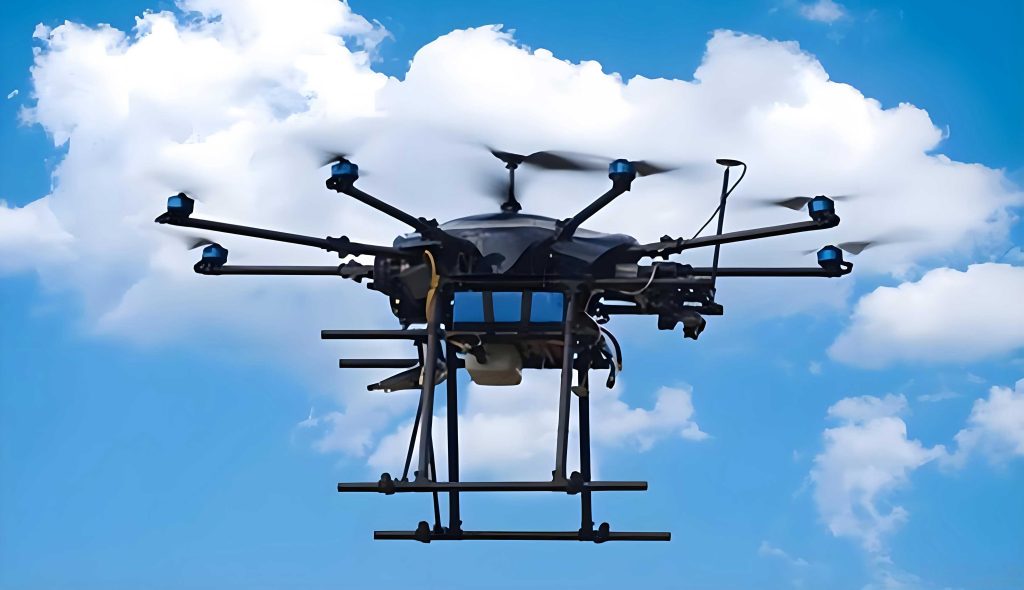
The core objective of this work is to develop and integrate a comprehensive, scenario-driven intelligent inspection system. This system utilizes UAV drones for autonomous data acquisition and employs tailored computer vision models for the real-time detection and proactive warning of specific anomalies. By implementing this technology, we strive to significantly enhance inspection quality and frequency, reduce operational costs, and elevate the overall level of informatization and standardization in waterway maintenance workflows.
Current Demands and Challenges in Intelligent Waterway Management
The management of navigation channels and locks faces multifaceted challenges that hinder efficient and proactive maintenance. Following administrative reforms, the separation of enforcement and management functions has sometimes led to gaps in timely oversight. Common issues include unauthorized vessel parking in waiting zones, which reduces lock efficiency, and damage to ecological revetments. Furthermore, ensuring the correct installation and maintenance of critical navigation aids, such as pipeline markers and bridge clearance gauges, remains difficult with conventional patrols. The general lack of advanced digital tools results in a reactive, rather than predictive, maintenance model, leaving potential safety hazards undiscovered until they escalate.
While the introduction of UAV drones has been a positive step—reducing manual labor by an estimated two-thirds in some patrol scenarios—their application often remains a simple replacement for the inspector’s eye. The captured video and imagery still require manual review, which is tedious, subjective, and does not fully leverage the data’s potential. There is a clear, unmet demand to transition from UAV-assisted manual inspection to UAV-driven intelligent inspection. This involves automating the detection of faults, transforming raw data into actionable alerts, and seamlessly integrating these alerts into existing management systems.
Core Application Scenarios for UAV Drones in Waterway and Lock Management
Our research targets two primary, high-impact application scenarios for intelligent UAV drone inspection. Each scenario addresses a specific maintenance pain point with a tailored machine vision solution.
1. Intelligent Early Warning for Revetment Diseases
Revetment integrity is paramount for bank stability. Diseases like spalling, cracking, scour, or block displacement can lead to catastrophic collapse. Our system automates the detection of such anomalies from UAV drone-captured video.
Technical Approach: We employ a hybrid vision model combining semantic segmentation and object detection. Initially, a Convolutional Neural Network (CNN) segments the image to isolate the revetment area from the background (water, vegetation). This step defines the Region of Interest (ROI). Within this ROI, a state-of-the-art object detection model, based on the YOLOv8 architecture, is deployed to identify and localize specific defect patterns.
The detection model is trained on a curated dataset comprising thousands of annotated images showcasing various revetment defects under different lighting and weather conditions. The model learns features indicative of failure, such as texture changes, irregular edges, and geometric anomalies. The final detection is a result of consensus between the segmentation mask’s anomaly map and the object detector’s bounding box predictions, reducing false positives.
The performance of an object detector like YOLOv8 is often evaluated using the mean Average Precision (mAP), which depends on precision and recall. For a set of detections, these can be summarized as:
$$ \text{Precision} = \frac{TP}{TP + FP}, \quad \text{Recall} = \frac{TP}{TP + FN} $$
$$ \text{mAP} = \frac{1}{N} \sum_{i=1}^{N} AP_i $$
where \(TP\), \(FP\), and \(FN\) are True Positives, False Positives, and False Negatives, respectively, \(AP_i\) is the Average Precision for class \(i\), and \(N\) is the number of classes (e.g., crack, spalling, displacement).
| Defect Type | Target Detection Accuracy | Target Miss Rate (Max) | Key Influencing Factors |
|---|---|---|---|
| Parapet/Coping Spalling | ≥ 80% | 15% | Lighting > 3000 lux, unobstructed view |
| Large-Area Collapse/Damage | ≥ 80% | 15% | Camera resolution ≥ 4MP, medium+ visibility |
2. Intelligent Status Detection for Ancillary Facilities
This scenario focuses on the condition of navigation signs and markers (e.g., pipeline signs, bridge clearance signs). Problems include tilting, occlusion, theft, vandalism, or improper installation.
Technical Approach: We utilize an enhanced YOLOv8s model, optimized for real-time performance on edge devices, for the initial detection and classification of all signage within the UAV drone’s field of view. The innovation lies in the change detection logic. During the first comprehensive UAV drone survey of a waterway segment, the system builds a geo-referenced inventory of all signs. Each sign’s type and precise location (from UAV drone RTK data) are recorded.
In subsequent automated patrols, the system performs two checks: 1) It detects all visible signs and compares their current type and estimated location with the inventory. 2) It flags any inventory sign that is not detected in its expected location (potential loss/theft) and any newly detected sign not in the inventory (unauthorized installation). For detected signs, a secondary classifier assesses their condition (e.g., bent, occluded, damaged).
The core detection task can be framed as optimizing the model parameters \(\theta\) to minimize a loss function \(L\) over the training dataset:
$$ \theta^* = \arg\min_{\theta} \sum_{(x_i, y_i) \in D} L(f(x_i; \theta), y_i) $$
where \(x_i\) is an input image from UAV drone footage, \(y_i\) is the ground-truth annotation (bounding box and class for each sign), \(f\) is the neural network model, and \(D\) is the training dataset.
| Detection Task | Target Detection Accuracy | Target Miss Rate (Max) | Operational Conditions |
|---|---|---|---|
| Sign Presence & Type | ≥ 85% | 15% | Resolution ≥ 4MP, unobstructed view |
| Sign Damage/Occlusion | ≥ 80% | – | Good visibility, stable UAV drone hover |
System Architecture and Technical Integration
The proposed intelligent inspection system is designed with a modular, layered architecture to ensure scalability, robustness, and ease of integration with existing Port and Waterway Management Center systems.
Overall System Architecture:
The architecture is composed of five distinct layers:
- Support Layer: Provides the hardware and fundamental software backbone, including UAV drones, communication networks (4G/5G), RTK base stations, and cloud/edge computing resources.
- Data Layer: Manages the storage and processing of multi-source data. This includes raw and processed UAV drone imagery/video, geographic information system (GIS) data, historical inspection records, and real-time algorithm outputs.
- Algorithm Layer: The core intelligence layer. It hosts the trained machine learning models for revetment defect detection, sign recognition and change detection, and optimal UAV drone path planning algorithms.
- Application Layer: Encapsulates the business logic and functional modules. Key modules include UAV drone mission control & scheduling, real-time video analysis, event alert generation, inspection reporting, and a dashboard for visualization.
- User Layer: Provides interfaces for different stakeholders, such as field inspectors, maintenance planners, and system administrators, via web portals and mobile applications.
This structure is bound together by standardized API interfaces and a comprehensive information security framework to protect data integrity and system availability.
Integration with Existing Management Systems
A critical success factor is the seamless integration of the UAV drone intelligence into the daily workflow of operations centers. Our approach involves deploying the algorithms as microservices that can ingest live video streams from UAV drones or analyze archived footage. When an anomaly is detected (e.g., a newly identified crack or a missing sign), the system automatically generates a structured alert. This alert contains the event type, location coordinates, timestamp, and a snapshot from the UAV drone video.
This alert is then pushed via API to the central management platform, where it appears on a digital map and in the work order queue. This triggers a review-and-dispatch process, transforming a previously manual search task into a managed response to a verified incident. Furthermore, the system supports automated report generation, summarizing all findings from a patrol mission, complete with geotagged evidence.
UAV Drone Fleet Management and Automated Operation
To maximize efficiency, we advocate for the use of automated UAV drone docking stations (hives) installed at strategic locations like communication towers along the waterway. This enables truly unattended operations. The system can schedule daily or weekly autonomous patrols along pre-programmed optimal flight paths. The UAV drones take off, follow the precise route, capture data, return to the hive for automatic battery swapping and data upload, and are ready for the next mission. This “UAV drone-on-demand” capability drastically reduces the need for manual pilot deployment and ensures consistent, high-frequency monitoring.
| Metric | Traditional Manual (Boat/Foot) | Basic UAV Drone (Manual Review) | Intelligent UAV Drone System (Proposed) |
|---|---|---|---|
| Coverage Speed | Slow (1x) | Fast (~10x faster) | Very Fast (~10x faster) + Automated |
| Data Consistency | Low (Subjective) | Medium (Recorded, but subjective review) | High (Algorithm-driven, consistent criteria) |
| Hazard Access | Risky/Limited | Excellent | Excellent |
| Proactivity | Reactive (Periodic) | Reactive (Periodic with better data) | Proactive (Frequent, automated anomaly detection) |
| Operational Labor | Very High | Medium (Piloting + Review) | Low (System monitoring + alert validation) |
Experimental Validation and Performance Analysis
We conducted field trials to validate the performance of the integrated system under real-world conditions. A test section of a major canal, approximately 30 kilometers in length, was selected for the experiment.
Inspection Protocol: A DJI M30 UAV drone, deployed from a tower-based hive, executed the autonomous patrols. For comprehensive data collection, each patrol segment was flown twice: first with the camera gimbal angled perpendicularly towards the revetment for defect inspection, and second with the camera aligned along the navigation direction for ancillary facility inspection. The UAV drone followed a pre-planned, repeatable flight path with consistent altitude and overlap to ensure data quality.
Data Augmentation for Validation: Given the relatively low natural occurrence of critical defects during a short trial, we employed a controlled simulation approach to rigorously test the algorithms. Representative defect models (simulating cracks, spalling) and sign anomalies (simulated damage, occlusion) were physically placed at known locations along the test bank. This created a ground-truth dataset with a sufficient number of positive samples for quantitative analysis.
Results and Discussion: Under optimal conditions (good lighting, clear visibility, minimal wind), the system demonstrated promising performance. The revetment defect detection algorithm achieved an accuracy of 80.0% against the simulated ground truth, while the ancillary facility status detection achieved 89.3%. The miss rates were measured at 11.1% and 13.8%, respectively, aligning with our design targets.
| Algorithm Module | Actual Anomalies Placed | Anomalies Detected by System | Anomalies Confirmed by Manual Review | Calculated Accuracy | Calculated Miss Rate |
|---|---|---|---|---|---|
| Revetment Defect Detection | 18 | 20 | 16 | 80.0% | 11.1% |
| Ancillary Facility Status Detection | 29 | 28 | 25 | 89.3% | 13.8% |
The primary sources of error and missed detections were identified as environmental factors: strong winds causing gimbal vibration, partial occlusion by overhanging vegetation, and wave reflection on water surfaces creating confusing visual noise. These factors highlight that while UAV drone-based intelligent inspection is a powerful tool, it is not infallible and operates best as part of a synergistic human-machine system. The role of the human inspector shifts from primary data gatherer to supervisor and validator of AI-generated alerts, significantly amplifying their productivity and focus.
The efficiency gain was substantial. The 30-km test segment was fully inspected by the UAV drone in approximately 90 minutes (including battery swap), a task that would traditionally require a full day or more for a boat crew, representing an order-of-magnitude improvement in time and resource utilization.
Conclusion and Future Perspectives
This research demonstrates a significant advancement in the application of UAV drone technology for waterway infrastructure management. By moving beyond simple aerial photography and integrating specialized machine vision algorithms, we have developed a system capable of automatic, intelligent analysis for key maintenance scenarios. The successful detection of revetment diseases and ancillary facility status anomalies, followed by automated alert generation, provides a concrete pathway towards predictive and proactive maintenance regimes.
The integration of this intelligent UAV drone system into existing port and waterway management platforms creates a powerful feedback loop: automated detection leads to faster response, which improves maintenance outcomes, which in turn refines the inspection models. This accelerates the digital transformation of the sector, enhancing safety, efficiency, and cost-effectiveness.
Future work will focus on several key areas to broaden and deepen the application of intelligent UAV drones. First, algorithm refinement is needed to improve robustness against challenging environmental conditions (e.g., poor lighting, rain, fog). Second, expanding the library of detectable defects to include more subtle, early-stage deterioration patterns will increase the system’s predictive power. Third, integrating data from other sensors (e.g., LiDAR on UAV drones for precise volumetric analysis of scour, or thermal cameras for detecting subsurface defects) will create a more comprehensive structural health monitoring platform. Finally, exploring swarm intelligence for coordinated inspection by multiple UAV drones could further revolutionize large-scale infrastructure assessment. The continuous evolution of UAV drone technology and artificial intelligence promises a future where our critical waterway infrastructure is monitored with unprecedented precision, intelligence, and foresight.