
In recent decades, the rapid advancement of unmanned aerial vehicle (UAV) technology has expanded its applications from military to various civil sectors, including agriculture. Among agricultural uses, multirotor drones have shown significant potential in tasks such as fertilization, pesticide spraying, and crop monitoring. However, their role in transporting agricultural products, particularly tea leaves from high-mountain regions, remains underexplored. This article examines the application of multirotor drones in addressing the challenges of tea leaf transport in rugged terrains, focusing on technical aspects, current limitations, and future prospects. As a researcher in this field, I have observed that multirotor drones can overcome inefficiencies of traditional methods, but several bottlenecks must be addressed to realize their full potential.
The transport of tea leaves, known as tea green, from high-altitude plantations is critical due to the perishable nature of the product. Traditional methods, such as manual carrying, motorcycles, or rail carts, are plagued by low efficiency, high costs, and physical damage to the leaves. For instance, tea green quality deteriorates rapidly under certain conditions; studies indicate that at 5°C, shelf life is limited to two days, and beyond nine hours at temperatures between 5°C and 25°C, quality degradation begins. Multirotor drones offer a promising alternative by enabling vertical take-off and landing, maneuverability in complex terrains, and reduced operational costs. Despite this, their adoption in tea transport is minimal, with only sporadic reports and limited technical research. This gap highlights the need for a comprehensive analysis of multirotor drone capabilities in this niche area.
High-mountain tea plantations, often located in steep, inaccessible areas, face unique logistical hurdles. The absence of proper roads and reliance on narrow paths make conventional transport methods impractical. Manual transport is labor-intensive and slow, leading to tea green spoilage, while motorcycles pose safety risks on treacherous paths. Rail systems, though more efficient, require specialized maintenance and high initial investment. In contrast, multirotor drones can navigate these environments with ease, using suspended cargo systems to minimize physical impact on tea leaves. However, challenges such as limited battery life, payload capacity, and precise flight control in signal-obstructed areas hinder widespread implementation. As I delve into this topic, it becomes evident that multirotor drones could revolutionize tea transport if these issues are mitigated through technological innovations.
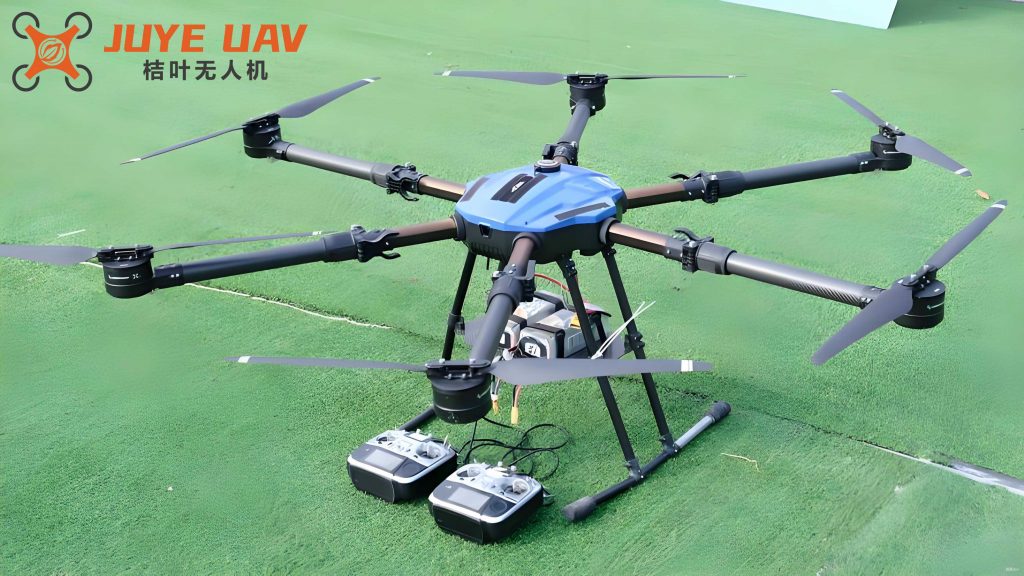
To understand the energy dynamics of multirotor drones, it is essential to compare common power sources. Lithium-ion batteries are widely used due to their portability and ease of operation, but they suffer from short endurance and sensitivity to environmental factors like low temperatures, which reduce effective capacity. Hydrogen fuel cells, on the other hand, offer higher energy density and longer flight times but face hurdles in cost, safety, and technical maturity. The following table summarizes key characteristics of these energy sources for multirotor drones:
| Energy Source | Energy Density | Typical Endurance | Advantages | Disadvantages |
|---|---|---|---|---|
| Lithium-ion Battery | ~250 Wh/kg | 20-40 minutes | Lightweight, eco-friendly, easy to use | Limited lifespan, temperature sensitivity, safety risks |
| Hydrogen Fuel Cell | ~120 MJ/kg (theoretical) | 5-10 hours | High energy density, fast refueling | High cost, complex infrastructure, safety concerns |
The endurance of a multirotor drone can be modeled using the power consumption equation. For a drone in hover, the power required $P$ is given by:
$$ P = \frac{(m \cdot g)^{3/2}}{\sqrt{2 \cdot \rho \cdot A \cdot C_T}} $$
where $m$ is the total mass (including payload), $g$ is gravitational acceleration, $\rho$ is air density, $A$ is rotor disk area, and $C_T$ is thrust coefficient. This shows that payload directly impacts energy use, underscoring the need for lightweight designs and efficient batteries. Innovations in thermal management, such as heat pipe systems, can extend battery life by maintaining optimal temperatures. For example, a thermal model might use:
$$ \frac{dT}{dt} = \frac{Q – hA(T – T_{\text{ambient}})}{mC_p} $$
where $T$ is battery temperature, $Q$ is heat generation, $h$ is heat transfer coefficient, $A$ is surface area, $T_{\text{ambient}}$ is ambient temperature, $m$ is mass, and $C_p$ is specific heat. Such approaches are crucial for multirotor drones operating in variable mountain climates.
Flight safety control is another critical aspect for multirotor drones in tea transport. When carrying suspended loads, swing oscillations can destabilize the system, especially in windy or obstructed terrains. Advanced control algorithms, such as nonlinear coupling anti-swing controllers, are employed to mitigate this. The dynamics of a multirotor drone with a pendulum-like load can be described by Lagrangian mechanics. Let $\theta$ represent the swing angle of the load, and $x, y, z$ the drone’s position. The equations of motion include:
$$ \ddot{x} = \frac{u_x}{m_d} – l \ddot{\theta} \cos \theta $$
$$ \ddot{\theta} = -\frac{g}{l} \sin \theta – \frac{\ddot{x} \cos \theta}{l} $$
where $m_d$ is drone mass, $l$ is cable length, $u_x$ is control input, and $g$ is gravity. Controllers based on energy analysis can dampen oscillations, ensuring stable flight. For instance, a proportional-integral-derivative (PID) controller with feedback linearization might use:
$$ u = K_p e + K_i \int e \, dt + K_d \frac{de}{dt} $$
where $e$ is the error in position or angle, and $K_p$, $K_i$, $K_d$ are gains. Additionally, in GPS-denied mountain areas, sensor fusion techniques like INS/GNSS tight combination positioning enhance accuracy. A common approach involves Kalman filtering:
$$ \hat{x}_{k|k} = \hat{x}_{k|k-1} + K_k (z_k – H \hat{x}_{k|k-1}) $$
where $\hat{x}$ is state estimate, $K$ is Kalman gain, $z$ is measurement, and $H$ is observation matrix. These methods enable multirotor drones to maintain precise navigation despite signal blockages from trees or terrain.
In terms of application models, single multirotor drone operations are feasible for small-scale tea farmers due to their flexibility and lower upfront costs compared to infrastructure projects like roads or rails. However, this mode suffers from limited range and frequent battery changes, which reduce overall efficiency during peak harvest seasons. A comparative analysis of transport modes reveals the trade-offs:
| Transport Mode | Efficiency | Cost | Tea Green Damage Risk | Suitability for High-Mountains |
|---|---|---|---|---|
| Manual Carry | Low | High (labor-intensive) | High | Moderate |
| Motorcycle | Medium | Medium | Medium | Low (safety issues) |
| Rail Cart | High | High (maintenance) | Low | Medium |
| Single Multirotor Drone | Medium | Medium | Low | High |
| Drone-Vehicle Collaborative | High | Medium to Low | Low | Very High |
The drone-vehicle collaborative model addresses endurance limitations by combining multirotor drones for last-mile transport in inaccessible areas with ground vehicles for longer hauls. This synergy optimizes the “first mile” of logistics, reducing the drone’s travel distance and battery drain. The overall transport time $T_{\text{total}}$ can be approximated as:
$$ T_{\text{total}} = \frac{d_{\text{drone}}}{v_{\text{drone}}} + \frac{d_{\text{vehicle}}}{v_{\text{vehicle}}} + t_{\text{transfer}} $$
where $d$ represents distances, $v$ speeds, and $t_{\text{transfer}}$ the handover time. Path planning algorithms, often based on graph theory, minimize this time by solving for optimal routes. For example, Dijkstra’s algorithm computes the shortest path in a network, ensuring efficient coordination between multirotor drones and vehicles.
Looking ahead, the future of multirotor drones in high-mountain tea transport hinges on breakthroughs in battery technology, such as solid-state batteries or enhanced lithium-sulfur chemistries, which could double energy density. Hydrogen fuel cells may become more viable with cost reductions and improved safety protocols. In control systems, machine learning algorithms like reinforcement learning could adapt to dynamic environments, optimizing flight paths in real-time. For instance, a Q-learning update rule:
$$ Q(s, a) \leftarrow Q(s, a) + \alpha [r + \gamma \max_{a’} Q(s’, a’) – Q(s, a)] $$
where $Q$ is the action-value function, $s$ state, $a$ action, $r$ reward, $\alpha$ learning rate, and $\gamma$ discount factor. Policy support and farmer training are equally important to foster adoption; workshops on multirotor drone operation can demystify the technology and build trust. Collaborative efforts between researchers and industry could standardize protocols for drone-vehicle systems, ensuring scalability.
In conclusion, multirotor drones represent a transformative solution for tea green transport in high-mountain regions, offering efficiency, cost savings, and reduced product damage. However, challenges in energy, control, and integration persist. Through continued innovation in power sources, intelligent control algorithms, and collaborative logistics, multirotor drones can pave the way for smarter, more sustainable agricultural practices. As I reflect on this journey, it is clear that the integration of multirotor drones into tea supply chains will require a multidisciplinary approach, blending engineering with environmental and economic considerations to achieve lasting impact.