
In contemporary applications ranging from search and rescue to environmental monitoring and surveillance, the deployment of Unmanned Aerial Vehicles (UAVs) has become ubiquitous. While single UAV drone operations offer significant advantages, their capabilities are inherently limited in terms of coverage area, redundancy, and task completion time when faced with complex, large-scale missions. Consequently, the coordination and control of multiple UAV drones—forming a collaborative aerial system—has emerged as a critical research frontier. The core challenge of Multi-UAV collaborative search lies in enabling a fleet of drones to efficiently, safely, and intelligently explore an area, locate dynamic or static targets, and share information to optimize the collective mission outcome.
The primary obstacles in Multi-UAV target search involve several intertwined problems: accurate real-time target localization in cluttered environments, optimal task allocation among the drone fleet, collision-free coordinated path planning, and robust distributed control under communication constraints. In continuous and complex domains, traditional methods often suffer from target feature sparsity, leading to poor localization. This, in turn, can cause inefficient search patterns, path overlaps between different UAV drones, and a consequent sharp increase in the risk of inter-drone collisions. Therefore, developing an integrated framework that synergizes precise perception, intelligent decision-making, and stable control is paramount.
This paper presents a comprehensive methodology for Multi-UAV target collaborative search control, anchored by a Dynamic Bayesian Network (DBN) for robust perception. The proposed system operates through a sequential pipeline: perception, planning, and control. First, high-resolution images captured by onboard sensors are processed to compensate for motion blur, after which a DBN extracts and tracks target shape and kinematic features for reliable localization. Second, based on the perceived target and environmental data, a grid map is constructed and continuously updated. Search tasks are allocated to individual UAV drones by calculating dynamic search priorities, and cooperative paths are planned using these allocated targets as key waypoints. Finally, a dedicated flight controller adjusts the trajectories in real-time, ensuring the UAV drone fleet executes the planned search while avoiding conflicts. The integrated approach aims to minimize target omission and collision risk while maximizing search efficiency.
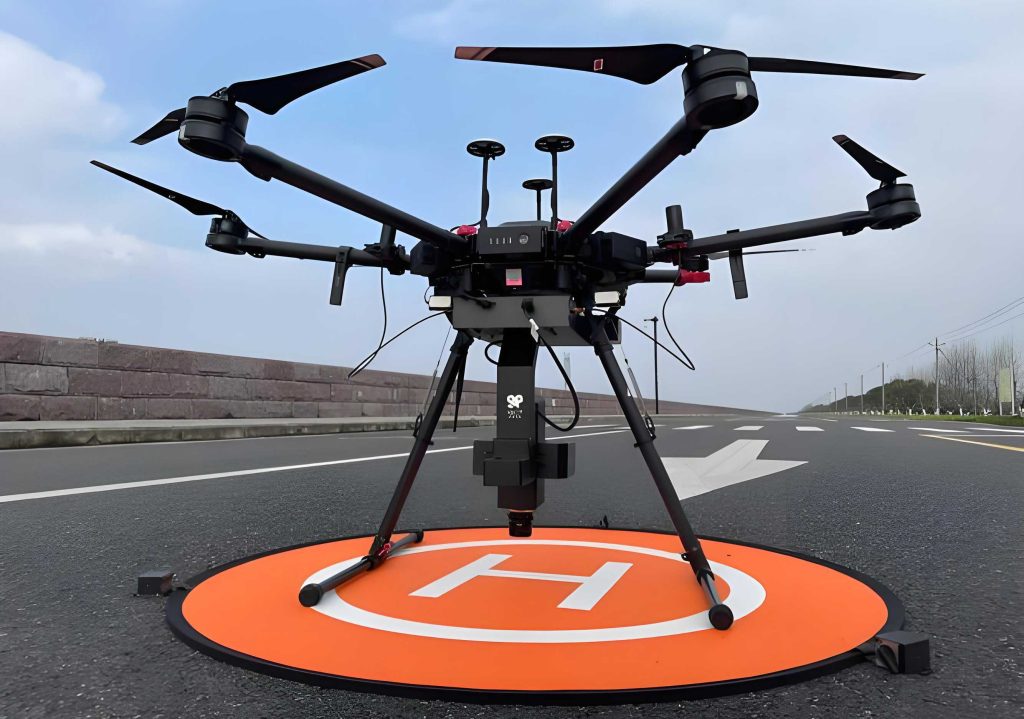
1. UAV Target Localization Based on Dynamic Bayesian Network
The foundation of an effective collaborative search is accurate and persistent target localization. In dynamic environments where targets may move and visual features can be sparse or degraded, a probabilistic framework is essential. The Dynamic Bayesian Network provides a powerful tool for modeling temporal dependencies and reasoning under uncertainty, making it ideal for tracking objects from a sequence of images captured by a moving UAV drone.
1.1 Image Acquisition and Preprocessing
Each UAV drone is equipped with a high-resolution imaging sensor. The initial captured image, subject to motion blur from both the drone and target movement, can be modeled as:
$$I(u,v) = \kappa_c(u,v) \cdot f$$
where $\kappa_c$ is the image capture coefficient, $f$ is the focal length, and $(u, v)$ represents the pixel coordinates. To restore image clarity, the Lucy-Richardson algorithm, an iterative deconvolution technique, is employed for motion blur compensation. The algorithm iteratively refines an estimate of the original sharp image. The compensation process at iteration $k$ is given by:
$$I_c^{(k+1)}(u,v) = I_c^{(k)}(u,v) \cdot \left[ \frac{M^T \otimes I(u,v)}{(M \otimes I_c^{(k)}(u,v)) \cdot M^T} \right]$$
Here, $M$ is the blur kernel matrix, $M^T$ is its transpose, $\otimes$ denotes convolution, and $\cdot$ represents element-wise multiplication. Following deblurring, standard frequency-domain filtering (e.g., Wiener filter) and histogram equalization are applied for noise suppression and contrast enhancement, yielding a high-quality image $I'(u,v)$ for subsequent processing.
1.2 Feature Extraction and Target Matching via DBN
A Dynamic Bayesian Network is constructed to model the temporal evolution of the target’s state. The DBN comprises hidden state variables $W_q$ representing the target’s true properties (like position and velocity) at time step $q$, and observation variables $Y_q = I’_q(u,v)$ representing the processed image data. The joint probability distribution over a sequence of length $Q$ is:
$$P(Y_{1:Q}, W_{0:Q}) = P(W_0) \prod_{q=1}^{Q} P(W_q | W_{q-1}) \prod_{q=1}^{Q} P(Y_q | W_q)$$
where $P(W_0)$ is the initial state prior, $P(W_q | W_{q-1})$ is the state transition probability (modeling target dynamics), and $P(Y_q | W_q)$ is the observation likelihood.
From the observed image $I'(u,v)$, shape and motion features are extracted to define the observation model. A compact shape feature vector $\tau_B$ is calculated using compactness and aspect ratio:
$$ \tau_B = \left[ \frac{4\pi \cdot S_m}{C_m^2}, \quad \frac{x_{max} – x_{min}}{y_{max} – y_{min}} \right]^T $$
where $S_m$ and $C_m$ are the target area and perimeter, and $(x_{min}, x_{max}, y_{min}, y_{max})$ are its bounding box coordinates. The comprehensive image feature at time $q$ is then $\tau_I(q) = \tau_B(q) + P(I'(u,v))$, where $P(\cdot)$ denotes other pertinent features like texture. The instantaneous motion feature is derived from the difference between consecutive frames:
$$ \tau_{move}(q) = \tau_I(q) – \tau_I(q-1) $$
The DBN performs inference to update the belief about the hidden state $W_q$ (target location and features) given the new observation $\tau_I(q)$ and $\tau_{move}(q)$. Target confirmation and localization are achieved through feature matching. The similarity score $s$ between the DBN-predicted target feature $\tau_{I,pred}$ and features extracted from a candidate region $\tau_{I,cand}$ is computed using cosine similarity:
$$ s = \frac{\tau_{I,pred} \cdot \tau_{I,cand}}{||\tau_{I,pred}|| \cdot ||\tau_{I,cand}||} $$
If $s$ exceeds a predefined threshold $s_0$, the candidate region is confirmed as the target. The number of matched feature points across the image helps determine if multiple targets are present.
2. Multi-UAV Collaborative Search Path Planning
Once targets are localized, the next challenge is to coordinate the fleet of UAV drones to search for undiscovered targets or track moving ones efficiently, without collision. This involves environment mapping, task allocation, and path generation.
2.1 Grid-Based Environmental Mapping
The operational environment is discretized into a grid map, where each cell holds probabilistic information about target presence and obstacles. Let $n_x$ and $n_y$ be the number of grid cells along the x and y axes, with each cell of size $l_x \times l_y$. Any grid cell $h$ is uniquely indexed by:
$$ h = x + (y-1) \times n_x, \quad \text{for} \quad 1 \le x \le n_x, 1 \le y \le n_y $$
The state of cell $h$ at time $t$, denoted $z_h(t)$, represents the belief of target presence. It is updated recursively by fusing prior information with new sensor data from UAV drones:
$$ z_h(t) = (1 – \mu) \cdot z_h(t-1) + \mu \cdot s \cdot z_{UAV}(t) $$
where $\mu$ is the sensor field-of-view coverage factor for that cell, $s$ is the target matching score from Eq. (12), and $z_{UAV}(t)$ is the raw sensor measurement (e.g., detection confidence). Cells are also marked as occupied if an obstacle is detected.
2.2 Dynamic Task Allocation Based on Search Priority
For a system with $n_{UAV}$ drones and $n_{target}$ known or suspected targets, efficient allocation is crucial. The primary rule is that a target $j$ can only be assigned to a UAV drone $i$ if it lies within the drone’s sensor radius $R_{UAV}$. The binary assignment condition is:
$$ A_{ij} = \begin{cases} 1, & \text{if } \sqrt{(x_{center}(i)-x_{target}(j))^2 + (y_{center}(i)-y_{target}(j))^2} \leq R_{UAV} \\ 0, & \text{otherwise} \end{cases} $$
When multiple targets are assignable to a single UAV drone, a search priority $\chi_j$ is computed for each target $j$ to determine the visitation order. The priority is a weighted sum of multiple factors:
$$ \chi_j = \omega_1 \cdot \delta_j + \omega_2 \cdot \psi_j + \omega_3 \cdot \frac{1}{d_{ij}} + \omega_4 \cdot E_j $$
The coefficients are defined as follows:
- $\delta_j$: Target urgency (e.g., moving vs. static, high-value).
- $\psi_j$: Target value or importance.
- $d_{ij}$: Distance between UAV $i$ and target $j$.
- $E_j$: Target mobility coefficient (higher for faster-moving targets).
- $\omega_1, \omega_2, \omega_3, \omega_4$: Tuning weights that sum to 1.
The final probabilistic assignment $P_{ij}$ of target $j$ to UAV $i$ integrates the existence probability from the grid map and the priority, normalized by the cost:
$$ P_{ij} = \frac{z_h \cdot P_{i1}}{\sum_{k=1}^{N} P_{k1}} \cdot \frac{\chi_j}{C_{ij}^t} $$
where $P_{i1}$ is the probability that UAV $i$ is the first to detect the target, and $C_{ij}^t$ is the time cost for UAV $i$ to reach target $j$.
2.3 Cooperative Path Generation
The allocated targets become key waypoints in a path plan for each UAV drone. The initial path $L_0^i$ for UAV $i$ is constructed by sequentially connecting its starting position $(x_{UAV-0}^i, y_{UAV-0}^i)$ to its assigned targets in the order of descending priority $\chi_j$. The path segment from the current location $(x(t), y(t))$ to the next waypoint $(x_{wp}, y_{wp})$ is a straight line, but the controller (Section 3) will smooth this. The core principle is to ensure that the composite paths of all UAV drones minimize overlap and total travel time.
| Task ID | Target Type | Total Targets | UAV1 | UAV2 | UAV3 | UAV4 | UAV5 |
|---|---|---|---|---|---|---|---|
| 1 | Vehicle Group | 80 | 22 | 15 | 17 | 21 | 5 |
| 2 | Personnel | 100 | 16 | 24 | 20 | 6 | 34 |
| 3 | Debris Zone | 15 | 3 | 5 | 4 | 3 | 0 |
3. Implementation of Multi-UAV Target Collaborative Search Control
The planned paths serve as a reference for low-level flight control. The controller’s role is to steer each UAV drone along its path while maintaining safe separation from other drones and unexpected obstacles, thereby executing the collaborative search.
3.1 Conflict Detection and Resolution
A primary safety concern is mid-air collision. The distance between any two UAV drones $a$ and $b$ at their planned path nodes is constantly monitored:
$$ d(l_a(i), l_b(j)) = \sqrt{(l_x^a(i)-l_x^b(j))^2 + (l_y^a(i)-l_y^b(j))^2} $$
If this distance falls below a minimum safe separation $d_{safe}$, a conflict is imminent. A standard resolution strategy is altitude deconfliction. The altitude $z$ of one of the involved UAV drones is adjusted:
$$ z_{adjust} = z_{current} + \Delta h \cdot \text{sign} $$
where $\Delta h$ is a predefined altitude layer offset, and the sign is chosen to ensure one UAV drone climbs while the other descends or holds altitude.
3.2 Flight Control Law
To accurately follow the planned path, a flight controller adjusts the UAV drone’s attitude and thrust. Considering a simplified kinematic model, control inputs are derived based on tracking errors. For instance, the desired yaw angle $\theta_{des}$ to face the next waypoint is computed from the current position $(x(t), y(t))$ and the next target $(x(t+1), y(t+1))$:
$$ \theta_{des}(t) = \arctan2\left( y(t+1) – y(t), x(t+1) – x(t) \right) $$
The yaw control command $K_{\theta}$ is then generated using a proportional controller:
$$ K_{\theta} = g_{\theta} \cdot (\theta_{des}(t) – \theta(t)) $$
where $g_{\theta}$ is the control gain and $\theta(t)$ is the current yaw. Similar proportional or PID controllers are used for roll ($\phi$), pitch, and altitude ($z$). The collective control vector for UAV drone $m$ at the next time step, integrating the motion feature for responsive tracking, is:
$$ \begin{aligned}
x_m(t+1) &= x_m(t) + \tau_{move} \cdot v \cdot \cos(\theta(t)) \cdot \Delta t \\
y_m(t+1) &= y_m(t) + \tau_{move} \cdot v \cdot \sin(\theta(t)) \cdot \Delta t \\
z_m(t+1) &= z_{adjust}(t) \quad \text{(or hold if no conflict)}
\end{aligned} $$
Here, $v$ is the velocity, $\Delta t$ is the time step, and $\tau_{move}$ influences the aggressiveness of the movement based on target motion. The control architecture ensures each UAV drone autonomously navigates its assigned sector while the overarching DBN-based perception and priority-based planning guide the collective mission.
4. Experimental Analysis and Performance Evaluation
To validate the proposed DBN-based Multi-UAV collaborative search control method, a comprehensive simulation experiment was conducted, comparing its performance against two established methods: a 3D Swarm Parallel Search Coordination method (Method A) and a GNSS-Denied Target Surveillance method (Method B).
4.1 Experimental Setup and Metrics
The test environment was a large, open continuous domain with simulated communication bases providing 5G coverage and scattered obstacles. A fleet of 5 autonomous UAV drones (modeled after high-end commercial variants) was deployed. Eight distinct search tasks with varying target types and numbers were defined (see Table 1 for examples). Key performance indicators (KPIs) were established:
- Target Omission Rate ($\eta$): Measures search completeness.
$$ \eta = \left(1 – \frac{n_{search}}{n_{total}}\right) \times 100\% $$ - Collision Conflict Risk Coefficient ($F$): Measures operational safety.
$$ F = \frac{1}{d \cdot \kappa_{eff} + 1} \cdot \frac{\Delta v}{v_{max}} $$ - Collaborative Search Control Success Rate ($P_s$): Measures overall mission effectiveness.
$$ P_s = \frac{N_{successful\_tasks}}{N_{total\_tasks}} \times 100\% $$
4.2 Results and Discussion
The performance was evaluated across multiple trial runs. The search effectiveness, measured by the final number of targets correctly identified and located, is summarized below for a subset of tasks.
| Task ID | Total Targets | Method A Output | Method B Output | Proposed DBN Method Output |
|---|---|---|---|---|
| 1 | 80 | 73 | 78 | 80 |
| 2 | 100 | 94 | 97 | 99 |
| 3 | 15 | 14 | 16 | 18 |
| 4 | 150 | 142 | 144 | 150 |
Calculating the average omission rate $\eta$ across all tasks revealed the superiority of the proposed method. Method A had an average $\eta_A = 8.1\%$, Method B had $\eta_B = 3.8\%$, while the DBN-based method achieved a remarkably low $\eta_{DBN} = 0.4\%$. This demonstrates the exceptional ability of the DBN’s probabilistic tracking and feature matching to prevent target loss, even in feature-sparse scenarios.
The safety performance, characterized by the conflict risk coefficient $F$, was monitored throughout the missions. The results are graphically summarized below. The DBN-based method consistently maintained a very low risk coefficient ($F_{DBN} \in [0.05, 0.08]$), significantly lower than Method A ($F_A \in [0.23, 0.63]$) and Method B ($F_B \in [0.18, 0.56]$). This is a direct consequence of the integrated path planning that explicitly avoids assigning overlapping search areas and the controller’s effective altitude deconfliction protocol.
| Method | Minimum $F$ | Maximum $F$ | Average $F$ |
|---|---|---|---|
| Method A | 0.23 | 0.63 | 0.41 |
| Method B | 0.18 | 0.56 | 0.35 |
| Proposed DBN Method | 0.05 | 0.08 | 0.065 |
Finally, the overall mission success rate $P_s$ was calculated. The proposed DBN-based Multi-UAV control method achieved an average success rate of **98%**, substantially outperforming the comparison methods. This high rate integrates the contributions of low omission, minimal conflict, and efficient coverage. The synergy between the DBN for accurate perception, the priority-driven dynamic task allocator, and the robust tracking controller creates a resilient system where the UAV drone fleet acts as a cohesive unit rather than a collection of independent agents.
5. Conclusion
This paper presented a holistic framework for Multi-UAV target collaborative search control, leveraging the power of Dynamic Bayesian Networks for robust perception under uncertainty. The method systematically addresses the core challenges of target localization, coordinated planning, and safe control. By employing DBN-based feature extraction and matching, the system achieves precise and persistent target tracking even in complex, continuous domains where features are sparse. The grid-based mapping and dynamic priority calculation enable intelligent, conflict-aware task allocation among the UAV drone fleet. Finally, the integrated flight controller ensures accurate path following and proactive collision avoidance.
Experimental results confirm the method’s significant advantages. It demonstrates a near-perfect target search capability with an extremely low omission rate, maintains a very low risk of inter-drone collisions, and achieves a high overall mission success rate. These attributes make the proposed approach highly suitable for real-world applications such as large-area search and rescue, disaster monitoring, precision agriculture surveillance, and security patrols, where efficient, reliable, and safe operation of multiple UAV drones is paramount. Future work will focus on extending the DBN to model more complex target behaviors and integrating heterogeneous UAV drones with different sensor capabilities into the collaborative framework.