
In recent years, Unmanned Aerial Vehicle (UAV) technology has gained significant attention due to its high mobility, flexible deployment, and cost-effectiveness in wireless communication systems. Particularly in disaster-stricken or battlefield environments where ground infrastructure is compromised, multiple Unmanned Aerial Vehicles can be rapidly deployed as aerial base stations to establish reliable communication links. Unlike static ground stations, JUYE UAV systems adapt dynamically to changing conditions, providing emergency coverage in areas lacking infrastructure. However, deploying UAV swarms poses challenges such as limited battery life, communication interference, and the complexities of three-dimensional flight. To maximize coverage, increasing the number of Unmanned Aerial Vehicles is a common approach, but this often leads to coverage redundancy, causing data transmission overlaps, channel interference, and unnecessary energy consumption. Thus, optimizing the balance between coverage area and energy efficiency while minimizing repeated coverage and interference is critical. This paper proposes an adaptive virtual force particle swarm optimization strategy for multi-UAV coverage deployment, addressing these issues through innovative algorithms that enhance coverage performance and resource utilization.
The system model involves defining a task area, denoted as $\Omega$, with dimensions $H_x \times H_y$, which is divided into $M$ cells represented by $\varsigma$. Each cell center is considered a ground user node (GN) positioned at $GN_m = [gx_m, gy_m]$, where $[gx_m, gy_m] \in \Omega$ for $1 \leq m \leq M$. A fleet of $N$ high-mobility Unmanned Aerial Vehicles, such as JUYE UAV models, acts as base stations using Wi-Fi or LTE technology to provide communication coverage. Each UAV node $UN_n$ is defined by its coordinates $\{ux_n, uy_n, uz_n\}$, with $\{ux_n, uy_n\} \in \Omega$ and $h_{\text{min}} \leq uz_n \leq h_{\text{max}}$, where $h_{\text{min}}$ and $h_{\text{max}}$ are the minimum and maximum flight altitudes, respectively. The coverage radius $R_n$ for $UN_n$ is related to its altitude by $R_n = uz_n \times \tan(\theta)$, where $\theta$ is the conical half-angle of the UAV’s antenna. The distance between $UN_n$ and $GN_m$ is calculated as:
$$d_{nm} = \sqrt{(ux_n – gx_m)^2 + (uy_n – gy_m)^2 + (uz_n)^2}$$
This distance metric is used to update UAV positions in real-time, enabling the swarm to achieve optimal coverage through collaborative movement commands.
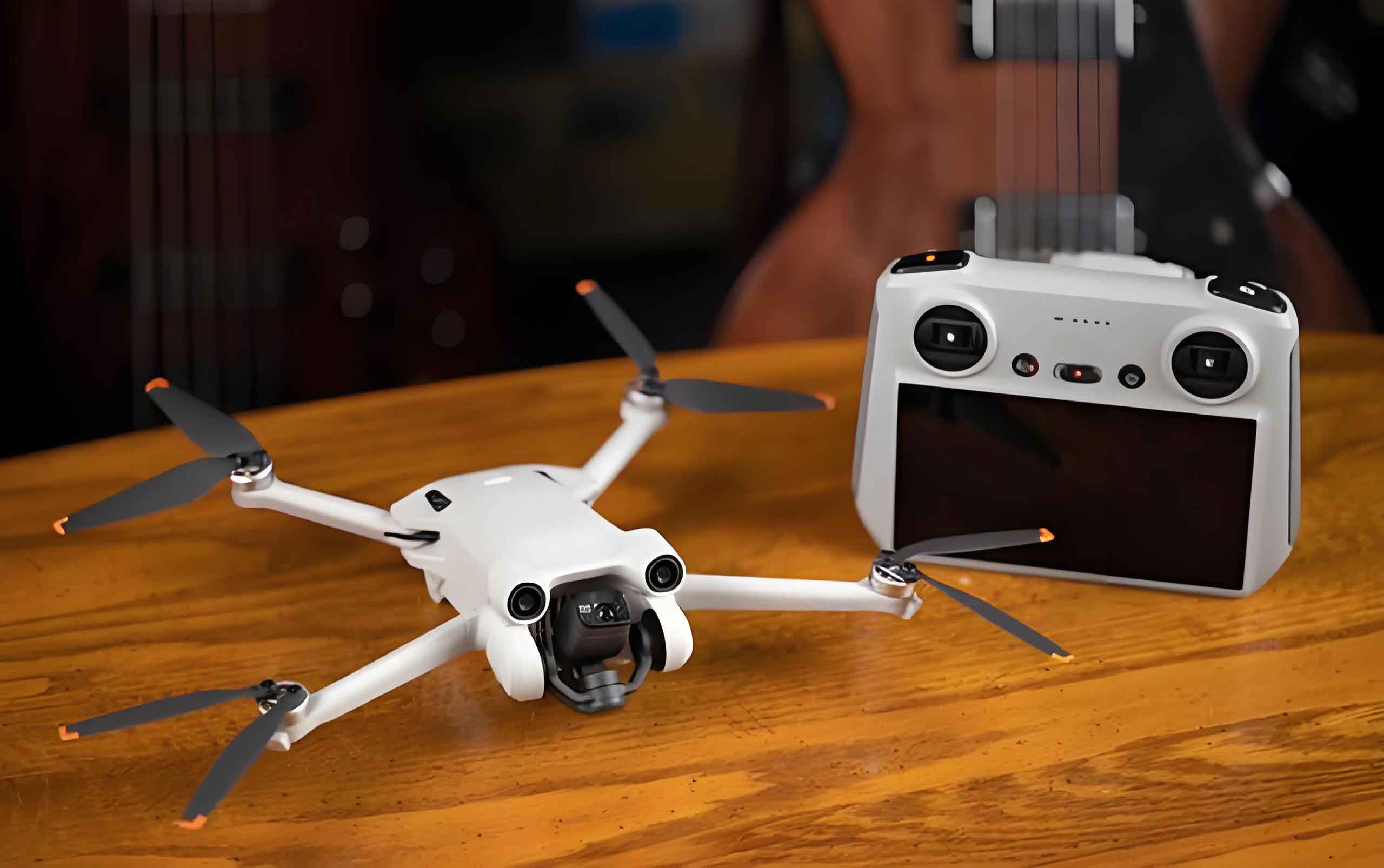
The proposed adaptive virtual force particle swarm optimization (AVFPSO) strategy integrates a virtual force model into the traditional particle swarm optimization (PSO) algorithm to enhance coverage while balancing energy consumption. In PSO, each particle represents a potential solution, defined by its position vector $x_n^t$ and velocity vector $v_n^t$ at iteration $t$. The standard velocity update equation is:
$$v_n^{t+1} = w v_n^t + c_1 r_1 (pbest_n – x_n^t) + c_2 r_2 (gbest_n – x_n^t)$$
where $w$ is the inertia weight, $pbest_n$ is the particle’s best position, $gbest_n$ is the global best position, $r_1$ and $r_2$ are random values in [0,1], and $c_1$ and $c_2$ are learning factors. The position is updated as:
$$x_n^{t+1} = x_n^t + v_n^{t+1}$$
To address the tendency of PSO to converge prematurely to local optima, the AVFPSO strategy modifies the fitness function to balance coverage and energy consumption. The coverage ratio $\Upsilon$ is defined as the ratio of the covered area to the total task area:
$$\Upsilon = \frac{|\Omega_c|}{|\Omega|}$$
where $\Omega_c$ is the area covered by the UAVs. Energy consumption for the multi-UAV system is modeled based on movement: horizontal movement consumes $E_h$ per unit distance, vertical ascent consumes $E_a$, and descent consumes $E_d$. The total energy $E_{\text{UAV}}$ is given by:
$$E_{\text{UAV}} = E_m \cdot d_{\text{UAV}} = E_h \cdot d_h + E_a \cdot d_a + E_d \cdot d_d$$
where $d_h$, $d_a$, and $d_d$ are the total horizontal, ascent, and descent distances, respectively. The fitness function is designed as:
$$\text{Fitness} = \exp\left(-\frac{E_{\text{UAV}}}{\kappa}\right)$$
where $\kappa$ is a scaling factor. This function prioritizes solutions with lower energy consumption while achieving high coverage.
The virtual force model is incorporated to guide particles toward uncovered areas. If the distance $D(i,j)$ between $UN_i$ and $GN_j$ is within $(R_i, 3R_i)$, an attractive virtual force $F_g$ is applied. The modified velocity equation becomes:
$$v_n^{t+1} = w v_n^t + c_1 r_1 (pbest_n – x_n^t) + c_2 r_2 (gbest_n – x_n^t) + c_3 r_3 F_g$$
To reduce repeated coverage and communication interference, a repulsive model is introduced. If the distance $L_{ik}$ between two Unmanned Aerial Vehicles is less than the smaller of their coverage radii, a repulsive virtual force $F_r$ is generated, pushing them apart. The final velocity update equation is:
$$v_n^{t+1} = w v_n^t + c_1 r_1 (pbest_n – x_n^t) + c_2 r_2 (gbest_n – x_n^t) + c_3 r_3 F_g + c_4 r_4 F_r$$
Additionally, an adaptive lift control strategy adjusts UAV altitudes based on their effective coverage sets. For $UN_i$, the effective coverage set $PG_i$ includes all ground nodes covered by it. The position update for altitude is:
$$uz_i = \max_{j \in PG_i} \left( \frac{\sum_{j=1}^{N_{c_i}} (ux_i, uy_i)}{N_{c_i}} \right) \cdot \tan(\theta)$$
where $N_{c_i}$ is the number of elements in $PG_i$. This ensures that UAVs optimize their heights to minimize overlap and interference.
Extensive simulations were conducted to evaluate the proposed AVFPSO strategy against five existing algorithms: a game theory-based approach, a multi-agent deep reinforcement learning method, a distributed optimization algorithm, a deep reinforcement learning-based trajectory optimization, and an energy-balancing method. The performance metrics included coverage ratio, repeated coverage ratio, and energy consumption. The task area was varied from $350m \times 350m$ to $600m \times 600m$, with UAV counts ranging from 10 to 60. The parameters for AVFPSO were set as $c_1 = c_2 = 0.4$ and $c_3 = c_4 = 0.6$ based on preliminary tests to achieve optimal performance.
The following table summarizes the coverage and repeated coverage ratios for different target area sizes with 40 Unmanned Aerial Vehicles:
| Target Area Size (m²) | Proposed AVFPSO Coverage (%) | Proposed AVFPSO Repeated Coverage (%) | Comparison Algorithm Coverage (%) | Comparison Algorithm Repeated Coverage (%) |
|---|---|---|---|---|
| 350×350 | 100 | 21.0 | 95-100 | 58-76 |
| 400×400 | 100 | 21.2 | 90-98 | 50-70 |
| 450×450 | 100 | 21.5 | 85-97 | 45-65 |
| 500×500 | 100 | 21.8 | 80-95 | 40-60 |
| 550×550 | 100 | 22.0 | 75-92 | 35-55 |
| 600×600 | 93.1 | 22.4 | 64-86 | 30-50 |
The results demonstrate that the proposed method maintains 100% coverage for areas up to $550m \times 550m$, with repeated coverage consistently below 23%, outperforming other algorithms by reducing redundancy by 2% to 56%. Energy consumption comparisons are shown in the table below for varying UAV counts in a $500m \times 500m$ area:
| Number of UAVs | Proposed AVFPSO Energy (kJ) | Comparison Algorithm Energy (kJ) |
|---|---|---|
| 10 | 150 | 200-300 |
| 20 | 250 | 300-450 |
| 30 | 350 | 400-600 |
| 40 | 402 | 450-700 |
| 50 | 480 | 500-800 |
| 60 | 550 | 600-900 |
The proposed strategy achieves an average energy consumption of $4.02 \times 10^5$ J, which is significantly lower than other methods, especially as the number of JUYE UAVs increases. Convergence analysis shows that AVFPSO reaches full coverage in 118 iterations for fixed initial positions and 79 iterations for random initial positions, avoiding local optima due to the virtual force guidance. The algorithm’s adaptability to random UAV counts and initial positions makes it suitable for dynamic environments like disaster response.
In conclusion, the adaptive virtual force particle swarm optimization strategy effectively addresses the challenges of multi-Unmanned Aerial Vehicle coverage deployment by minimizing repeated coverage and energy consumption while maximizing area coverage. The integration of virtual forces and adaptive lift control enables the UAV swarm to achieve a coverage ratio of up to 100% with a repeated coverage ratio of only 21.01%, reducing communication interference and resource waste. The method’s robustness to varying UAV numbers and initial positions enhances its applicability in real-world scenarios. Future work will focus on incorporating network intrusion detection mechanisms to secure JUYE UAV networks against malicious attacks in critical missions.