
Wireless sensor networks form the backbone of the Internet of Things, playing a critical role in modern engineering fields. These networks face significant deployment and maintenance challenges in remote monitoring and disaster recovery scenarios, where environmental complexity necessitates prolonged operation of sensors and wireless devices. Drone technology, particularly Unmanned Aerial Vehicles (UAVs), offers an efficient solution for power replenishment due to their high mobility and low operational costs. However, the inherent energy constraints of drone technology present substantial obstacles, as UAVs consume energy during both flight and hovering states. This necessitates optimal deployment and resource allocation strategies to maximize charging efficiency while minimizing operational time.
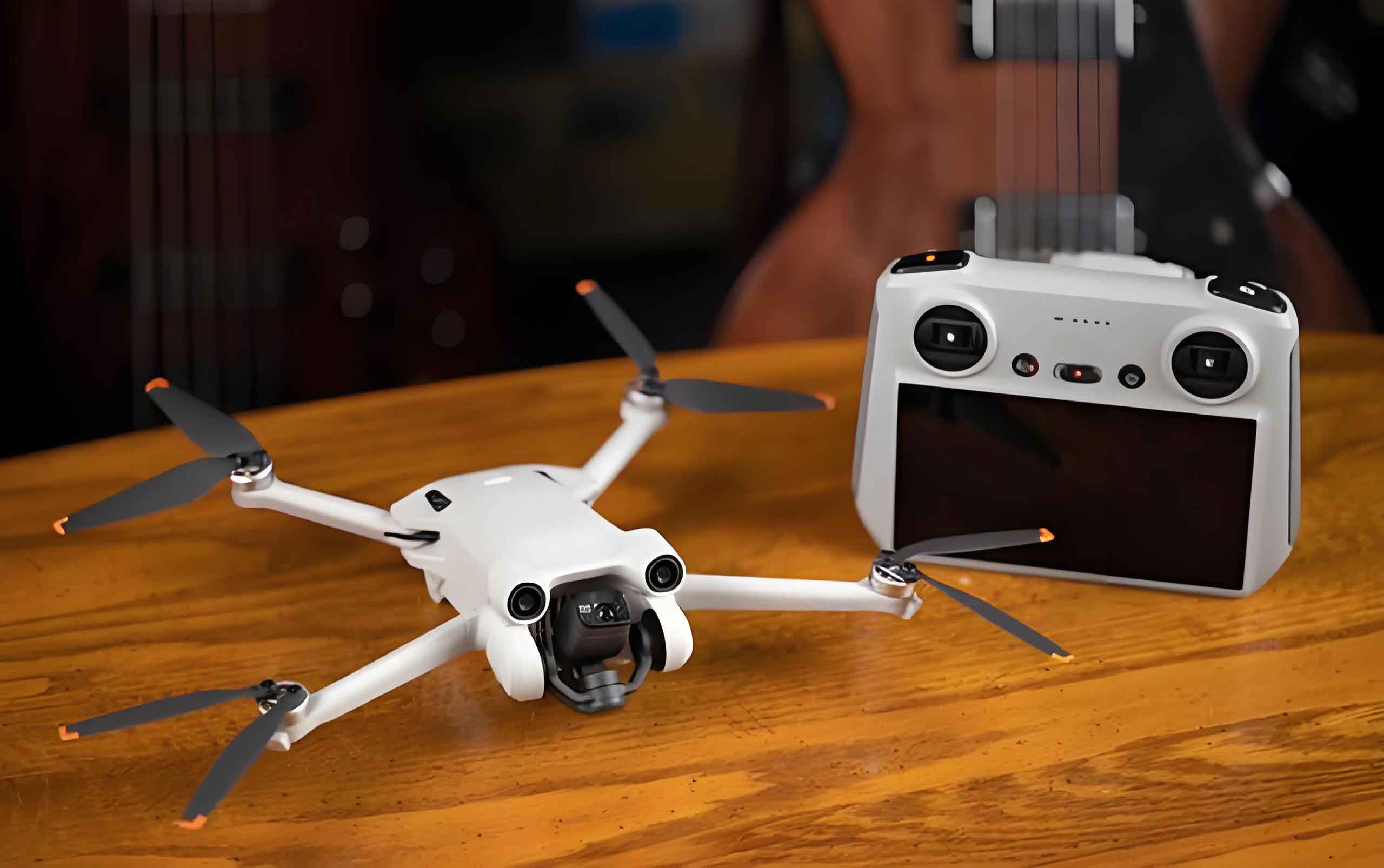
Consider a wireless sensor network comprising a single Unmanned Aerial Vehicle and \(n\) randomly distributed network devices \(D_i = (x_i, y_i, z_i)\) within a 100m × 100m × 100m 3D operational space. The drone technology system initiates from a base station \(BS = (X_0, Y_0, Z_0)\), selects \(m\) hovering positions \(H_j = (X_j, Y_j, Z_j)\) for wireless charging, and must return before exhausting its onboard energy capacity \(B = 250kJ\). The charging model employs Friis’ free-space equation with practical constraints:
$$ \sigma_{ij} = \begin{cases}
\frac{\alpha}{d_{ij}^2 + \beta} & d_{ij} \leq d_{\max} \\
0 & d_{ij} > d_{\max}
\end{cases} $$
where \(\alpha = 10^5\), \(\beta = 40\), \(d_{\max} = 12m\) denotes the maximum effective charging distance, and \(\sigma_{ij}\) represents the received power at device \(i\) from the Unmanned Aerial Vehicle at position \(j\). The total energy received by device \(i\) considers energy capacity constraints \(\theta_c = 10kJ\):
$$ E(i) = \min \left\{ \theta_c, \sum_{j=1}^{m} \sigma_{ij} t_{H_j} \right\} $$
The energy consumption model for drone technology integrates three components: mobility, hovering, and charging. The UAV’s movement power at economic cruise velocity is characterized as:
$$ P_{\text{mov}} = P_{\text{UAV}}(v) = P_0 \left(1 + \frac{3v^2}{U_{\text{tip}}^2\right) + P_i \left(\sqrt{1 + \frac{v^4}{4v_0^4}} – \frac{v^2}{2v_0^2}\right)^{1/2} + \frac{1}{2} d_0 \rho s_{\text{UAV}} A_r v^3 $$
where \(P_0 = 79.86W\), \(P_i = 88.64W\), \(U_{\text{tip}} = 120m/s\), \(v_0 = 4.03\), \(d_0 = 0.6\), \(s_{\text{UAV}} = 0.05\), \(\rho = 1.225 \text{kg/m}^3\), and \(A_r = 0.503m^2\). Total energy expenditure combines mobility cost \(\mu = 10J/m\) over path length \(\Re\), hovering power \(P_{\text{hov}} = 20J/s\), and transmission power \(\sigma_0 = 200J/s\):
$$ C_{\text{sum}} = \mu \Re + (P_{\text{hov}} + \sigma_0) \sum_{j=1}^{m} t_{H_j} \leq B $$
The multi-objective optimization problem for drone technology efficiency is formulated as:
$$ \begin{aligned}
\text{min} \quad & f_1 = – \sum_{i=1}^{n} E(i) \\
\text{min} \quad & f_2 = \sum_{j=1}^{m} t_{H_j} \\
\text{s.t.} \quad & X_{\min} \leq X_j \leq X_{\max} \\
& Y_{\min} \leq Y_j \leq Y_{\max} \\
& Z_{\min} \leq Z_j \leq Z_{\max} \\
& C_{\text{sum}} \leq B
\end{aligned} $$
To solve this NP-hard problem, we propose an Enhanced Multi-Objective Particle Swarm Optimization (EMOPSO) algorithm integrating three innovations:
- Chaotic Initialization: Uses ICMIC mapping for uniform solution distribution:
$$ q_{j+1} = \sin \left( \frac{\epsilon \pi}{q_j} \right), \quad S(j) = LB_j + (UB_j – LB_j) \cdot \mod(q_j, 1) $$
where \(\epsilon = 0.7\) controls chaotic behavior.
- Grey Wolf Optimization Integration: With 50% probability, updates positions using GWO leadership hierarchy:
$$ \begin{aligned}
\mathbf{X}(t+1) &= \frac{\mathbf{X}_1 + \mathbf{X}_2 + \mathbf{X}_3}{3} \\
\mathbf{X}_k &= \mathbf{X}_{\gamma_k} – A_k \cdot D_k, \quad k=\{1,2,3\} \\
D_k &= |C_k \mathbf{X}_{\gamma_k} – \mathbf{X}(t)| \\
A &= 2a \cdot \mathbf{r}_1 – a, \quad C = 2\mathbf{r}_2 \\
a &= 2(1 – t/T)
\end{aligned} $$
where \(\gamma_k\) denotes leader wolves selected from Pareto archive.
- Cauchy Mutation: Applied with 50% probability using heavy-tailed distribution:
$$ \mathbf{S}_j^i(t) = \mathbf{S}_j^i(t) \cdot [1 + \text{Cauchy}(0,1)], \quad \text{Cauchy}(0,1) = \tan[\pi(\text{rand}-0.5)] $$
The EMOPSO procedure implements these enhancements within the MOPSO framework, significantly improving global search capability in discrete 3D solution spaces.
Experimental validation considers network scales of 50, 75, and 100 devices. Parameter configurations follow drone technology specifications:
| Parameter | Value |
|---|---|
| Network Dimensions | 100m × 100m × 100m |
| Device Energy Capacity \(\theta_c\) | 10kJ |
| UAV Energy Capacity \(B\) | 250kJ |
| Maximum Charging Distance \(d_{\max}\) | 12m |
| Transmission Power \(\sigma_0\) | 200J/s |
| Hovering Power \(P_{\text{hov}}\) | 20J/s |
| Mobility Cost \(\mu\) | 10J/m |
| Algorithm | Mean \(-f_1\) (kJ) | Mean \(f_2\) (s) | Standard Deviation |
|---|---|---|---|
| MOPSO | 74.90 | 1597.7 | 120.00 |
| NSGA-II | 47.49 | 2213.0 | 119.64 |
| MOFPA | 21.13 | 2382.0 | 103.20 |
| MODA | 73.09 | 2023.1 | 133.16 |
| EMOPSO | 95.46 | 1108.6 | 100.16 |
Results demonstrate EMOPSO’s superiority in Unmanned Aerial Vehicle charging optimization. For 100 devices, it achieves 27.5% higher mean charged energy (\(-f_1\)) and 30.6% lower mean charging time (\(f_2\)) compared to the next-best algorithm. Statistical analysis across 30 independent runs confirms EMOPSO’s stability, showing the lowest standard deviations in both objectives (Table 2). The Pareto fronts (Figure 2) reveal EMOPSO solutions dominate other algorithms across all network scales, confirming enhanced exploration/exploitation balance from chaotic initialization, GWO-inspired updates, and Cauchy mutation.
Deployment visualization illustrates how EMOPSO positions Unmanned Aerial Vehicles to maximize coverage while minimizing path redundancy. The uniform spatial distribution of hovering points reflects effective navigation of 3D constraints, a critical advantage of this drone technology optimization approach. Energy allocation schedules demonstrate proportional time assignment to high-density device clusters, validating the multi-objective balance.
This research establishes a comprehensive framework for optimizing drone technology in energy-constrained wireless sensor networks. The joint optimization model effectively balances charging time minimization against energy transfer maximization under practical physical constraints. EMOPSO’s algorithmic innovations—chaotic initialization, GWO hybridization, and Cauchy mutation—significantly enhance solution quality in complex 3D environments. Future work will investigate dynamic environments and multi-drone coordination to further advance Unmanned Aerial Vehicle charging capabilities for large-scale IoT deployments.