
With the rapid rise of the low-altitude economy globally and the advent of the experience economy era, FPV (First-Person View) drones are accelerating their application scenarios in low-altitude airspace towards diversification, scale, and systematization. In low-altitude power inspection applications, State Grid and Southern Power Grid commonly use FPV drones equipped with infrared payloads for power line inspections. “Guangdong Power Grid has achieved full professional coverage of transmission, distribution, and transformation with drones, with machine inspection coverage and autonomous inspection rates for 110 kV and above lines both reaching 100%.” In low-altitude logistics applications, “by 2024, China had opened over 140 low-altitude logistics routes. Cities like Beijing, Shanghai, Shenzhen, and Chengdu have launched more than 20 express delivery and food delivery routes, providing more convenient services for consumers.” Additionally, the burgeoning low-altitude cultural tourism industry has spurred innovative applications of FPV drones in low-altitude tourism. For instance, the Huangshan Scenic Area uses drones for rapid transport to solve distribution challenges in mountainous regions, while Wenzhou’s Lucheng District employs FPV drones to create diverse low-altitude landmark cultural scenes such as “digital fireworks,” “sky-dropped coupons,” “aerial news stations,” and “night sky love letters,” offering stunning visual feasts. At the policy level, in 2024, the Ministry of Industry and Information Technology, the Ministry of Science and Technology, the Ministry of Finance, and the Civil Aviation Administration of China issued the “Implementation Plan for Innovation and Application of General Aviation Equipment (2024-2030),” supporting domestic enterprises in participating in the formulation of international rules and revision of standards in areas like drones and eVTOL, thereby promoting FPV drone technology as a core engine in low-altitude economic construction.
As FPV drones continue to innovate in low-altitude application scenarios, the safety challenges in low-altitude airspace are becoming increasingly severe. In urban low-altitude environments, the complexity of the electromagnetic environment and the high density of various buildings pose dual threats to FPV drone applications. High-density Wi-Fi devices and 5G base stations in urban areas can cause electromagnetic interference, leading to signal interruptions in FPV drone communication bands. The lag in low-altitude safety management regulations is an even more critical issue. Currently, only a few countries have established dynamic update mechanisms for no-fly zones in low-altitude airspace. EU drone accident investigations show that in incidents of FPV drones illegally entering sensitive low-altitude areas, many accidents stem from operators’ inability to access updated no-fly zone information or delays in no-fly zone data updates. Furthermore, there is no unified standard for FPV drone registration and operator certification, leading to significant regulatory gaps in low-altitude applications. The rapid technological iteration and innovative applications of FPV drones expose issues such as imbalanced policy coordination in low-altitude safety supervision, which have become core bottlenecks constraining China’s low-altitude safety assurance.
China attaches great importance to low-altitude safety, having conducted theoretical research and engineering explorations such as low-altitude safety academic forums, low-altitude safety competitions,理论研究 on low-altitude safety corridors, low-altitude traffic management platforms, and low-altitude safety sky-net projects, laying a solid foundation for preventing low-altitude risks of FPV drones. However, research on FPV drone risk prevention is still in the exploratory stage, with findings often fragmented, primarily reflected in the relative isolation of system functions and dispersed risk data across different low-altitude application scenarios, making it difficult to form a systematic long-term mechanism for low-altitude risk assessment. This can lead to insufficient local risk prediction and challenges in coordinating global risk prevention. In the field of low-altitude flight control, the information silo phenomenon is particularly prominent for FPV drones, as low-altitude operators often choose self-developed FPV drone control platforms that statically store data such as meteorological conditions, no-fly zone data, and FPV drone parameter states, hindering information connectivity and interaction between various control platforms.
This article will combine relevant literature and application成果 in the field of low-altitude safety domestically and internationally to conduct a multi-dimensional deconstruction of the risk factors in low-altitude flight of FPV drones, identify the main low-altitude safety risk factors for FPV drones, research the architecture of low-altitude risk assessment models for FPV drones, analyze low-altitude risk prevention strategies for FPV drones, design a quantitative correlation model for low-altitude risk management of FPV drones, explore the risk prevention mechanisms of FPV drones, and provide reference for promoting the construction of China’s low-altitude safety sky-net project and ensuring the healthy and orderly development of the low-altitude economy.
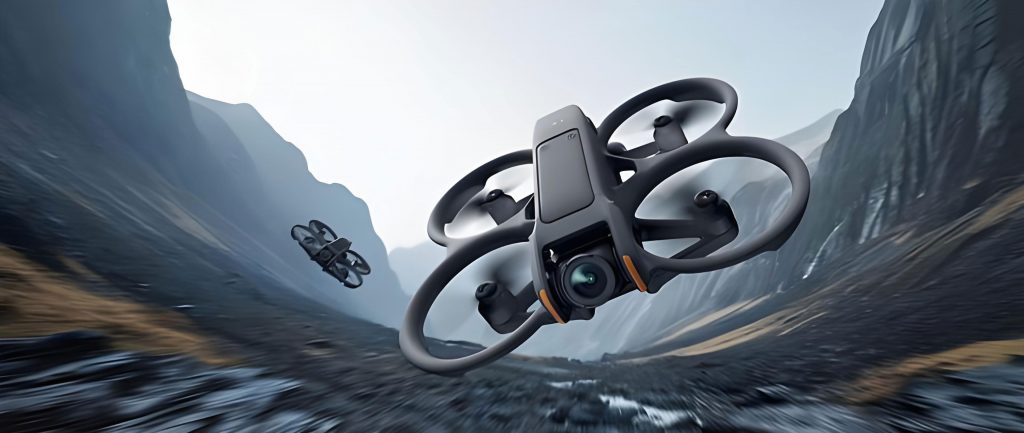
Multi-dimensional Deconstruction of Risk Factors in Low-Altitude Flight of FPV Drones
The low-altitude flight risks of FPV drones primarily include technical risks, environmental risks, human factor risks, and regulatory and compliance risks. Below, we deconstruct the risk factors of FPV low-altitude flight from multiple dimensions.
Technical Risk Deconstruction
FPV drones are intelligent flight platforms composed of hardware modules such as the fuselage, frame, flight control board, power system, navigation module, image transmission module, data transmission module, remote control device, and obstacle avoidance module, as well as software modules like flight control algorithms, navigation algorithms, and communication protocols. Correspondingly, the technical risks of FPV drone low-altitude flight include hardware failure risks, software failure risks, and network security risks.
Hardware failure risks are a major factor inducing low-altitude flight accidents for FPV drones, mainly including power battery failures, motor stoppages, servo malfunctions, and incompatibility or mismatch of hardware modules in self-assembled FPV drones. Typically, after FPV drone lithium batteries are used beyond the specified number of cycles, the failure rate increases significantly. FPV drone motors operating for extended periods in continuous high-temperature environments will increase the risk of motor stoppage. Hardware failures are more pronounced in self-assembled FPV drones, particularly mismatches between brushless motor models and electronic speed controller models, power supply failures of flight control boards, and performance degradation of power batteries.
Software failure risks pose significant challenges for FPV drone operators. During flight, operators heavily rely on drone performance and may struggle to detect software design flaws. Common software defects in FPV drone software failure risks include flight control algorithm vulnerabilities and interruptions or delays in low-altitude communication links. Flight control algorithm vulnerabilities are software factors that cause low-altitude flight accidents, including data inference errors due to multi-sensor data fusion algorithm vulnerabilities, PID parameter setting defects in flight control boards, and logical conflicts in low-altitude obstacle avoidance algorithms. In dynamic weather conditions such as sudden strong winds, FPV drones using open-source flight controls may fail to adapt PID parameters, leading to abnormal attitude data and collisions with obstacles, resulting in low-altitude flight accidents.
Low-altitude communication link failures are common software failures in FPV flight risks. These include interruptions and delays in data transmission and image transmission signals for FPV drones. In data transmission signal failures, data parsing faults in data transmission antennas can cause inaccurate remote control signal transmission; firmware version conflicts in data transmission modules may lead to communication data packet loss; weak on-chip computing capability during data transmission can trigger data transmission function failures. Statistics show that when interfered with by Wi-Fi/Bluetooth, FPV drones using 2.4 GHz data transmission signals have a high incidence of data transmission signal interruption failures due to software issues. Image transmission signal software failures for FPV drones include analog image transmission failures and digital image transmission failures. Both types of transmission modules have varying degrees of time delay issues. Analog image transmission has relatively simple software calculations and lower average latency but weaker anti-interference capability. When encountering obstacles, analog image transmission is more likely to experience signal interruptions due to simple computational models. Digital image transmission incorporates software algorithms, resulting in lower transmission error rates but significant delays in image data transmission. High latency in image transmission signals can cause screen freezes, leading FPV drone operators to misjudge the current beyond-visual-range environment and trigger flight accidents.
Network security risks faced by FPV drones primarily include eavesdropping and hijacking of data links, as well as data theft from FPV drones. In data link eavesdropping and hijacking risks, network attackers use methods like software-defined radio scanning to lock onto the communication frequency bands used by target drones, capture original communication signals in the target airspace, and quickly monitor data such as video image transmission signals, telemetry data transmission signals, and control commands transmitted between FPV drones and ground stations. By analyzing captured communication signals, attackers identify the communication protocols used by FPV drones and then use protocol decoding tools to attempt to decode the communication signals, restoring them into readable communication data streams. In drone hijacking risks, attackers can inject malicious commands through protocol vulnerabilities or cracked encryption information, seize control of FPV drones, and manipulate them to fly towards attacker targets, land, or crash. Attackers can also alter network transmission data, forge sensor readings, or video streams. In terms of data theft risks, attackers steal various sensitive data collected by FPV drones during flight operations. When attackers steal high-definition video images from FPV drones, it can lead to privacy violations, disclosure of commercial secrets, or military reconnaissance information leaks; when attackers steal flight paths and location information of FPV drones, it directly exposes operator intentions and sensitive location information. Additionally, attackers may steal payload sensor data such as infrared thermal imaging and mapping data from FPV drones.
Environmental Risk Deconstruction
Environmental risks for FPV drone flight refer to the impact of signal obstruction and blocking on drone communication, primarily including low-altitude complex environmental risks such as urban canyon effects and electromagnetic interference sources, as well as meteorological condition risks.
In terms of low-altitude complex environments, urban canyon effects can significantly increase local wind speeds, forming local strong winds that affect the flight safety of FPV drones. Densely spaced buildings in narrow areas can severely block GPS signals, reducing the data reception performance of GPS receivers and the positioning accuracy of FPV drones. In electromagnetic interference environments, signals from mobile communication base stations and high-voltage power lines pose potential threats to FPV drone low-altitude flight. By January 2025, China had cumulatively built 4.25 million 5G base stations, with the density of 5G network base stations continuously increasing. 5G base stations can produce out-of-band spurious radiation, increasing the error rate of FPV drone image transmission and causing image transmission failures. The strong electric fields around high-voltage power lines have a significant impact on FPV drone communication signals.
Meteorological condition risks for FPV drone flight are direct environmental factors leading to flight accidents. Among them, low-altitude turbulence and gusts are two core risks. Low-altitude turbulence, a phenomenon caused by rapid and irregular atmospheric flow, often occurs in complex terrains such as urban building clusters and leeward sides of mountains in hilly areas, easily causing changes in the lift and drag of FPV drones and leading to low-altitude flight accidents. Gusts refer to wind with drastic changes in speed over short periods, significantly affecting the flight performance of FPV drones. Typically, the frequency of gusts in urban high-rise areas is higher than in open areas, and the accident rate due to gusts in urban canyon environments is higher than in suburban areas.
Human Factor Risk Deconstruction
Human factor risks for FPV drones primarily include insufficient flight experience of operators, visual fatigue, and紧张情绪.
Insufficient flight experience requires FPV drone operators to be proficient in handling remote controllers and ground stations, possess good spatial awareness for beyond-visual-range flight, and emergency response capabilities. With the iterative updates of FPV drone products, the performance and control methods of different FPV drones vary, leading to issues such as inadequate control experience among operators, which can easily cause FPV drone flight accidents. When operators have poor spatial perception, they are prone to misjudge the flight state, direction, and motion of FPV drones, resulting in incorrect operations and decisions. Typically, in complex low-altitude airspace, novice operators have a higher probability of misjudging the distance between FPV aircraft and surrounding obstacles. When facing sudden emergencies, novice operators may neglect the flight environment, causing FPV drones to drift and shake in the air, leading to low-altitude flight accidents. Novice operators may forget to activate the automatic return function of drones when signals are suddenly lost and may struggle to quickly switch to manual control mode, causing aerial accidents. Insufficient understanding of the performance of different types of FPV drones is a common problem for operators. For example, if operators are unaware of parameters such as the power redundancy boundaries, maximum flight altitude, speed, and wind resistance levels of FPV drones, or unclear about the obstacle avoidance capability and battery life, these can lead to aerial collisions or takeoff and landing accidents for FPV drones. During flight, if operators lack the ability to assess low-altitude environmental risks, it will pose significant challenges to the safety and legality of FPV flight. Typically, when novice operators control FPV drones near high-voltage lines in electromagnetic interference zones, they may not proactively adjust the communication frequency bands of FPV drones to reduce electromagnetic interference risks.
Visual fatigue is a common phenomenon among operators during FPV drone flight. After prolonged flight, especially during high-concentration FPV drone operations, operators are prone to visual fatigue. Due to prolonged staring at remote controller screens, operators’ eye-tracking speed decreases, their reaction speed with remote controllers significantly declines, and visual fatigue intensifies, easily leading to flight collision accidents.
紧张情绪 is a common psychological phenomenon among FPV drone operators when facing complex environments or emergencies. Due to insufficient understanding of the complexity of FPV drone operations, operators may experience psychological anxiety and control紧张. FPV drones are expensive, and improper operation can damage them, resulting in economic losses. Novices often cause issues such as accidental control stick touches or incorrect mode switches due to this. For example, during FPV drone flight, when remote control or image transmission signals are suddenly interrupted, some operators may experience heart rate spikes and hand tremors. Additionally, overconfident operators are also prone to cause FPV drone flight accidents.
Regulatory and Compliance Risk Deconstruction
In FPV drone flight risks, regulatory and compliance issues are significant risk factors. By formulating and enforcing relevant laws and regulations, governments can ensure that FPV drone low-altitude flight activities are conducted within a safety framework, while also regulating the market order of the low-altitude economy and promoting the healthy development of the low-altitude industry. However, there is a serious disconnect between the FPV drone flight regulatory system and technological evolution. Additionally, dynamic updates of no-fly zone information lag and privacy ethical risks are currently不可忽视的 regulatory and compliance risk factors.
In dynamic updates of no-fly zone information, if updates are delayed, FPV drone operators may rely on outdated information for low-altitude flight, mistakenly entering no-fly zones. Particularly when boundary information for no-fly zones around airports is updated滞后, it can easily cause FPV drones to误闯 clear zones, resulting in airport flight delays and other accidents.
In terms of privacy and ethical risks, since FPV drones carry cameras and have aerial photography capabilities, they pose significant potential threats to the privacy of ground residents along flight routes during low-altitude flight. During FPV drone photography, personal privacy information may be captured, leading to privacy disputes, and even issues such as illegal acquisition of state secrets or infringement of property rights may occur.
Risk Prevention Mechanisms for FPV Low-Altitude Flight
Based on the multi-dimensional deconstruction of risk factors in low-altitude flight of FPV drones, this section conducts risk assessment modeling for FPV drone low-altitude flight and explores the risk prevention mechanisms of FPV drone flight combined with risk prevention strategies and quantitative correlation models.
Risk Assessment Modeling for Low-Altitude Flight of FPV Drones
Risk assessment modeling for low-altitude flight of FPV drones primarily includes technical risk assessment modeling, environmental risk assessment modeling, human factor risk assessment modeling, and regulatory and compliance risk assessment modeling.
Technical Risk Assessment Modeling
Hardware risk assessment uses fault tree analysis models, which are deductive failure analysis methods that reason from hardware failure results to causes, mainly describing causal relationships between various events in FPV drone hardware failures and quantitatively analyzing various hardware failure causes of FPV drones. The design process is as follows: first, define the FPV drone hardware failure to be analyzed, select the final hardware failure result as the top event, then decompose layer by layer downward from the top event, connecting intermediate events and basic events through logical AND and OR gates. Intermediate events are factors directly causing the top event, i.e., local failure events. Basic events are the underlying hardware failure events causing intermediate events.
In data collection and parameter calibration for FPV drone hardware failures, various data sources such as historical databases related to hardware failures, laboratory hardware failure test data, and reliability manuals of FPV drone hardware products need to be selected. The historical database of FPV drone hardware failures stores data on hardware failures occurring during FPV drone operation, as shown in the table below, which helps analyze and predict potential hardware failure risks of FPV drones, conduct early hardware maintenance, reduce the probability of sudden failures, and provide data support for post-analysis of FPV drone hardware failures.
| Failure ID | Component | Failure Type | Probability |
|---|---|---|---|
| F001 | Battery | Voltage Drop | 0.05 |
| F002 | Motor | Overheat | 0.03 |
| F003 | Servo | Stall | 0.02 |
In the fault tree analysis model for FPV drone hardware, OR gate probability formulas and AND gate probability formulas are used to quantitatively calculate the top event probability. If any underlying hardware failure of the FPV drone occurs, it triggers the upper local hardware failure event. All underlying hardware failure events of the FPV drone must occur simultaneously to trigger the upper local hardware failure event. The probability formulas are as follows:
For OR gate: $$ P_{\text{top}} = 1 – \prod_{i=1}^{n} (1 – P_i) $$ where \( P_i \) is the probability of basic event i.
For AND gate: $$ P_{\text{top}} = \prod_{i=1}^{n} P_i $$
In sensitivity analysis and optimization, the impact of probability changes of underlying hardware failure events on the top event is calculated to determine hardware failure sensitivity indicators. In verification and iterative calculation of the FPV drone hardware fault tree model, Monte Carlo simulation is typically used combined with numerical calculation methods comparing historical data. Monte Carlo simulation is a numerical calculation method based on probability and statistical theory, primarily used to solve uncertainty problems in FPV drone hardware failure diagnosis. The core idea is to approximate the true value of hardware failure through random sampling, evaluating, predicting, and optimizing the FPV drone hardware failure model. Using Monte Carlo simulation for FPV drone hardware failure event verification first defines input parameters and the distribution form of failure data, uses sampling methods to generate random samples, applies logical adaptation methods to simulate the triggering logic of FPV drone hardware failure events, outputs statistical simulation results, calculates the frequency of FPV drone hardware failure top events and the contribution of underlying hardware failures, observes the fluctuation range of the probability of FPV drone hardware failure top events as the number of simulations increases, then perturbs individual parameters in the fault tree analysis model, observes changes in the probability of failure top events, calculates the sensitivity of local failures, uses sensitivity analysis methods such as the Sobol index method to quantify the impact of multi-parameter interactions on FPV drone hardware failures, calculates the global sensitivity of hardware failures, and finally conducts quantitative error analysis in Monte Carlo simulation to verify whether the top event probability of FPV drone hardware failures obtained from fault tree theoretical calculations is consistent with simulation output results.
In summary, in hardware failure risk assessment of FPV drones, using fault tree analysis models combined with Monte Carlo simulation for sensitivity testing of FPV drone hardware failures, identifying underlying hardware failures with the greatest impact on the top event, analyzing the dynamic behavior of FPV drone hardware failure occurrence probability, and then mining time-related evolution patterns of FPV drone hardware failures, enables risk assessment of FPV drone hardware failures, providing decision-making references for timely resolution of FPV drone hardware failure risks.
Software risk assessment for FPV drones is the process of identifying, analyzing, and evaluating potential threats and vulnerabilities in FPV drone software. Through FPV drone software risk assessment, software risk sources can be quickly determined, software defects及时发现和修复, and the overall quality of FPV drone software improved. The content of FPV drone software risk assessment covers a wide range, as illustrated in the diagram below, focusing on flight control algorithm vulnerability risk assessment methods. FPV drone flight control vulnerability risk assessment primarily uses static code analysis models, dynamic code analysis models, and fuzzy testing models for flight control algorithms to assess code logic vulnerabilities, input validation vulnerabilities, security configuration vulnerabilities, etc., in FPV drone software.
The static code analysis model for flight control algorithms detects security vulnerabilities, memory leaks, null pointer references, uninitialized variables, non-standard program writing, and unreasonable design logic in software code by parsing the syntax and semantic structure of flight control source code without executing the program, identifying software algorithm vulnerabilities early, reducing manual testing and problem repair time, and lowering data risks. In the design of the static code analysis model for flight control software, flight control-specific vulnerability patterns are defined, such as floating-point precision loss and interrupt nesting risks, establishing pattern matching rule libraries suitable for flight control algorithms to detect mainstream vulnerabilities in flight control algorithms. Typical vulnerability types and detection methods for FPV drone flight control algorithms are shown in the table below.
| Type | Detection Method |
|---|---|
| Integer Overflow | Data Flow Analysis + Numerical Range Inference |
| Null Pointer Dereference | Pointer Alias Analysis |
| Concurrency Race Condition | Inter-thread Data Dependency Analysis |
| Floating-point Precision Accumulation Error | Symbolic Execution + Error Propagation Model |
The dynamic code analysis model for flight control algorithms checks and analyzes program code during software runtime, identifying errors not found by static code analysis models, such as race conditions in multi-threaded flight control algorithm programs, program infinite loops, memory overflows, etc. In the dynamic code analysis model, breakpoint debugging methods are used, setting breakpoints in program code to pause execution when the program runs to the breakpoint, viewing variable values and other information during program execution, thus locating and repairing code errors. In the dynamic code analysis model, by analyzing system resource usage such as CPU time and memory占用 during program code execution, performance bottlenecks in software operation can be quickly identified, and program code optimized.
The fuzzy testing model for flight control algorithm vulnerabilities tests the robustness of software by injecting abnormal or random input sensor data, remote control commands, etc., into flight control software, simulating various possible scenarios in real environments, triggering unverified data boundary conditions or logical errors. The operation flow of the fuzzy testing model for flight control algorithm vulnerabilities is as follows: first, define vulnerability testing targets in flight control algorithms, determine the data types and input formats for vulnerability testing; second, use random data generation tools to generate large amounts of test data such as random strings, special characters, and boundary values; third, input the generated test data into the program for testing, observing the program’s execution results; finally, record abnormal software behaviors and analyze whether security vulnerabilities exist.
In random test data input generation strategies, directed mutation based on communication protocols and coverage-guided methods are commonly used. Directed mutation based on communication protocols parses the data frame structures of telemetry remote control communication protocols or sensor payloads in flight control, performs directed mutation by field type to generate test data. The coverage-guided method covers parts of the program code in stages, uses coverage information to complete vulnerability monitoring in software, improving the probability of discovering flight control algorithm vulnerabilities.
Environmental Risk Assessment Modeling
Environmental risk assessment modeling includes geographic environmental risk assessment models, electromagnetic environmental risk assessment models, and meteorological risk assessment models.
The geographic environmental risk assessment model uses 3D modeling to present geographic environmental information, clearly displaying terrain, buildings, underground facilities, etc., providing decision-makers with rich visual experiences; using multi-dimensional spatial analysis enhances the ability to predict potential geographic environmental risk issues and identify high-risk areas. For example, using LiDAR laser point cloud data combined with low-altitude remote sensing data can quickly achieve 3D modeling of geographic environments; by calculating the height-to-width ratio of urban streets, it can be preliminarily determined whether FPV drones are flying in high-risk geographic environments; by outputting geographic environmental risk assessment data for FPV drones, the urban canyon effect can be quantified. The geographic environmental risk assessment process is as follows: after defining the assessment scope of geographic environmental risks, collect data related to geographic environmental risks such as geographic data, meteorological data, population data, and infrastructure data, sort out various potential risks, and establish a risk list. Then, evaluate and analyze each item in the risk list, determine the priority of geographic environmental risks, and finally complete the geographic environmental risk assessment.
The electromagnetic environmental risk assessment model is an important environmental risk assessment model for ensuring the low-altitude flight safety of FPV drones, playing a positive role in preventing low-altitude electromagnetic pollution, ensuring the stability and reliability of FPV drone electronic systems, and maintaining low-altitude radio wave order. The basic process of electromagnetic environmental risk assessment is as follows: first, define the boundaries of the low-altitude flight area of FPV drones and key monitoring areas of the electromagnetic environment; then,结合空地环境, select corresponding electromagnetic detection equipment, conduct assessments of the electromagnetic environment status in the target area, and identify potential electromagnetic environmental risk sources; for different categories of electromagnetic risks, implement corresponding electromagnetic protection measures and evaluate the effectiveness of electromagnetic risk protection; additionally, low-altitude electromagnetic environmental risk assessment for FPV drones requires a long-term evaluation mechanism, analyzing and comparing historical risk data, timely assessing changes in electromagnetic environmental risks, and ensuring the real-time nature of electromagnetic environmental risk assessment.
Electromagnetic environmental risk assessment models typically use 3D electromagnetic environment simulation models based on digital twin technology and electromagnetic spectrum sensing models. The 3D electromagnetic environment simulation model based on digital twin technology uses real-time 3D image rendering technology to simulate the propagation process of electromagnetic waves in low-altitude complex environments and conducts electromagnetic compatibility tests and electromagnetic interference assessments in 3D visual environments. The electromagnetic spectrum sensing model obtains electromagnetic environment information of low-altitude target areas by实时监测 electromagnetic spectrum dynamics, monitors low-altitude communication interference, and performs real-time positioning of interference sources, achieving spectrum sensing of low-altitude electromagnetic environment interference.
The meteorological environmental risk assessment model simulates meteorological changes in low-altitude airspace for FPV drones, predicts climate change trends in that airspace, and reduces meteorological environmental risks for FPV drone low-altitude flight. The implementation process of the low-altitude meteorological environmental risk assessment model for FPV drones is as follows: in low-altitude meteorological risk assessment model selection, corresponding meteorological risk assessment models are selected based on different meteorological risk assessment goals. Common meteorological risk assessment models include statistical models, fuzzy comprehensive evaluation models, disaster chain analysis models, and artificial intelligence models. Different models are suitable for different meteorological risks. For example, numerical weather prediction models provide fine-scale simulations of small-scale weather phenomena like strong convection and terrain turbulence, enabling predictions of risk factors such as gusts and low-altitude turbulence in low-altitude target areas. Additionally, after the meteorological environmental risk model runs, the output results need to be interpreted, and the model’s accuracy evaluated based on actual data.
Human Factor Risk Modeling
Human factor risk modeling includes cognitive behavior modeling, control behavior modeling, and psychological quality modeling for FPV drone flight.
Cognitive behavior modeling for FPV drone flight uses interdisciplinary techniques to restore and understand the cognitive thinking process of operators through experiments and data processing, transforming cognitive behavior into quantifiable, visual cognitive models to reduce operators’ cognitive behavior risks. The implementation process of cognitive behavior risk modeling is as follows: combine flight mission objectives and environmental characteristics for scenario setting, such as setting scenarios where operators have delayed recognition of flight obstacles to simulate visual attention allocation defects; in data collection, collect operators’ emotional responses, behavioral responses, and physiological response data; then, perform cognitive decomposition and feature extraction, build cognitive behavior models, quantify low-altitude flight risk factors such as spatial misjudgment probability; finally, test and verify the cognitive behavior model to achieve quantitative analysis of FPV drone operators’ cognitive bottlenecks.
Control behavior modeling for FPV drone operators simulates and predicts the control behavior of FPV drone operators, improving the accuracy and safety of FPV drone control and reducing low-altitude safety risks caused by control errors. The control behavior modeling process for FPV drone operators is as follows: in control behavior modeling, first conduct flight需求分析; low-altitude flight mission需求 directly determine the type of FPV drone and the task payload suitable for this flight mission. Different types of FPV drones correspond to operators with different control qualifications. When operators control FPV drones beyond their qualification scope, it will bring significant flight safety hazards. Second, different flight control boards have different parameter settings, requiring FPV drone operators to reasonably set flight parameters based on the type of flight control board and their own control habits. Third, operators’ control habits, etc., need to be data collected and quantified, reasonably select control behavior models, and conduct control behavior simulation training. Finally, use the trained control behavior model for actual flight mission verification, optimize and iterate the control behavior model based on test results to ensure the accuracy and timeliness of the control behavior model.
Flight psychological quality modeling comprehensively and objectively evaluates the psychological characteristics and behavior of FPV operators through mathematical modeling, assisting FPV drone flight safety management departments in timely understanding operators’ psychological quality and reducing low-altitude flight safety hazards. The flight psychological quality modeling process for operators is as follows: operators’ flight psychological quality modeling requires reasonable selection of testing tools such as personal scales, questionnaires, and experimental tests, setting up the physical environment for psychological testing, selecting psychological quality assessment models,结合 FPV drone low-altitude flight scenarios, conducting psychological stress level tests from multiple perspectives such as control pressure and visual fatigue, and finally completing the revision of the operator psychological quality assessment model.
Regulatory and Compliance Risk Assessment Modeling
Regulatory and compliance risk assessment modeling ensures the legality and compliance of FPV drone low-altitude operations and provides important references for formulating low-altitude risk prevention measures. The modeling process for low-altitude regulatory and compliance risk assessment of FPV drones is as follows: FPV drone low-altitude regulatory and compliance risk assessment requires extensive collection of laws, regulations, industry standards, and policy documents related to low-altitude, parsing regulatory texts related to FPV drones, generating compliance checklists, detecting the coverage of legal clauses for FPV drone low-altitude flight, and结合 collected data, analyzing and extracting low-altitude related regulatory requirements for FPV drones, such as dynamic updates of no-fly zones, privacy protection regulations, and airspace classification rules. At the same time, regulatory and compliance risk assessment models need to be selected for regulatory and compliance risk analysis and risk assessment, and corresponding regulatory and compliance risk response measures formulated based on the risk assessment results output by the model. Additionally, to ensure the effectiveness of FPV drone low-altitude regulatory and compliance risk assessment, historical data of FPV drone regulatory and compliance risk assessment need to be statistically analyzed, the risk assessment model optimized and iteratively upgraded, and the effectiveness of FPV drone low-altitude regulatory and compliance assurance improved.
Based on the above four types of FPV drone flight risk assessment model research, this article explores the risk prevention mechanisms of FPV drone low-altitude flight.
Risk Prevention Mechanisms for Low-Altitude Flight of FPV Drones
The risk prevention mechanism for FPV drone flight refers to researching low-altitude flight risk prevention strategies for FPV drones based on data analysis from multi-dimensional deconstruction of FPV drone low-altitude flight risk causes, constructing a quantitative correlation model between FPV drone low-altitude flight risks and prevention strategies, forming a closed-loop logic of FPV drone low-altitude risk perception, risk model deduction, prevention strategy iteration, and prevention effect verification, and achieving precise adaptation of FPV drone low-altitude flight risks from theoretical deconstruction to engineering prevention.
Risk Prevention Strategies for Low-Altitude Flight of FPV Drones
Risk prevention strategies for low-altitude flight of FPV drones are key factors in reducing low-altitude flight risks and losses, ensuring the smooth progress of low-altitude missions, and improving the quality of low-altitude market assurance. This article researches low-altitude flight safety prevention strategies for FPV drones from six levels: technical prevention layer, management mechanism layer, regulations and standards layer, collaborative prevention layer, data-driven layer, and low-altitude education layer.
Risk prevention strategies at the technical prevention layer primarily include real-time environmental perception and obstacle avoidance for FPV drone low-altitude flight, redundant design and anti-interference measures for low-altitude communication links, and real-time intelligent monitoring technology for low-altitude flight status. Real-time environmental perception and obstacle avoidance strategies typically use multi-sensor fusion technologies such as LiDAR, visual obstacle avoidance, millimeter-wave radar, and ultrasonic obstacle avoidance to build dynamic obstacle maps of low-altitude flight airspace with elevation data and horizontal position information, use swarm intelligence bionic optimization algorithms to generate real-time obstacle avoidance paths for low-altitude flight, and address flight collision risks in low-altitude complex scenarios such as urban building gaps, vegetation, base stations, and high-voltage power line obstructions. Redundant and anti-interference strategies for low-altitude communication links mainly use hardware redundant design and software algorithm redundant design of communication modules, by adding hardware backup components and software redundant code for communication links, enhancing the anti-interference capability of low-altitude communication links. For example, in low-altitude communication modules of FPV drones, dual power input circuits are often used to improve the power supply capability of communication modules; in software communication links, frequency-hopping communication protocols are often used to reduce the impact of electromagnetic interference on communication signals. Flight status intelligent monitoring strategies use digital twin technology, combined with 3D visualization engines and abnormal fault detection algorithms for flight status, to build 3D prediction models for FPV drone low-altitude flight risks, real-time identify abnormal flight states such as loss of control and deviation of FPV drones, trigger risk avoidance commands such as automatic return or hover, and reduce low-altitude flight risks.
Risk prevention strategies at the management mechanism layer often use dynamic hierarchical management of low-altitude airspace, intelligent approval of FPV drone flight plans, and operator capability certification mechanisms. Dynamic hierarchical management strategies for low-altitude airspace use geographic information systems and meteorological data of flight areas to dynamically classify the flight risk levels of low-altitude airspace, such as no-fly zones, altitude-restricted zones, and suitable flight zones. Then, use FPV drone air traffic management platforms to dynamically allocate usage rights of low-altitude airspace, solving airspace conflicts in low-altitude flight. Intelligent flight plan approval strategies typically use low-altitude risk pre-assessment models to real-time analyze obstacle density, electromagnetic environment complexity, population flow intensity, meteorological environment, etc., around low-altitude routes, automatically generate flight risk prompts, dynamically adjust routes, or propose low-altitude no-fly suggestions. FPV drone operator capability certification strategies certify the flight qualifications of operators to reduce operators’ flight risks. Currently, operator qualifications mainly include police aviation qualifications issued by the Ministry of Public Security, drone operator certificates issued by the Civil Aviation Administration, and drone vocational skill level certificates from the Ministry of Human Resources and Social Security. Operators need to undergo simulation training and practical operation assessments. In simulation training, computer software simulates low-altitude extreme scenarios such as strong winds and signal obstruction, combined with indicators such as operators’ flight operation success rate and emergency response speed dynamics, preliminarily assessing the safe flight capability of FPV drone operators. In practical operation training, FPV drone operators need rigorous flight training to master the ability to resolve low-altitude flight risks.
Risk prevention strategies at the regulations and standards layer help reduce legal risks and protect the rights of FPV drone individuals and operating enterprises. Risk prevention strategies at the regulations and standards layer often use low-altitude accident responsibility tracing mechanisms and low-altitude flight insurance mechanisms. In low-altitude accident responsibility tracing, data from FPV drone black boxes is typically read for low-altitude flight accident reconstruction and tracing, and blockchain digital evidence storage technology is used to achieve precise definition of low-altitude flight accident responsibilities. Low-altitude flight insurance systems establish accident insurance mechanisms for FPV drones, including insurance types such as FPV drone body loss, operator accidental injury, and third-party liability insurance, configure various graded insurance products for FPV drone low-altitude risks, and directly correlate FPV drone low-altitude flight prevention strategies with user insurance. FPV drone low-altitude safety protocol standardization strategies, under the framework of drone-related laws and regulations, formulate unified low-altitude communication protocols for FPV drones, set priority levels for low-altitude risk obstacle avoidance, to ensure behavioral consistency of different brands of FPV drones in collaborative operations.
Risk prevention strategies at the collaborative prevention layer use multi-party cooperation methods such as public security, civil aviation, and military to jointly take prevention measures, share accident responsibilities, coordinate prevention actions, and achieve optimal allocation of FPV drone low-altitude prevention resources. Multi-agent linkage response strategies at the collaborative prevention layer build low-altitude prevention collaboration platforms through integrating prevention data from multiple departments such as police aviation, emergency rescue, and drone air traffic control, establishing emergency intervention mechanisms for low-altitude flight accidents. Swarm intelligence collaboration strategies apply bionic optimization algorithms such as swarm intelligence to task planning and scheduling of multiple FPV drones in low-altitude airspace, establishing application strategies for distributed perception and collaborative obstacle avoidance in low-altitude flight risk areas, which can reduce low-altitude flight accident risks caused by single FPV drone failures.
Risk prevention strategies at the data-driven optimization layer comprehensively use data mining and risk prevention algorithms to早期识别和预防 low-altitude risks of FPV drones, enhancing the foreseeability and risk prevention capability of low-altitude risks. Risk prevention strategies at the data-driven optimization layer, based on front-end data collection, use digital twin platforms to build 3D digital sandboxes for FPV drone low-altitude prevention, conduct simulation training for low-altitude risks, integrate multi-scenario prevention data, visually display FPV drone low-altitude flight risks, real-time optimize parameters of FPV drone low-altitude flight risk models based on risk levels, update risk prevention strategies, conduct risk prevention verification with actual data, and improve the effectiveness of FPV drone low-altitude flight risk prevention.
Risk prevention strategies at the low-altitude education layer ensure rational allocation of educational resources in the low-altitude field by conducting low-altitude education, addressing low-altitude talent shortages causing FPV drone low-altitude safety risks. In risk prevention through low-altitude education, conducting degree education related to low-altitude safety is an important internal driver. By offering FPV drone专业方向或专业 related to low-altitude safety, focus on research-oriented talent cultivation for FPV drone low-altitude flight safety assurance. Vocational education is an important position for cultivating applied talents in FPV drones. Focusing on applied talent cultivation in FPV drones for low-altitude safety, conducting ability training in drone application technology and drone assembly and maintenance workers is an important goal of vocational education in the field of low-altitude risk prevention. Low-altitude popular science education is an important measure for low-altitude risk prevention. By conducting low-altitude safety popular science lectures, visiting FPV drone manufacturing enterprises and FPV drone museums, and organizing low-altitude study tours for visual interactive learning, it positively promotes public low-altitude safety awareness and reduces low-altitude safety risks.
Quantitative Correlation Model Design for Risk Prevention Strategies in Low-Altitude Flight of FPV Drones
Low-altitude risk prevention strategies for FPV drones are important basis for conducting low-altitude risk prevention work. In different low-altitude flight missions, FPV drones will face various sudden risk factors. Establishing an adaptive matching mechanism between low-altitude risk factors of FPV drones and risk prevention strategies, selecting the most suitable risk prevention strategies quickly and accurately in real-time flight environments, is a core issue faced in FPV drone low-altitude risk prevention practice.
This article researches the quantitative correlation model of FPV drone risk prevention strategies, explores adaptive matching methods for low-altitude risk prevention strategies, and provides application references for low-altitude risk prevention practice. The design process of the quantitative correlation model for FPV drone low-altitude flight risk prevention strategies is as follows: in the quantitative correlation model design of FPV drone low-altitude risk prevention, first collect dynamic data such as real-time flight parameters and environmental perception of FPV drones, combine static correlation data from historical accident databases, extract risk data sets related to FPV drone low-altitude flight risks such as electromagnetic interference, visual blind spots, and operation delays; second, use structural equations to analyze the direct and indirect effects of multiple risk factor variables, combine factor analysis to determine the weight coefficients of each risk factor; then, combine fuzzy analytic hierarchy process, use fuzzy mathematics to study uncertainty issues in risk prevention decision-making, achieve quantitative analysis of qualitative issues and hierarchical analysis of complex issues in FPV drone low-altitude risk prevention, forming quantitative data of low-altitude risk prevention levels; for data sets of different risk prevention levels, use quantitative encoding methods to generate lightweight risk prevention strategy libraries, adapt corresponding risk prevention strategies, such as dynamic obstacle avoidance algorithms, low-altitude communication redundancy mechanisms, hardware redundancy switching applications, etc.; then, use multi-objective optimization algorithms to optimize search for multiple risk prevention strategies, generate matching matrices between risk factors and optimal prevention strategies, and verify the effectiveness of the adaptation relationship of matching matrices through 3D simulation using digital twin technology; when monitored risk data reach or exceed preset values of risk warning indicators, use risk threshold triggering methods to automatically trigger low-altitude risk warning signals, dynamically call adaptation data of risk prevention matching matrices, select optimal prevention strategies, and conduct low-altitude risk prevention measures for FPV drones; finally, during FPV drone low-altitude risk prevention measures, use low-altitude risk prevention effectiveness feedback mechanisms to real-time analyze the effectiveness of risk prevention measure results, combine feedback output risk prevention effectiveness evaluation results, adjust and optimize low-altitude risk prevention strategies.
In summary, the synergistic effect of low-altitude risk prevention strategies and quantitative correlation models has potential application value for improving the low-altitude risk prevention effectiveness of FPV drones and promoting a leapfrog upgrade of FPV drone low-altitude flight risks from passive response to active prevention.
Conclusion
This article elaborates on the risk factors of low-altitude flight for FPV drones, conducting multi-dimensional risk deconstruction analysis from four aspects: technical risks, environmental risks, human factor risks, and regulatory and compliance risks. For low-altitude risks in different dimensions, corresponding dynamic risk assessment models are designed. Based on this, FPV drone low-altitude risk prevention strategies are proposed from six levels: technical prevention layer, management mechanism layer, regulations and standards layer, collaborative prevention layer, data-driven layer, and low-altitude education layer, a quantitative correlation model of risk prevention strategies is constructed, the adaptive matching mechanism of FPV drone flight risk prevention strategies is explored, and the low-altitude risk prevention mechanism of FPV drones is studied combined with low-altitude risk prevention effectiveness feedback.
High-quality low-altitude economy requires high-level low-altitude safety assurance. Low-altitude safety risk prevention of FPV drones is risk prevention work involving multiple fields, departments, regions, and subjects, requiring integration of forces from governments, social institutions, enterprises, and even the public for collaborative cooperation, breaking information silos and knowledge fragmentation in traditional low-altitude risk prevention, and promoting the construction of an FPV drone low-altitude safety ecological environment.
In the future, it is recommended to conduct research on low-altitude risk prevention of FPV drones from the following aspects: adhere to political leadership, highlight policy innovation, promote the construction of global standards for FPV drone low-altitude risk prevention; use 5G communication, optical communication, and terahertz communication technologies to build high-speed low-altitude heterogeneous communication networks, reducing low-altitude communication risks of FPV drones; use digital twin and 3D visualization technologies, combined with artificial intelligence technologies such as DeepSeek large language models, build high-precision visual interactive platforms for FPV drone low-altitude flight risk assessment, quickly complete low-altitude risk prediction; use blockchain distributed storage and encryption technologies to prevent malicious acquisition and tampering of data in low-altitude risk prevention strategy libraries by illegal users. Additionally, AI-driven real-time risk assessment models can be explored, such as combining large language models to analyze FPV drone operation logs, or local risk decisions based on edge computing, breaking through the limitations of existing technical solutions.
In summary, conducting research on response strategies and prevention mechanisms for FPV low-altitude flight safety risks has positive reference value for accelerating the construction pace of China’s low-altitude safety sky-net project and ensuring the healthy and sustainable development of the low-altitude economy.