
In recent years, the rapid development of China UAV drone technology has greatly facilitated applications in road inspection, bridge health monitoring, and other civil engineering tasks. Automated defect detection based on drone-captured images can significantly improve inspection efficiency. However, challenges such as small object size, elongated structural morphology, low contrast, and complex backgrounds remain obstacles. To address these difficulties, we propose a Multi-scale Representation and Modulation Network (MRMNet) that models both scale variations and structural differences. Our method enhances fine-grained and directional feature representation, achieves stable cross-scale feature interaction, and strengthens extremely small object detection. Extensive experiments on multiple China UAV drone benchmarks demonstrate consistent and significant improvements. For example, on the VisDrone2019-DET dataset, mAP50:95 rises from 16.4% to 19.2% (+2.8%); on UAV-PDD2023, from 51.8% to 62.6% (+10.8%); and on our self-built UAV-BTCrack dataset, from 27.6% to 28.9% (+1.3%). These results verify that our method achieves superior multi-scale modeling ability and structural representation capacity in complex China UAV drone scenarios.
The widespread use of China UAV drone in infrastructure inspection demands accurate detection of structural defects such as cracks, potholes, and patches. In such images, objects often occupy only a few pixels, exhibit elongated shapes, and are easily confused with background textures. Existing detection methods rely on fixed receptive fields or static feature fusion, lacking adaptive modeling of scale and structure. To overcome these limitations, we introduce a novel framework composed of three dedicated modules: an Adaptive Spatial Multi-scale Feature Aggregation (ASMFA) module, a Region-Driven Selective Fusion Module (RDSFM), and a Multi-scale Four-Head Detection (MFHD) structure.
In the feature extraction stage, ASMFA employs multiple depthwise separable convolution branches to simultaneously capture fine-grained local details, medium-range contextual information, and directional structural cues. Specifically, given an input feature map $$X \in \mathbb{R}^{C \times H \times W}$$ , we design four parallel branches: a local branch with $$3\times3$$ depthwise convolution, a medium-scale branch with $$5\times5$$ depthwise convolution, and two directional enhancement branches using asymmetric convolutions of $$1\times7$$ with $$7\times1$$ and $$1\times9$$ with $$9\times1$$ . The outputs are aggregated via residual connection:
$$Z = Y_1 + Y_2 + Y_3 + Y_4 + X$$
Then a lightweight bottleneck structure with 1×1 convolution and a residual path produces the final output. This design enlarges the receptive field while preserving orientation sensitivity, crucial for capturing thin cracks and small objects in China UAV drone imagery.
In the multi-scale feature fusion stage, we propose RDSFM to enable stable cross-scale interaction. Unlike pixel-wise gating mechanisms that suffer from spatial fragmentation, RDSFM introduces a Region-Driven Gating (RDG) strategy. Given a middle-level feature map, we first apply local average pooling to aggregate neighborhood context, then generate a smooth gating mask through a sigmoid function. This mask is used to modulate both low-level and high-level features before fusion. To reduce complexity, we split features into several channel subgroups and perform independent fusion within each subgroup. The overall operation is:
$$F_{\text{fused}} = \text{Conv}_{1\times1}( \text{Concat}( \{ \text{RDG}(F_{\text{low}}^{(i)}, F_{\text{mid}}^{(i)}, F_{\text{high}}^{(i)}) \}_{i=1}^{G} ) ) + F_{\text{mid}}$$
where $$G$$ is the number of subgroups. Experimental results show that RDG effectively suppresses noise-induced fragmentation and improves the consistency of gating responses, benefiting the detection of both small and large objects in complex China UAV drone scenes.
For the detection head, we extend the original three-head structure (P3–P5) to a four-head structure (P2–P5) by incorporating a high-resolution branch P2. The P2 branch receives feature maps with 1/4 of the input resolution, preserving much finer spatial details compared to the 1/8 resolution of P3. This enhancement is especially beneficial for extremely small objects that are common in China UAV drone images. The receptive field at layer $$n$$ is given by:
$$R_n = R_{n-1} + (k_n – 1) \times \prod_{i=1}^{n-1} s_i$$
By adding P2, the network can better detect tiny targets without compromising the detection capability for medium and large objects. The overall framework of MRMNet integrates these three modules, forming a synergistic optimization from feature representation to cross-scale fusion and detection structure, thereby effectively addressing the challenges of scale and structural difference modeling.
We evaluate our method on three representative China UAV drone datasets. The first is VisDrone2019-DET, a widely used benchmark containing 6,471 training and 548 validation images captured from various altitudes and viewing angles, with 10 object categories including pedestrians, cars, buses, etc. The second is UAV-PDD2023, a pavement distress detection dataset containing cracks, potholes, and repair areas with diverse scales and textures. The third is our self-built UAV-BTCrack dataset, collected from the towers of the Hangzhou Bay Bridge in China. It contains approximately 7,400 images with thin crack structures and very small targets. The dataset is split into training, validation, and test sets in a 7:2:1 ratio. All three datasets represent typical challenges in China UAV drone applications: high density of small objects, elongated structural patterns, and complex backgrounds.
We adopt the standard MS COCO evaluation metrics: mAP@0.5 and mAP@0.5:0.95, as well as scale-specific metrics (mAPS/mAPM/mAPL) and average recall (ARS/ARM/ARL). Our method is implemented in PyTorch on a single NVIDIA GeForce RTX 4090D GPU. We use SGD optimizer with initial learning rate 0.01, momentum 0.937, cosine annealing scheduler, batch size 8, and 100 training epochs. All images are resized to 640×640 pixels. The same settings are applied to all compared methods for fair comparison.
We perform systematic ablation studies on VisDrone2019-DET to analyze each module’s contribution. The baseline model is YOLOv11s. Results are summarized in the table below:
| ASMFA | RDSFM | MFHD | mAPS (%) | mAPM (%) | mAPL (%) | mAP50 (%) | mAP50:95 (%) | Params (M) | FPS |
|---|---|---|---|---|---|---|---|---|---|
| – | – | – | 7.1 | 25.7 | 37.0 | 29.1 | 16.4 | 9.4 | 430 |
| ✓ | – | – | 7.3 | 26.5 | 36.7 | 30.2 | 17.1 | 12.3 | 166.7 |
| ✓ | ✓ | – | 8.0 | 27.3 | 38.0 | 31.5 | 17.4 | 13.6 | 189.9 |
| ✓ | ✓ | ✓ | 10.5 | 28.9 | 34.6 | 34.5 | 19.2 | 14.8 | 131.8 |
As shown, adding ASMFA improves mAPS from 7.1% to 7.3% and mAPM from 25.7% to 26.5%. Introducing RDSFM further boosts performance across all scales, especially mAPS to 8.0% and mAPM to 27.3%. Finally, adding MFHD significantly elevates mAPS to 10.5% and mAP50:95 to 19.2%. The slight drop in mAPL is a typical trade-off for better small object detection, which is acceptable in China UAV drone contexts where small objects dominate. Inference speed of 131.8 FPS still meets real-time requirements.
We further compare the gating strategy within RDSFM. Pixel-wise gating (as in DASI) yields mAPS=7.3%, mAPM=26.3%, mAPL=35.0%. Our region-driven gating achieves mAPS=7.3%, mAPM=25.9%, mAPL=34.8% but with better consistency across scales, indicating improved fusion stability. The MFHD module alone, when added to baseline, improves mAPS from 7.1% to 9.1% and mAP50:95 from 16.4% to 17.7%, confirming its effectiveness for small targets.
We compare MRMNet against several state-of-the-art detectors on VisDrone2019-DET. Results are listed below:
| Method | ARS (%) | ARM (%) | ARL (%) | mAPS (%) | mAPM (%) | mAPL (%) | mAP50 (%) | mAP50:95 (%) | Params (M) | FPS |
|---|---|---|---|---|---|---|---|---|---|---|
| YOLOv5s | 18.4 | 45.2 | 56.4 | 6.7 | 24.6 | 35.1 | 28.0 | 15.7 | 9.1 | 389 |
| YOLOv8s | 19.4 | 45.8 | 60.2 | 6.9 | 25.3 | 37.9 | 28.8 | 16.2 | 11.1 | 360 |
| YOLOv11s | 19.3 | 46.0 | 57.9 | 7.1 | 25.7 | 37.0 | 29.1 | 16.4 | 9.4 | 430 |
| YOLOv11m | 22.0 | 48.6 | 61.7 | 8.8 | 28.9 | 38.0 | 32.8 | 18.6 | 20.0 | 180 |
| YOLOv11l | 22.6 | 49.2 | 59.5 | 8.9 | 29.4 | 39.3 | 32.8 | 18.7 | 25.3 | 133 |
| PKINet | 19.6 | 45.0 | 59.6 | 7.0 | 24.8 | 35.5 | 28.5 | 15.9 | 9.9 | 234 |
| DASI | 19.4 | 46.0 | 58.5 | 6.9 | 26.2 | 38.1 | 29.2 | 16.6 | 10.2 | 284 |
| TPH-YOLOv5 | 22.2 | 46.0 | 56.3 | 8.8 | 26.0 | 34.9 | 30.9 | 17.2 | 9.7 | 193 |
| MRMNet | 24.3 | 48.9 | 58.8 | 10.5 | 28.9 | 34.6 | 34.5 | 19.2 | 14.8 | 131.8 |
Our MRMNet achieves the highest mAP50 (34.5%) and mAP50:95 (19.2%), with a remarkable mAPS of 10.5%, outperforming all compared methods of similar scale. Even compared to larger models like YOLOv11l, MRMNet provides better small-object detection while using 10.5M fewer parameters. The inference speed of 131.8 FPS is more than adequate for real-time China UAV drone applications.
We further perform cross-scene experiments on UAV-PDD2023 and UAV-BTCrack to assess generalization. The results are summarized below.
| Method | mAP50 (%) | mAP50:95 (%) | Params (M) | FPS |
|---|---|---|---|---|
| YOLOv5s | 82.1 | 52.3 | 9.1 | 488 |
| YOLOv8s | 79.9 | 47.4 | 11.1 | 472 |
| YOLOv11s | 82.7 | 51.8 | 9.4 | 494 |
| YOLOv11l | 85.4 | 61.0 | 25.3 | 197 |
| PKINet | 78.3 | 49.6 | 9.9 | 434 |
| DASI | 84.4 | 55.1 | 10.2 | 453 |
| TPH-YOLOv5 | 86.0 | 57.9 | 9.7 | 431 |
| MRMNet | 90.4 | 62.6 | 14.8 | 187 |
On UAV-PDD2023, MRMNet surpasses all competitors by a large margin: mAP50 90.4% vs. 86.0% (TPH-YOLOv5), demonstrating strong capability in detecting irregular road defects from China UAV drone data.
| Method | mAP50 (%) | mAP50:95 (%) | Params (M) | FPS |
|---|---|---|---|---|
| YOLOv5s | 50.6 | 23.9 | 9.1 | 413 |
| YOLOv8s | 51.6 | 24.5 | 11.1 | 396 |
| YOLOv11s | 56.1 | 27.6 | 9.4 | 437 |
| YOLOv11l | 55.6 | 28.0 | 25.3 | 171 |
| PKINet | 57.3 | 28.9 | 9.9 | 193 |
| DASI | 56.3 | 28.0 | 10.2 | 213 |
| TPH-YOLOv5 | 52.2 | 25.1 | 9.7 | 197 |
| MRMNet | 57.3 | 28.9 | 14.8 | 169 |
On UAV-BTCrack, MRMNet ties the best mAP50 (57.3% with PKINet) and achieves the highest mAP50:95 (28.9%). This competitive performance on thin-crack detection further validates its structural modeling ability. The results across all three datasets confirm that MRMNet generalizes well to various China UAV drone tasks.
To further investigate the training dynamics, we plot the mAP50:95 curves during training on VisDrone2019-DET. Our method consistently maintains higher accuracy throughout the training process, indicating stable optimization and effective learning of multi-scale features. Visual comparisons also show that MRMNet detects more small and distant objects than baseline models, and produces more complete crack structures on UAV-BTCrack and UAV-PDD2023 datasets.
Discussion: The proposed MRMNet addresses the long-standing problem of modeling scale and structural variations in China UAV drone imagery. By enhancing fine-grained features at shallow layers, introducing region-driven gating for stable cross-scale fusion, and adding a high-resolution detection head, the model achieves notable improvements across diverse scenarios. The trade-off between large-object detection and small-object improvement is acceptable given the predominance of small targets in drone imagery. Future work may explore lightweight designs to reduce computation while maintaining accuracy, and perform cross-dataset generalization tests under consistent category definitions. Our current experiments are limited to three datasets; additional evaluations on more China UAV drone benchmarks could further verify the robustness.
In conclusion, we have developed a multi-scale representation and modulation network (MRMNet) specifically designed for China UAV drone object detection. The ASMFA module enriches directional and multi-scale features, RDSFM stabilizes cross-scale interactions with region-driven gating, and MFHD boosts extremely small object detection. Extensive experiments on VisDrone2019-DET, UAV-PDD2023, and our UAV-BTCrack demonstrate that MRMNet consistently outperforms state-of-the-art methods, achieving significant gains of 2.8%, 10.8%, and 1.3% in mAP50:95 respectively. Our approach effectively mitigates the modeling deficiency caused by scale and structure differences in complex China UAV drone scenes, providing a reliable and efficient solution for real-world applications such as infrastructure inspection.
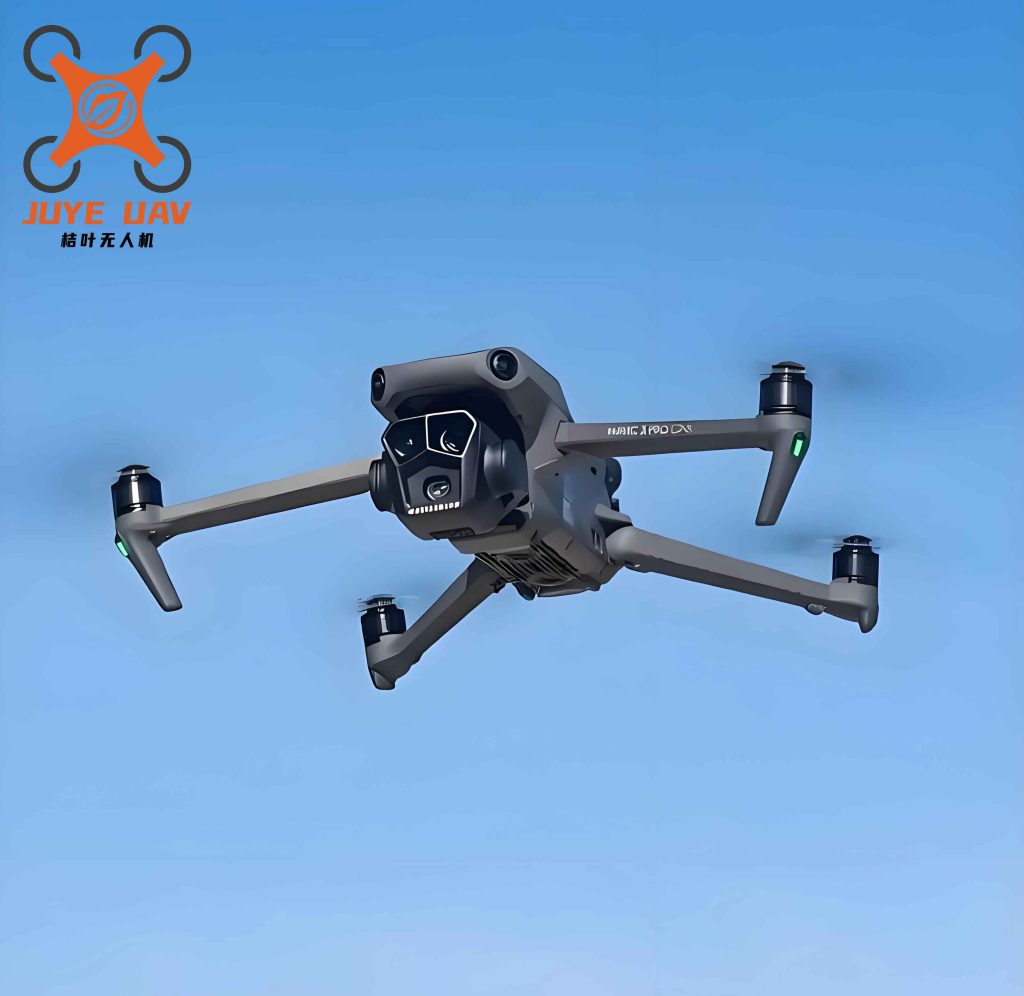
We also present a representative example of a China UAV drone platform used in our data collection and testing. The following image illustrates a typical China drone deployed for bridge crack inspection. The high-resolution imagery captured enables detailed analysis of structural defects.
Looking ahead, we plan to extend MRMNet to handle video streams from China UAV drone for real-time structural health monitoring, and further optimize the network for edge deployment. The consistent improvements across multiple datasets confirm that our method is a valuable contribution to the field of China UAV drone-based object detection.