
In recent years, the rapid proliferation of unmanned aerial vehicles (UAVs) has posed significant challenges to public safety, security, and defense worldwide. As an analyst in the field of electronic warfare and security systems, I have observed firsthand the escalating threats posed by both commercial and malicious drones. These threats range from unauthorized surveillance and smuggling to potential terrorist attacks and swarm assaults, which can overwhelm traditional defense mechanisms. The need for effective anti-UAV systems has never been more urgent, driving extensive research and development across various technological domains. In this article, I will delve into the core technologies underpinning contemporary anti-UAV systems, analyze their strengths and weaknesses, and explore emerging trends that shape the future of drone defense. Throughout this discussion, I will emphasize the importance of integrated solutions and the pivotal role of advanced algorithms in enhancing anti-UAV capabilities.
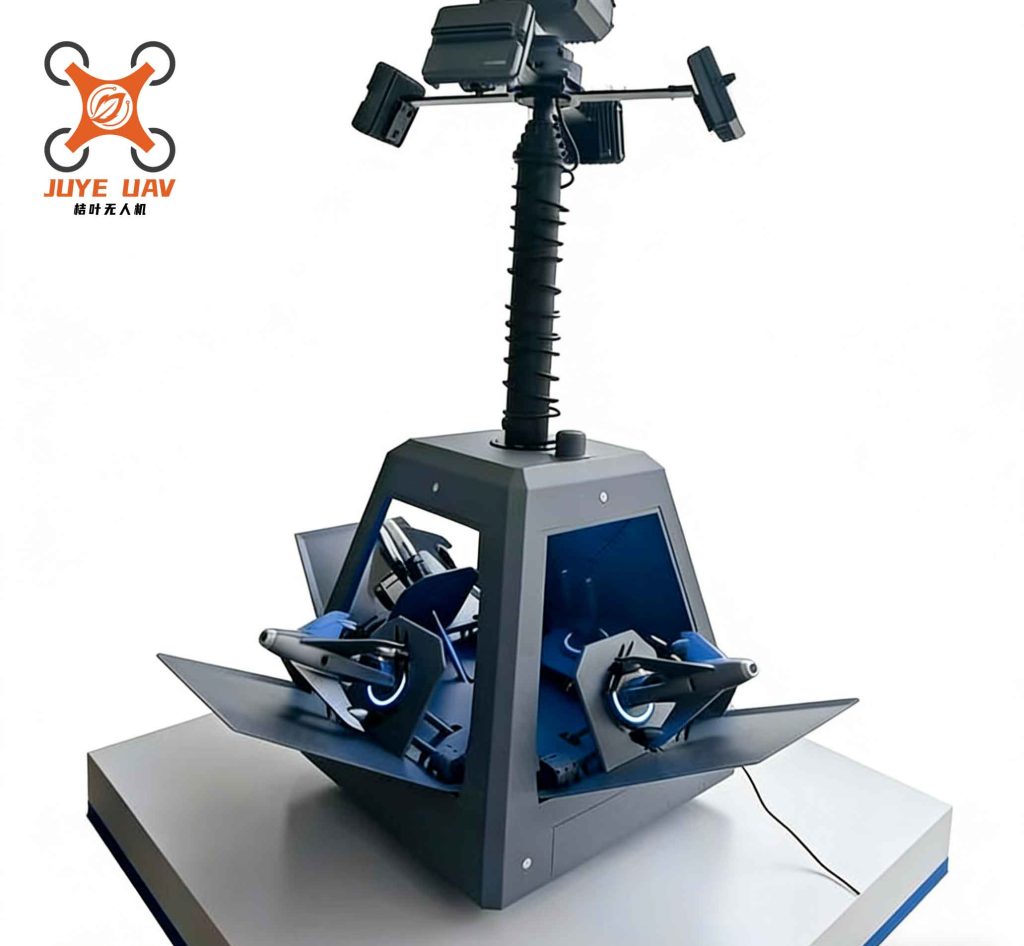
The evolution of anti-UAV systems is closely tied to the advancements in drone technology itself. Drones have become smaller, more agile, and increasingly autonomous, thanks to improvements in electronics, communication, and artificial intelligence. This has reduced their radar cross-section (RCS) and made them harder to detect using conventional methods. Consequently, anti-UAV solutions must leverage multiple sensing modalities to achieve reliable detection, tracking, identification, and neutralization. The primary technologies employed in modern anti-UAV systems include radio frequency (RF) analyzers, radar systems, visual sensors coupled with image processing, and acoustic sensors. Each of these technologies offers unique advantages but also suffers from inherent limitations, making a multi-layered approach essential for comprehensive drone defense. In the following sections, I will dissect these technologies, providing insights into their operational principles and practical applications.
Before delving into specifics, it is crucial to understand the operational environment for anti-UAV systems. Drones operate across diverse terrains—urban landscapes, rural areas, coastal regions, and dense forests—each presenting distinct challenges such as clutter, noise, and signal interference. Moreover, the rise of autonomous drones and those using cellular networks (e.g., 4G/5G) complicates detection, as they may not emit traditional RF signals. Anti-UAV systems must therefore be adaptable and resilient, capable of functioning in all weather conditions and against evolving drone tactics. The integration of artificial intelligence and machine learning has become a game-changer, enabling systems to distinguish drones from birds, kites, and other false targets with high accuracy. As I explore each technology, I will highlight how these innovations enhance anti-UAV performance.
Key Technologies in Anti-UAV Systems
Anti-UAV systems rely on a suite of sensors to provide situational awareness and enable countermeasures. No single sensor is sufficient for all scenarios; thus, a fusion of data from multiple sources is often employed to improve detection rates and reduce false alarms. Below, I examine the four primary technologies used in anti-UAV systems, detailing their mechanisms, benefits, and drawbacks.
1. Radio Frequency (RF) Analyzers
RF analyzers are pivotal in anti-UAV operations because most drones rely on radio signals for command and control (C2) links, as well as for transmitting data such as video feeds and telemetry. These systems consist of antennas that capture RF emissions and processors that analyze the spectrum to identify drone-specific signatures. In my experience, RF analyzers are particularly effective in environments where drones actively communicate with ground stations, allowing for real-time detection and classification. Advanced RF analyzers can even fingerprint drone models by analyzing waveform characteristics or map drones to their controllers using MAC addresses from Wi-Fi communications.
The effectiveness of RF analyzers in anti-UAV contexts can be quantified using signal detection theory. For instance, the probability of detecting a drone signal in the presence of noise can be modeled as:
$$ P_d = \frac{1}{2} \text{erfc} \left( \frac{\lambda – \mu_s}{\sigma_s \sqrt{2}} \right) $$
where \( P_d \) is the detection probability, \( \lambda \) is the detection threshold, \( \mu_s \) is the mean signal power, and \( \sigma_s \) is the standard deviation of the signal. This formula underscores the importance of signal-to-noise ratio (SNR) in RF-based anti-UAV systems.
However, RF analyzers have limitations. They are ineffective against drones that operate autonomously or use encrypted or non-RF communication channels, such as cellular networks. Additionally, in congested RF environments—common in urban areas—the presence of numerous devices like routers and IoT gadgets can lead to false positives. To mitigate this, anti-UAV systems often employ spectral fingerprinting and machine learning algorithms to isolate drone signals. The table below summarizes the key aspects of RF analyzers in anti-UAV applications:
| Aspect | Description | Advantages | Disadvantages |
|---|---|---|---|
| Detection Range | Typically up to 3-5 km, depending on antenna gain and signal strength. | Long-range capability; real-time operation. | Range reduces in cluttered environments. |
| Classification Ability | Can identify drone models and controllers through RF fingerprinting. | Enables targeted countermeasures; supports multi-drone tracking. | Limited to drones with active RF emissions; requires updated signature databases. |
| Environmental Suitability | Works in various terrains but performance degrades with RF interference. | Cost-effective; easy to deploy in networks for triangulation. | Vulnerable to jamming and spoofing; high false alarm rate in crowded spectra. |
In practice, RF analyzers are often integrated with other sensors in anti-UAV systems to compensate for their blind spots. For example, when a drone ceases transmission, radar or optical sensors can maintain tracking. This multi-sensor fusion is a cornerstone of modern anti-UAV architectures.
2. Radar Systems
Radar technology has been a staple in air defense for decades, and its adaptation for anti-UAV purposes is critical due to its all-weather, day-night capability. Drones present a unique challenge for radar because of their small RCS and low-altitude, slow-moving flight profiles, which often blend them with ground clutter. Modern anti-UAV radars employ advanced techniques such as phased arrays and MIMO (Multiple-Input Multiple-Output) configurations to enhance detection. I have worked with systems that use 3D radar to provide precise altitude data, which is essential for distinguishing drones from ground objects and guiding countermeasures like jammers or interceptors.
The radar equation for drone detection can be expressed as:
$$ P_r = \frac{P_t G_t G_r \lambda^2 \sigma}{(4\pi)^3 R^4} $$
where \( P_r \) is the received power, \( P_t \) is the transmitted power, \( G_t \) and \( G_r \) are the antenna gains, \( \lambda \) is the wavelength, \( \sigma \) is the RCS of the drone, and \( R \) is the range. For small drones with low \( \sigma \), increasing \( P_t \) or using higher frequencies can improve detection, but this may also increase clutter. Anti-UAV radars often operate in Ku-band or Ka-band to achieve better resolution.
Two prominent radar types in anti-UAV systems are AESA (Active Electronically Scanned Array) and MIMO radars. AESA radars use electronic beam steering to scan areas rapidly, similar to how human eyes move, while MIMO radars transmit diverse waveforms simultaneously, providing instantaneous coverage like a fly’s eye. This allows for faster refresh rates and better performance against drone swarms. The table below compares these radar technologies in the context of anti-UAV applications:
| Radar Type | Principle | Advantages for Anti-UAV | Disadvantages for Anti-UAV |
|---|---|---|---|
| AESA Radar | Electronic beam scanning using phased arrays; scans sector by sector. | High agility; excellent tracking of multiple targets; resistant to jamming. | Higher cost; complex processing; limited simultaneous coverage. |
| MIMO Radar | Simultaneous transmission of orthogonal waveforms; uses multiple antennas. | Very high refresh rates; effective clutter suppression; good for swarm detection. | Requires advanced signal processing; may have higher computational load. |
Despite advancements, radar alone may struggle with classification—it can detect an object but not necessarily identify it as a hostile drone. Therefore, anti-UAV systems combine radar with EO/IR sensors for visual confirmation. Moreover, radar performance can degrade in urban canyons or mountainous areas due to multipath effects, necessitating complementary sensors.
3. Visual Sensors and Image Processing
Electro-optical (EO) and infrared (IR) cameras provide visual evidence of drone presence, which is invaluable for verification and prosecution. In anti-UAV systems, these sensors are paired with sophisticated image processing algorithms, often powered by deep learning, to automatically detect and classify drones. From my involvement in testing such systems, I have seen how convolutional neural networks (CNNs) can achieve high accuracy in distinguishing drones from birds or other flying objects, even at long ranges.
The detection process typically involves frame differencing, background subtraction, and feature extraction. For instance, a common approach uses Haar-like features or histograms of oriented gradients (HOG) fed into a support vector machine (SVM) classifier. More recently, CNNs have dominated, with architectures like YOLO (You Only Look Once) enabling real-time detection. The performance can be measured using the intersection over union (IoU) metric:
$$ \text{IoU} = \frac{\text{Area of Overlap}}{\text{Area of Union}} $$
where a higher IoU indicates better localization. For anti-UAV applications, an IoU threshold of 0.5 is often used to define true positives.
Visual sensors offer advantages such as positive identification and the ability to capture detailed imagery for forensic analysis. However, they are limited by weather conditions (e.g., fog, rain), lighting (e.g., night-time), and range constraints. Typical EO sensors in anti-UAV systems have a detection range of 2-3 km, which can be extended with telescopic lenses, but this narrows the field of view. IR sensors help at night by detecting heat signatures, but they may confuse drones with other warm objects. The table below outlines key characteristics:
| Sensor Type | Detection Range | Advantages | Disadvantages |
|---|---|---|---|
| EO Camera (Daylight) | Up to 3 km under clear conditions. | High-resolution imagery; good for classification; provides visual proof. | Affected by weather and lighting; limited range compared to radar. |
| IR Camera (Thermal) | Up to 2 km, depending on thermal contrast. | Operates in darkness; detects heat from motors and batteries. | Lower resolution; false alarms from animals or vehicles; expensive. |
| Multi-Spectral Systems | Varies with bands; can extend range via fusion. | Combines visual and thermal data; improves accuracy in diverse conditions. | Complex integration; higher cost and processing requirements. |
To overcome limitations, anti-UAV systems often deploy multiple cameras with overlapping fields of view or use pan-tilt-zoom (PTZ) mechanisms to track drones dynamically. Image processing algorithms continuously evolve, with recent trends focusing on real-time deep learning on edge devices to reduce latency.
4. Acoustic Sensors
Acoustic sensors, or microphone arrays, detect the sound emitted by drone motors and propellers. They are a passive technology, making them stealthy and useful when other sensors are obstructed. In my experiments, acoustic arrays have proven effective in quiet environments for short-range detection, often up to 300-500 meters. By analyzing sound waveforms and using beamforming techniques, these sensors can estimate the direction of arrival (DOA) of a drone, enabling rough triangulation when multiple arrays are deployed.
The DOA estimation can be modeled using time-difference of arrival (TDOA) methods. For a linear array with \( N \) microphones, the TDOA between microphones \( i \) and \( j \) for a sound source at angle \( \theta \) is:
$$ \tau_{ij} = \frac{d \sin \theta}{c} $$
where \( d \) is the microphone spacing and \( c \) is the speed of sound. By solving these equations, the anti-UAV system can localize the drone.
Acoustic sensors are low-cost and easy to deploy, but they suffer from high false alarm rates in noisy environments (e.g., urban areas with traffic) and have limited range. They are also less effective against electric drones, which are quieter than gasoline-powered ones. However, they complement other sensors by providing an additional detection layer, especially in scenarios where RF or radar stealth is employed by drones. The table below summarizes acoustic sensor attributes in anti-UAV systems:
| Aspect | Description | Advantages | Disadvantages |
|---|---|---|---|
| Detection Principle | Captures acoustic signatures of drones (typically 50 Hz to 10 kHz). | Passive operation; no emissions; works in non-line-of-sight conditions. | Short range; highly susceptible to ambient noise. |
| Localization Accuracy | Direction estimation within 5-10 degrees; range estimation poor. | Low cost; quick deployment; good for early warning in quiet zones. | Poor in wind or rain; cannot classify drone types reliably. |
| Integration Potential | Used as part of sensor fusion networks to fill gaps. | Enhances robustness; provides backup when other sensors fail. | Adds computational load for signal processing; limited standalone use. |
In practice, acoustic sensors are often deployed in perimeter security systems for critical infrastructure, where they can trigger alerts for further investigation by other anti-UAV components.
Technological Trends in Anti-UAV Systems
The landscape of anti-UAV technology is rapidly evolving, driven by the increasing sophistication of drone threats and advancements in computing. Based on my analysis of recent developments, several key trends are shaping the future of anti-UAV systems. These trends emphasize integration, intelligence, and interoperability, aiming to create seamless defense networks capable of countering even the most challenging scenarios, such as drone swarms.
1. Multi-Sensor Data Fusion
Data fusion is becoming the backbone of modern anti-UAV systems, as it combines inputs from RF, radar, visual, and acoustic sensors to produce a comprehensive operational picture. The fusion process typically occurs at three levels: data-level (raw sensor data), feature-level (extracted characteristics), and decision-level (combined outputs). Bayesian inference or Dempster-Shafer theory is often used to handle uncertainties. For example, the probability of a drone presence given sensor data can be computed as:
$$ P(\text{Drone} | \mathbf{D}) = \frac{P(\mathbf{D} | \text{Drone}) P(\text{Drone})}{P(\mathbf{D})} $$
where \( \mathbf{D} \) represents data from multiple sensors. Deep learning models, such as recurrent neural networks (RNNs) or transformers, are increasingly employed for end-to-end fusion, learning to weigh sensor inputs based on context.
This trend addresses the limitations of individual sensors, reducing false alarms and improving detection rates in cluttered environments. In the U.S., systems like the Army’s FAAD-C2 (Forward Area Air Defense Command and Control) exemplify this approach, integrating diverse sensors for a unified anti-UAV capability. The table below illustrates a typical fusion architecture:
| Fusion Level | Techniques | Benefits for Anti-UAV | Challenges |
|---|---|---|---|
| Data-Level | Kalman filtering, particle filters for tracking. | High accuracy; real-time updates; good for tracking. | Requires synchronized data; high bandwidth needs. |
| Feature-Level | Feature concatenation followed by classification (e.g., SVM, CNN). | Reduces data volume; leverages distinct sensor features. | Feature extraction must be robust; may lose information. |
| Decision-Level | Voting schemes, Bayesian networks, fuzzy logic. | Flexible; tolerant to sensor failures; easier to implement. | May suboptimally combine conflicting decisions. |
The move towards fusion is essential for scalable anti-UAV solutions, enabling systems to adapt to new drone models and tactics through continuous learning.
2. Counter-Swarm Technologies
Drone swarms—coordinated groups of UAVs—pose a formidable threat due to their ability to saturate defenses. Anti-swarm strategies require rapid detection and engagement of multiple targets simultaneously. Current research focuses on leveraging directed energy weapons (e.g., high-power microwaves, lasers), electronic warfare, and autonomous interceptors. From my review, kinetic solutions like “smart bullets” or mini-missiles are being developed for cost-effective swarm neutralization. For instance, the U.S. has tested systems that fire networked projectiles to engage swarm drones.
Mathematically, swarm defense can be framed as a multi-target tracking problem. The probability hypothesis density (PHD) filter is often used to estimate the number of drones and their states. The PHD recursion is given by:
$$ v_{k|k-1}(x) = \int p_{S}(\zeta) f_{k|k-1}(x|\zeta) v_{k-1}(\zeta) d\zeta + \gamma_k(x) $$
where \( v_{k|k-1} \) is the predicted PHD, \( p_S \) is the survival probability, \( f_{k|k-1} \) is the transition density, and \( \gamma_k \) is the birth intensity. This allows anti-UAV systems to handle swarm dynamics.
Key developments include the use of AI-driven swarm detection algorithms that can identify patterns in drone behavior, predicting attack vectors. The table below outlines anti-swarm technologies:
| Technology | Mechanism | Advantages | Limitations |
|---|---|---|---|
| Directed Energy (HPM/Lasers) | Disrupts electronics or physically damages drones with beams. | Speed-of-light engagement; low cost per shot; scalable against swarms. | Line-of-sight required; atmospheric attenuation; high power needs. |
| Electronic Attack (Jamming/Spoofing) | Jams C2 links or spoofs GPS to divert drones. | Non-kinetic; can affect multiple drones; reusable. | May affect friendly communications; less effective against autonomous drones. |
| Kinetic Interceptors (Net Guns, Missiles) | Physical capture or destruction of drones. | High certainty of neutralization; works against all drone types. | Limited magazine depth; higher cost per engagement; collateral risk. |
Future anti-UAV systems will likely combine these approaches, using layered defenses to degrade swarms progressively.
3. Artificial Intelligence and Deep Learning
AI is revolutionizing anti-UAV systems by enabling autonomous detection, classification, and decision-making. Deep neural networks, particularly CNNs for image analysis and RNNs for time-series data from sensors, are being deployed on edge devices to reduce latency. In my work, I have seen systems that use reinforcement learning to optimize sensor resource allocation, dynamically focusing on high-threat areas. AI also enhances jamming strategies by learning drone communication protocols and adapting in real-time.
A common AI model for drone classification is a CNN with softmax output, where the loss function is categorical cross-entropy:
$$ \mathcal{L} = -\sum_{i=1}^{C} y_i \log(\hat{y}_i) $$
where \( C \) is the number of classes (e.g., drone, bird, clutter), \( y_i \) is the true label, and \( \hat{y}_i \) is the predicted probability. Training on large datasets of drone signatures improves accuracy.
AI-driven anti-UAV systems, such as Citadel Defense’s Titan, use machine learning to identify and neutralize drone swarms autonomously. Similarly, Russian systems employ neural networks for friend-or-foe identification. The table below highlights AI applications in anti-UAV contexts:
| AI Application | Description | Impact on Anti-UAV | Future Directions |
|---|---|---|---|
| Automatic Target Recognition (ATR) | CNN-based classification of sensor data to identify drones. | Reduces operator workload; increases response speed; lowers false alarms. | Explainable AI for trust; federated learning for shared intelligence. |
| Predictive Analytics | RNNs or LSTMs to forecast drone trajectories and intent. | Enables proactive countermeasures; improves interception rates. | Integration with weather and terrain data for better predictions. |
| Adaptive Electronic Warfare | Reinforcement learning to optimize jamming parameters. | Dynamic response to drone evasion tactics; efficient spectrum use. | Real-time learning in contested environments; counter-AI measures. |
As AI matures, we can expect fully autonomous anti-UAV systems that require minimal human intervention, though ethical and legal considerations remain.
4. Integrated Command and Control (C2) Systems
Interoperability is crucial for effective anti-UAV operations, especially in multi-domain environments. The trend is towards open-architecture C2 systems that allow “plug-and-play” integration of sensors and effectors from different vendors. Standards like NATO’s STANAG 4586 are being adapted for anti-UAV use, ensuring seamless communication between army, navy, and air force assets. In my analysis, the U.S. Department of Defense’s 2021 Counter-Small Unmanned Aircraft Systems Strategy emphasizes the need for common C2 frameworks to avoid siloed solutions.
C2 systems often use middleware layers, such as the Robot Operating System (ROS) or military-specific software, to manage data flows. The effectiveness can be measured using metrics like decision latency \( L_d \), given by:
$$ L_d = t_{\text{response}} – t_{\text{detection}} $$
where lower \( L_d \) indicates faster anti-UAV reactions. AI-enhanced C2 can automate engagement decisions, subject to rules of engagement.
The table below outlines key aspects of modern anti-UAV C2 systems:
| C2 Component | Role in Anti-UAV | Examples | Challenges |
|---|---|---|---|
| Sensor Management | Coordinates sensor tasks (e.g., slewing cameras, adjusting radar modes). | MEDUSA (Multi-Environment Domain Unmanned Systems Application). | Bandwidth constraints; sensor conflict resolution. |
| Data Integration | Fuses sensor inputs into a common operational picture (COP). | FAAD-C2; Aegis Combat System adaptations. | Data standardization; real-time processing loads. |
| Effector Control | Commands jammers, interceptors, or directed energy weapons. | Raytheon’s Phaser; Lockheed Martin’s MORFIUS. | Safety protocols; integration with civilian air traffic control. |
Future C2 systems will likely leverage cloud computing and 5G networks for distributed anti-UAV operations, enabling collaborative defense across wide areas.
Conclusion
The field of anti-UAV technology is dynamic and multifaceted, requiring continuous innovation to keep pace with evolving drone threats. Through this review, I have highlighted the core technologies—RF analyzers, radar, visual sensors, and acoustic sensors—and how their integration via data fusion enhances overall system robustness. The trends towards AI-driven autonomy, counter-swarm capabilities, and interoperable C2 systems are shaping the next generation of anti-UAV solutions. However, challenges remain, including the need for cost-effective neutralization methods, resilience against adversarial AI, and regulatory frameworks for deployment in civilian airspace.
As drones become more accessible and capable, the importance of reliable anti-UAV systems will only grow. Future research should focus on quantum radar for enhanced detection, bio-inspired sensors for passive monitoring, and blockchain for secure C2 networks. Ultimately, the goal is to create layered defense ecosystems that can detect, identify, track, and neutralize UAV threats with minimal collateral damage, ensuring safety in an increasingly crowded sky. The journey towards comprehensive anti-UAV dominance is ongoing, and collaboration across industries and governments will be key to success.