
Quadrotor unmanned aerial vehicles (UAVs) have gained significant attention due to their exceptional hovering capabilities, maneuverability, and cost-effectiveness, making them ideal for applications such as aerial photography, search and rescue, and surveillance. The core propulsion system of a quadrotor relies on brushless DC motors (BLDCMs), which offer high efficiency, low noise, and excellent speed regulation. However, in practical flight scenarios, motor performance is influenced by factors like power supply voltage fluctuations and varying load conditions, leading to challenges in dynamic response and system stability. To address these issues, computer simulation techniques provide an efficient approach for designing and validating control systems. In this paper, I develop a dual-loop control system model for BLDCMs using Matlab/Simulink, which reduces design cycles, lowers experimental costs, and establishes a foundation for advanced control algorithm research. The focus is on the quadrotor UAV, a highly dynamic system that requires precise motor control for stable flight operations.
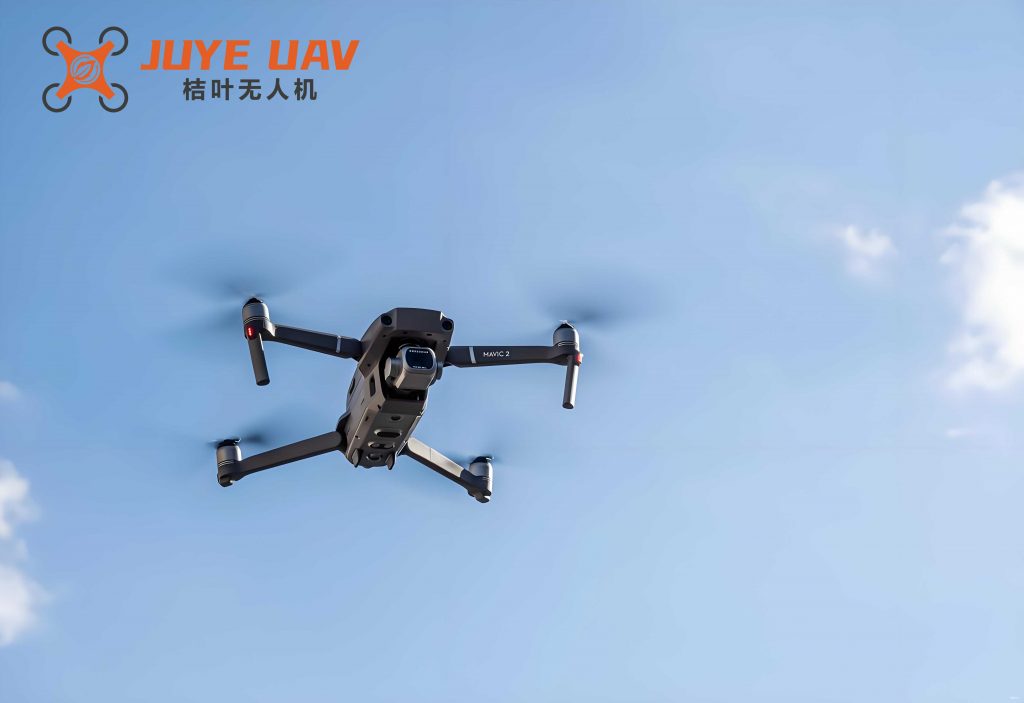
The quadrotor UAV operates through four symmetrically arranged BLDCMs that drive propellers to generate lift and control moments. Each motor’s performance directly impacts the overall flight dynamics, including altitude, pitch, roll, and yaw movements. To model the system accurately, I begin by establishing the mathematical models for both the BLDCM and the quadrotor dynamics. For the BLDCM, which operates in a three-phase, star-connected configuration with a two-phase conduction mode, I derive the voltage balance equations based on standard assumptions: ignoring iron saturation, eddy current and hysteresis losses, assuming a trapezoidal back-EMF distribution with a flat-top width of 120 electrical degrees, neglecting armature reaction and cogging effects, and considering ideal switching characteristics for the inverter circuit. The voltage equations for the stator windings are given by:
$$ \begin{bmatrix} u_a \\ u_b \\ u_c \end{bmatrix} = \begin{bmatrix} R & 0 & 0 \\ 0 & R & 0 \\ 0 & 0 & R \end{bmatrix} \begin{bmatrix} i_a \\ i_b \\ i_c \end{bmatrix} + \begin{bmatrix} L – M & 0 & 0 \\ 0 & L – M & 0 \\ 0 & 0 & L – M \end{bmatrix} \frac{d}{dt} \begin{bmatrix} i_a \\ i_b \\ i_c \end{bmatrix} + \begin{bmatrix} e_a \\ e_b \\ e_c \end{bmatrix} $$
where \( u_a, u_b, u_c \) are the phase voltages, \( i_a, i_b, i_c \) are the phase currents, \( e_a, e_b, e_c \) are the back-EMFs, \( R \) is the phase resistance, \( L \) is the self-inductance, \( M \) is the mutual inductance, and \( \frac{d}{dt} \) is the differential operator. The electromagnetic torque \( T_{em} \) is expressed as:
$$ T_{em} = \frac{1}{\omega} (i_a e_a + i_b e_b + i_c e_c) $$
where \( \omega \) is the mechanical angular velocity. The motion equation relates the electromagnetic torque, load torque \( T_L \), damping coefficient \( B \), and rotor inertia \( J \):
$$ T_{em} – T_L – B \omega = J \frac{d\omega}{dt} $$
For the quadrotor UAV dynamics, I consider a rigid body model with symmetric mass distribution, where the center of gravity coincides with the geometric center, and only gravity and propeller thrust forces are acting. The kinematics are described using inertial and body-fixed coordinate systems. The Newton-Euler equations yield the following dynamic model for the quadrotor:
$$ \begin{aligned}
\ddot{x} &= [U_1 (\cos \phi \sin \theta \cos \psi + \sin \phi \sin \psi)] / m \\
\ddot{y} &= [U_1 (\cos \phi \sin \theta \cos \psi – \sin \phi \cos \psi)] / m \\
\ddot{z} &= [U_1 (\cos \phi \cos \theta) – mg] / m \\
\ddot{\phi} &= [U_2 + (I_y – I_z) \dot{\theta} \dot{\psi}] / I_x \\
\ddot{\theta} &= [U_3 + (I_z – I_x) \dot{\phi} \dot{\psi}] / I_y \\
\ddot{\psi} &= [U_4 + (I_x – I_y) \dot{\phi} \dot{\theta}] / I_z
\end{aligned} $$
Here, \( [x, y, z]^T \) represents the position coordinates, \( [\phi, \theta, \psi]^T \) are the roll, pitch, and yaw angles, \( m \) is the mass, \( g \) is gravitational acceleration, \( I_x, I_y, I_z \) are the moments of inertia, and \( U_1, U_2, U_3, U_4 \) are control inputs derived from motor thrusts. The thrust generated by each motor in the quadrotor is proportional to the square of its rotational speed:
$$ F_i = K \omega_i^2 $$
where \( F_i \) is the thrust from the i-th motor, \( K \) is the lift coefficient, and \( \omega_i \) is the motor speed. The total thrust \( F_b \) is the sum of individual thrusts:
$$ F_b = \sum_{i=1}^{4} F_i = K (\omega_1^2 + \omega_2^2 + \omega_3^2 + \omega_4^2) $$
This model highlights the interdependence between motor performance and quadrotor stability, emphasizing the need for robust control strategies.
To design an effective control system for the quadrotor UAV, I adopt a dual-loop control strategy comprising speed and current loops. This approach ensures precise speed regulation and rapid response to disturbances, which is crucial for maintaining quadrotor stability during dynamic maneuvers. The outer speed loop adjusts the motor speed to match the desired reference, while the inner current loop manages the motor current to minimize torque ripple and enhance dynamic performance. Both loops utilize proportional-integral (PI) controllers to achieve zero steady-state error and improved transient response. The overall control system block diagram integrates key modules: the BLDCM model, control module, current detection module, logic commutation module, pulse-width modulation (PWM), and inverter circuit. This modular design facilitates easy parameter adjustments and algorithm modifications, which is essential for optimizing quadrotor performance under varying flight conditions.
The control module encompasses the speed and current PI controllers. The speed controller’s output serves as the reference for the current controller, which then generates PWM signals by comparing its output with a triangular carrier wave. These signals drive the three-phase inverter bridge, enabling efficient voltage regulation. The current detection module processes three-phase back-EMF signals and motor currents to provide accurate feedback for the current loop. It transforms the sampled phase currents into measurable currents using position logic, ensuring high control precision. The logic commutation module, consisting of gates and decoder submodules, handles electronic commutation based on Hall sensor signals. The decoder converts Hall signals into back-EMF waveforms, while the gates generate switching signals for the inverter’s power transistors. The logical relationships for these modules are summarized in the following tables, which are critical for proper quadrotor motor operation.
| Hall Ha | Hall Hb | Hall Hc | Emf_A | Emf_B | Emf_C | VQ1 | VQ2 | VQ3 | VQ4 | VQ5 | VQ6 |
|---|---|---|---|---|---|---|---|---|---|---|---|
| 0 | 0 | 0 | 0 | 0 | 0 | 0 | 0 | 0 | 0 | 0 | 0 |
| 0 | 0 | 1 | 0 | -1 | +1 | 0 | 0 | 0 | 0 | 1 | 1 |
| 0 | 1 | 0 | -1 | +1 | 0 | 0 | 0 | 1 | 1 | 0 | 0 |
| 0 | 1 | 1 | -1 | 0 | +1 | 0 | 0 | 0 | 1 | 1 | 0 |
| 1 | 0 | 0 | +1 | 0 | -1 | 1 | 1 | 0 | 0 | 0 | 0 |
| 1 | 0 | 1 | +1 | -1 | 0 | 1 | 0 | 0 | 0 | 0 | 1 |
| 1 | 1 | 0 | 0 | +1 | -1 | 0 | 1 | 1 | 0 | 0 | 0 |
| 1 | 1 | 1 | 0 | 0 | 0 | 0 | 0 | 0 | 0 | 0 | 0 |
| Emf_A | Emf_B | Emf_C | Hall Ha | Hall Hb | Hall Hc |
|---|---|---|---|---|---|
| 0 | 0 | 0 | 0 | 0 | 0 |
| 0 | -1 | +1 | 0 | 0 | 1 |
| -1 | +1 | 0 | 0 | 1 | 0 |
| -1 | 0 | +1 | 0 | 1 | 1 |
| +1 | 0 | -1 | 1 | 0 | 0 |
| +1 | -1 | 0 | 1 | 0 | 1 |
| 0 | +1 | -1 | 1 | 1 | 0 |
| 0 | 0 | 0 | 1 | 1 | 1 |
To validate the control system, I conduct simulation experiments in Matlab/Simulink under various operating conditions, including acceleration, deceleration, and load changes. The BLDCM parameters used in the simulation are as follows: pole pairs = 4, rated voltage = 24 V, rated speed = 1500 r/min, phase resistance = 0.432 Ω, phase inductance = 4.22 × 10^{-4} H, rotor inertia = 0.77 g·m², and the equivalent rotational inertia of the quadrotor rotor折算到电动机上的无人机旋翼转动惯量 = 14.8 g·m². The performance criteria include a speed range of 200–1500 r/min, settling time ≤10 s, overshoot ≤5%, and steady-state phase current ≤11 A. In the simulation, the initial speed reference is set to 1500 r/min with a load torque of 0.6 N·m. After reaching steady state, the load is removed at 7.5 s, and the speed is reduced to 1000 r/min. The simulation results demonstrate that the system achieves steady state at 5.07 s with no overshoot, an average phase current of 10.51 A, and minimal torque and current ripple. These outcomes confirm that the model meets the specified performance criteria, proving its effectiveness for quadrotor UAV applications.
The simulation waveforms for speed, electromagnetic torque, phase current, and back-EMF align with theoretical expectations. Under large rotational inertia conditions, the quadrotor drive system exhibits stable tracking of speed changes, with the electromagnetic torque quickly adapting to load variations. The following table summarizes key performance metrics from the simulation, highlighting the system’s robustness in handling dynamic transitions typical of quadrotor flight maneuvers.
| Parameter | Value | Unit |
|---|---|---|
| Steady-State Time | 5.07 | s |
| Speed Overshoot | 0 | % |
| Average Phase Current | 10.51 | A |
| Speed Range | 200–1500 | r/min |
| Torque Ripple | Low | – |
Furthermore, the mathematical analysis of the quadrotor dynamics reinforces the importance of motor control in achieving stable flight. The relationship between motor thrust and rotational speed is crucial for designing efficient propulsion systems. For instance, the total thrust \( F_b \) can be expressed in terms of the control inputs \( U_1 \) to \( U_4 \), which are derived from the motor speeds. This interconnection underscores the need for precise motor modeling in quadrotor simulations. The dual-loop control strategy effectively mitigates disturbances, such as wind gusts or payload changes, which are common in real-world quadrotor operations. By integrating the BLDCM model with the quadrotor dynamics, I ensure that the simulation accurately represents the coupled electromechanical behavior.
In conclusion, the developed BLDCM control system model demonstrates excellent performance in simulating quadrotor UAV drive motors. The modular approach allows for flexible parameter tuning and algorithm integration, facilitating future research on advanced control techniques like fuzzy logic or neural networks. The simulation results validate the model’s ability to handle large inertial loads and dynamic speed changes, which are critical for quadrotor applications. This work provides a reliable foundation for optimizing motor control in quadrotor UAVs, contributing to enhanced flight stability and efficiency. Future directions include implementing real-time hardware-in-the-loop testing and extending the model to multi-quadrotor formations for collaborative missions.