
The evolution of the Ukrainian conflict has fundamentally transformed our investment framework for defense technologies. Military drones now decisively influence air superiority and ground operations, with their strategic impact demonstrated through precision strikes and persistent surveillance. The military UAV market presents extraordinary growth potential, demanding reevaluation of sector leaders’ investment profiles.
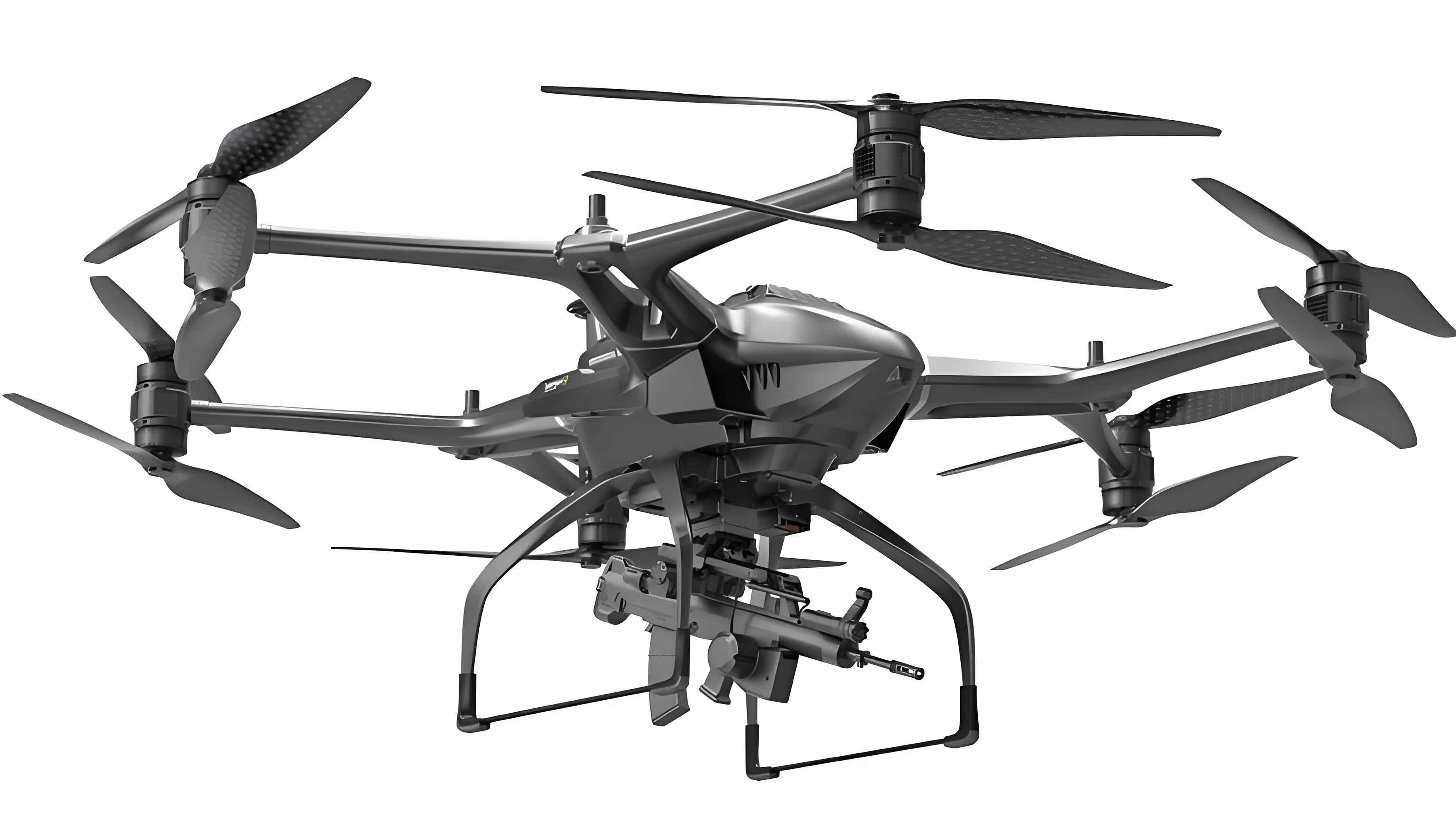
Unmanned combat systems integrate networked communications within open architectures, delivering functional distribution, cost efficiency, and enhanced survivability. Contemporary warfare increasingly relies on these systems for targeted operations and large-scale engagements. The core principle remains “unmanned platforms, human-controlled systems,” with military UAVs constituting the critical airborne component alongside ground and maritime counterparts.
The global military drone market exhibits robust expansion. According to MarketsandMarkets analysis:
$$ CAGR = \left( \frac{EV}{BV} \right)^{\frac{1}{n}} – 1 $$
Where CAGR represents Compound Annual Growth Rate, EV is ending value, BV beginning value, and n the period. Applying this to military UAV sector growth:
$$ MarketSize_{2025} = MarketSize_{2018} \times (1 + CAGR)^7 $$
| Year | Military UAV Market (USD billions) | Growth Rate |
|---|---|---|
| 2018 | 12.1 | – |
| 2025 | 26.8 | 12.00% CAGR |
U.S. military drone procurement exemplifies sustained investment, with annual budgets averaging $3 billion (¥20 billion) during 2010-2020, totaling $34.8 billion. UAV allocations consistently exceeded 6% of total aviation budgets. Current U.S. military drone inventory stands at 1,040 units (excluding micro-drones), predominantly MQ-9 Reaper (284 units) and MQ-1 Predator/Gray Eagle (204 units) platforms.
Comparative analysis reveals significant capacity disparities. While China’s operational large-scale military drones number merely dozens, technological leapfrogging potential exists. Domestic manufacturers have developed competitive equivalents like the CH-4 and CH-5 military UAV series, designed for reconnaissance-strike missions comparable to their Western counterparts.
Leading military drone manufacturers demonstrate distinctive capabilities:
| Manufacturer | Primary Military UAV Products | Operational Features |
|---|---|---|
| Manufacturer A (Stock: 002389) | CH-3, CH-4, CH-5 Series | High-altitude endurance, multi-role configuration |
| Manufacturer B | Wing Loong Series | Long-range ISR, modular payload |
| Manufacturer C | BZK-005 Series | Electronic warfare, maritime patrol |
| Manufacturer D | Sky Saber/Twin-Tail Scorpion | Vertical takeoff, all-weather operation |
The strategic integration of airframes and munitions defines competitive advantage. Leading manufacturers have pioneered integrated weapons systems like the Archer missile series, specifically engineered for their military UAV platforms. Combat efficacy was validated during 260+ successful strikes against high-value targets in Middle Eastern operations, demonstrating precision engagement capabilities against mobile threats. This military drone-weapon synergy enables:
$$ P_{kill} = 1 – \prod_{i=1}^{n} (1 – p_i) $$
Where \( P_{kill} \) represents target neutralization probability and \( p_i \) individual system reliability factors. Integrated military UAV systems significantly enhance mission success probabilities through platform-payload optimization.
Financial metrics underscore sector leadership, with dominant military drone manufacturers maintaining gross margins exceeding 35%, substantially above industry averages. Recent capital initiatives include ¥910 million strategic investments targeting next-generation military UAV development:
| Development Program | Military UAV Technology Focus | Capability Enhancement |
|---|---|---|
| Project Alpha | CH-4 Enhancement | Extended loiter, multi-sensor integration |
| Project Beta | Tiltrotor Systems | VTOL capability, shipboard operations |
| Project Gamma | Low-Observable Platforms | Reduced radar signature, penetration missions |
| Project Delta | Cost-Optimized Munitions | Swarm deployment, asymmetric warfare |
Portfolio optimization has further strengthened focus, with non-core asset divestitures generating ¥320 million in capital redeployment toward military UAV R&D. Production scalability follows the industrial expansion model:
$$ Q_t = Q_0 \times e^{rt} $$
Where \( Q_t \) represents production volume at time t, \( Q_0 \) initial capacity, r growth rate, and e base of natural logarithm. Current manufacturing enhancements target 300% capacity growth within three operational cycles.
Operational effectiveness of military UAV systems follows the Lanchester combat model for modern warfare:
$$ \frac{dA}{dt} = -\beta B \\ \frac{dB}{dt} = -\alpha A $$
Where A and B represent opposing forces, with α and β their respective combat effectiveness coefficients. Military drone deployments substantially increase α-values through persistent surveillance and precision engagement capabilities.
Emerging military UAV technologies will dominate future battlespace architecture. Investment priorities should target manufacturers demonstrating:
- Integrated sensor-to-shooter capabilities reducing OODA loop duration
- Swarm coordination algorithms enabling autonomous collaborative engagement
- Hyperspectral sensing for counter-camouflage detection
- AI-driven target recognition minimizing operator cognitive load
- Cross-domain interoperability for joint all-domain command and control
The military drone sector’s trajectory indicates accelerated adoption across global defense establishments. Technological parity initiatives will drive domestic procurement, while export markets expand through combat-proven system demonstrations. Investment analysis must prioritize manufacturers with vertical integration capabilities, particularly in airframe-munition optimization, and demonstrable battlefield performance validation. As unmanned systems redefine contemporary warfare, military UAV specialists command premium valuation reflecting their critical defense role.