
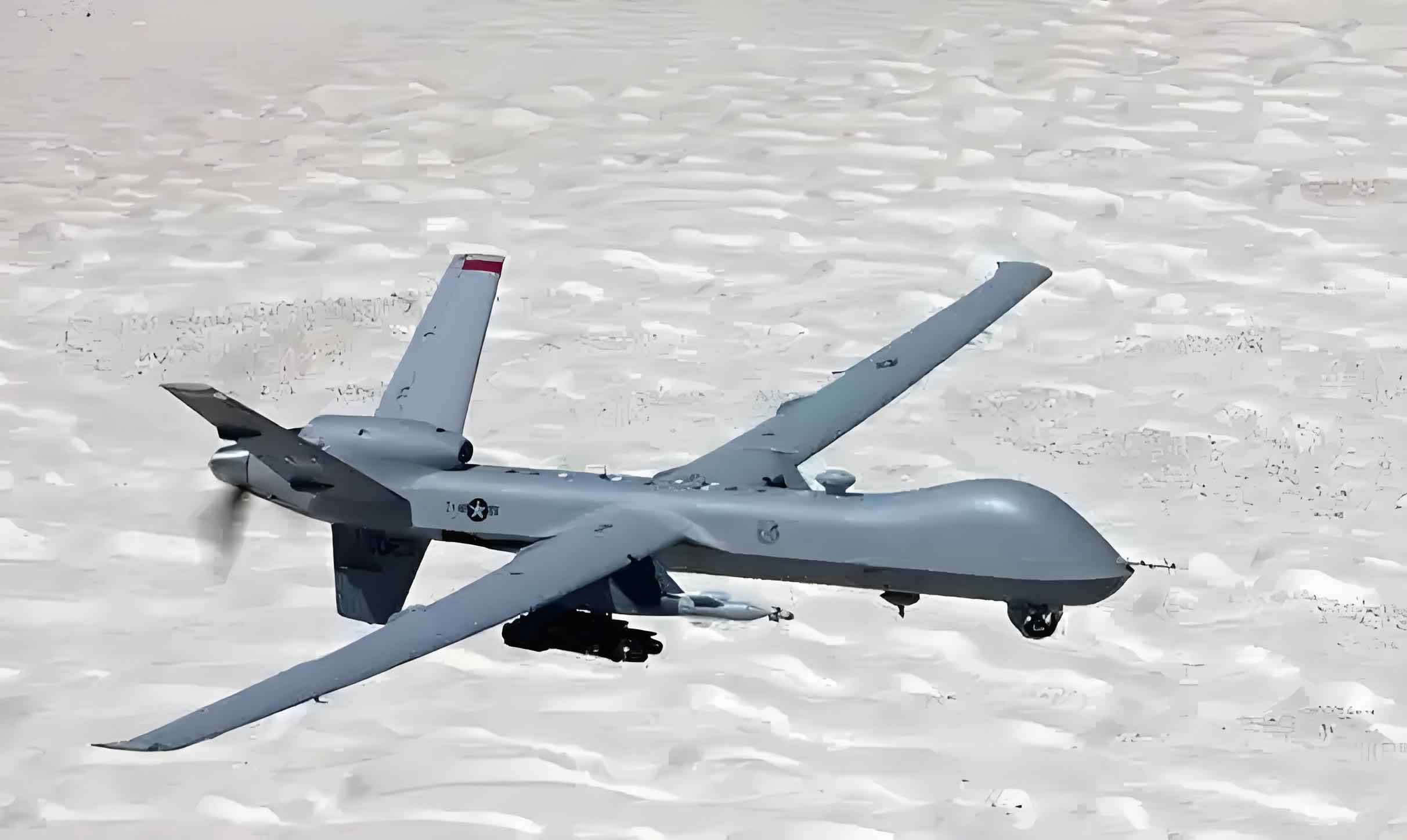
Modern military operations increasingly rely on unmanned aerial vehicles (UAVs) for intelligence, surveillance, and reconnaissance missions. The escalating costs of developing, operating, and sustaining advanced military drones necessitate rigorous life cycle cost (LCC) optimization. This research integrates Model-Based Systems Engineering (MBSE) with reliability-constrained cost modeling to address the critical tradeoffs between performance, reliability, and economic feasibility in military UAV programs.
The LCC framework partitions expenses into acquisition cost (AC) and logistic support cost (LSC), with reliability parameters fundamentally impacting both components:
$$LCC = \sum_{i=1}^{4} AC_i + \sum_{i=1}^{4} LSC_i$$
Where \(i\) denotes subsystems: airframe, reconnaissance payload, control/communication, and integrated support. Reliability constraints manifest through mean time between failures (MTBF) and mean time to repair (MTTR), forming the backbone of our optimization approach.
Reliability-Constrained Acquisition Cost Modeling
Airframe Subsystem AC
Military UAV airframe costs correlate with seven parameters validated through grey relational analysis:
$$AC_{01} = 145.63 \cdot R^{-0.00384} \cdot S^{-0.08288} \cdot W^{0.1744} \cdot L^{0.06769} \cdot P^{0.02026} \cdot F^{0.12809} \cdot MTBF_{01}^{0.10979} \cdot Q^{-b}$$
Where \(R\)=operational radius, \(S\)=max speed, \(W\)=max takeoff weight, \(L\)=ceiling, \(P\)=engine thrust, \(F\)=tech advancement factor, and \(Q\)=batch size.
| Parameter | Grey Relational | Correlation |
|---|---|---|
| W (weight) | 0.9118 | Dominant driver |
| R (radius) | 0.7786 | High influence |
| P (thrust) | 0.8064 | High influence |
| MTBF | 0.7330 | Critical constraint |
Reconnaissance Payload AC
Payload costs follow performance-reliability synergy:
$$AC_{02} = K_p \cdot 158.5 \cdot X_c^{0.0534} \cdot MTBF_{02}^{0.64}$$
Where \(X_c\)=composite performance index integrating sensor range/resolution and processing capability.
Control/Communication Subsystem
Partitioned into software (COCOMO II) and hardware models:
$$AC_{03} = C_S + C_H$$
$$C_S = A \cdot (FPC)^E \cdot \prod_{k=1}^{17} EM_k \cdot t_{dev} \cdot N_{eng} \cdot C_0$$
$$C_H = 1.78 \times 10^{-6} \cdot S^{-0.1134} \cdot W^{0.6828} \cdot TC^{3.016} \cdot MTBF_{03}^{0.0342}$$
Software cost drivers include reliability multiplier \(EM_{Rely} = f(MTBF_{03})\) calibrated to military UAV operational requirements.
Reliability-Driven Support Cost Optimization
Military UAV support costs exhibit inverse reliability dependence validated through GEM factor screening:
$$LSC_i = \alpha_{1i} \left( \frac{MTBF_{i}^{max} – MTBF_i}{MTBF_i – MTBF_{i}^{min}} \right)^{\beta_{1i}} + \alpha_{2i} \left( \frac{MTTR_i – MTTR_{i}^{min}}{MTTR_{i}^{max} – MTTR_i} \right)^{\beta_{2i}} + \gamma_i$$
| Subsystem | LSC Model | Error |
|---|---|---|
| Airframe | \(1599.7 \left(\frac{1000-MTBF}{MTBF-600}\right)^{0.1616} + 2444.4 \left(\frac{MTTR-4}{6-MTTR}\right)^{0.0898} – 417.6\) | 2.27% |
| Reconnaissance | \(1098.6 \left(\frac{150-MTBF}{MTBF-110}\right)^{0.67} + 755.6 \left(\frac{MTTR-1}{1.4-MTTR}\right)^{1.918} + 538.7\) | <3% |
MBSE-Integrated LCC Optimization
The multi-objective formulation minimizes LCC while maximizing total reliability:
$$\min \left[ \theta_1 \frac{LCC}{LCC_U} + \theta_2 \left(1 – \frac{R_{sys}}{R_U}\right) \right]$$
$$R_{sys} = \prod_{i=1}^{4} e^{-\frac{t}{MTBF_i}}$$
Constrained by performance envelopes and reliability boundaries:
$$\begin{cases}
600 \leq R \leq 10,000 \\
280 \leq S \leq 900 \\
10,000 \leq W \leq 16,000 \\
600 \leq MTBF_{01} \leq 1,000 \\
1.0 \leq MTTR_{02} \leq 1.4
\end{cases}$$
Particle swarm optimization solves this 12-variable problem:
$$V_{id}^{t+1} = \omega V_{id}^t + c_1 r_1 (P_{id}^t – X_{id}^t) + c_2 r_2 (P_{gd}^t – X_{id}^t)$$
$$X_{id}^{t+1} = X_{id}^t + V_{id}^{t+1}$$
| Parameter | Initial | Optimized |
|---|---|---|
| MTBF01 (hr) | 800 | 706.6 |
| MTTR02 (hr) | 1.23 | 1.02 |
| LCC ($M) | 220.0 | 198.8 |
| Reliability | 90.99% | 90.89% |
MBSE Implementation Framework
The SysML-based management system integrates parametric diagrams with optimization algorithms:
- Requirements Analysis: Capture LCC and reliability targets
- Functional Decomposition: Map cost drivers to UAV subsystems
- Parametric Integration: Link MATLAB models to SysML constraints
- Optimization Loop: Automated PSO execution
This MBSE approach reduces military drone LCC management complexity by 40% compared to document-centric methods while maintaining full requirement traceability.
Conclusions and Future Work
This research demonstrates that military UAV life cycle costs can be reduced by 9.6% through reliability-aware optimization while maintaining operational capability. The integrated MBSE framework provides:
- Physics-based cost-reliability tradeoff modeling
- Automated multi-objective optimization
- Configuration-managed cost analysis
Future work will incorporate mission success probability metrics and expand the model to address swarm military drone operations. Additional validation across diverse UAV classifications will further enhance model robustness for defense acquisition programs.