
The proliferation of Unmanned Aerial Vehicles (UAVs) within the military domain represents a paradigm shift in modern warfare. The advantages of military UAVs, from persistent Intelligence, Surveillance, and Reconnaissance (ISR) to precision strike capabilities, have been decisively demonstrated in contemporary conflicts. These systems offer the strategic benefit of projecting power and gathering critical information while mitigating risks to human operators. Consequently, global military strategies are increasingly pivoting towards unmanned and swarmed operations. However, this very utility makes military UAVs a significant threat. Adversarial or illicit use of these platforms can compromise security, disrupt critical infrastructure, and challenge airspace sovereignty. Therefore, the development and deployment of robust Counter-Unmanned Aircraft System (C-UAS) technologies have become an operational imperative. Effective military UAV countermeasures are essential not only for force protection in contested environments but also for safeguarding national assets during peacetime. This article provides a multi-dimensional analysis of military UAV countermeasures, detailing classification and characteristics of threat platforms, the C-UAS processing chain, detection and mitigation technologies, system typologies, and the enduring challenges in this dynamic field.
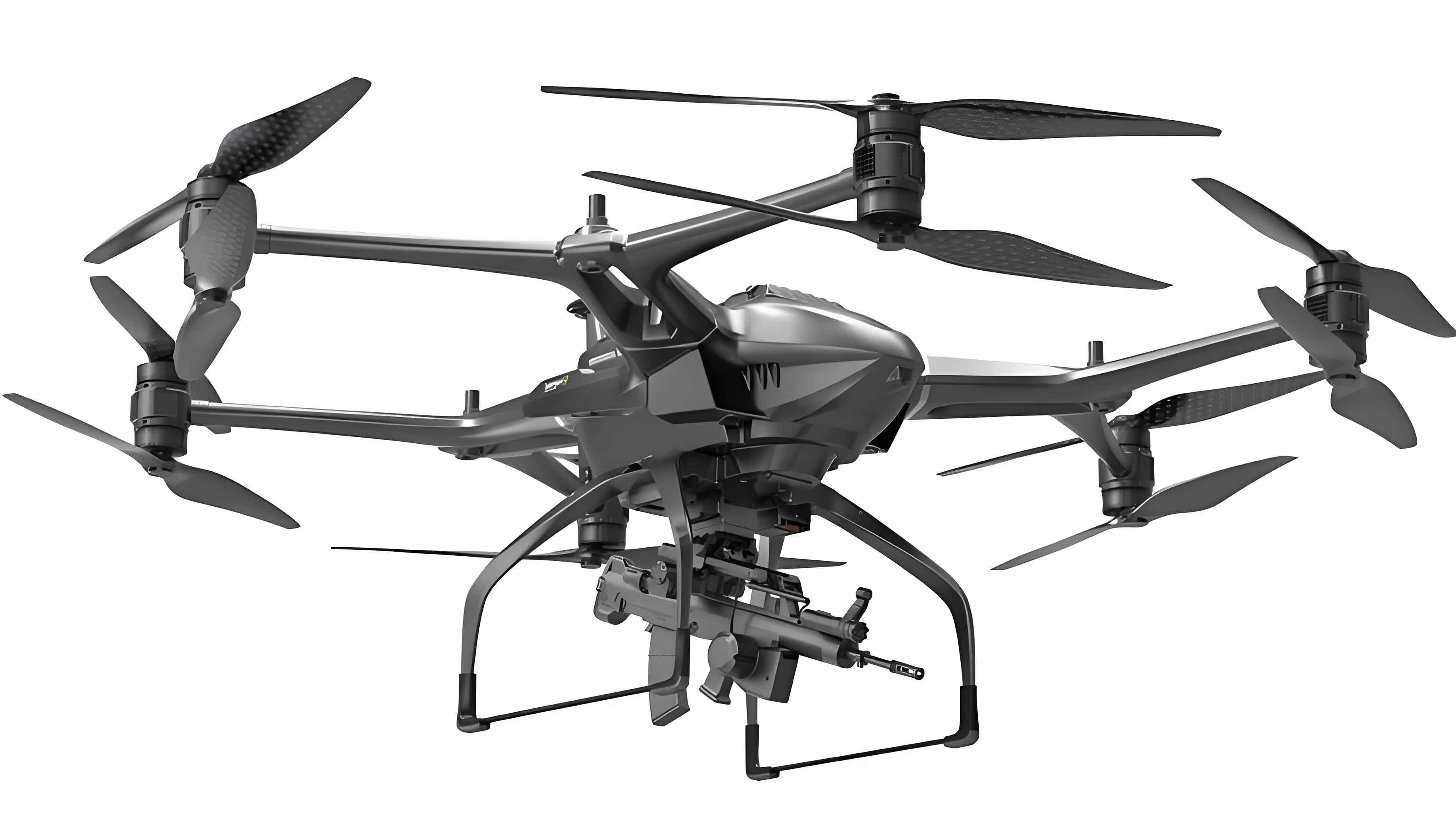
Analysis of Military UAV Threats
A foundational understanding of the threat is paramount for effective neutralization. Military UAVs, often referred to as Unmanned Aircraft Systems (UAS), encompass the aerial vehicle, its control station, and the data link connecting them. Various defense organizations have established classification frameworks, typically based on parameters like maximum gross weight, operating altitude, and speed. One widely referenced taxonomy, as utilized by the U.S. Department of Defense, categorizes military UAVs into five distinct groups. This classification is crucial as it directly correlates with the platform’s mission set, logistical footprint, and the level of countermeasure complexity required to address it.
| Group | Weight (kg / lbs) | Normal Operating Altitude (m / ft AGL/MSL) | Speed (km/h / kts) | Typical Examples |
|---|---|---|---|---|
| Group 1 | < 9.07 / <20 | < 365.76 / <1200 (AGL) | < 185.2 / <100 | RQ-11B Raven, RQ-20A Puma |
| Group 2 | 9.53 – 24.97 / 21-55 | < 1066.80 / <3500 (AGL) | < 463.0 / <250 | ScanEagle, AeroVironment Quantix |
| Group 3 | 25.40 – 598.74 / 56-1320 | < 5486.40 / <18000 (MSL) | < 463.0 / <250 | RQ-7B Shadow, RQ-21A Blackjack |
| Group 4 | > 598.74 / >1320 | > 5486.40 / >18000 (MSL) | Any airspeed | MQ-1C Gray Eagle, MQ-9A Reaper |
| Group 5 | > 598.74 / >1320 | > 5486.40 / >18000 (MSL) | Any airspeed | RQ-4 Global Hawk, MQ-4C Triton |
The characteristics of these military UAV groups vary significantly, influencing their tactical application and the subsequent countermeasure response. Group 1 and 2 platforms are often termed “small” or “tactical” military UAVs. They are hand-launched or catapulted, provide platoon- or company-level situational awareness, and have minimal logistical needs. Their small radar cross-section (RCS) and low acoustic signature make them particularly challenging to detect. In contrast, Group 3, 4, and 5 military UAVs are larger systems, resembling manned aircraft in their operation from runways. They perform strategic ISR, signals intelligence (SIGINT), and strike missions over long endurance and range. While easier to detect due to their size, they present a different challenge due to their altitude, speed, and potentially hardened datalinks. The threat spectrum from a military UAV can therefore range from a lone, low-flying quadcopter conducting visual reconnaissance to a high-altitude, long-endurance (HALE) platform providing over-the-horizon targeting data or launching precision-guided munitions.
| Group | Launch Method | Primary Military Use | Typical Payloads | Key Advantages | Key Vulnerabilities / Limitations |
|---|---|---|---|---|---|
| 1 | Hand-Launched | Tactical ISR, Over-the-hill reconnaissance | EO/IR gimbals | Portable, organic to small units, low logistics burden. | Short range/endurance, visual line-of-sight (VLOS) operation, low altitude. |
| 2 | Catapult | Brigade-level ISR/Target Acquisition | EO/IR, Laser designator | Improved endurance and sensor capability over Group 1. | Limited range, requires more logistics support for launch/recovery. |
| 3 | Catapult/Runway | Medium-range ISR, Light strike | EO/IR, SAR, SIGINT, small munitions | Greater payload flexibility, weaponization capability. | Reduced endurance when armed, significant logistical tail. |
| 4 & 5 | Runway | Strategic ISR, Penetrating strike, SIGINT | Multi-spectral sensors, heavy munitions, SIGINT suites | Very long range and endurance, heavy payload capacity, high altitude. | Requires fixed infrastructure (runway), large logistical footprint, strict airspace requirements. |
The C-UAS Operational Kill Chain
Neutralizing a hostile military UAV is not a singular action but a sequence of interdependent steps, often conceptualized as a “kill chain” or processing chain. This framework is vital for understanding how different C-UAS technologies integrate to form a complete defense system. While terminology may vary, a generalized C-UAS kill chain consists of the following phases: Detect, Track, Identify, and Mitigate.
Detect: This is the initial phase where a sensor system confirms the presence of an object in the protected airspace. A single “detection” is generated when a sensor (e.g., radar, RF scanner) crosses a threshold indicating a potential threat. The critical metric here is the probability of detection ($P_d$) while minimizing false alarms. The detection range ($R_{det}$) is a fundamental parameter, often governed by the radar equation for RF-based sensors:
$$P_r = \frac{P_t G_t G_r \lambda^2 \sigma}{(4\pi)^3 R^4 L}$$
where $P_r$ is the received power, $P_t$ is the transmitted power, $G_t$ and $G_r$ are the transmit and receive antenna gains, $\lambda$ is the wavelength, $\sigma$ is the target’s Radar Cross Section (RCS), $R$ is the range to the target, and $L$ represents system losses. For a small military UAV with a very low $\sigma$, achieving a sufficient $P_r$ for detection at operationally useful ranges is a primary challenge.
Track: Following detection, the system must establish and maintain a track—a time-series of positional estimates for the target. Tracking involves filtering sensor data (e.g., using Kalman filters) to predict future positions and overcome intermittent detections. The accuracy of the track, defined by metrics like Circular Error Probable (CEP), is crucial for cueing other sensors and guiding kinetic mitigation systems.
Identify (Classify): This phase distinguishes a hostile military UAV from other aerial objects (birds, manned aircraft, friendly drones) and may further classify the UAV type. Identification can be non-cooperative, based on analysis of flight patterns, RF emissions, or visual signatures. The confidence level in identification ($C_{id}$) directly influences the decision to engage. Techniques like Specific Emitter Identification (SEI) analyze subtle, unintentional modulations in the UAV’s RF signal to create a unique fingerprint.
Mitigate (Neutralize): The final phase involves applying an effect to eliminate the threat. The choice of mitigation is dictated by rules of engagement, the environment, and the identified threat. Mitigation can be reversible (e.g., radio frequency jamming to force a landing) or destructive (e.g., a high-power microwave or laser engagement). The time available for this phase, the “engagement window” ($T_{eng}$), is critical and depends on the target’s velocity ($v$) and the maximum effective range of the mitigator ($R_{mit}$): $T_{eng} \approx R_{mit} / v$.
Military UAV Detection Technologies
No single sensor modality is universally effective against the diverse spectrum of military UAV threats. A layered, multi-sensor approach is therefore essential. Each technology offers distinct advantages and suffers from specific limitations, as summarized below.
| Technology | Principle of Operation | Key Performance Parameters | Advantages Against Military UAV | Disadvantages/Limitations |
|---|---|---|---|---|
| Radar | Active emission and reception of RF pulses to determine range, velocity, and angle. | Detection Range ($R_{det}$), Update Rate, Angular Resolution, Minimum Detectable RCS ($\sigma_{min}$). | Long-range, all-weather, day/night capability. Good for tracking and cueing. | Struggles with very low-RCS targets (Group 1/2). Active emission can reveal location. Clutter and multipath effects. |
| Electro-Optical/ Infrared (EO/IR) | Passive reception of visual or thermal radiation emitted/reflected by the target. | Field of View (FOV), Resolution, Detection Range (atmospheric dependent). | Passive (covert), provides high-resolution imagery for positive identification (PID). | Performance degraded by weather (fog, rain), lighting conditions. Shorter effective range than radar. Requires line-of-sight. |
| Radio Frequency (RF) Sensing | Passive detection and analysis of communication, control, and navigation signals (e.g., Wi-Fi, C2, GPS). | Frequency Coverage, Sensitivity, Direction Finding (DF) Accuracy, Emitter Identification Capability. | Passive and long-range for emitting targets. Can detect Ground Control Station (GCS). Provides data for identification and geolocation. | Ineffective against pre-programmed/autonomous military UAVs with emissions control (EMCON). Congested RF environment causes interference. |
| Acoustic Sensing | Passive detection of acoustic signatures from UAV motors and propellers using microphone arrays. | Detection Range, Bearing Accuracy, Signature Library Size. | Passive, low-cost, can work in NLOS conditions around obstacles. Effective for very low-altitude, slow UAVs. |
The fusion of data from these heterogeneous sensors is key to achieving high $P_d$ with low false-alarm rates. Sensor fusion algorithms, often based on Bayesian frameworks or Dempster-Shafer theory, combine probabilistic outputs from each sensor to form a unified, higher-confidence track and identification. For instance, a radar may initially detect a small, slow-moving track. An EO/IR camera, cued by the radar, can attempt visual classification. Simultaneously, an RF sensor may detect a control link characteristic of a known military UAV model. The fusion engine weights these inputs to declare a confirmed hostile military UAV track with a defined confidence level, enabling the commander to make an informed engagement decision.
Military UAV Mitigation (Intercept) Technologies
Once a hostile military UAV is confidently identified and tracked, mitigation systems are employed to negate the threat. These technologies fall into two broad categories: Electronic Warfare (EW) (non-kinetic) and Kinetic (physical) effects.
Electronic Warfare (EW) Mitigation
EW systems aim to disrupt the data links and navigation essential for the military UAV’s operation. Their effects are often reversible, making them suitable for densely populated areas.
1. Jamming: This involves transmitting high-power noise-like signals on the frequencies used by the UAV’s Command & Control (C2) and/or Global Navigation Satellite System (GNSS) receivers. The goal is to raise the noise floor at the receiver, degrading the Signal-to-Noise Ratio (SNR) below a usable threshold.
$$SNR_{rx} = \frac{P_{signal}}{P_{noise} + P_{jam}}$$
where $P_{jam}$ is the received jamming power. If $SNR_{rx} < SNR_{required}$, the link is broken. Jammers must cover a wide frequency spectrum to address diverse protocols. Directional jammers focus energy for longer range, while omnidirectional jammers provide 360-degree coverage.
2. Spoofing: A more sophisticated technique than jamming, spoofing involves transmitting counterfeit but valid-looking GNSS or C2 signals to deceive the military UAV. GNSS spoofing can feed false position, navigation, and timing (PNT) data, causing the UAV to deviate from its course. Protocol spoofing or “hijacking” involves reverse-engineering the UAV’s communication protocol to send malicious commands, potentially seizing control. This requires deep understanding of the specific military UAV’s communication stack.
Kinetic Mitigation
Kinetic systems physically damage or capture the threat military UAV. They are typically employed when electronic measures are ineffective, the threat is imminent, or rules of engagement permit.
1. Directed Energy (DE):
- High-Energy Lasers (HEL): Focus coherent light energy on a small spot on the UAV airframe, causing thermal ablation, structural failure, or damage to critical components (e.g., sensors, flight controls). The required energy on target is a function of laser power ($P_{laser}$), dwell time ($t_{dwell}$), and atmospheric attenuation ($\alpha$): $$E_{target} = \frac{P_{laser}}{R^2} e^{-\alpha R} \cdot t_{dwell}$$ where $R$ is the range. HELs offer a “deep magazine” and precision engagement but are affected by weather and require precise tracking.
- High-Power Microwave (HPM): Emits a broad-beam, high-power microwave pulse designed to couple into the military UAV’s electronic systems, inducing damaging currents and voltages (via “front-door” or “back-door” coupling). This can result in temporary upset or permanent damage. HPM systems can engage multiple targets in a single shot and are less affected by weather than lasers.
2. Projectile-Based Systems: These include traditional air defense artillery, missiles (often adapted MANPADS), and specialized “net” guns. A key challenge is the cost-exchange ratio; using a $100,000 missile to destroy a $1,000 military UAV is unsustainable. This has driven the development of lower-cost kinetic solutions like:
- Interceptor Drones: Employing a friendly UAV to ram or deploy a net to entangle the threat UAV.
- Fragmentation Munitions with Proximity Fuses: Designed to detonate near a swarm of small military UAVs.
| Mitigation Type | Sub-Category | Primary Effect | Key Limitation | Risk of Collateral Damage |
|---|---|---|---|---|
| Electronic (EW) | Jamming (RF/GNSS) | Break C2/GPS link, force landing/return. | Ineffective vs. autonomous military UAVs; can cause friendly spectrum interference. | Medium (Disruption of friendly/commercial communications/GPS in area). |
| Spoofing/Hijacking | Deceive navigation or take control. | Requires specific protocol knowledge; inertial navigation provides counter. | Low to Medium (Controlled UAV can be crashed). | |
| Kinetic | Directed Energy (Laser/Microwave) | Physical destruction or electronic disablement. | Atmospheric attenuation (laser); short effective range for HPM; high power demand. | High (Falling debris from destroyed military UAV; potential for HPM to affect friendly electronics). |
| Projectile/Missile | Physical destruction via blast/fragmentation. | High cost-per-engagement; risk of missing and causing ground impact. | Very High (Falling debris and munition remnants). | |
| Net Guns / Interceptor Drones | Physical capture/entanglement. | Very short range; ineffective against fast or high-altitude military UAVs. | Medium (Falling UAV and net). |
Challenges and Future Outlook
Despite rapid advancements, military UAV countermeasure systems face persistent and evolving challenges that drive future research and development.
1. Detection Dilemmas: The fundamental physics of detecting small, low-flying military UAVs (Group 1/2) remains challenging. Their low RCS, slow speed (which blends with ground clutter), and minimal thermal/visual signatures stress even advanced sensors. Achieving a high probability of detection ($P_d$ > 0.95) while maintaining a very low false alarm rate in complex urban or cluttered environments is an unsolved optimization problem. Furthermore, distinguishing a hostile military UAV from a benign civilian drone or a bird requires advanced Artificial Intelligence/Machine Learning (AI/ML) algorithms trained on vast, representative datasets.
2. Mitigation Efficacy and Escalation: No mitigation system is 100% effective. Jamming can be countered with frequency-hopping, anti-jam GPS receivers, or autonomous operation. Spoofing requires constant updates to counter new encryption and protocols. Kinetic “hard-kill” solutions face the challenge of defeating swarms of military UAVs, where engaging individual targets sequentially is infeasible. Future systems will need area-denial effects or swarmed countermeasures themselves.
3. The Swarm Threat: Coordinated swarms of military UAVs represent a quantum leap in threat complexity. They can saturate defenses, execute distributed attacks, and maintain mission capability even with significant attrition. Countering swarms requires systems that can detect and track hundreds of small targets simultaneously, make rapid engagement decisions, and employ wide-area effects (e.g., HPM, electronic swarm attack).
4. Legal and Regulatory Constraints: The use of C-UAS technologies, especially jamming and kinetic effects, is heavily constrained by national and international law. In many jurisdictions, broadcasting jamming signals is illegal due to the collateral disruption of essential services. Rules of Engagement (ROE) in military contexts must clearly define the thresholds for identification and engagement to avoid escalation or unintended casualties.
5. Adaptive Adversaries and Technological Pace: Military UAV technology is not static. Adversaries will incorporate counter-countermeasures, such as low-probability-of-intercept (LPI) datalinks, AI-based autonomous navigation resistant to spoofing, and airframes designed to minimize signature. The C-UAS domain is thus a continuous cycle of measure and countermeasure.
In conclusion, the defense against military UAV threats necessitates a holistic, system-of-systems approach. No single “silver bullet” exists. Success depends on integrating layered sensors (radar, EO/IR, RF, acoustic) with fused command and control, which then directs a mix of electronic and kinetic effectors appropriate to the threat and environment. Future advancements will hinge on AI/ML for rapid identification and decision-making, distributed sensor and shooter networks for resilience, and the development of cost-effective, scalable solutions to address the looming challenge of autonomous military UAV swarms. The evolution of military UAV countermeasures will remain a critical and dynamic frontier of modern defense technology.