
The rapid ascendancy of the quadrotor drone in the commercial sector has been a defining technological trend of the past decade. However, its extensive and transformative use in recent conflicts has forcefully redirected global military attention to the profound tactical implications of this platform. This analysis focuses on the development trajectory of small quadrotor drones within modern military frameworks, examining practical combat experience, accrued technical knowledge, and the ensuing strategic challenges. By dissecting the capabilities of current systems and their battlefield applications, we can illuminate their foundational impact on tactical operations and formulate effective countermeasures. The proliferation of the quadrotor drone is not merely an addition to the arsenal; it represents a fundamental shift in the granularity of sensing and striking power available to the smallest tactical units.
Modern military strategy increasingly emphasizes agility, dispersion, and decentralized operations. In this context, tactical units have an urgent requirement for organic, responsive intelligence, surveillance, and reconnaissance (ISR), as well as precision engagement capabilities. The small quadrotor drone, with its vertical take-off and landing (VTOL) capability, low acoustic signature, ease of deployment, and relatively low cost, has emerged as the key to fulfilling this need. It provides squad, platoon, and company-level elements with what was previously the purview of higher echelons: real-time, overhead, and persistent situational awareness. The ongoing evolution of these systems from simple observation posts to networked, AI-enabled, and armed platforms is reshaping tactical doctrines for infantry, marines, and special operations forces worldwide. This analysis will detail specific platforms, their operational use, and the multi-layered strategies required to neutralize the threat they pose.
Contemporary Military Quadrotor Drone Systems: A Technical Comparison
The current landscape of military-grade small quadrotor drones is characterized by a blend of commercial-off-the-shelf (COTS) adaptation and purpose-built designs. The core advantages of the quadrotor drone—inherent stability, mechanical simplicity, and hover capability—are enhanced with military-grade encryption, ruggedization, modular payloads, and advanced autonomy. Below is a comparative analysis of representative systems, highlighting the diversification of roles for the modern military quadrotor drone.
| Platform Designation / Name | Primary Role & Echelon | Key Technical Features | Notable Payload Capabilities | Operational Endurance |
|---|---|---|---|---|
| RQ-28A (Skydio X2D) | ISR; Platoon-level | Advanced AI for autonomous navigation and obstacle avoidance (360°), foldable airframe. | High-resolution EO camera; AI-driven software for automated scene reconstruction and tracking. | ~35 minutes |
| R80D SkyRaider | ISR, Light Logistics, Target Designation; Company-level | Open architecture, heavy lift capability. | EO/IR gimbal, modular payloads including Laser Target Designator (LTD) for guiding munitions. | ~40-50 minutes (varies with payload) |
| InstantEye Mk-3 GEN5-D1 | Close-range ISR; Squad-level | Minimized acoustic signature, low-visibility profile, GPS-denied navigation. | Stabilized EO/IR camera, IR illuminator, plug-and-play interface for various micro-payloads. | ~25-30 minutes |
This table underscores a critical trend: the specialization of the quadrotor drone for specific tactical niches. The performance of a quadrotor drone can be summarized by a set of interrelated equations. For instance, its effective operational time is a function of battery capacity, weight, and power draw:
$$ E_{\text{total}} = \sum_{i} P_i t_i + P_{\text{payload}} t_{\text{active}} $$
where $E_{\text{total}}$ is the total energy available (Joules), $P_i$ is the power required for subsystems like comms and processing, and $P_{\text{payload}}$ is the power draw of the active sensor or tool. The lift capability, crucial for drones like the R80D, relates to thrust $T$ generated by its four rotors:
$$ T = \sum_{i=1}^{4} k \cdot \omega_i^2 $$
where $k$ is a thrust constant and $\omega_i$ is the angular velocity of rotor $i$. The vehicle hovers when $T = mg$, where $m$ is the total mass. The open architecture of platforms like the R80D allows for payloads that drastically alter its mission profile, such as the Laser Target Designator, which transforms the quadrotor drone from a scout into a critical node in the precision kill chain.
Battlefield Application: The Quadrotor Drone in Modern Conflict
The conflict in Ukraine has served as a brutal and illuminating laboratory for the tactical use of the commercial and militarized quadrotor drone. Its applications have evolved rapidly, demonstrating a cycle of adaptation and counter-adaptation that defines modern warfare.
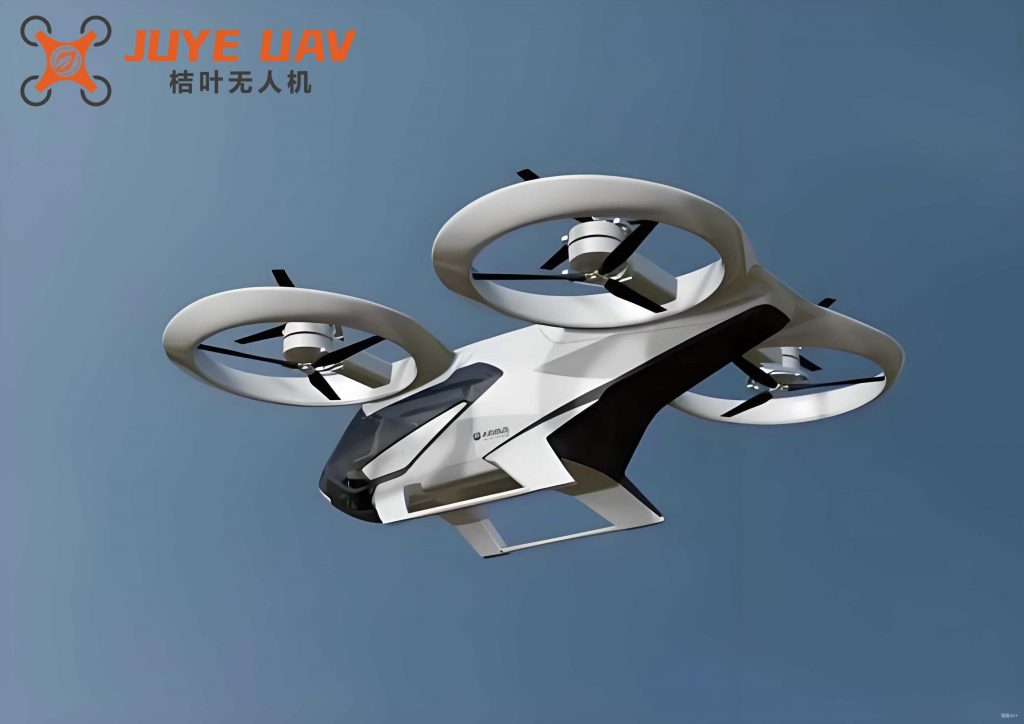
Initially, the primary role was reconnaissance and surveillance. The low cost and high availability of commercial quadrotor drone models allowed both sides to deploy them in vast numbers, providing real-time video feeds of enemy positions, movements, and fortifications directly to smartphone-equipped soldiers. This democratized aerial surveillance to an unprecedented degree. This evolved rapidly into artillery correction. A hovering quadrotor drone, acting as an airborne forward observer, can adjust fire for conventional artillery with such effectiveness that it approaches the accuracy of precision-guided munitions. The impact can be modeled by significantly reducing the Circular Error Probable (CEP):
$$ \text{CEP}_{\text{with drone}} = \frac{\text{CEP}_{\text{blind}}}{k_{\text{correction}}} $$
where $k_{\text{correction}} >> 1$ due to real-time trajectory feedback.
The most significant tactical innovation, however, has been the weaponization of the quadrotor drone. By equipping small quadrotor drones with explosive charges, grenades, or mortar rounds, soldiers created a ubiquitous, low-altitude, precision-delivery system for trench clearing, attacking light vehicles, and targeting individual soldiers. This has ushered in an era of pervasive overhead threat, fundamentally altering infantry tactics and necessitating constant vigilance against micro-air threats. The operational tempo and density of quadrotor drone use in such conflicts highlight a new reality: the modern battlefield is saturated with sensors and potential strike platforms at the smallest unit level.
Developing a Layered Counter-Quadrotor Drone Strategy
The widespread use of the quadrotor drone creates a complex defensive problem. Its small size, low radar cross-section (RCS), slow speed, and ability to fly nap-of-the-earth make traditional air defense systems largely ineffective or economically unsustainable. A successful counter-strategy must be multi-layered, integrating detection, tracking, identification, and defeat mechanisms across different domains. The following table outlines a spectrum of countermeasures, categorized by their primary method of engagement.
| Countermeasure Category | Exemplary Systems / Techniques | Mechanism of Action | Advantages | Limitations |
|---|---|---|---|---|
| Kinetic & Physical | Net guns, interceptor drones (e.g., “Hunter F700”), trained birds of prey, focused energy (lasers). | Physical capture or destruction of the airframe. | Positive confirmation of kill, no electromagnetic emission. | Short range, line-of-sight requirement, limited magazine depth against swarms. |
| Electronic Warfare (EW) | Radio Frequency (RF) jammers, GNSS (GPS) spoofers, protocol manipulation. | Disrupts command & control (C2) link and/or navigation signals. | Area denial, can affect multiple targets simultaneously, operates at a distance. | Risk of friendly spectrum interference; advanced drones may use frequency hopping or autonomous navigation. |
| Electro-Magnetic Effects | High-Power Microwave (HPM) systems (e.g., “Leonidas”). | Broadcast high-energy microwaves to fry electronic circuits (sensors, flight controllers). | Effective against drone swarms, “shotgun” effect, very fast engagement. | High power consumption, potential collateral damage to friendly electronics, limited by range and line-of-sight. |
| Cyber & Systemic | Signal intrusion, malware injection, supply chain interdiction. | Takes control of or corrupts the drone’s software. | Potential for covert and reusable effects. | Highly target-specific, requires deep technical intelligence. |
The optimal defense integrates these layers. Detection is the first and major challenge. A combined sensor suite using acoustics, low-frequency radar, and electro-optical/infrared (EO/IR) cameras is essential. The probability of detecting a small quadrotor drone $P_d$ with a sensor fusion system can be higher than with any single system:
$$ P_{d_{\text{fused}}} = 1 – \prod_{i=1}^{n} (1 – P_{d_i}) $$
where $P_{d_i}$ is the detection probability of sensor $i$. Once detected, the engagement calculus must consider cost and collateral damage. The cost-exchange ratio is critical: using a $500,000 missile to destroy a $2,000 quadrotor drone is unsustainable. This drives investment in low-cost effectors like EW and HPM. Furthermore, tactics must adapt. Troops must be trained in visual recognition, noise discipline, and the use of physical screening (nets, camouflage) to reduce the vulnerability of static positions to quadrotor drone observation and attack.
The Future Trajectory: Autonomy, Swarms, and Asymmetric Costs
The trajectory of military quadrotor drone development points towards greater autonomy, collaborative behavior, and cognitive electronic warfare. Future systems will rely less on continuous human piloting and more on onboard AI for navigation, target recognition, and even engagement decisions within defined rules. This will complicate electronic countermeasures, as the drone’s decision-making loop becomes internalized. The logical extension is the coordinated swarm—multiple, inexpensive quadrotor drones operating as a single intelligent system to overwhelm defenses through saturation. The effectiveness of a defensive system against a swarm can be modeled by its time-to-engage and capacity. A defender with $m$ launchers, each requiring time $t_{\text{engage}}$ to defeat one drone, faces a swarm of size $n$. The number of drones that penetrate, $n_{\text{pen}}$, before the swarm is neutralized is approximated by:
$$ n_{\text{pen}} \approx \max(0, \, n – m \cdot \frac{T}{t_{\text{engage}}}) $$
where $T$ is the total engagement window. This simple model shows how easily limited defenses can be saturated.
Another pivotal equation is the coverage area provided by a swarm for ISR. A group of $n$ quadrotor drones, each with a sensor sweep width $w_{\text{sensor}}$ and average speed $v_{\text{avg}}$, can surveil an area $A$ over time $t$ more effectively than a single platform:
$$ A_{\text{coverage}}(t) \approx n \cdot v_{\text{avg}} \cdot t \cdot w_{\text{sensor}} $$
This scalability is what makes the low-cost quadrotor drone swarm a disruptive concept for area denial and persistent surveillance.
Finally, the asymmetry in cost and procurement between advanced military-specific quadrotor drones and adapted commercial systems will continue to shape conflicts. While dedicated military quadrotor drones offer superior performance, security, and integration, their high cost constrains quantity. Adversaries may field ten or a hundred commercial-grade quadrotor drones for the price of one militarized system, accepting higher attrition rates in exchange for mass and psychological pressure. Therefore, counter-quadrotor drone strategies and our own development programs must rigorously account for this economic reality. The goal is not necessarily to field the most exquisite quadrotor drone, but to develop and counter systems that provide decisive tactical advantage at a sustainable cost, ensuring they can be deployed in sufficient numbers to be truly transformative rather than merely symbolic. The era of the tactical quadrotor drone is here, and its influence on the character of war will only deepen.