
In recent years, the evolution of global conflicts, particularly the situation in Ukraine, has prompted profound reflections on investment opportunities within the defense sector. From my analysis, one domain stands out remarkably: the military drone. The role of the military drone on the modern battlefield has become increasingly pivotal, to the extent that it not only influences which side dominates airspace but also profoundly shapes ground operations. The military drone, as a key component of unmanned systems, is redefining warfare paradigms, making it a critical area for investors to reevaluate. The prospects for the military drone market are vast, and the investment value of leading enterprises in this field warrants renewed scrutiny.
The unmanned combat system, built on an open architecture centered on network communications, offers advantages such as survivability, low cost, distributed functionality, and intelligent superiority. This system is characterized by a high proportion of unmanned platforms, following the principle of “unmanned platforms, manned systems.” An unmanned combat system typically integrates unmanned platforms, mission payloads, command and control systems, and a comprehensive information network spanning air, space, and ground. The unmanned platform is its core, and based on operational domains, these systems can be categorized into unmanned aerial systems (UAS), unmanned ground platforms, and unmanned maritime systems. Among these, the military drone is the most prominent and rapidly evolving segment.
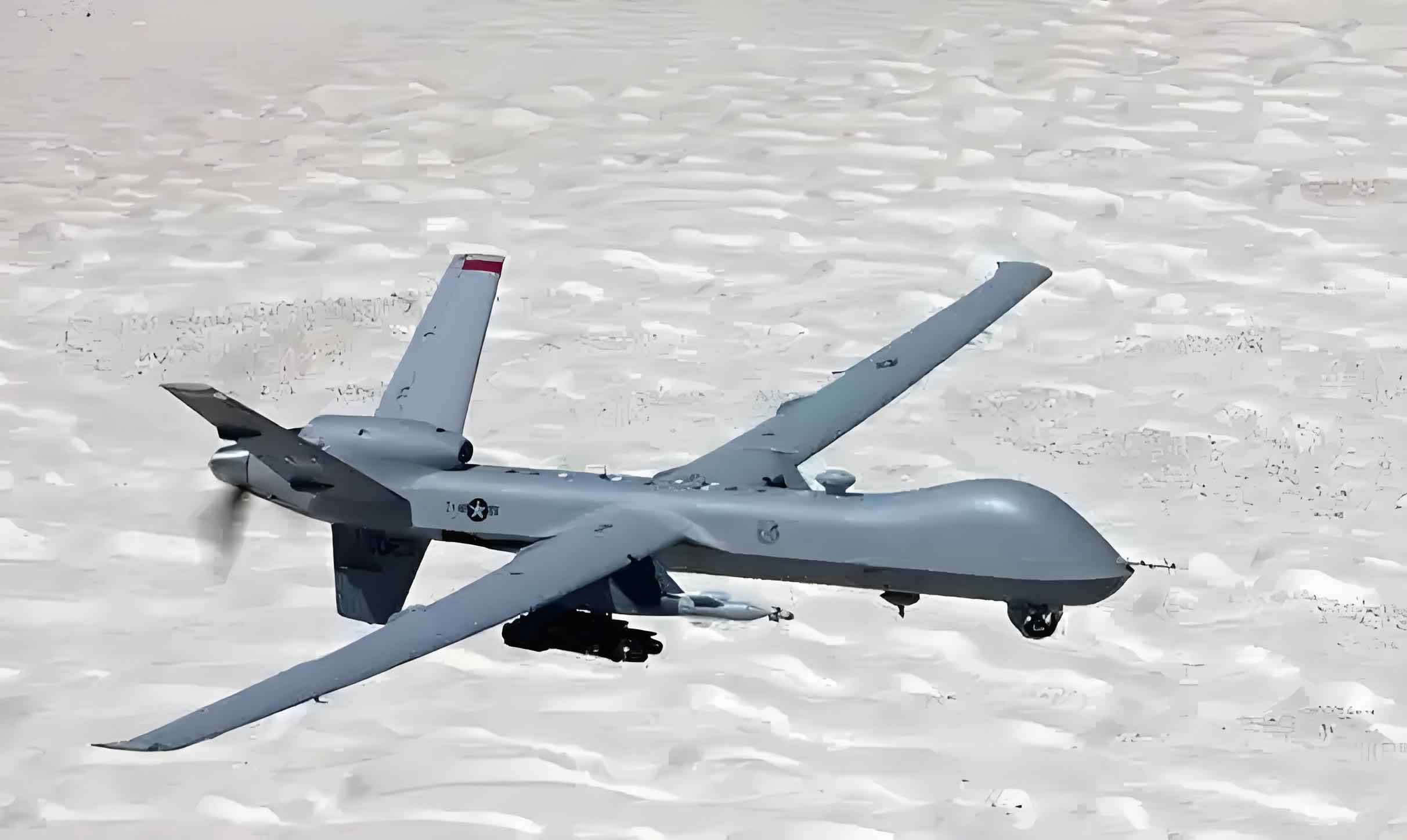
From an investment standpoint, the market space for military drones is exceptionally broad. According to data from MarketsandMarkets, the global military drone market was valued at approximately $12.1 billion in 2018. It is projected to reach $26.8 billion by 2025, with a compound annual growth rate (CAGR) of 12.00% from 2018 to 2025. This growth can be expressed using the CAGR formula:
$$ CAGR = \left( \frac{FV}{PV} \right)^{\frac{1}{n}} – 1 $$
Where \( FV \) is the future value ($26.8 billion), \( PV \) is the present value ($12.1 billion), and \( n \) is the number of years (7). Plugging in the values:
$$ CAGR = \left( \frac{26.8}{12.1} \right)^{\frac{1}{7}} – 1 \approx 0.12 \text{ or } 12.00\% $$
This robust growth is driven by increasing defense budgets, technological advancements, and the demonstrated effectiveness of military drones in conflicts. For instance, the United States military has been a major investor in this domain. Over the period from 2010 to 2020, the U.S. allocated over $34.8 billion to drone procurement, averaging more than $3 billion annually (around $20 billion in RMB terms). Drone-related budgets accounted for an average of 6.19% of the total aviation equipment budget during this time. Currently, the U.S. military operates a large fleet of over 1,040 large drones (excluding micro-drones), with the Army and Air Force being the primary users. This includes models like the MQ-9 Reaper (284 units) and MQ-1 Predator/Gray Eagle (204 units), which are benchmarks for global military drone capabilities.
In contrast, other nations, including China, have fewer operational large military drones, numbering only in the dozens. This disparity highlights a significant gap but also presents a catch-up opportunity through late-mover advantages. The demand for military drones is expanding beyond reconnaissance to include strike capabilities, with integrated reconnaissance-strike drones becoming a major trend. The following table summarizes the global military drone market projection:
| Year | Market Size (USD Billion) | CAGR Period | Growth Rate |
|---|---|---|---|
| 2018 | 12.1 | 2018-2025 | 12.00% |
| 2025 (Projected) | 26.8 | – | – |
Another critical aspect is the technological evolution of military drones. These systems are becoming more sophisticated, with enhancements in endurance, payload capacity, stealth, and autonomy. The integration of artificial intelligence (AI) and machine learning enables military drones to perform complex missions, such as autonomous swarming, target identification, and real-time decision-making. The performance of a military drone in terms of range and payload can be modeled using equations like the Breguet range equation for endurance:
$$ R = \frac{V}{C} \cdot \frac{L}{D} \cdot \ln \left( \frac{W_{initial}}{W_{final}} \right) $$
Where \( R \) is range, \( V \) is velocity, \( C \) is specific fuel consumption, \( L/D \) is lift-to-drag ratio, and \( W_{initial}/W_{final} \) is the weight ratio. For military drones, optimizing these parameters is key to achieving long-endurance missions, which are crucial for surveillance and strike operations.
When evaluating investment targets in the military drone sector, several factors come into play. Leading companies often have advantages in research and development (R&D), product portfolios, and integration capabilities. A core competitive edge lies in the integrated design of drones and munitions, often referred to as “aircraft-missile integration.” This allows military drones to carry specialized missiles, enhancing their combat effectiveness. For example, some systems are equipped with precision-guided missiles that can neutralize targets like vehicle-borne improvised explosive devices (VBIEDs) with high accuracy, as seen in various conflict zones. The reliability and precision of such military drone systems have been validated in real combat, boosting their appeal to defense forces worldwide.
Financially, companies in the military drone industry exhibit varying performance metrics. Those with strong R&D and diversified product lines tend to maintain higher gross margins. Below is a comparative table of hypothetical financial indicators for military drone companies (anonymized to avoid referencing specific entities):
| Company Type | Revenue Growth (Annual) | Gross Margin | R&D Investment (% of Revenue) |
|---|---|---|---|
| Integrated Drone-Missile Developer | 15-20% | 35-40% | 10-15% |
| Pure-Play Drone Manufacturer | 10-15% | 25-30% | 8-12% |
| New Market Entrant | 5-10% | 20-25% | 5-10% |
The integrated developer, focusing on military drone and missile synergy, often commands premium pricing and loyalty from clients, reflected in superior margins. This aligns with the trend toward system-of-systems approaches in modern defense procurement.
From a product perspective, successful military drone manufacturers offer a layered portfolio covering high, medium, and low-altitude operations, as well as long, medium, and short-range capabilities. This ensures they can address diverse mission requirements, from strategic reconnaissance to tactical strikes. Innovation in this space includes developments in stealth military drones, tilt-rotor unmanned systems, and low-cost munitions. For instance, funding initiatives aimed at new-concept drone development and affordable airborne weapons can significantly enhance a company’s competitiveness. The return on investment (ROI) for such projects can be estimated using net present value (NPV) calculations:
$$ NPV = \sum_{t=0}^{T} \frac{C_t}{(1 + r)^t} $$
Where \( C_t \) is the net cash flow at time \( t \), \( r \) is the discount rate, and \( T \) is the project horizon. Positive NPV indicates value creation, which is vital for justifying R&D expenditures in military drone technologies.
Operational performance of military drones also hinges on network-centric capabilities. The effectiveness of a drone swarm, for example, can be analyzed using models from cooperative control theory. Consider a system of \( n \) military drones coordinating to cover an area \( A \). The coverage efficiency \( E \) might be expressed as:
$$ E = \frac{A_{covered}}{A_{total}} \cdot \frac{1}{t_{response}} $$
Where \( A_{covered} \) is the area surveilled by drones, \( A_{total} \) is the target area, and \( t_{response} \) is the response time. Minimizing \( t_{response} \) through better communication links is a key focus area, driving investments in drone command-and-control infrastructure.
Moreover, the lifecycle cost of a military drone system is a critical consideration for buyers. The total cost of ownership (TCO) includes acquisition, operation, maintenance, and training expenses. A simplified TCO model for a fleet of military drones over \( N \) years is:
$$ TCO = C_{acquisition} + \sum_{i=1}^{N} \left( C_{operation,i} + C_{maintenance,i} \right) $$
Lowering TCO through modular designs and commonality across platforms is a competitive strategy for manufacturers. This makes military drones more accessible to a broader range of defense budgets, fueling market expansion.
In terms of market dynamics, the military drone industry is influenced by geopolitical factors, export controls, and technological spillovers from commercial sectors. The dual-use nature of drone technology—where innovations in civilian applications can enhance military capabilities—adds another layer of investment appeal. However, regulatory risks, such as restrictions on drone exports, must be factored into investment decisions. A risk-adjusted valuation model might incorporate a discount rate that reflects these uncertainties:
$$ r_{adjusted} = r_{risk-free} + \beta \cdot (r_{market} – r_{risk-free}) + \alpha_{regulatory} $$
Here, \( \alpha_{regulatory} \) represents an additional premium for regulatory risks specific to the military drone sector.
Looking ahead, the trajectory for military drones points toward greater autonomy, swarming capabilities, and integration with other unmanned systems. Projects focused on next-generation military drones, such as stealth variants or hybrid vertical take-off and landing (VTOL) models, are likely to yield high returns. Additionally, the shift toward asymmetrical warfare and counter-insurgency operations underscores the demand for versatile, cost-effective military drone solutions. The following table outlines key growth drivers and challenges:
| Growth Drivers | Challenges |
|---|---|
| Increasing defense budgets globally | Export regulations and geopolitical tensions |
| Proven combat efficacy of military drones | Cybersecurity vulnerabilities |
| Technological advancements in AI and sensors | High R&D costs and long development cycles |
| Rising demand for ISR (Intelligence, Surveillance, Reconnaissance) | Ethical and legal concerns over autonomous weapons |
From an investment perspective, companies that navigate these challenges while leveraging drivers can capture significant market share. Financial metrics such as earnings before interest and taxes (EBIT) margins and return on invested capital (ROIC) are useful for evaluation. For a military drone firm, ROIC can be calculated as:
$$ ROIC = \frac{Net Operating Profit After Tax (NOPAT)}{Invested Capital} $$
A high ROIC indicates efficient use of capital in developing and deploying military drone systems.
In conclusion, the military drone sector represents a compelling investment opportunity driven by robust market growth, technological innovation, and shifting defense priorities. The military drone is no longer a supplementary asset but a cornerstone of modern military strategy. Investors should focus on entities with strong integrated capabilities, diversified product portfolios, and sound financials. While risks exist, the long-term outlook for military drones remains positive, underpinned by their expanding roles in security and defense. As conflicts evolve, the military drone will continue to be a decisive factor, making it a strategic holding for those looking to capitalize on defense industry trends. I believe that a disciplined approach, combining fundamental analysis with an understanding of technological trends, can unlock substantial value in this dynamic segment of the military drone market.