
In my exploration of modern aerospace technology, I find that unmanned aerial vehicles, commonly referred to as military drones, have revolutionized contemporary warfare and defense strategies. These systems, which operate without an onboard human pilot, leverage remote control or pre-programmed autonomous protocols to execute a wide array of missions. The historical genesis of military drones dates back to the early 20th century, with pioneering developments during World War I. Today, the proliferation of military drones is a testament to advancements in computing, materials science, and telecommunications. Their inherent advantages—such as eliminating risk to human life, offering cost-effective solutions, enhancing operational flexibility, and demonstrating robust survivability—have cemented their role as indispensable assets in both military and emerging civilian domains. This article delves deeply into the multifaceted world of military drones, examining their classification, global development status, and future trends, with a particular emphasis on the repeated and critical importance of military drone technology in shaping future combat and surveillance paradigms.
Taxonomical Classification of Military Drones
From my perspective, categorizing military drones is essential for understanding their operational roles and technological requirements. These systems are primarily segmented based on mission profiles, with further subdivisions considering altitude, endurance, and size. The core dichotomy lies between reconnaissance/surveillance platforms and combat-oriented systems. However, the ecosystem of military drones is far more nuanced. I have constructed the following table to encapsulate the primary classifications, which highlights the diversity and specialization within the field of military drone development.
| Primary Category | Sub-Category | Key Mission | Typical Characteristics | Exemplary Models (Conceptual) |
|---|---|---|---|---|
| Reconnaissance & Surveillance Drones | Strategic High-Altitude Long Endurance (HALE) | Wide-area, persistent ISR (Intelligence, Surveillance, Reconnaissance) | Altitude > 15,000 m, Endurance > 24 hours, Large wingspan | Global Hawk analogue |
| Tactical Medium-Altitude Long Endurance (MALE) | Theater-level surveillance, target acquisition | Altitude 5,000-15,000 m, Endurance 20-40 hours, Multi-sensor payload | Predator/Reaper analogue | |
| Small/Mini/Micro UAVs | Close-range reconnaissance, squad-level support | Portable, low altitude, short endurance (hours), low acoustic/visual signature | Hand-launched systems | |
| Combat & Strike Drones | Unmanned Combat Aerial Vehicles (UCAVs) | Air-to-ground strike, suppression of enemy air defenses (SEAD) | Weaponized, stealth features, high maneuverability | Loyal Wingman concepts, attritable platforms |
| Loitering Munitions (Kamikaze Drones) | Precision strike against time-sensitive targets | Small to medium size, explosive payload, one-way mission profile | Switchblade, Harpy analogues | |
| Support & Specialized Drones | Electronic Warfare (EW) Drones | Jamming, signals intelligence (SIGINT), cyber operations | Equipped with EW payloads, often modular | Specialized platforms for spectrum dominance |
| Logistics & Resupply Drones | Cargo transport, medical supply delivery | Heavy-lift capability, VTOL (Vertical Take-Off and Landing) often preferred | Large multi-rotor or fixed-wing hybrids |
The evolution of the military drone from a simple reconnaissance tool to a complex, multi-role platform is remarkable. Each category of military drone addresses specific operational gaps, and their synergistic use creates a powerful, layered network of capabilities on the battlefield.
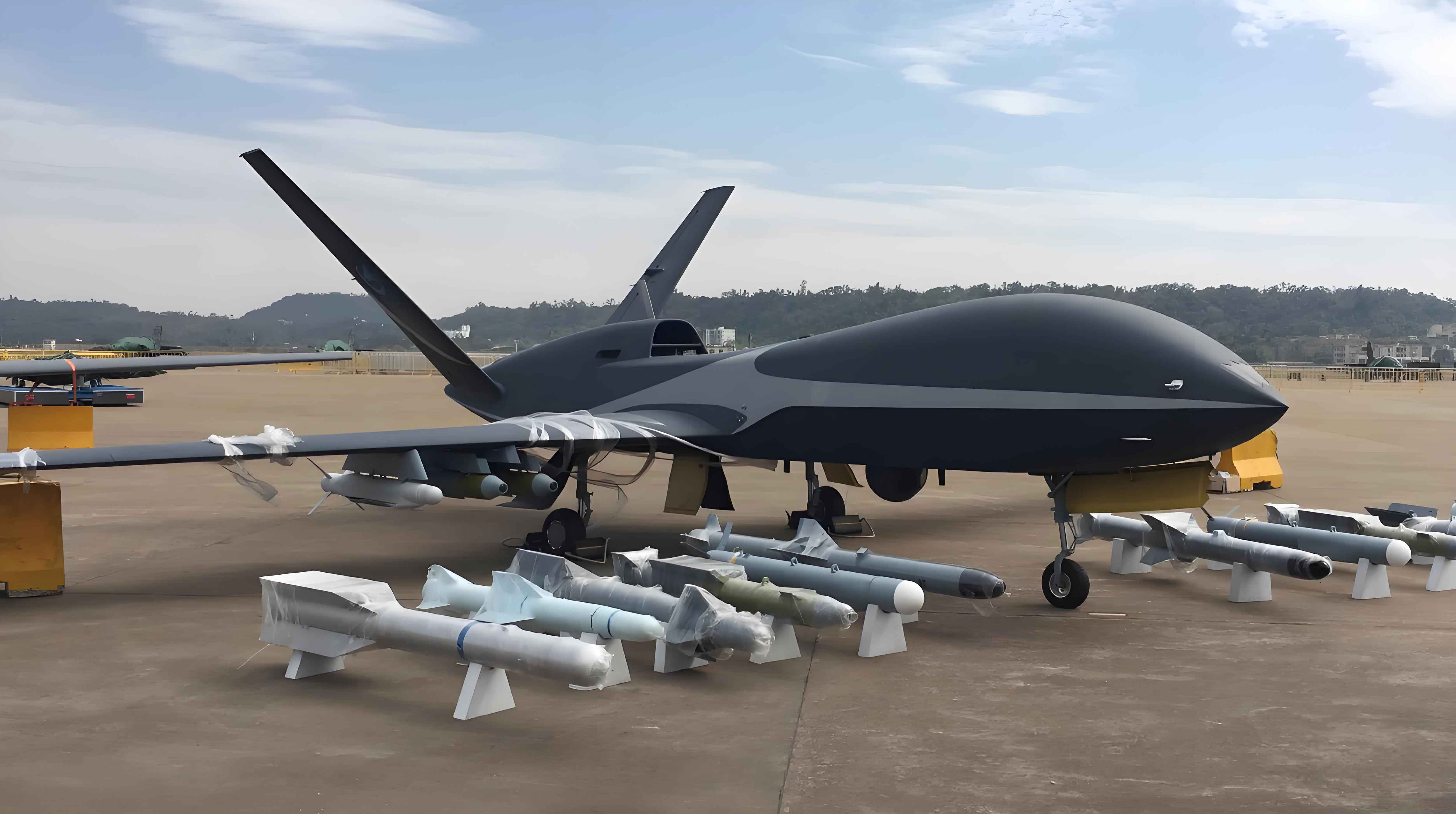
Global Development Landscape of Military Drones
In my analysis, the global landscape for military drone development is characterized by intense competition and rapid innovation. The technological lead, once held by a few nations, is gradually diffusing, though significant disparities remain. I will dissect the status across key geopolitical blocs, emphasizing the strategic focus areas for each. The following table provides a comparative snapshot of the current state of military drone capabilities among leading and emerging actors.
| Country/Region | Technology Tier | Key Strengths & Focus Areas | Notable Platforms (Representative) | Export Market Presence |
|---|---|---|---|---|
| United States | Leader | HALE/MALE drones, stealth UCAVs, swarm technology, AI integration | RQ-4 Global Hawk, MQ-9 Reaper, X-47B, Valkyrie | Restricted, primarily to close allies |
| Israel | Leader | Tactical UAVs, UCAVs, loitering munitions, robust C4I systems | Heron, Harop, Hermes 900 | Very strong, one of the world’s largest exporters |
| China | Rapid Ascendant | Diverse portfolio from HALE to combat drones, mass production capacity | GJ-11 (Sharp Sword), Wing Loong series, CH series | Growing significantly, offering cost-effective alternatives |
| European Union (Collective) | Advanced (but fragmented) | MALE drones, naval UAVs, collaborative programs (e.g., FCAS) | Eurodrone (in development), Neuron, nEUROn | Moderate, often through consortia |
| Turkey | Rising Power | Armed tactical drones, swarm systems, indigenous development | Bayraktar TB2, Akıncı, Kızılelma | Expanding rapidly, especially in Africa and Asia |
| Russia | Developer | Heavy strike drones, long-range systems, electronic warfare variants | Orion, Okhotnik, Kub-BLA | Limited, primarily to allied states |
| Iran | Niche Developer | Low-cost asymmetric drones, loitering munitions, swarm tactics | Shahed series, Mohajer series | Growing, focusing on proxy groups and sympathetic states |
My observation is that the United States continues to push the envelope in high-end, technologically sophisticated military drone concepts, particularly in autonomy and networked warfare. Israel maintains its edge in reliable, battle-proven systems and total solution packages. China’s systematic and large-scale investment has yielded a comprehensive family of military drones that challenge established norms. Europe’s challenge lies in harmonizing national interests to achieve scale, while regional powers like Turkey have demonstrated the strategic impact of determined indigenous military drone programs. The proliferation of military drone technology is undeniable, lowering the barrier to entry for advanced aerial reconnaissance and strike capabilities.
Mathematical Modeling and Key Performance Parameters
To quantitatively assess military drone capabilities, I often employ fundamental mathematical models. These formulas help in understanding the trade-offs in design and mission planning for any military drone. Key performance parameters include endurance, range, stealth characteristics, and payload capacity.
Endurance and Loiter Time: The endurance (E) of a propeller-driven military drone, crucial for surveillance missions, can be approximated using the Breguet endurance equation:
$$E = \frac{\eta}{c} \frac{L}{D} \ln \left( \frac{W_{initial}}{W_{final}} \right)$$
where:
- $\eta$ is the propeller efficiency,
- $c$ is the specific fuel consumption of the engine,
- $L/D$ is the lift-to-drag ratio (a measure of aerodynamic efficiency),
- $W_{initial}$ and $W_{final}$ are the initial and final weights of the military drone, respectively.
This equation underscores why high-altitude, long-endurance (HALE) military drones feature high-aspect-ratio wings (high L/D) and efficient propulsion systems.
Radar Cross-Section (RCS) and Stealth: The detectability of a military drone by radar is governed by its Radar Cross-Section (σ). The radar range equation shows the received power $P_r$:
$$P_r = \frac{P_t G_t G_r \lambda^2 \sigma}{(4\pi)^3 R^4}$$
where $P_t$ is transmitted power, $G_t$ and $G_r$ are antenna gains, λ is wavelength, and R is range. To achieve stealth, a military drone designer aims to minimize σ through shaping, materials, and coating. A simplified model for RCS reduction from shaping can be:
$$\sigma \propto \frac{A^2}{\lambda^2} f(\theta)$$
where A is a characteristic area and $f(\theta)$ is a function of aspect angle. This drives the faceted, smooth contours of modern stealth military drones like the RQ-170 or GJ-11.
Payload-Range Trade-off: The fundamental range (R) equation, derived from the Breguet range equation, highlights the trade-off for a military drone:
$$R = \frac{V}{c} \frac{L}{D} \ln \left( \frac{W_{takeoff}}{W_{takeoff} – W_{fuel}} \right)$$
However, $W_{takeoff} = W_{empty} + W_{payload} + W_{fuel}$. For a given design, increasing $W_{payload}$ (sensors, weapons) often requires sacrificing fuel weight ($W_{fuel}$), thus reducing range or endurance, unless overall efficiency is improved. This is a central challenge in military drone design.
Future Trajectories and Technological Frontiers
Based on current trends and research directions, I foresee several interconnected trajectories that will define the next generation of military drones. The convergence of artificial intelligence, advanced materials, and networked systems is poised to unleash transformative capabilities.
1. Pervasive Stealth and Low Observability
The quest for invisibility will intensify. Future military drones will incorporate multi-spectral stealth, aiming to reduce signatures not just in radar (RF) bands, but also in infrared (IR), visual, and acoustic spectra. This involves advanced metamaterials, passive and active cooling systems, and innovative propulsion. The effectiveness of an IR suppression system on a military drone engine can be modeled by the reduction in apparent temperature contrast (ΔT):
$$\Delta T_{apparent} = \varepsilon \cdot (T_{surface} – T_{background}) \cdot e^{-\tau}$$
where ε is emissivity, and τ is the optical depth of any shielding plume or material. The goal is to drive $\Delta T_{apparent}$ toward zero. Furthermore, radar-absorbent structures (RAS) and frequency-selective surfaces (FSS) will be integral to the airframe, making the military drone a truly “quiet” player in contested airspace.
2. The Ascent of Autonomous Swarms
The future of military drone operations lies not in individual platforms, but in collaborative, intelligent swarms. I envision swarms of hundreds of small, attritable military drones operating as a cohesive unit. The control algorithms for such swarms often draw from biological models like flocking. A simplified rule for an individual agent (drone) in a swarm to maintain cohesion while avoiding collisions can be expressed as a velocity update:
$$\vec{v}_i(t+1) = \vec{v}_i(t) + \alpha \sum_{j \in N_i} (\vec{v}_j(t) – \vec{v}_i(t)) + \beta \sum_{j \in N_i} \frac{(\vec{p}_j(t) – \vec{p}_i(t))}{||\vec{p}_j(t) – \vec{p}_i(t)||^2} + \gamma (\vec{p}_{goal} – \vec{p}_i(t))$$
where $\vec{v}_i$ and $\vec{p}_i$ are velocity and position of drone i, $N_i$ is its neighborhood, and α, β, γ are weights for alignment, separation/cohesion, and goal attraction, respectively. This decentralized intelligence will allow military drone swarms to saturate defenses, perform complex ISR patterns, and execute distributed strikes with unprecedented resilience.
3. Hyper-Persistence: Nuclear and Solar Power
Breaking the endurance barrier is a key goal. While liquid hydrogen and advanced biofuels are options, two frontier areas are solar-powered high-altitude pseudo-satellites (HAPS) and micronuclear propulsion. A solar-powered military drone must balance energy harvested versus consumed. The power available from solar cells ($P_{solar}$) on a wing of area $S_{wing}$ at altitude h and latitude φ is time-dependent:
$$P_{solar}(t) = I_{sun} \cdot \eta_{cell} \cdot S_{wing} \cdot \cos(\theta_{incident}(t, h, \phi)) \cdot T_{atm}(h)$$
where $I_{sun}$ is solar constant, $\eta_{cell}$ is cell efficiency, $\theta_{incident}$ is the solar incidence angle, and $T_{atm}$ is atmospheric transmittance. For year-round persistence at high latitudes, energy storage (batteries, fuel cells) for night operation becomes critical. Meanwhile, compact radioisotope or fission reactors could theoretically power a military drone for months or years, revolutionizing persistent presence.
4. Cognitive AI and Human-Machine Teaming
The onboard AI of a future military drone will evolve from following pre-set rules to exhibiting cognitive functions—perception, reasoning, learning, and decision-making in dynamic environments. This can be framed as a Partially Observable Markov Decision Process (POMDP), where the drone, in state s, takes action a based on observation o to maximize a reward function R over time, despite uncertainty. The policy π the drone learns can be represented as:
$$\pi^* = \arg\max_{\pi} \mathbb{E} \left[ \sum_{t=0}^{\infty} \gamma^t R(s_t, a_t) \right]$$
where γ is a discount factor. Such AI will enable a military drone to independently manage sensor fusion, target identification, threat assessment, and mission re-tasking, operating as a true “loyal wingman” in tandem with manned aircraft. The human operator transitions from a pilot to a mission commander overseeing multiple intelligent military drone assets.
5. Miniaturization and Micro-System Integration
The trend towards smaller, more capable military drones will continue, driven by Micro-Electro-Mechanical Systems (MEMS) and nanotechnology. Payloads like synthetic aperture radar (SAR) are undergoing radical miniaturization. The theoretical resolution δ of a SAR system on a small military drone is given by:
$$\delta_{azimuth} \approx \frac{D}{2}$$
where D is the antenna length along the flight path, and
$$\delta_{range} \approx \frac{c}{2B}$$
where c is the speed of light and B is the signal bandwidth. Advanced digital beamforming and metamaterial antennas are enabling high-resolution SAR from physically small apertures, allowing even mini military drones to carry all-weather, day-night imaging sensors. Similarly, micro-spectrometers and hyperspectral imagers are shrinking, providing detailed chemical analysis from a tiny military drone platform.
| Trend Dimension | Technological Enablers | Expected Impact on Military Drone Operations | Potential Timeline (Estimated) |
|---|---|---|---|
| Advanced Stealth | Metamaterials, AI-driven adaptive camouflage, plasmonic coatings | Near-invisible penetration of advanced integrated air defense systems (IADS) | 2025-2035 (incremental advances) |
| Autonomous Swarms | Distributed AI, mesh communications, lightweight agile platforms | Overwhelming defenses, resilient distributed sensing & attack, cost-exchange asymmetry | Now-2030 (operational deployment) |
| Extreme Endurance | High-efficiency solar cells, advanced energy storage, micronuclear reactors | Months-long continuous station-keeping for ISR or communications relay | Solar HAPS: Now-2030; Nuclear: post-2035 |
| Cognitive AI | Neuromorphic computing, explainable AI (XAI), reinforcement learning | Fully autonomous complex mission execution in denied environments with minimal human input | 2030-2040 |
| Payload Miniaturization | MEMS, nanophotonics, quantum sensors | Strategic-grade sensing capabilities deployed on tactical or even micro military drones | Ongoing, rapid pace |
Strategic Implications and Concluding Perspectives
In my final analysis, the relentless advancement of military drone technology is reshaping the very fabric of warfare and national security. The proliferation of capable and relatively inexpensive military drones is democratizing air power, allowing state and non-state actors to project force and gather intelligence in ways previously reserved for major powers. This necessitates a fundamental rethinking of air defense architectures, which must now contend with low-cost, numerous, and intelligent military drone swarms rather than just a few high-value platforms. The ethical and legal frameworks surrounding the autonomous use of force by a military drone are still evolving and represent a critical area for international discourse.
From a technical standpoint, the future military drone will be a node in a larger “combat cloud” – a networked ecosystem of satellites, manned aircraft, ground stations, and other drones, sharing data and tasks seamlessly. Interoperability and secure, jam-resistant communications (like tactical data links and laser comms) will be as vital as the platform’s physical attributes. The formula for future success in this domain lies not just in building a better individual military drone, but in mastering the system-of-systems integration and the algorithms that govern their collective behavior.
To conclude, my examination affirms that the era of the military drone is not merely an adjunct to traditional aviation but is rapidly becoming its centerpiece for many missions. The trajectories toward greater autonomy, persistence, stealth, and miniaturization are clear and accelerating. As these trends converge, the strategic, tactical, and even political impact of the humble military drone will only magnify, solidifying its position as one of the most transformative and pivotal technologies of 21st-century defense and security. The ongoing evolution of the military drone demands continuous attention from strategists, engineers, and policymakers alike.