
In my analysis of contemporary warfare, I have witnessed a profound transformation driven by rapid technological advancement. The dawn of the new century has ushered in significant revolutions within the military domain, largely fueled by scientific progress. In this future-oriented, high-tech combat environment, military equipment is increasingly steering towards intelligent and unmanned systems. Among these, a class of intelligent weaponry designed to execute predetermined tactical or strategic missions, with core reliance on smart information processing and communication technologies, has risen to prominence. The unmanned aerial vehicle (UAV), or as it is more commonly termed in operational contexts, the military drone, has emerged as a decisive force on the modern high-tech battlefield. A military drone is essentially an unpiloted aircraft, controlled either via remote radio signals or autonomous pre-programmed systems. Its successful development and battlefield deployment have heralded a new chapter in warfare characterized by long-range, intelligent, and information-centric “non-contact engagement.”
Reflecting on various strategic assessments, one compelling perspective posits that if the tank was the core weapon of 20th-century ground warfare, the 21st century will likely belong to military robots. As the aerial representative of this robotic force, the military drone is the fastest-growing segment within the family of military robots. The advantages of deploying military drones are manifold: they offer lower costs, eliminate platform losses and personnel casualties, provide high mobility, support diverse take-off and landing methods, and are reusable. Globally, numerous nations have integrated military drones into roles spanning reconnaissance, surveillance, communications relay, electronic warfare, fire guidance, battle damage assessment, ground and maritime attack, target simulation, and early warning. Current estimates suggest that 32 countries have developed over 50 distinct types of drones, with more than 50 nations involved in their production. In my examination, I will delineate the current state of military drone development in key regions—the United States, the European Union, and Israel—and subsequently project future trajectories.
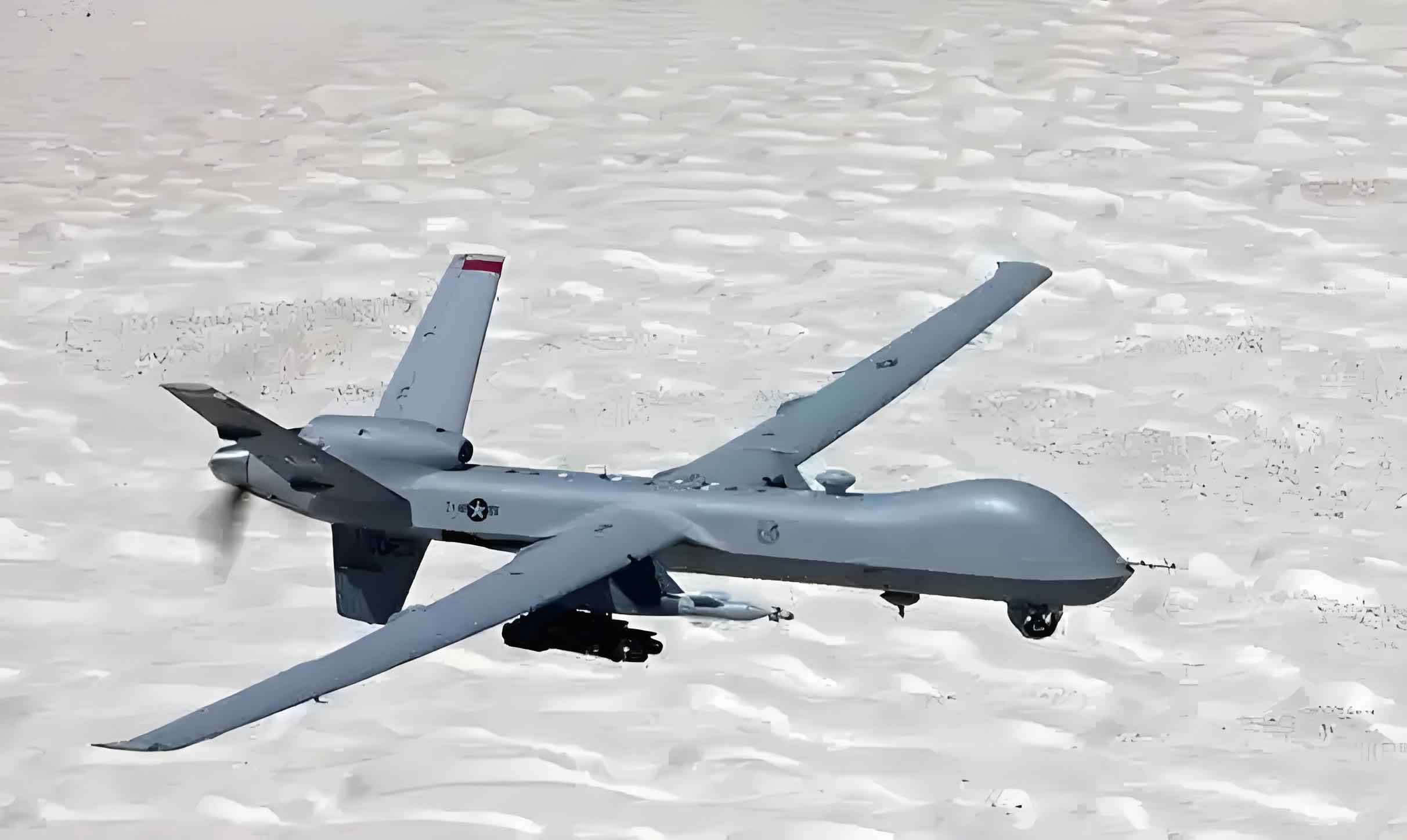
The strategic importance of the military drone cannot be overstated. As I delve into the capabilities of these systems, it becomes clear that they are not merely tools but pivotal elements in shaping modern combat doctrines. The integration of advanced sensors, artificial intelligence, and networked communication has elevated the military drone from a simple reconnaissance asset to a multifunctional, strategic platform. This evolution is central to understanding the current global dynamics in defense technology.
Current State of Global Military Drone Development
My research focuses on the technological and operational advancements in military drones across leading nations. The development pace is uneven, with certain countries establishing significant leads in capability and deployment.
United States Military Drone Ecosystem
As the world’s preeminent military power, the United States places the highest priority on unmanned combat systems. My observation aligns with historical policy shifts; as early as 2000, advisory bodies recommended that drones constitute one-third of the U.S. military aviation inventory by 2010. The commitment continues, exemplified by the Department of Defense’s “Unmanned Systems Integrated Roadmap: 2013-2038.” Over the next decade, the U.S. military has worked on nearly 60 different drone models, with iconic systems like the “Predator” and “Global Hawk” leading the way. The sophistication of American military drone technology sets a benchmark for others.
The RQ-1/MQ-1 Predator series, developed by General Atomics, is a cornerstone of the Medium-Altitude Long-Endurance (MALE) military drone category. Its evolution from a pure reconnaissance asset (RQ-1A) to an armed, multi-role platform (MQ-1B) signifies a major shift towards “persistent hunter-killer” capabilities. The engagement where an MQ-1B launched a Hellfire missile to destroy a Taliban tank marked the operational debut of armed military drones. Furthermore, the pivotal strike in 2001 demonstrated the potent role of integrated reconnaissance-strike military drones in counter-terrorism. The performance parameters of such systems are critical. For instance, endurance can be modeled by a simplified formula considering fuel capacity and consumption rate:
$$T_{endurance} = \frac{V_{fuel}}{\dot{m}_{fuel}}$$
Where \(T_{endurance}\) is flight time, \(V_{fuel}\) is fuel volume, and \(\dot{m}_{fuel}\) is the fuel mass flow rate. For the Predator, with approximately 110 liters of fuel and a specific consumption profile, achieving 40-hour loiter times is a key performance metric.
The RQ-4 Global Hawk, a High-Altitude Long-Endurance (HALE) military drone from Northrop Grumman, represents the pinnacle of strategic reconnaissance. Operating at altitudes exceeding 20,000 meters, it largely negates threats from traditional ground-based air defenses. Its intercontinental range, enabled by massive fuel capacity, reduces reliance on forward bases. The autonomy of the Global Hawk is remarkable, relying on integrated GPS and inertial navigation systems for complete mission autonomy from take-off to landing. The sensor suite, including Synthetic Aperture Radar (SAR), electro-optical, and infrared imagers, provides all-weather, day-night intelligence. The data link and communication systems ensure seamless integration into the broader intelligence network. The operational history, with thousands of flight hours, underscores its reliability. The sensor coverage area, often a function of altitude and sensor characteristics, can be approximated for a SAR system by:
$$A_{coverage} \propto h \cdot \theta_{swath}$$
where \(h\) is altitude and \(\theta_{swath}\) is the radar swath angle.
Naval aviation is also undergoing a transformation with the military drone. The X-47B Unmanned Combat Air System (UCAS) is a testament to this, being the first drone designed for carrier-based operations. Its successful take-off and landing on a carrier in 2013 marked a historic milestone. With stealth characteristics, an operational range nearly double that of contemporary manned fighters, and aerial refueling capability, the X-47B aims to extend naval power projection and counter anti-access/area-denial (A2/AD) threats. The range extension with aerial refueling can be conceptually expressed as:
$$R_{total} = R_{initial} + n \cdot \Delta R_{refuel}$$
where \(R_{initial}\) is the baseline range, \(n\) is the number of refuelings, and \(\Delta R_{refuel}\) is the range increment per refueling.
The following table summarizes key technical parameters of prominent U.S. military drones, based on my synthesis of open-source data:
| Drone Model | Category | Primary Role | Endurance (hours) | Max Altitude (feet) | Notable Features |
|---|---|---|---|---|---|
| MQ-1 Predator | MALE | Reconnaissance, Strike | ~40 | ~26,000 | Armed with Hellfire missiles |
| RQ-4 Global Hawk | HALE | Strategic Reconnaissance | ~42 | >60,000 | Intercontinental range, high-altitude operation |
| X-47B | UCAS | Carrier-based Strike | ~6 (unrefueled) | ~40,000 | Stealth, autonomous carrier operations |
European Union Military Drone Initiatives
In Europe, collective and national programs are advancing military drone capabilities. The United Kingdom is a leading force, with programs like the Joint Unmanned Experimentation Programme (JUEP) and the Watchkeeper tactical system emphasizing interoperability within NATO. The unveiling of the “Taranis” demonstrator in 2010 revealed European ambitions in high-end, stealthy combat drones. Taranis boasts low-observable features, internal weapon bays, and advanced autonomous systems, indicating a path towards a capable unmanned combat air vehicle (UCAV). Its design prioritizes survivability and deep-strike capability, potentially with intercontinental reach.
France, leading the multinational “Neuron” project, has focused on developing a stealthy, combat-proven UCAV technology demonstrator. Neuron incorporates advanced automatic fault tolerance, neural networks, and artificial intelligence, enabling it to autonomously detect, identify, and request authorization to engage targets. A significant achievement is its exploration of cooperative flight, addressing key challenges in multi-drone control, data fusion, and tactical coordination. The cooperative control of multiple military drones can be modeled using systems of equations. For instance, maintaining formation during a mission involves controlling relative positions. A simplified linear model for two drones could be:
$$ \dot{x}_1 = A x_1 + B u_1 $$
$$ \dot{x}_2 = A x_2 + B u_2 + K (x_1 – x_2 – d) $$
where \(x_i\) is the state vector (position, velocity) of drone \(i\), \(u_i\) is its control input, \(A\) and \(B\) are system matrices, \(K\) is a coupling gain, and \(d\) is the desired separation vector.
Other European nations contribute with specialized platforms. Germany’s RT900 “Tucan” and Italy’s “Mirach” series represent developments in smaller, tactical military drone systems. The European approach often centers on consortium-based projects to pool resources and maintain technological competitiveness. The table below provides a snapshot of key European military drone projects:
| Drone / Project | Lead Country/Consortium | Type | Key Technological Focus |
|---|---|---|---|
| Taranis | United Kingdom | UCAV Demonstrator | Stealth, Autonomy, Deep Strike |
| Neuron | France (with EU partners) | UCAV Demonstrator | Stealth, AI, Cooperative Combat |
| Watchkeeper | United Kingdom | Tactical UAV System | NATO Interoperability, Persistent Surveillance |
Israel’s Military Drone Prowess
Israel stands as a world leader in military drone technology and operational doctrine, second only to the United States. My assessment of its historical use in conflicts shows that Israel pioneered the integration of military drones to support ground maneuvers. It possesses advanced large-scale, long-endurance systems like the “Heron TP” (Eitan), which is comparable in wingspan to a commercial airliner. This military drone is equipped for extended missions with sophisticated electronic and sensor payloads, playing roles in surveillance, communications relay, and notably, electronic warfare. The evolution towards networked, hybrid warfare concepts pushes such military drones to operate cooperatively with other drones, manned aircraft, and even satellite systems.
Israel has also pursued innovative and cost-effective attack concepts. The “Harop” loitering munition, or suicide attack drone, blurs the line between a reconnaissance military drone and a precision-guided missile. It operates by patrolling an area, transmitting video for target identification, and then diving to destroy the target with a significant warhead. This represents a different approach to the “reconnaissance-strike” integration paradigm, optimizing for simplicity and direct engagement. The kill probability \(P_k\) of such a system against a stationary target might be modeled as a function of sensor detection probability \(P_d\) and guidance reliability \(P_g\):
$$P_k = P_d \cdot P_g$$
For a loitering military drone like the Harop, \(P_d\) can be high due to extended dwell time over the target area.
The following table contrasts two key Israeli military drone approaches:
| Drone Model | Category | Primary Role | Operational Concept |
|---|---|---|---|
| Heron TP (Eitan) | HALE/MALE | ISTAR, Electronic Warfare | High-altitude, long-duration, network-centric operations |
| Harop | Loitering Munition | Suppression of Enemy Air Defenses (SEAD), Strike | “Fire-and-forget” with man-in-the-loop option, suicide attack |
Trends and Future Projections for Military Drones
Based on my synthesis of current developments, I foresee several dominant trends that will shape the next generation of military drones. The future of air combat is being redefined by these unmanned systems, and their evolution will be revolutionary for air forces worldwide.
1) Cooperative Swarming and Multi-Drone Formations. The limitations of a single military drone—constrained sensor perspective, limited payload, and vulnerability—are being overcome by deploying multiple drones in coordinated groups or swarms. A swarm of military drones can perform complex tasks like multi-angle surveillance, distributed electronic attack, or synchronized strikes with enhanced survivability and effectiveness. The path planning for such a cooperative mission involves optimizing multiple trajectories simultaneously. A common objective is to minimize total mission time or maximize coverage while avoiding collisions and threats. This can be formulated as a multi-objective optimization problem:
$$ \min_{p_1(t),…,p_n(t)} \left( J_{time}, -J_{coverage} \right) $$
$$ \text{subject to: } \| p_i(t) – p_j(t) \| \geq d_{safe} \quad \forall i \neq j, \forall t $$
where \(p_i(t)\) is the path of the i-th military drone, \(J_{time}\) is the total mission time, \(J_{coverage}\) is the area covered, and \(d_{safe}\) is a safe separation distance.
2) Manned-Unmanned Teaming (MUM-T). In the foreseeable future, fully autonomous decision-making in complex combat environments remains a challenge. Therefore, a synergistic approach combining the cognitive strengths of human pilots with the endurance and risk tolerance of military drones is gaining traction. In MUM-T, a manned aircraft (e.g., a fighter jet or command center) acts as a mission commander, controlling or tasking a group of accompanying military drones. These drones can extend the sensor footprint, carry additional weapons, or perform high-risk penetration missions. The information flow and decision latency in such a team are critical. The effectiveness of the team can be conceptualized as a function of shared situational awareness \(SA\) and command latency \(\tau\):
$$ E_{MUM-T} = f(SA_{shared}, \frac{1}{\tau}) $$
Higher shared awareness and lower latency lead to greater combat effectiveness. This trend is fundamental to integrating military drones into existing air combat structures.
3) Modularity, Multifunctionality, and Standardization. Future military drone designs will increasingly embrace open architecture and modular payload bays. This allows a single drone airframe to be rapidly reconfigured for different missions—swapping a signals intelligence (SIGINT) pod for a precision strike weapon or an electronic countermeasures (ECM) suite. Furthermore, ground control stations and data links are moving towards common standards to enable joint operations and information sharing across different drone types and military services. This trend reduces lifecycle costs and enhances operational flexibility. The value \(V\) of a modular military drone platform can be expressed as a sum over potential mission sets \(M\):
$$ V = \sum_{m \in M} P(m) \cdot U(C_m) $$
where \(P(m)\) is the probability of being tasked with mission type \(m\), and \(U(C_m)\) is the utility derived from the configuration \(C_m\) (set of modules) optimized for that mission.
4) Network-Enabled, Fully Integrated Reconnaissance-Strike Complexes. The ultimate direction is the seamless integration of military drones into the broader Command, Control, Communications, Computers, Combat Systems, Intelligence, Surveillance, and Reconnaissance (C4KISR) network. Individual drones will act as nodes in a vast sensory grid, with their data fused in real-time to create a comprehensive common operational picture. This network enables the “sensor-to-shooter” timeline to be compressed to minutes or even seconds, fulfilling the requirement to engage time-sensitive targets. The concept of “find, fix, track, target, engage, and assess” (F2T2EA) becomes a tightly integrated loop with military drones at its core. The timeline \(T_{kill-chain}\) for this process is a critical metric:
$$ T_{kill-chain} = T_{detect} + T_{localize} + T_{decide} + T_{engage} + T_{assess} $$
Advanced networked military drones, equipped with both sensors and weapons, aim to minimize each component of this chain, especially \(T_{decide}\) and \(T_{engage}\), through automation and direct data links.
5) Enhanced Autonomy and Artificial Intelligence. Beyond pre-programmed routines, next-generation military drones will incorporate higher levels of artificial intelligence (AI) for autonomous navigation in contested environments, target recognition, and even tactical decision-making within defined rules of engagement. Machine learning algorithms will allow drones to adapt to dynamic threats and optimize their behavior based on mission objectives. This involves complex pattern recognition and classification tasks. For autonomous target recognition (ATR), a classifier model, such as a deep neural network, processes sensor data \(S\) to output a target class label \(\hat{y}\):
$$ \hat{y} = \arg \max_{y \in Y} P(y | S; \theta) $$
where \(Y\) is the set of potential target classes, and \(\theta\) represents the learned parameters of the AI model. The reliability of such autonomous functions is a key area of research and development for future military drones.
6) Counter-Drone Technologies and Survivability. As military drones proliferate, the need to defend against them grows equally. Future military drone development will inherently include considerations for survivability against evolving counter-UAV systems. This includes not only traditional stealth (low radar cross-section) but also electronic protection, anti-jamming capabilities for data links, and possibly defensive countermeasures. The probability of survival \(P_s\) of a military drone in a threat environment can be modeled as:
$$ P_s = \exp\left(-\int_{0}^{T} \lambda(t) \, dt \right) $$
where \(\lambda(t)\) is the time-varying threat encounter rate, which itself depends on the drone’s detectability and the effectiveness of enemy air defenses. Future designs will aim to minimize \(\lambda(t)\) through a combination of low observability, altitude, speed, and electronic warfare suites.
To encapsulate these trends, I present a comparative table highlighting the evolutionary shift in military drone capabilities:
| Aspect | Current Generation (Representative) | Next-Generation Trends |
|---|---|---|
| Control Paradigm | Primarily remote-controlled or pre-programmed; limited autonomy. | High-level mission autonomy; AI-driven decision support; swarm intelligence. |
| Mission Profile | Often single-role (ISR or Strike) or basic “hunter-killer”. | Multi-role, dynamically reconfigurable via modular payloads; integrated “sense and respond”. |
| Operational Concept | Individual platforms or simple pairs. | Manned-unmanned teams (MUM-T); large cooperative swarms; network-centric nodes. |
| Survivability | Relies on altitude (HALE) or limited stealth features. | Advanced stealth, electronic warfare self-protection, cooperative tactics for survivability. |
| Integration Level | Data feed into command centers; some weapon integration. | Full fusion into C4KISR nets; automated sensor-to-shooter loops; joint all-domain command and control. |
In my concluding analysis, the trajectory for military drones is unequivocally towards greater complexity, connectivity, and autonomy. The military drone is transitioning from a supporting tool to a central pillar of modern warfare, capable of independent strategic effects. The ongoing research in AI, propulsion, materials, and networking will further unlock potential, leading to systems that are more resilient, adaptable, and decisive. Nations that successfully innovate and integrate these trends will secure a significant advantage in the future security landscape. The era of the intelligent, networked, and collaborative military drone is not on the horizon—it is already unfolding in operational theaters and research laboratories around the globe. The continuous iteration and enhancement of military drone technology will remain a defining feature of 21st-century defense planning for the foreseeable future.