
From my perspective, the evolution and deployment of the military drone represent one of the most transformative shifts in modern warfare. These unmanned systems, which I consider to be sophisticated aerial robots, have progressed from simple, remotely piloted curiosities to central pillars of strategic and tactical operations. Their history is deeply intertwined with conflict, serving as a stark reminder that necessity, particularly in war, is the primary catalyst for technological advancement.
The conceptual foundation for the military drone was laid surprisingly early. While significant development occurred during the 20th century’s major global conflicts and subsequent regional wars, the core idea of unmanned flight has roots reaching back to the early 20th century. It was the relentless demands of battlefield surveillance, target acquisition, and the imperative to keep human pilots out of extreme danger that provided the consistent thrust for innovation. Conflicts throughout the latter half of the 20th century and into the 21st served as proving grounds, accelerating the military drone’s capabilities from basic reconnaissance to complex, multi-role missions.
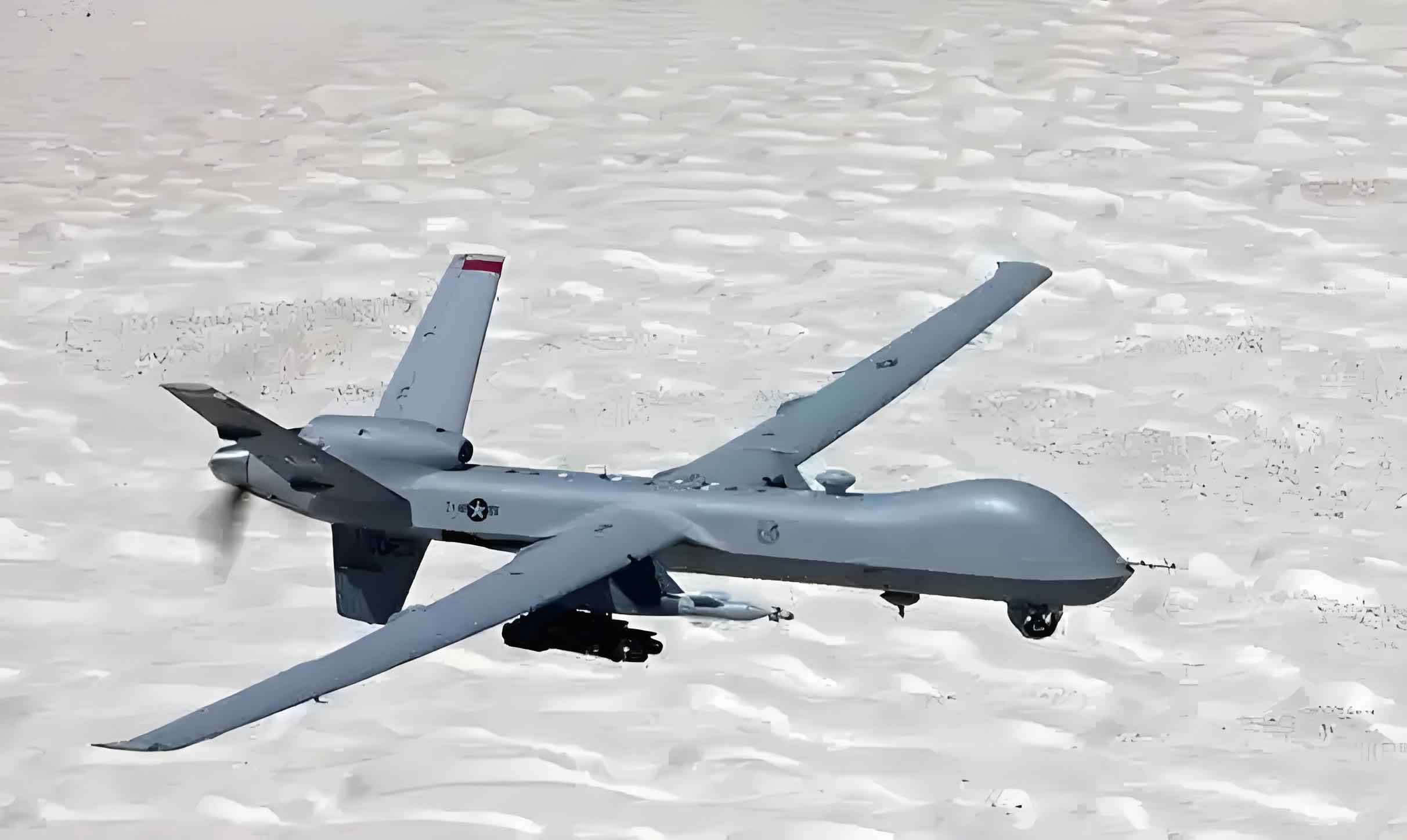
Today, a military drone is fundamentally defined as an unmanned, reusable, powered aerial vehicle capable of operating within or beyond the atmosphere. Its autonomy can range from remote-controlled to semi-autonomous or fully autonomous, often combining these modes. The true versatility of a military drone lies in its payload capacity; by swapping mission-specific modules—sensors, communication relays, or weaponry—a single platform can fulfill diverse roles. This adaptability makes the modern military drone a force multiplier, integral to contemporary and future battlespace dominance.
Classification and Core Roles of Military Drones
The ecosystem of military drones is vast and can be systematically categorized to understand their operational scope. The primary classification is based on performance envelopes such as endurance, range, and altitude.
| Category | Endurance / Range | Typical Altitude | Primary Role & Example |
|---|---|---|---|
| Long-Endurance (Strategic) Drone | >24 hours (HALE), >12 hours (MALE) | >18 km (HALE), < 15 km (MALE) | Broad-area ISR, persistent surveillance. Example: RQ-4 Global Hawk. |
| Medium-Range Drone | Radius: 700 – 1,000 km | High to Medium Altitude | Theatre-level reconnaissance, often with higher speeds. Example: (Historical) Model 350. |
| Short-Range Drone | Radius: 150 – 350 km | Medium to Low Altitude | Tactical ISR for division/brigade level. Example: RQ-2 Pioneer. |
| Close-Range Drone | Radius: < 100 km | 2 – 4 km | Battlefield surveillance for battalion/company level. Example: Small tactical UAVs. |
Equally important is classification by military function, which highlights the mission diversity of the modern military drone.
| Mission Type | Core Function | Typical Payloads |
|---|---|---|
| Reconnaissance & Surveillance (ISR) | Intelligence gathering, target tracking, battle damage assessment. | EO/IR cameras, Synthetic Aperture Radar (SAR), SIGINT equipment. |
| Unmanned Combat Aerial Vehicle (UCAV) | Strike, suppression/destruction of enemy air defenses (SEAD/DEAD). | Precision-guided munitions (PGMs), air-to-surface missiles. |
| Electronic Warfare (EW) Drone | Electronic attack (jamming) and electronic support (listening). | Jammers, signal intercept and analysis suites. |
| Decoy Drone | Simulate attack profiles to saturate and expose enemy air defenses. | Radar reflectors, signature enhancers. |
| Communications Relay | Extend network and datalink ranges over the horizon. | UHF/VHF/SATCOM relay packages. |
| Target Drone | Simulate enemy aircraft or missiles for training and weapons testing. | Programmed flight profiles, scoring systems. |
Enabling Technologies and Performance Metrics
The capabilities of a military drone are dictated by a suite of advanced technologies. Autonomy is governed by complex algorithms for navigation, obstacle avoidance, and mission planning. Navigation, often relying on a fusion of Global Navigation Satellite Systems (GNSS) and Inertial Navigation Systems (INS), is critical. A simplified model for the position error growth in an INS-aided system can be described by equations optimized with techniques like Kalman filtering:
State Vector: $$ \mathbf{x}_k = [\mathbf{p}_k, \mathbf{v}_k, \boldsymbol{\psi}_k, \mathbf{b}_a, \mathbf{b}_g]^T $$
System Model: $$ \mathbf{x}_{k+1} = \mathbf{F}_k \mathbf{x}_k + \mathbf{w}_k $$
Measurement Model (GNSS aiding): $$ \mathbf{z}_k = \mathbf{H}_k \mathbf{x}_k + \mathbf{v}_k $$
Where $\mathbf{p}$, $\mathbf{v}$, $\boldsymbol{\psi}$ are position, velocity, and attitude; $\mathbf{b}_a$, $\mathbf{b}_g$ are accelerometer and gyroscope biases; and $\mathbf{w}_k$, $\mathbf{v}_k$ are process and measurement noise. The Kalman filter recursively estimates $\mathbf{x}_k$, minimizing navigation error for the military drone.
Sensor performance is another key area. The ground resolution of an imaging sensor on a military drone is a function of altitude and focal length:
$$ GSD = \frac{H \times p}{f} $$
where $GSD$ is the Ground Sample Distance (a measure of resolution), $H$ is the altitude of the military drone, $p$ is the sensor pixel pitch, and $f$ is the lens focal length. Lower GSD means higher resolution, which is paramount for identification tasks.
Furthermore, the aerodynamic and propulsion efficiency directly impacts the most valued trait of many platforms: endurance. For a high-altitude, long-endurance (HALE) military drone, the approximate loiter time can be related to the aerodynamic efficiency and specific fuel consumption:
$$ E \approx \frac{1}{g} \frac{C_L}{C_D} \frac{1}{SFC} \ln \left( \frac{W_{initial}}{W_{final}} \right) $$
Here, $E$ is endurance, $C_L/C_D$ is the lift-to-drag ratio (aerodynamic efficiency), $SFC$ is the engine’s specific fuel consumption, and $W_{initial}/W_{final}$ is the ratio of initial to final weight (largely fuel). This equation underscores why HALE military drones feature high-aspect-ratio wings and efficient engines.
Evolutionary Trends and Strategic Directions
The trajectory of military drone development is characterized by several dominant and interconnected trends that are reshaping aerial warfare.
1. The Rise of the Unmanned Combat Aerial Vehicle (UCAV): This represents the most significant shift from a supportive to a primary combat role. A UCAV is designed for high-risk missions like SEAD/DEAD and deep strike. Its advantages over manned platforms are compelling:
- Reduced Risk and Political Cost: No pilot at risk enables operations in heavily defended airspace.
- Enhanced Performance Envelope: Freed from human physiological limits (e.g., +9G), airframes can be designed for higher maneuverability and different, potentially more effective, configurations.
- Life-Cycle Cost Efficiency: While development costs are high, the removal of life support systems, pilot training pipelines, and associated safety margins can lead to lower long-term costs compared to manned fighters, and they are more cost-effective than expendable cruise missiles for many targets.
National programs, such as the X-47B and other classified successors, are paving the way for sixth-generation air combat systems where a military drone may operate as a loyal wingman to a manned aircraft or in fully autonomous swarms.
2. Multi-Role and Modular Flexibility: The drive for platform commonality and cost-effectiveness is pushing development towards multi-role military drones. This is achieved through:
- Integrated Multi-Sensor Suites: A single platform like the MQ-9 Reaper carries ISR, targeting, and weapons payloads simultaneously.
- Modular/Podded Payloads: A universal airframe can accept different mission pods (ISR, EW, strike) that are swapped rapidly in the field, creating a family of systems from a single base design.
3. Miniaturization and the Micro-Drone Revolution: Advances in micro-electromechanical systems (MEMS), batteries, and communications have enabled a new class of military drone. These range from hand-launched tactical systems to palm-sized micro-air vehicles (MAVs) and even insect-sized nanodrones. Their value lies in discreet, localized intelligence for small infantry units, indoor reconnaissance, and biochemical sensing. The technical challenge is summarized by scaling laws; for instance, aerodynamic efficiency often degrades at very small scales due to low Reynolds numbers:
$$ Re = \frac{\rho v L}{\mu} $$
where a low Reynolds number ($Re$), due to small characteristic length ($L$), leads to a higher ratio of viscous to inertial forces, making flight more like swimming through honey and demanding novel propulsion and wing designs for a micro military drone.
4. Swarm Intelligence and Collaborative Operations: Perhaps the most disruptive concept is the coordinated use of large numbers of low-cost, attritable military drones. A swarm operates on distributed algorithms where simple local interaction rules lead to emergent, intelligent global behavior. Key advantages include:
- Mass and Saturation: Overwhelming enemy defenses through sheer numbers.
- Resilience and Redundancy: The loss of individual units does not compromise the mission of the swarm.
- Adaptive Sensor Network: Creating a wide-area, multi-perspective surveillance or communication mesh.
The control problem involves algorithms for flocking, distributed task allocation, and collective decision-making, often inspired by nature (e.g., bird flocks, fish schools).
5. Human-Machine Teaming and the “Loyal Wingman”: The future is not purely unmanned but rather a synergistic blend. The concept of a manned aircraft acting as a “quarterback” for a group of accompanying military drones is a central focus. These drones can perform tasks such as forward sensing, missile trucking, or electronic attack, all commanded by the pilot in the lead aircraft. This multiplies the combat effectiveness of the human-piloted platform while keeping it at a safer distance from threats.
Global Landscape and Strategic Implications
The development and proliferation of military drone technology is a global phenomenon, though marked by significant disparity in capabilities.
| Country/Region | Focus and Key Characteristics | Representative Systems/Trends |
|---|---|---|
| United States | Technology leadership across all categories, heavy investment in stealth, HALE, UCAVs, and swarm research. Emphasis on network integration and manned-unmanned teaming (MUM-T). | RQ-4 Global Hawk (HALE), MQ-9 Reaper (MALE/Strike), XQ-58A Valkyrie (Loyal Wingman), classified UCAV programs. |
| Israel | Pioneer in tactical and MALE drones, strong focus on operational excellence, robust EW and counter-drone systems. A major exporter of military drone technology. | Heron (MALE), Harop (Loitering Munition), Orbiter (Small Tactical). |
| China | Rapid, comprehensive development across the spectrum, from HALE to combat drones. Exhibiting growing sophistication and a focus on indigenous innovation and export. | Cai Hong (CH) series, Wing Loong (MALE/Strike) series, GJ-11 (Stealth UCAV prototype). |
| Turkey | Emerged as a dominant player in medium-altitude armed drones, with significant success in regional conflicts. Showcases effective indigenization and integration of swarm munitions. | Bayraktar TB2 (Tactical MALE), Akinci (Heavy MALE), Kızılelma (Stealth UCAV prototype). |
| European Nations | Collaborative efforts to develop sovereign capabilities, focusing on MALE and future combat systems. Progress varies by nation (e.g., France, UK). | nEUROn (Stealth UCAV demo), SCAF/FCAS (6th-gen system with drone component). |
| Others (Iran, Russia, etc.) | Developing diverse portfolios, often emphasizing lower-cost, attritable systems and loitering munitions. Capabilities range from basic to increasingly advanced. | Various Shahed-type drones (Iran), Orion (Russia – MALE), and a wide array of loitering munitions. |
The strategic implications are profound. The military drone has democratized access to persistent surveillance and precision strike capabilities, altering the dynamics of regional power. It introduces new challenges in arms control, ethics (autonomy in lethal decision-making), and air defense, as traditional systems struggle against low-cost, numerous, or low-observable threats. The proliferation of military drone technology ensures they will be central to future conflicts, from high-intensity state-on-state warfare to asymmetric counter-insurgency and counter-terrorism operations.
Conclusion: The Inexorable March Towards an Unmanned Future
Reflecting on the journey from early remote-controlled craft to today’s intelligent, networked systems, it is clear that the military drone is not merely an adjunct to traditional air power but is evolving into its successor. The trends towards greater autonomy, swarming collaboration, and seamless integration with manned forces point to a future battlespace that is increasingly dominated by unmanned systems. The technical challenges—in AI reliability, secure communications, and counter-swarm defenses—are substantial. However, the operational advantages of persistence, scalability, and risk reduction are so compelling that the development trajectory is irreversible. The military drone has fundamentally changed how nations project power, gather intelligence, and conduct warfare. As these technologies continue to mature and proliferate, they will undoubtedly continue to redefine the very nature of conflict in the 21st century and beyond, solidifying their role as the cornerstone of future aerospace dominance.