
In my analysis of modern warfare, the rapid proliferation of unmanned aerial vehicles (UAVs) has fundamentally altered battlefield dynamics. I have observed that conflicts such as the Nagorno-Karabakh clash in 2020 highlighted the decisive role of drones, enabling even less powerful nations to deploy extensive UAV arsenals for surveillance and strikes, thereby gaining tactical superiority. However, I argue that the effectiveness of drones should not be overstated; robust air defense systems can mitigate their impact, leading to an ongoing spiral of innovation between drones as the “spear” and anti-drone technologies as the “shield.” This article explores the explosive growth of military drones abroad and the多元化 anti-drone countermeasures, emphasizing strategic implications and future trends from my perspective.
The global development of military UAVs has been exponential, driven by their cost-effectiveness and versatility. I note that since the early use of drones in conflicts like the Vietnam War and the Middle East, their applications have expanded beyond reconnaissance to include armed attacks, as seen with the U.S. Predator in Afghanistan. Currently, over 70 countries possess military drones, a significant increase from just a few decades ago. The international arms trade reflects this trend, with UAV models proliferating rapidly. From my assessment, the following table summarizes key characteristics of military drone development based on data from institutes like SIPRI:
| Category | Description | Percentage of Models | Trends |
|---|---|---|---|
| Class I (Weight < 150 kg) | Small tactical drones | 19% | Steady growth, used for short-range missions |
| Class II (Weight < 600 kg) | Medium-altitude long-endurance (MALE) drones | 49% | Dominant in trade, often for ISR and strike roles |
| Class III (Weight > 600 kg) | High-altitude long-endurance (HALE) and combat drones | 33% | Rapid increase post-2000, with advanced capabilities |
| Fixed-wing vs. Rotary-wing | Predominance of fixed-wing designs | >93% fixed-wing | Reflects efficiency for endurance and payload |
I have calculated that the number of new UAV models introduced after 2000 grew by 3.3 times compared to the previous two decades, indicating accelerated innovation. Countries like the U.S. and Israel remain leaders in exports, but nations such as Turkey, Iran, and Russia are emerging as significant suppliers. This diffusion lowers barriers to entry, potentially democratizing drone warfare. In my view, the rise of small and loitering munitions, often called “suicide drones,” is particularly transformative. These systems, exemplified by Israel’s Harop or the U.S. SwitchBlade, integrate reconnaissance and strike functions, enabling precise, low-cost attacks. Their proliferation could redefine tactical operations, as modeled by the following equation for swarm effectiveness: $$ E_s = N \cdot \alpha \cdot (1 – P_d) $$ where \( E_s \) is the swarm’s effectiveness, \( N \) is the number of drones, \( \alpha \) is a capability coefficient, and \( P_d \) is the probability of detection. This underscores the urgency for advanced anti-drone solutions.
In response to the UAV threat, foreign militaries have developed a多元 array of anti-drone systems, ranging from electronic warfare to directed energy weapons. I categorize these into soft-kill and hard-kill methods, each with distinct advantages. Electronic warfare, targeting communication links, is a primary soft-kill approach due to its low cost and flexibility. For instance, Russian systems like “Krasukha” can jam signals up to 30 km away. The effectiveness of jamming can be expressed as: $$ J_{eff} = \frac{P_t \cdot G_t}{R^2 \cdot L} $$ where \( P_t \) is transmitted power, \( G_t \) is antenna gain, \( R \) is range, and \( L \) is loss factor. This highlights how anti-drone电子战 systems degrade UAV control. Below is a table comparing major anti-drone手段:
| Anti-Drone Method | Mechanism | Advantages | Limitations | 代表 Systems |
|---|---|---|---|---|
| Electronic Warfare | Jamming or spoofing communication/GPS links | Low cost, rapid deployment, effective vs. small drones | Limited range,可能 affect friendly signals | Russian “Repellent,” Israeli “Drone Dome” |
| Kinetic Hard-Kill | Using guns, missiles, or nets to physically destroy drones | High reliability, proven technology | High cost per engagement, ammunition limits | U.S. CROWS with .50 cal, Russian “Pantsir” missiles |
| High-Energy Laser (HEL) | Directed energy to burn or disable drones | Precision, low cost per shot, scalable power | Atmospheric attenuation, size/weight constraints | U.S. Army MMHEL (50 kW), Russian “Peresvet” |
| High-Power Microwave (HPM) | Broadcast electromagnetic pulses to fry electronics | Effective vs. drone swarms, wide area coverage | Short range, development in early stages | U.S. THOR, Raytheon PHASER |
| Drone-on-Drone | Using UAVs to intercept or crash into enemy drones | Flexible, can operate in complex environments | Risk of losing interceptor, requires autonomy | U.S. Coyote Block 2, Russian “Wolf-18” |
From my perspective, kinetic硬杀伤 remains a reliable anti-drone layer, but cost reduction is critical. I estimate that the cost-exchange ratio for using missiles against cheap drones is unfavorable, often expressed as: $$ C_{ratio} = \frac{C_{interceptor}}{C_{drone}} $$ where values much greater than 1 indicate inefficiency. Thus, militaries are investing in mini-missiles or upgraded guns with precision fire control. Meanwhile, directed energy weapons like lasers and microwaves offer promising anti-drone capabilities due to their speed and low operational costs. The lethality of a laser system can be modeled as: $$ P_k = 1 – \exp\left(-\frac{I \cdot A_t \cdot t}{\lambda}\right) $$ where \( P_k \) is kill probability, \( I \) is irradiance, \( A_t \) is target area, \( t \) is dwell time, and \( \lambda \) is a material constant. For example, a 100 kW laser can neutralize drones within kilometers, making it a key anti-drone asset. The U.S. Army’s multi-layered air defense plan incorporates such systems, with deployments anticipated by 2024.
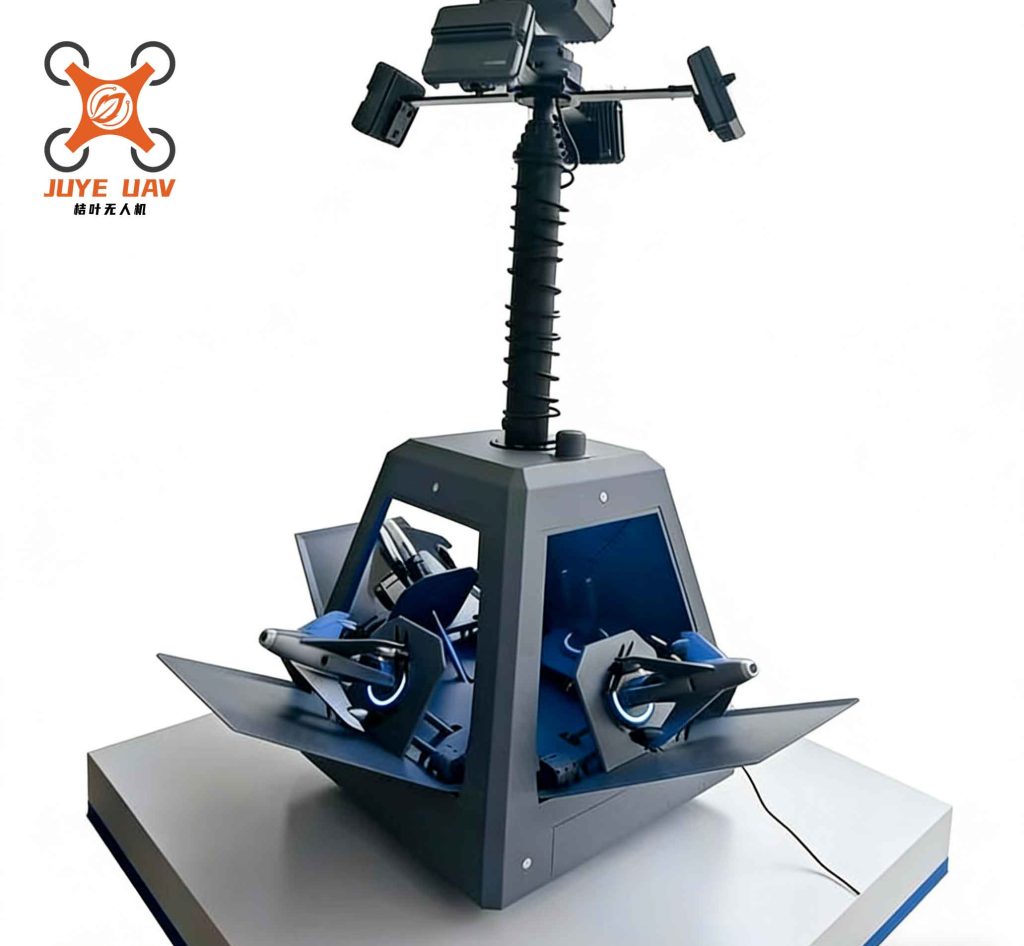
I have also studied passive防御 and indirect anti-drone strategies, such as smokescreens or decoys, which reduce UAV effectiveness by obscuring targets. However, active measures like striking drone ground control stations are often more efficient, as eliminating the source negates all associated drones. In my analysis, foreign militaries emphasize integrated approaches. The U.S., for instance, has established a Joint Counter-small UAV Office (JCO) to coordinate anti-drone efforts, with annual investments nearing $500 million. Russia has formed dedicated electronic warfare units and tested combined “detect-jam-strike” tactics in Syria. These efforts underscore a strategic shift toward treating anti-drone warfare as a cornerstone of modern defense.
My observations lead to several启示 for enhancing anti-drone capabilities. First, strategic prioritization is essential; nations must conduct regular exercises and实战检验 to refine systems. Second, building a unified command-and-control core is crucial for integrating diverse anti-drone assets. The U.S. IBCS system exemplifies this, allowing interoperability among sensors and shooters. I propose a framework for an integrated anti-drone体系, summarized in this table:
| Pillar | Components | Function | Key Technologies |
|---|---|---|---|
| Early Warning | Radars, acoustic sensors, RF detectors | Detect and track UAV threats at long ranges | AI-based classification, multi-sensor fusion |
| Electromagnetic Shield | Jammers, spoofers, cyber tools | Disrupt drone communications and navigation | Adaptive algorithms, high-power射频 |
| Kinetic Hard-Kill | Guns, missiles, nets | Physically destroy drones in flight | Precision guided munitions, swarm tactics |
| Ground-Based Directed Energy | Lasers, microwave emitters | Disable drones with energy beams | Fiber lasers, solid-state微波 |
| Aerial Attack Drones | Interceptor UAVs, loitering munitions | Engage enemy drones in air-to-air combat | Autonomous targeting, collision avoidance |
This “five-in-one” system aims to address weaknesses like high costs and limited弹药 capacity. For instance, reducing interceptor missile costs can be achieved through economies of scale, modeled as: $$ C_m = C_0 \cdot N^{-b} $$ where \( C_m \) is unit cost, \( C_0 \) is initial cost, \( N \) is quantity, and \( b \) is the learning curve exponent. Additionally, accelerating development of laser and microwave anti-drone systems is vital, as they offer scalable solutions against swarms. The effectiveness of such an integrated approach can be quantified by overall system reliability: $$ R_{sys} = 1 – \prod_{i=1}^{n} (1 – R_i) $$ where \( R_i \) is the reliability of each pillar. By adopting these strategies, militaries can stay ahead in the anti-drone race.
In conclusion, the evolution of military drones necessitates equally innovative anti-drone responses. I contend that a multifaceted approach, combining electronic warfare, kinetic effects, directed energy, and drone-based countermeasures, is indispensable for future battlefields. Foreign experiences demonstrate that success hinges on strategic focus, interoperable systems, and cost-effective solutions. As UAV technology continues to diffuse, the importance of robust anti-drone capabilities will only grow, shaping the nature of warfare for decades to come. Through continuous research and实战 deployment, we can enhance our resilience against these pervasive threats, ensuring that防御 measures keep pace with offensive innovations.