
In the contemporary battlespace, the paradigm of warfare has been irrevocably altered by the pervasive presence and profound impact of unmanned aerial systems. From my perspective as a researcher deeply immersed in this field, the evidence is unequivocal: the military drone has evolved from a niche surveillance asset into a cornerstone of modern combat power. Its roles in fire adjustment, persistent intelligence, surveillance, and reconnaissance (ISR), precision strike, and even loitering munition attacks have made it arguably the single most significant tactical and operational factor influencing conflict outcomes today. This transformation underscores a critical, often underappreciated, prerequisite for dominance: a robust, scalable, and highly effective system for training the personnel who command these systems from the ground. The ability to field large numbers of military drone platforms is meaningless without a commensurate cadre of skilled operators—those individuals who manipulate flight controls, manage data links, and orchestrate payloads to execute complex missions. This article, drawn from my analysis and observations, will delineate a comprehensive training mode for military drone operators, emphasizing scalability, systematization, and standardization.
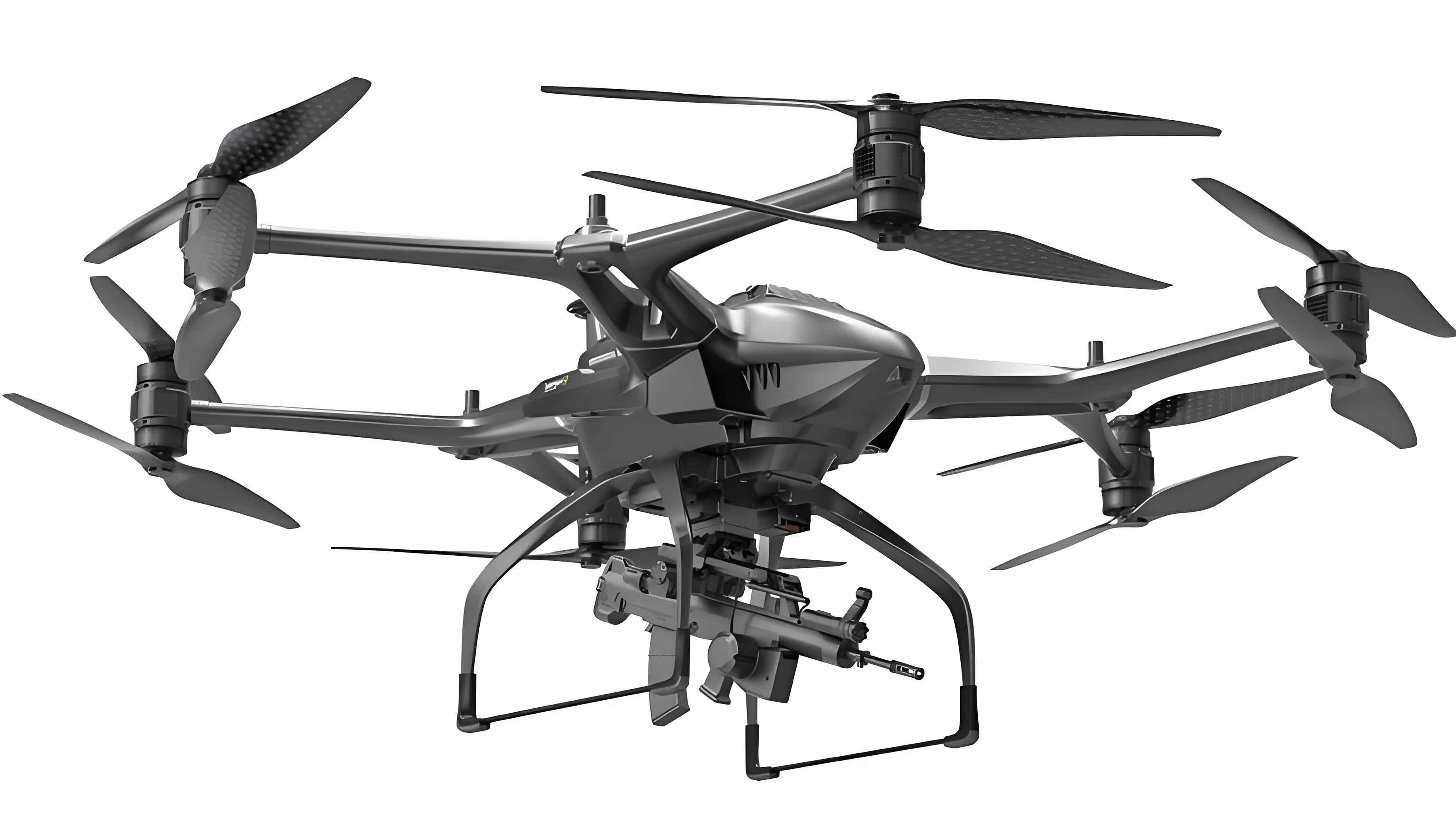
The necessity for a dedicated training paradigm is best understood by examining established practices. For instance, one major military power began systematizing its military drone operator training programs following conflicts in the late 1990s. Their approach reveals service-specific adaptations. One branch initially sourced all operators from experienced manned aircraft pilots and navigators, adhering to a traditional culture that privileged aviator control. However, the explosive demand for military drone capabilities forced a strategic shift. Their current training pipeline for candidates without prior flight experience is a meticulously structured, multi-phase process spanning approximately ten months. It progresses from fundamental aeronautical knowledge and basic flight principles, through intensive simulator-based training on vehicle control and mission execution under varied conditions, to theoretical mastery of specific platform parameters and command-and-control systems. The final and most critical phase involves extensive hands-on, live-flight training. Candidates with previous flight experience are afforded an accelerated track, bypassing the initial foundational phases, which highlights the efficiency gains from recognizing prior skill transferability.
Another branch, which fields the largest inventory of military drone systems, takes a distinctly different approach. They do not require prior aviation experience for many of their operator roles, effectively treating it as a new military occupational specialty. Their training model for a tactical military drone, such as the RQ-7 Shadow, is concentrated at a dedicated education center and typically lasts around 24 weeks. The structure is tripartite: a lengthy ground preparation phase covering doctrine, platform mechanics, navigation, and tactics; a simulator training block focusing on core操控 techniques and mission procedures; culminating in a practical phase of live aircraft and radio operation. This model demonstrates a highly streamlined, volume-oriented training solution suitable for producing large numbers of competent operators for specific platform types.
A maritime service, while operating fewer platforms, illustrates further specialization. Their selection and training are closely tied to platform type: tactical military drone operators are often drawn from naval aviators, while smaller system operators are not. Training curricula are then segregated by function: flight operators, payload operators, and maintenance personnel follow distinct, length-specific tracks. Notably, their program includes dedicated command training, emphasizing mission planning, interservice coordination, and the unique challenges of shipboard launch and recovery operations—a critical differentiator for naval military drone employment.
From my synthesis, the training of military drone operators is distinguished from civilian training by several pronounced characteristics and demands, which any effective model must address.
| Characteristic | Training Implication |
|---|---|
| Diverse Mission Set | Training must be mission-specialized (ISR, strike, EW, etc.), not generic. |
| Wide Spectrum of Platforms | Training must be tiered according to platform size, complexity, and cost. |
| Rapid Technological Evolution | Training systems and curricula must be modular and adaptable. |
| High Operational Tempo & Volume Need | Training must be scalable, efficient, and produce standardized outputs. |
| Integration with Joint Operations | Training must include tactics, procedures, and communication for combined arms. |
These imperatives lead me to propose an integrated training mode built on the pillars of Classification, Tiered-Phased-Specialized Training, and Systematic Standardization.
I. Classification-Based Training
The first logical division in the military drone operator training paradigm is by core function. An operational crew is not a single role but a team of specialists. Therefore, training must bifurcate at the highest level:
- Flight Operators (Pilots): These individuals are responsible for the physical state of the aircraft. Using control stations, they command the military drone’s flight path, managing take-off, landing, navigation, and basic airframe maneuvers. Their primary metrics are flight safety and platform positioning.
- Mission Operators: This category contains two critical sub-specialties:
- Payload/Sensor Operators: They control the mission-specific equipment (electro-optical/infrared cameras, synthetic aperture radar, signals intelligence suites, weapons). Their skill determines the quality of intelligence gathered or the precision of an engagement.
- Data Link Operators: They establish and maintain the critical communication bridge between the airborne platform and the ground control station, ensuring continuity of control and data flow.
This classification ensures that training resources are focused on developing deep, functional expertise rather than creating generalists with superficial skills across all domains. The training pathways for these roles, while potentially overlapping in basic theory, diverge significantly in practical application.
II. Tiered, Phased, and Specialized (TPS) Training Mode
The “one-size-fits-all” approach is ineffective for the diverse ecosystem of military drone platforms. A TPS model tailors the journey to the platform and the role.
A. Tiered Training for Flight Operators
Tiering corresponds to the size, complexity, and cost of the military drone system. The investment in training should be proportional to the system’s capability and cost.
| Platform Tier | Training Approach | Key Characteristics |
|---|---|---|
| Micro (<10 kg) | Short, intensive familiarization & certification. | Hand-held controller; akin to advanced RC model training; often user-level maintenance. |
| Small | Two-Stage Civilian-to-Military Pipeline. | Stage 1: Civilian drone license (theory + flight test). Stage 2: Military-specific tactics, procedures, and payload operation. |
| Medium & Large | Comprehensive, Sequential Pipeline. | For novices: Fundamentals → Systems Theory → Simulation → Live Flight → Certification. For qualified small drone pilots: Systems Conversion → Advanced Simulation → Live Flight → Certification. |
The training intensity can be modeled as a function of platform tier and trainee background:
$$ I_t = \alpha T_p + \beta (1 – E_b) + \gamma $$
Where:
\( I_t \) = Training Intensity (time, resource cost),
\( T_p \) = Platform Tier (1=Micro, 2=Small, 3=Medium/Large),
\( E_b \) = Existing relevant background (1=yes, 0=no),
\( \alpha, \beta, \gamma \) are coefficients representing the base cost per tier, the cost of building fundamentals, and fixed overheads, respectively.
B. Phased & Specialized Training for Mission Operators
For Payload and Data Link operators, the training is inherently specialized and follows a clear phased progression, largely independent of the flight operator’s aviation fundamentals.
| Operator Type | Training Pathway | Specialization Tracks |
|---|---|---|
| Payload/Sensor Operator | Specialized Theory → Practical Simulation → Live Operation → Certification | 1. Imaging (EO/IR, SAR) 2. Signals Intelligence/Electronic Warfare 3. Communications Relay 4. Weapon Employment |
| Data Link Operator | Communications Theory → Link Management Practice → Integrated Exercises → Certification | Focus on specific link types (C/L/Ku/Ka-band SATCOM, LOS data links), encryption, and troubleshooting. |
The efficacy \( E_o \) of an operator crew can be conceptualized as the product of individual role proficiencies and their synergy:
$$ E_o = (P_f \cdot P_p \cdot P_l) \cdot S_{team} $$
Where:
\( P_f \) = Proficiency of Flight Operator,
\( P_p \) = Proficiency of Payload Operator,
\( P_l \) = Proficiency of Link Operator,
\( S_{team} \) = Synergy factor (>1 for effective teamwork, <1 for poor coordination).
This emphasizes that training must develop not only individual skill (\( P \)) but also crew resource management and inter-operator procedures (\( S_{team} \)) through integrated, collective training in later phases.
III. The Framework for Systematic & Standardized Training
A mode is only as good as its implementation. To achieve规范化, systemization, and scale, the training ecosystem must be built on robust pillars.
| Pillar | Components | Objective |
|---|---|---|
| Institutional Foundation | Dedicated training schools/centers with standardized curricula, training management software, and certified evaluators. | Ensure consistent quality and measurable outputs across all training pipelines. |
| Human Capital | Cadre of expert instructors (theoretical, simulator, live-fly). Blend of permanent staff and rotating operational experts. | Transfer of both textbook knowledge and tacit, experience-based tactical know-how. |
| Material & Documentation | 1. Doctrine & Regulations: Governing selection, training standards, certification, and career progression. 2. Curricula & Manuals: Tiered and specialized training syllabi, textbooks, and standard operating procedures. 3. Training Aids: From simple RC models and computer-based trainers (CBT) to high-fidelity mission simulators and actual military drone systems for live flight. |
Create a renewable, updatable, and complete knowledge/toolset for the training lifecycle. |
| Infrastructure | Classrooms, simulation labs, secured ground control station facilities, and authorized airspace/fields for live-fly training. | Provide the physical and electromagnetic environment for safe, effective, and uninterrupted training. |
The overall system output—qualified military drone operators—can be viewed as a throughput function of these inputs:
$$ Q = \eta \cdot \frac{R_i \cdot I_q \cdot F_t}{T_c} $$
Where:
\( Q \) = Quantity of qualified operators per period,
\( \eta \) = System efficiency (0 to 1),
\( R_i \) = Incoming recruit pool (size & aptitude),
\( I_q \) = Quality of instructional resources & infrastructure,
\( F_t \) = Funding/time allocated,
\( T_c \) = Training cycle time for a given tier/specialty.
This model highlights that scaling output (\( Q \)) requires not just more recruits (\( R_i \)) or funding (\( F_t \)), but also optimizing efficiency (\( \eta \)), improving resource quality (\( I_q \)), and streamlining cycle time (\( T_c \)) through methods like prior experience recognition and advanced simulation.
In conclusion, the centrality of the military drone in modern and future conflict is a settled fact. The strategic advantage will therefore accrue not merely to the side with the most advanced platforms, but to the side that can most effectively and rapidly generate the human capital to wield them. The training mode I have outlined—predicated on a clear functional classification, structured around tiered, phased, and specialized pathways, and enabled by a systematic and standardized institutional framework—provides a blueprint for building that essential capacity. It acknowledges the spectrum from the disposable micro-military drone to the strategic high-altitude, long-endurance system, and it demands corresponding investment in the training continuum. As these systems continue to proliferate and evolve, the rigor and adaptability of our operator training programs will be a decisive factor in mastering the unmanned skies.