
From my perspective as a professional engaged in this demanding field, the evolution and sustainment of military Unmanned Aerial Systems (UAS) represent one of the most critical yet complex challenges in modern defense logistics. The superior mobility, covert operational capabilities, and multi-role functionality of drones—spanning intelligence, surveillance, reconnaissance, and precision strike—have cemented their role as indispensable assets. However, this operational reliance is fundamentally underpinned by the ability to rapidly and effectively return these sophisticated systems to service following faults, battle damage, or routine wear. The traditional paradigms of maintenance are being strained to their limits by the pace of technological advancement and the unforgiving nature of the operational environments in which these platforms are deployed. Therefore, this analysis delves into the multifaceted domain of military UAS maintenance, identifying systemic bottlenecks and proposing a comprehensive framework of innovative, technology-driven solutions aimed at maximizing availability and combat effectiveness. The focus extends beyond mere repair to encompass the entire ecosystem of sustainment, including resource management, process innovation, and, most critically, the development of a robust and adaptive human capital foundation through continuous drone training.
The Evolution of Military UAS and Its Cascading Maintenance Imperatives
The trajectory of military drone technology is characterized by exponential growth in both capability and complexity. Modern platforms are no longer simple remotely piloted aircraft; they are integrated systems of systems, featuring advanced composites, stealth technologies, sophisticated sensor suites, complex data links, and increasingly autonomous flight control and mission management software. This technological leap is mirrored in market forecasts, with the global military UAS sector projected to reach a value of approximately $14.8 billion by 2028. This expansion signifies not just more units in the inventory, but platforms with capabilities that demand an entirely new echelon of support.
The maintenance challenge is thus twofold: technical and logistical. The technical dimension involves diagnosing and repairing failures in highly integrated and often proprietary systems. A fault in a radar-absorbent material panel, for instance, is not merely a structural issue but a survivability one, requiring specialized materials and application techniques. Similarly, a software anomaly in the targeting system necessitates diagnostics that blur the line between traditional avionics repair and cybersecurity. This fusion of disciplines defines the new normal for UAS maintenance crews.
Logistically, the demand is for speed and precision. The operational concept of drones often relies on persistent presence or rapid response. Extended downtime for maintenance directly erodes this core value proposition. Consequently, maintenance technology must evolve from scheduled, depot-centric models to agile, predictive, and forward-deployable support. The ultimate goal is to shift from a “fail-and-fix” mentality to a “predict-and-prevent” paradigm, ensuring maximum operational readiness. The following table summarizes this evolution and its implications for maintenance doctrine.
| Era of UAS Development | Primary Technological Features | Dominant Maintenance Paradigm | Key Maintenance Challenges |
|---|---|---|---|
| Early / Analog | Basic airframes, limited sensors, direct radio control. | Corrective & Scheduled. Depot-level focus. | Mechanical failures, limited diagnostic tools, long repair cycles. |
| Intermediate / Digital | Composite structures, digital avionics, GPS navigation, basic data links. | Preventive & Condition-Based. Introduction of onboard diagnostics. | Integrating software updates, diagnosing intermittent electrical faults, managing sensor calibration. |
| Advanced / Networked | Stealth features, multispectral sensors, MALE/HALE endurance, satellite comms, weapon integration. | Predictive & Performance-Based. Emphasis on data analytics. | Maintaining low-observable coatings, cyber-physical system security, managing massive data system health, complex sensor fusion alignment. |
| Next-Gen / Autonomous | AI/ML-driven autonomy, swarm coordination, advanced countermeasures, adaptive systems. | Prescriptive & Agile. AI-supported, decentralized, and embedded health management. | Diagnosing AI decision logic failures, maintaining swarm communication integrity, rapid software assurance and patching, continuous drone training for new failure modes. |
Identifying the Bottlenecks: Systemic Constraints on Maintenance Efficacy
Despite technological advancements, several persistent bottlenecks throttle the efficiency and effectiveness of military UAS maintenance. These constraints are interrelated, forming a complex web that must be untangled holistically.
1. Suboptimal Resource Configuration and Management
Resource management extends beyond spare parts to encompass skilled personnel, specialized tools, technical data, and test equipment. A critical failure often stems from a misalignment in this ecosystem. For example, a forward operating base may have the airframe mechanic but lack the cryptologic technician needed to reset a secure communication module. Supply chains optimized for predictable peacetime consumption can fracture under the variable demand surges of combat operations, leading to cannibalization of parts from other platforms—a practice that degrades overall fleet readiness.
This problem can be modeled as a system reliability challenge where overall availability is a function of the weakest link in the support chain. If we define System Operational Availability (Ao) as:
$$A_o = \frac{MTBF}{MTBF + (MTTR + MLDT)}$$
where MTBF is Mean Time Between Failures, MTTR is Mean Time To Repair, and MLDT is Mean Logistics Delay Time, it becomes clear that reducing MLDT—the time waiting for parts, personnel, or information—is as crucial as improving MTTR. Inefficient resource management directly inflates MLDT, crippling Ao regardless of the inherent reliability (MTBF) of the drone itself.
2. Technological Limitations in Diagnostics and Repair
Current maintenance technology often lags behind operational technology. Non-destructive inspection (NDI) methods suitable for aluminum airframes may be ineffective or insufficient for carbon fiber composites or integrated radome structures. Diagnosing intermittent faults in complex sensor fusion systems, where a problem may manifest in the output but originate in software processing, data bus latency, or power supply fluctuations, requires advanced diagnostic suites that are not always field-deployable.
Furthermore, the repair of advanced materials—such as applying and curing radar-absorbent materials to precise thickness and conductivity specifications—requires controlled environments and specialized skills that are scarce outside of depot facilities. This creates a tension between the need for forward repair to minimize downtime and the technical requirement for depot-level infrastructure.
3. The Critical Gap in Personnel Drone Training and Skills
This is, from my observation, the most significant and enduring bottleneck. The speed of technological change has created a widening gap between the skills embedded in the maintenance workforce and the skills required to support the latest systems. Traditional apprenticeship models and periodic technical courses cannot keep pace. The skill set is evolving from “wrench-turning” to “system-thinking,” requiring knowledge in:
- Cyber-Physical Systems: Understanding the interplay between hardware, software, and network security.
- Data Analytics: Interpreting system health monitoring data to predict failures.
- Advanced Composites and Stealth Technology: Specialized repair procedures.
- AI/ML Fundamentals: To troubleshoot autonomous system behaviors and decision logs.
The lack of a dynamic, continuous, and scalable drone training ecosystem means that new platforms are fielded with maintenance crews who are not fully proficient, leading to longer repair times, improper procedures, and increased risk of collateral damage to sensitive components. The skill decay rate in this field is high, necessitating a model of continuous learning rather than one-time certification.
A Framework for Optimization: Integrating Technology, Process, and People
Addressing these bottlenecks requires a synchronized, multi-pronged strategy. The following framework proposes actionable solutions across the three core domains: Technology & Process, Resource Management, and Human Capital (Drone Training).
1. Innovation in Maintenance Technology and Process Re-Engineering
The goal is to make maintenance smarter, faster, and less dependent on rare expertise at the point of need. Key innovations include:
- Embedded Health and Usage Monitoring Systems (HUMS) with AI: Moving beyond simple fault codes to predictive analytics. Machine learning algorithms can analyze vibration, thermal, electrical, and performance data to identify anomalies and predict component failures before they occur, enabling just-in-time maintenance.
- Augmented Reality (AR) Assisted Repair: AR glasses can overlay technical manuals, wiring diagrams, and step-by-step repair procedures onto the technician’s field of view. An expert remotely connected can annotate the live video feed to guide a less-experienced technician through a complex repair, effectively distributing expert knowledge.
- Additive Manufacturing (3D Printing) for Forward Support: Deployable 3D printers using approved digital designs and materials can produce non-critical structural brackets, ducting, or custom tools on-demand, drastically reducing the logistics tail for these items.
- Standardized, Modular Open Systems Architecture (MOSA): Designing drones with modular, swappable payloads and subsystems (e.g., “plug-and-play” sensor pods, common data buses) simplifies fault isolation and repair. A faulty module is replaced, not repaired in the field, and sent back to a depot. This requires robust design for modularity but pays dividends in operational availability.
The integration of these technologies facilitates a new repair priority model. We can assign a dynamic priority score (P) to a maintenance task based on multiple factors:
$$P = \alpha C + \beta (1 – A) + \gamma L + \delta S$$
Where:
- C = Criticality of the affected system to mission success (0 to 1 scale).
- A = Current operational availability of the specific UAS platform (0 to 1).
- L = Lead time for required parts (normalized).
- S = Available skill level for the task (0 to 1).
- α, β, γ, δ = Weighting coefficients determined by operational context.
This formula helps maintenance controllers dynamically prioritize tasks in a resource-constrained environment, ensuring the most critical assets are returned to service fastest.
2. Optimizing Resource Configuration and Management through Digital Integration
The solution lies in creating a “Digital Thread” for sustainment—an integrated data flow from design through operation to maintenance and back.
- AI-Powered Predictive Logistics: By analyzing historical failure data, operational tempo, and environmental conditions, AI can forecast part demand at specific locations, enabling proactive stocking rather than reactive scrambling. This directly attacks the MLDT variable in the availability equation.
- Blockchain for Parts Traceability and Configuration Management: Immutable ledger technology can track every critical component from manufacturer to installation, recording its maintenance history, modifications, and compliance with technical directives. This ensures configuration integrity and prevents the use of counterfeit parts.
- Integrated Logistics Information Systems (ILIS): A unified, cloud-based platform (with secure, disconnected operation capability) that provides real-time visibility into global spares inventory, technician qualifications, equipment status, and maintenance work orders. This breaks down information silos and enables optimal resource dispatch.
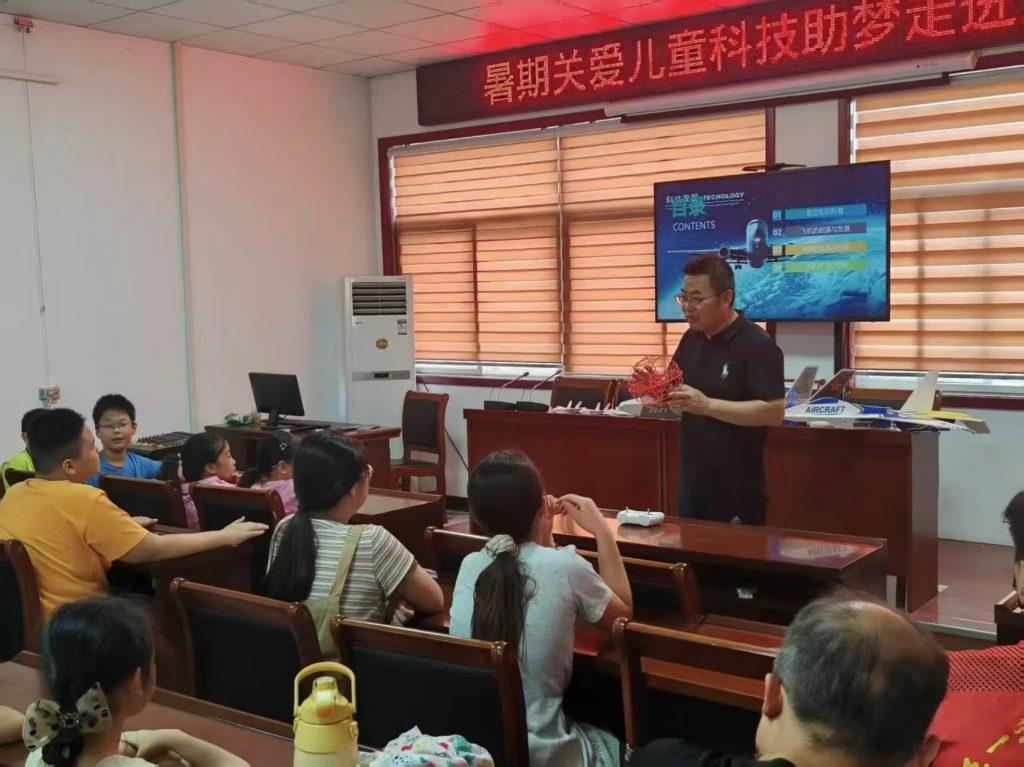
The image above visually underscores a core component of this optimized ecosystem: practical, hands-on drone training in a simulated operational context. This is where theoretical knowledge from digital systems meets physical skill, a vital link often missing in purely technology-focused solutions.
3. Establishing a Holistic and Adaptive Drone Training Ecosystem
Technology and processes are futile without skilled personnel to execute them. We must revolutionize drone training. This new ecosystem must be:
- Continuous and Modular: Instead of monolithic courses, training should be delivered in micro-modules aligned with specific new technologies or procedures (e.g., a 4-hour virtual module on diagnosing the new EO/IR turret). This facilitates just-in-time learning.
- Immersive and Simulation-Based: Extensive use of Virtual Reality (VR) and Mixed Reality (MR) simulators allows technicians to practice complex repairs—from composite patching to full sensor replacement—on a digital twin of the exact UAS model, with no risk to actual assets. Simulators can replicate rare failure modes and extreme environmental conditions (sand, rain, EM interference) that are impossible or too costly to recreate regularly in live training.
- Gamified and Competency-Based: Incorporating game mechanics (badges, leaderboards, progression levels) and shifting from time-based to competency-based assessment motivates continuous skill development. A technician advances by demonstrating proficiency in specific tasks within the simulator, not just by completing a course.
- Integrated with Operational Data: The training curriculum must be informed by real-world maintenance data. Common failures and difficult repairs identified in the field should be rapidly converted into new training scenarios in the simulator, creating a closed-loop learning system.
The competency of a maintenance unit can be modeled as a function of its collective skills, which depreciate over time and appreciate with training. We can express the Skill Index (SI) of a unit at time t as:
$$SI(t) = SI(t-1) \cdot e^{-\lambda t} + \int_{0}^{t} T(\tau) \cdot e^{-\lambda (t-\tau)} d\tau$$
Where:
- SI(t-1) is the previous skill index.
- λ is the skill decay rate (a constant specific to the technology domain).
- T(τ) is the training input function over time.
This model illustrates that without continuous training input T(τ), unit competency decays exponentially. An effective drone training ecosystem directly injects value into this function, countering decay and building a resilient, adaptable workforce.
The following table synthesizes the proposed optimization strategies against the identified bottlenecks:
| Core Bottleneck | Technological & Process Innovations | Resource Management Optimizations | Drone Training & Personnel Development |
|---|---|---|---|
| Resource Mismanagement | Modular design to reduce part variety; AR for remote expert guidance reducing travel needs. | AI-powered predictive logistics; Blockchain-enabled supply chain visibility. | Cross-training on common modules to increase personnel flexibility and pool size. |
| Technical Limitations | Embedded AI-HUMS for predictive diagnostics; Deployable 3D printing for on-site tool/part fabrication. | Digital Twins for virtual testing of repair procedures before physical attempt. | VR/MR simulators for practicing advanced repairs (composite, sensor alignment) in risk-free environment. |
| Skills & Training Gap | AR-guided procedures that contextualize information for the technician. | ILIS that links work orders to technician skill records for optimal task assignment. | Continuous, micro-modular, competency-based learning ecosystem with gamified VR simulations. |
In conclusion, the future of military UAS maintenance is not found in a single silver bullet technology, but in the deliberate integration of advanced technologies, data-driven processes, and a renaissance in how we develop and sustain human expertise. It requires building an intelligent, connected, and agile sustainment network where predictive analytics inform logistics, augmented tools empower technicians, and immersive, continuous drone training ensures the human element remains the strongest link, not the weakest. By implementing this holistic framework, military organizations can transform maintenance from a cost center and a constraint into a genuine strategic enabler, ensuring that the unparalleled potential of unmanned systems is fully realized on the modern and future battlefield.