
In recent years, the low altitude economy has emerged as a strategic emerging industry, reshaping airspace management models and industrial dynamics with unprecedented vitality. As low-altitude flight activities transition from localized pilots to networked operations, there is a concerted effort to establish the world’s largest and most complex low-altitude operational system. This evolution is driven by policy leadership, optimized resource allocation, and diversified applications, positioning the low altitude economy as a cornerstone of future transportation and economic growth. In this discussion, I will explore the development strategies and key technologies essential for advancing the low altitude economy, drawing from interdisciplinary research and practical insights to address core challenges and opportunities.
The low altitude economy encompasses a broad spectrum of activities, including unmanned aerial vehicles (UAVs), urban air mobility, and logistics, all operating within low-altitude airspace. This sector promises to enhance efficiency, reduce congestion, and foster innovation across various industries. However, its growth is contingent on overcoming significant hurdles, such as airspace management, safety assurance, and technological integration. Through a first-person perspective, I will delve into the strategies that can guide policy and collaboration, as well as the cutting-edge technologies that underpin operational excellence. By incorporating tables and mathematical formulations, I aim to provide a comprehensive overview that highlights the multifaceted nature of the low altitude economy.
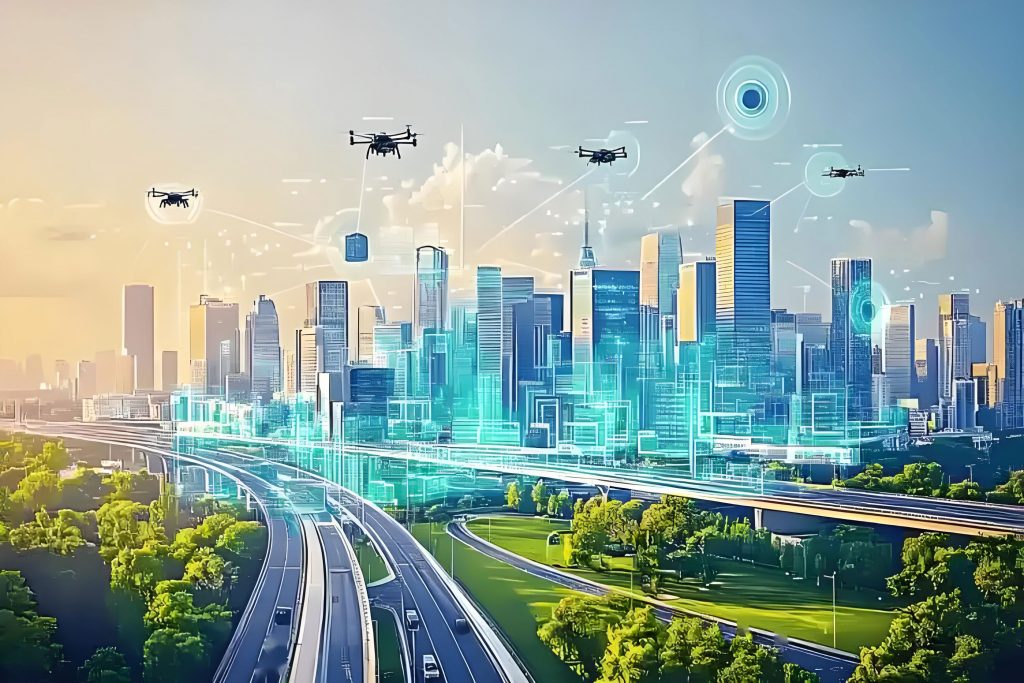
One of the primary strategies for fostering the low altitude economy involves establishing robust regulatory frameworks and collaborative governance models. For instance, the SFIC (Synergistic Framework for Integrated Collaboration) model offers a theoretical foundation for multi-stakeholder coordination in low-altitude airspace management. This model emphasizes the interplay between government agencies, private enterprises, and research institutions, facilitating a cohesive approach to airspace utilization. The low altitude economy benefits from such synergies by ensuring that diverse perspectives are integrated into policy-making and operational protocols. To illustrate, consider the following table summarizing key strategic elements in low-altitude airspace management:
| Strategy Component | Description | Challenges |
|---|---|---|
| Policy Formulation | Development of regulations to guide low-altitude operations, including safety standards and economic incentives. | Balancing innovation with risk mitigation; adapting to rapid technological changes. |
| Stakeholder Collaboration | Engagement of multiple actors, such as aviation authorities, communication providers, and local communities, through models like SFIC. | Aligning divergent interests; ensuring equitable participation in decision-making. |
| Infrastructure Development | Investment in physical and digital infrastructure, including navigation systems and communication networks. | High capital costs; interoperability issues across regions and technologies. |
| Standardization | Establishment of uniform protocols for data exchange, vehicle certification, and operational procedures. | Fragmented regulatory landscapes; resistance to adoption from legacy systems. |
In the context of the low altitude economy, the SFIC model can be mathematically represented to quantify collaboration dynamics. Let $$C$$ denote the level of collaboration, which depends on factors such as stakeholder engagement $$S$$, resource allocation $$R$$, and institutional support $$I$$. A simplified formulation is:
$$ C = \alpha S + \beta R + \gamma I $$
where $$\alpha$$, $$\beta$$, and $$\gamma$$ are weighting coefficients that reflect the relative importance of each factor. This equation helps in optimizing collaborative efforts to enhance the low altitude economy’s resilience and efficiency. Moreover, iterative feedback loops, as described by the model, ensure continuous improvement in low-altitude airspace management, reinforcing the sustainable growth of the low altitude economy.
Another critical aspect of the low altitude economy is the development of advanced surveillance systems to ensure safety and reliability. Low-altitude监视 (monitoring) technologies must address challenges like capacity limitations, progress assurance, and infrastructure robustness. A multi-layered surveillance framework, integrating both cooperative and non-cooperative targets, is essential for comprehensive coverage. For example, cooperative targets include UAVs equipped with transponders, while non-cooperative targets refer to unauthorized or non-participating entities. The integration of multi-source data fusion techniques enhances the accuracy and responsiveness of surveillance systems in the low altitude economy. The table below outlines key surveillance technologies and their characteristics:
| Surveillance Technology | Target Type | Advantages | Limitations |
|---|---|---|---|
| Radar Systems | Non-cooperative | Wide-area coverage; all-weather capability. | Susceptible to clutter; limited resolution for small objects. |
| Automatic Dependent Surveillance-Broadcast (ADS-B) | Cooperative | High accuracy; real-time data transmission. | Dependence on vehicle equipment; vulnerability to spoofing. |
| Electro-Optical/Infrared Sensors | Non-cooperative | Detailed imagery; effective in visual conditions. | Performance degradation in poor weather; limited range. |
| Multi-Source Data Fusion | Both | Enhanced reliability; redundancy in detection. | Complex integration; high computational demands. |
To mathematically model data fusion in low-altitude surveillance, let $$D_i$$ represent data from source $$i$$, and let $$F$$ be the fused output. Using a weighted average approach, we have:
$$ F = \sum_{i=1}^{n} w_i D_i $$
where $$w_i$$ is the weight assigned to each data source, satisfying $$\sum_{i=1}^{n} w_i = 1$$. This formulation ensures that the surveillance system in the low altitude economy dynamically adapts to varying conditions, improving overall safety. Furthermore, the low altitude economy relies on such technologies to enable real-time decision-making, which is crucial for managing the increasing density of low-altitude operations.
Path planning and route optimization are pivotal technologies in the low altitude economy, particularly for applications like logistics and transportation. Deep reinforcement learning (DRL) algorithms have shown promise in addressing multi-objective path planning for UAVs. For instance, in logistics drone operations, DRL can optimize routes to minimize travel time and energy consumption while avoiding obstacles. The core of DRL involves training an agent to make sequential decisions by maximizing cumulative rewards. The Q-learning algorithm, a common DRL method, is defined by the Bellman equation:
$$ Q(s, a) \leftarrow Q(s, a) + \alpha \left[ r + \gamma \max_{a’} Q(s’, a’) – Q(s, a) \right] $$
where $$Q(s, a)$$ is the value of taking action $$a$$ in state $$s$$, $$r$$ is the immediate reward, $$\alpha$$ is the learning rate, and $$\gamma$$ is the discount factor. This approach allows UAVs in the low altitude economy to gradually adapt to complex environments, demonstrating scalability and practicality. By applying DRL, the low altitude economy can achieve efficient resource utilization and enhance operational reliability in scenarios such as parcel delivery or emergency response.
Another innovative method in the low altitude economy is the airspace confidence algorithm for route delineation. This technique involves partitioning airspace into three-dimensional grids using systems like BeiDou Grid Code, and dynamically adjusting confidence levels to balance efficiency and safety. The confidence value $$C_{ij}$$ for a grid cell $$(i,j)$$ can be expressed as:
$$ C_{ij} = \frac{\sum_{k=1}^{m} \phi_k \cdot e^{-\lambda t_k}}{\sum_{k=1}^{m} e^{-\lambda t_k}} $$
where $$\phi_k$$ represents historical safety data points, $$t_k$$ is the time decay factor, and $$\lambda$$ is a sensitivity parameter. This formula accelerates the convergence of route optimization calculations by prioritizing high-confidence paths, thereby supporting the low altitude economy’s need for dynamic and safe airspace management. The table below compares different route planning methods in the low altitude economy:
| Planning Method | Key Features | Applications in Low Altitude Economy |
|---|---|---|
| Deep Reinforcement Learning | Adaptive learning from environment; handles multiple objectives. | Logistics UAVs; urban air mobility for efficient path finding. |
| Airspace Confidence Algorithm | Grid-based segmentation; dynamic confidence adjustments. | Route delineation for safe and efficient low-altitude corridors. |
| Genetic Algorithms | Evolutionary optimization; global search capabilities. | Large-scale route planning for fleet operations in low altitude economy. |
| A* Search Algorithm | Heuristic-based; optimal path finding in known environments. | Real-time navigation for UAVs in constrained low-altitude spaces. |
The integration of these technologies into the low altitude economy not only improves operational efficiency but also enhances safety through redundant systems and real-time monitoring. For example, in highway inspection applications, UAVs equipped with intelligent algorithms and digital management platforms can autonomously conduct surveys, reducing human intervention and increasing accuracy. This exemplifies how the low altitude economy leverages innovation to address practical challenges, such as infrastructure maintenance and disaster response. The low altitude economy thus represents a paradigm shift in transportation, where aerial solutions complement ground-based systems to create a more connected and resilient society.
Moreover, the low altitude economy is characterized by its emphasis on fusion—integrating aviation, transportation, and communication sectors to create synergistic benefits. Policy-driven initiatives play a crucial role in this integration, as seen in efforts to establish low-altitude service centers and监管 platforms. These initiatives facilitate coordinated operations between manned and unmanned aircraft, ensuring that the low altitude economy grows in a structured and secure manner. To quantify the impact of policy interventions, consider a simple economic model where the growth rate $$G$$ of the low altitude economy is a function of policy support $$P$$, technological advancement $$T$$, and market demand $$D$$:
$$ G = k_1 P + k_2 T + k_3 D $$
where $$k_1$$, $$k_2$$, and $$k_3$$ are constants representing the elasticity of growth to each factor. This model underscores the importance of a balanced approach in nurturing the low altitude economy, where strategic investments in technology and regulation yield compounded benefits.
In conclusion, the low altitude economy stands at the forefront of technological and economic transformation, offering immense potential for innovation and efficiency gains. Through strategic frameworks like collaborative governance and advanced technologies such as deep reinforcement learning and multi-source data fusion, the low altitude economy can overcome existing barriers and achieve sustainable development. The repeated emphasis on the low altitude economy in this discussion highlights its centrality to future aerospace and transportation ecosystems. As research and实践 continue to evolve, the low altitude economy will undoubtedly play a pivotal role in shaping smarter, more responsive airspace systems worldwide. By fostering cross-sector partnerships and continuous technological refinement, we can ensure that the low altitude economy reaches new heights of performance and integration, ultimately contributing to economic vitality and societal well-being.
To further elaborate on the economic implications, the low altitude economy can be analyzed using cost-benefit models that account for factors like infrastructure investment, operational savings, and environmental impact. For instance, the net present value (NPV) of a low-altitude project can be calculated as:
$$ \text{NPV} = \sum_{t=0}^{T} \frac{B_t – C_t}{(1 + r)^t} $$
where $$B_t$$ and $$C_t$$ are the benefits and costs in year $$t$$, $$r$$ is the discount rate, and $$T$$ is the project horizon. This formula helps stakeholders in the low altitude economy prioritize initiatives that deliver long-term value, aligning with strategic goals of sustainability and inclusivity. The low altitude economy, therefore, not only drives technological progress but also fosters economic resilience through calculated investments and risk management.
In summary, the low altitude economy is a dynamic and multifaceted domain that requires concerted efforts in strategy and technology. By embracing models like SFIC for collaboration and algorithms like DRL for optimization, the low altitude economy can navigate complexities and unlock new opportunities. The persistent focus on the low altitude economy throughout this discourse underscores its transformative potential, urging continued innovation and cooperation across all sectors involved.