
The low altitude economy, defined as an integrated economic form leveraging low-altitude airspace for flight activities and driving cross-sector convergence, represents a pivotal shift in modern production paradigms. As a strategic emerging industry, it aligns intrinsically with the core attributes of new quality productive forces—characterized by high technology, high efficiency, and high quality—through its transformative impact on development dynamics, operational efficiency, and output standards. This article explores the three-dimensional alignment between the low altitude economy and new quality productive forces, examines its empowering effects on the fundamental elements of productivity, addresses the associated challenges, and proposes practical pathways for sustainable advancement. The analysis integrates theoretical frameworks with empirical insights, employing formulas and tables to elucidate key relationships and trends, while emphasizing the pervasive role of the low altitude economy in fostering innovation-driven growth.
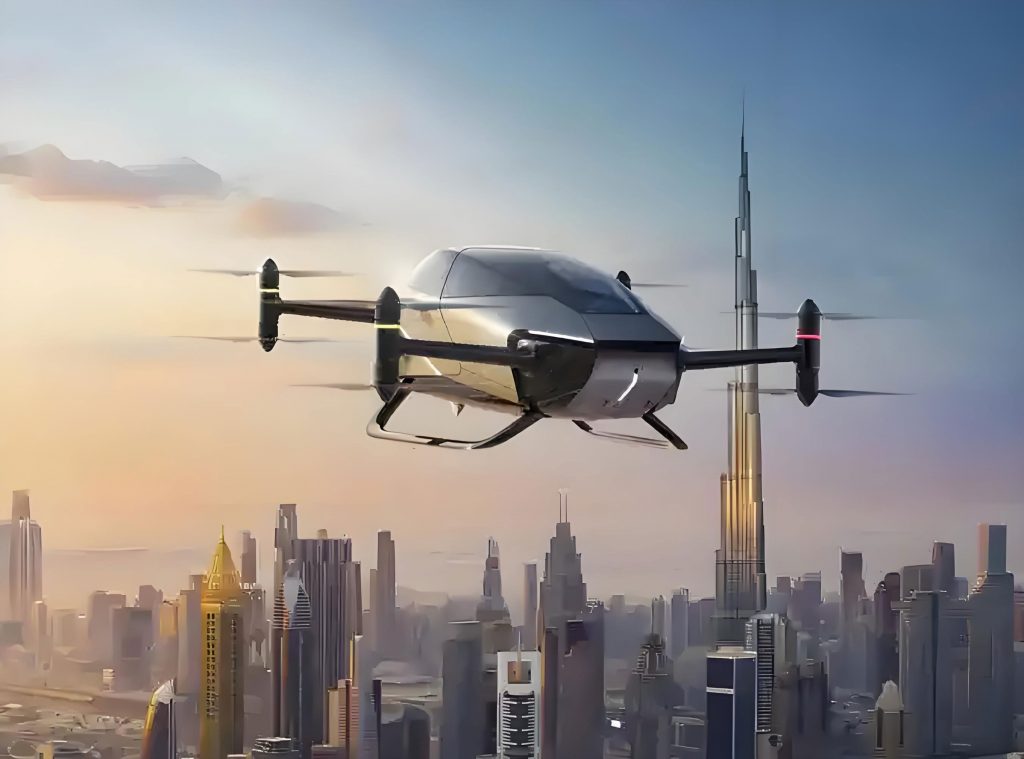
Three-Dimensional Alignment: Low Altitude Economy and New Quality Productive Forces
The low altitude economy exhibits a profound congruence with new quality productive forces across technological, efficiency, and quality dimensions. This alignment stems from its capacity to drive innovation, optimize resource allocation, and uphold sustainable development principles, thereby transcending traditional productivity models. Below, we dissect each dimension using analytical frameworks and empirical data.
Technological Dimension: High-Tech Drive and Path Innovation
Technological revolution serves as the core engine for paradigm shifts in productivity. The low altitude economy thrives on breakthroughs in low-altitude technologies, such as electric propulsion, advanced materials, and intelligent systems, which collectively redefine production paths. For instance, innovations in energy storage and autonomous navigation have enabled electric vertical take-off and landing (eVTOL) aircraft, reducing reliance on fossil fuels and minimizing environmental footprints. The growth in patent applications—from 852 in 2014 to over 14,000 in 2023—underscores the rapid technological maturation. This progression can be modeled through an innovation function: $$ I(t) = A \cdot e^{\lambda t} $$ where \( I(t) \) represents innovation output at time \( t \), \( A \) is the initial technological base, and \( \lambda \) denotes the growth rate driven by R&D investments in the low altitude economy. Such advancements facilitate a transition from labor-intensive operations to smart, automated systems, epitomizing the “innovation-led” essence of new quality productive forces.
Efficiency Dimension: High Efficiency and Total Factor Productivity Leap
The low altitude economy enhances efficiency by optimizing factor inputs and reconfiguring production functions. It leverages low-altitude airspace as a novel production factor, complementing traditional ground-based resources to overcome spatial constraints. For example, in agriculture, drones enable precision spraying, reducing input waste and boosting yield per unit area. In logistics, unmanned aerial vehicles (UAVs) circumvent terrestrial bottlenecks, cutting delivery times and labor costs. The total factor productivity (TFP) gain can be expressed as: $$ \text{TFP} = \frac{Y}{F(K, L, R)} $$ where \( Y \) is output, and \( K \), \( L \), and \( R \) denote capital, labor, and low-altitude resources, respectively. Empirical studies indicate that drone-based inspections in infrastructure maintenance improve efficiency by over tenfold compared to manual methods. The table below summarizes efficiency gains across sectors:
| Sector | Application | Efficiency Improvement |
|---|---|---|
| Agriculture | Precision spraying | 80–100x faster than manual methods |
| Logistics | Last-mile delivery | 50% reduction in time and cost |
| Infrastructure | Power inspection | 10x higher efficiency |
These enhancements demonstrate how the low altitude economy drives “high efficiency” by elevating marginal returns on capital, labor, and technology.
Quality Dimension: High Quality and Adherence to New Development Concepts
The low altitude economy embodies high-quality development by aligning with the principles of innovation, coordination, greenness, openness, and sharing. It fosters synergistic innovation ecosystems, regional integration through aerial corridors, and eco-friendly operations via electric aircraft. For instance, UAVs in environmental monitoring reduce pollution and support biodiversity conservation. The green impact can be quantified using a sustainability index: $$ S = \sum_{i=1}^{n} w_i E_i $$ where \( S \) is the sustainability score, \( w_i \) represents weights for factors like emissions reduction, and \( E_i \) denotes environmental benefits. Additionally, the low altitude economy promotes inclusive growth by expanding public service access in remote areas. The following table highlights its alignment with development concepts:
| Development Concept | Manifestation in Low Altitude Economy |
|---|---|
| Innovation | Cross-sector R&D and patent growth |
| Coordination | Regional connectivity and industry multipliers |
| Greenness | Electric propulsion and reduced land use |
| Openness | Global standards and trade partnerships |
| Sharing | Infrastructure and service democratization |
This multidimensional alignment underscores how the low altitude economy operationalizes the qualitative aspirations of new quality productive forces.
Empowering Effects: Enhancing the Three Elements of Productivity
The low altitude economy exerts transformative effects on the core components of productivity—laborers, means of labor, and subjects of labor—propelling them toward new qualitative states. By analyzing these elements through Marxist political economy lenses, we can delineate the empowerment mechanisms.
Accelerating the New Quality Upgrade of Laborers
The low altitude economy elevates labor quality through efficiency gains, substitution effects, and skill transformation. Automation with UAVs reduces physical burdens, freeing workers for creative tasks and continuous learning. For instance, drone operators must acquire certifications in navigation and data analysis, fostering a shift from manual to cognitive labor. The labor upgrade function can be modeled as: $$ L_{new} = L_0 + \int \alpha \cdot T(t) \, dt $$ where \( L_{new} \) is the new labor quality, \( L_0 \) is the initial level, \( \alpha \) is the learning coefficient, and \( T(t) \) represents training investments in the low altitude economy. This transition mitigates skill obsolescence and promotes human capital accumulation, aligning with the dynamic needs of new quality productive forces.
Promoting Deep Transformation and Upgrade of Means of Labor
The means of labor evolve from isolated tools to integrated, intelligent systems under the low altitude economy. Drones equipped with AI and IoT capabilities become multifunctional platforms for data collection and processing. For example, UAVs in agriculture transform from simple sprayers to decision-support systems that analyze soil conditions and crop health. The capital-output ratio improvement can be expressed as: $$ \kappa = \frac{K}{Y} = f(T, D) $$ where \( \kappa \) is the capital efficiency, \( T \) is technology level, and \( D \) denotes data integration from low-altitude operations. This upgrade enhances productivity while reducing operational risks, marking a leap in labor资料 sophistication.
Triggering Comprehensive Reshaping of Subjects of Labor
The low altitude economy expands the subjects of labor to include three-dimensional airspace, digital data, and virtual models. Airspace itself becomes a manageable resource for logistics and surveillance, while data generated from flights serve as critical inputs for analytics. The production possibility frontier shifts outward, as shown by: $$ PPF: A(L, K, R) = Y $$ where \( R \) now encompasses low-altitude resources. In urban planning, digital twins created via UAV mapping enable simulations that optimize resource use. This redefinition of labor subjects unlocks new value chains and fosters innovation across sectors, integral to advancing new quality productive forces.
Realistic Challenges: Bottlenecks in Empowering New Quality Productive Forces
Despite its potential, the low altitude economy faces imbalances and inadequacies that hinder its full empowerment of new quality productive forces. These challenges span employment, technology, resources, and safety, necessitating critical assessment.
Technological Substitution and Employment Squeeze
The automation driven by the low altitude economy displaces medium-skilled jobs in sectors like agriculture and logistics, exacerbating unemployment and income polarization. The employment elasticity to technology can be represented as: $$ \eta = \frac{\Delta L / L}{\Delta T / T} $$ where \( \eta \) is negative for substitutable tasks. For instance, drone adoption in crop spraying reduces labor demand by 60–70%, while platform-based gig work erodes job security. This strains social equity and demands robust skill transition programs.
Technological Dependence and Resource Misallocation
Reliance on imported components, such as aviation-grade chips and batteries, creates vulnerabilities in the low altitude economy supply chain. Concurrently, regional disparities in infrastructure and innovation capacity widen the technology gap. The resource misallocation index can be calculated as: $$ M = \sum |a_i – \bar{a}| $$ where \( a_i \) is resource allocation in region \( i \), and \( \bar{a} \) is the optimal level. Overinvestment in certain segments, like eVTOL manufacturing, leads to bubbles and underinvestment in foundational R&D, undermining sustainable growth.
Environmental Disturbances and Security Risks
Scaled low-altitude operations generate noise pollution, visual intrusions, and ecological disruptions, particularly in sensitive habitats. Battery disposal and data breaches pose additional environmental and security threats. The risk function is: $$ R = P \times S $$ where \( P \) is the probability of incidents, and \( S \) is the severity. For example, unauthorized data access could compromise national security, requiring stringent regulatory frameworks.
Addressing Challenges: Practical Pathways for High-Quality Empowerment
To harness the low altitude economy for new quality productive forces, a dual approach focusing on empowerment enhancement and challenge mitigation is essential. This involves building integrated innovation ecosystems and reinforcing institutional safeguards.
Strengthening Empowerment: Constructing a “Technology-Infrastructure-Scenario” Trinity Innovation Ecosystem
Innovation in the low altitude economy requires synergistic advances in core technologies, smart infrastructure, and diverse applications. Key actions include:
– **Technology**: Prioritize R&D in autonomous systems and materials science to reduce external dependencies. The innovation output can be boosted through collaborative networks: $$ I = \beta_0 + \beta_1 R\&D + \beta_2 HC $$ where \( HC \) is human capital.
– **Infrastructure**: Develop vertiports and digital air traffic management systems to support seamless operations. Investment efficiency can be optimized using cost-benefit analysis.
– **Scenarios**: Expand applications in emergency response, tourism, and cargo delivery to stimulate market demand. Scenario diversification increases resilience, as per the formula: $$ D_s = \sum_{j=1}^{m} u_j \cdot v_j $$ where \( u_j \) is usage frequency, and \( v_j \) is value per scenario.
Mitigating Challenges: Improving the “Employment-Industry-Safety” Three-Dimensional Linkage Institutional System
Addressing socio-economic risks entails:
– **Employment**: Implement reskilling initiatives and social safety nets for displaced workers. The labor adaptation rate can be improved through policy incentives.
– **Industry**: Foster regional coordination and patient capital investment to prevent resource bubbles. The table below outlines strategic measures:
| Challenge | Solution | Expected Outcome |
|---|---|---|
| Job displacement | Vocational training and subsidies | Higher labor mobility |
| Technology gaps | R&D grants and international cooperation | Reduced import reliance |
| Security risks | Cybersecurity protocols and regulations | Enhanced data protection |
– **Safety**: Establish comprehensive regulations for airspace management and environmental protection, leveraging AI for real-time monitoring. The overall empowerment effect can be summarized as: $$ E_{total} = \sum (W_i \cdot I_i) – C $$ where \( W_i \) are weights for empowerment factors, \( I_i \) are inputs, and \( C \) represents mitigated costs.
Conclusion
The low altitude economy, through its three-dimensional alignment with new quality productive forces, acts as a catalyst for productivity evolution by upgrading laborers, transforming means of labor, and expanding subjects of labor. However, realizing its full potential requires overcoming challenges related to employment, technology, and sustainability. By adopting holistic strategies that balance innovation with inclusivity, the low altitude economy can sustainably drive high-quality development, ensuring that progress in productive forces translates into broad-based societal benefits. Future efforts should focus on adaptive governance and cross-sector collaboration to solidify its role as a pillar of modern economic transformation.