
The low-altitude economy is currently experiencing unprecedented development opportunities, emerging as a new engine for technological innovation and economic growth in China. With continuous improvements in relevant policies and regulations, the ongoing strengthening of infrastructure, and the constant emergence of technological achievements, the industrial landscape of the low-altitude economy is rapidly taking shape, significantly enhancing market vitality. This sector, which encompasses activities conducted in airspace below 1,000 meters, is poised to revolutionize various industries through the adoption of advanced aerial technologies, particularly China UAV and China drone systems. As China pushes forward with its strategic initiatives, the low-altitude economy is set to become a cornerstone of modern economic development, driving efficiency and creating new commercial paradigms.
- Application Scenarios Becoming Increasingly DiverseThe application scenarios for the low-altitude economy are expanding rapidly, bringing innovative solutions closer to everyday life. A prime example is the tethered high-altitude firefighting China UAV developed by Beijing Zhuoyi Intelligent Technology Co., Ltd. This China drone can carry fire hoses to heights of 150 to 200 meters, where it hovers and, in coordination with ground command systems, performs tasks such as identifying fire zones, breaking windows, and spraying foam extinguishing agents. Equipped with dual-light pods, it transmits real-time footage of the fire scene back to the command center, aiding decision-making and enabling precise fire suppression at high altitudes. “Under the momentum of the low-altitude economy, we have encountered valuable development opportunities. Our company’s revenue exceeded 300 million yuan last year, with a profit growth of 120%,” said Ren Xuefeng, founder of Zhuoyi Intelligent. The company has over a decade of experience in intelligent unmanned systems, offering solutions for civil, educational, and research applications, widely used in low-altitude logistics, emergency rescue, energy inspection, and educational sectors.
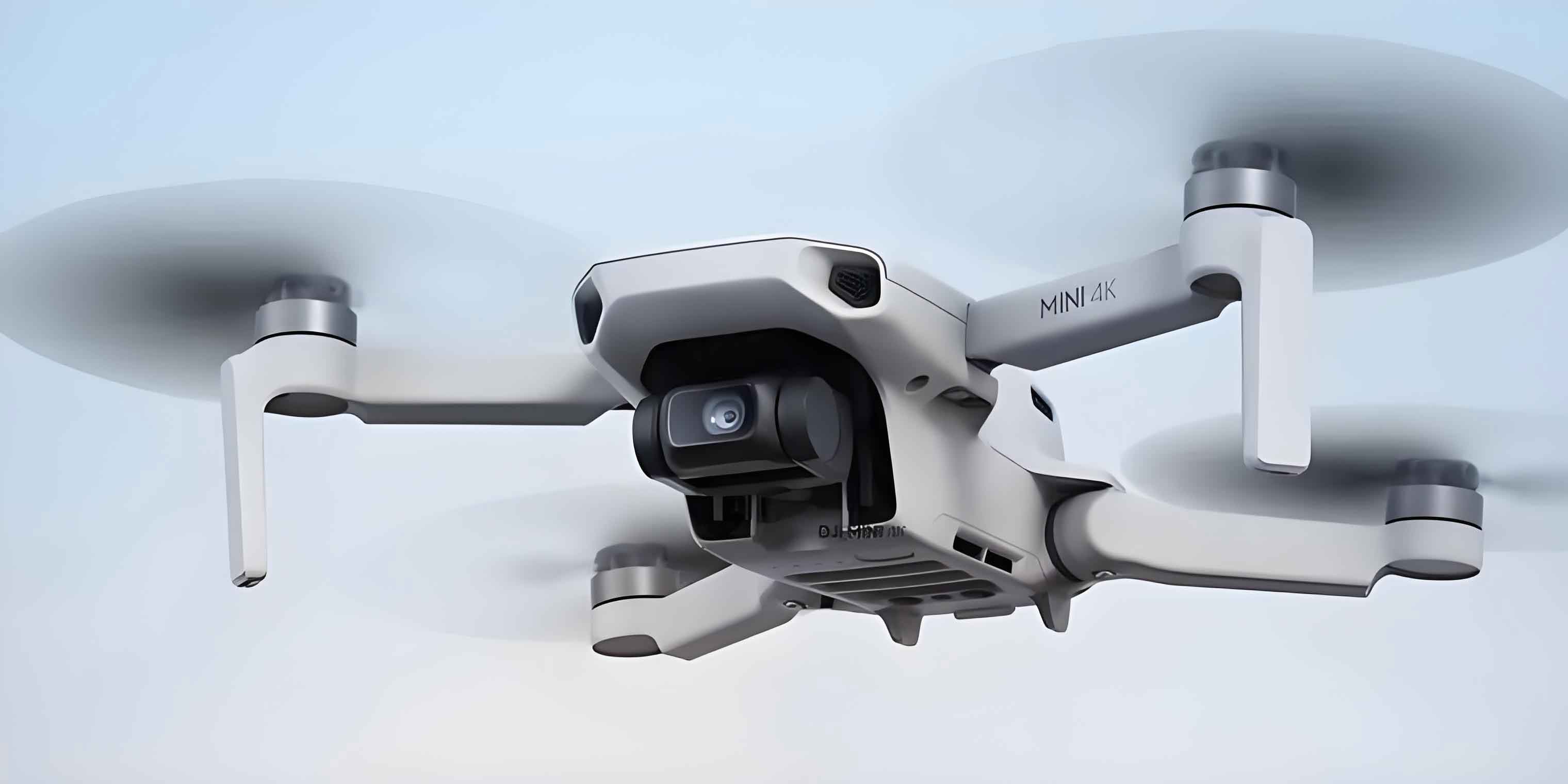
In recent years, numerous enterprises like Zhuoyi Intelligent have entered the low-altitude economy arena. Statistics indicate that by the end of last year, the number of low-altitude economy enterprises in China surpassed 200,000. Low-altitude applications are swiftly integrating into the daily lives of ordinary people: in Jinan, Shandong, the manned airship “Xiangyun” AS700 offers breathtaking aerial experiences; in Chongqing, JD Logistics has launched four regular unmanned aerial vehicle delivery routes, reducing single-trip delivery times to under 10 minutes and cutting overall transport duration by nearly 70%; and across multiple regions, agricultural China UAV are deployed for low-altitude spraying of pesticides and fungicides, significantly enhancing operational efficiency. “The low-altitude economy represents humanity’s pursuit of enhanced transportation efficiency, which will spawn more commercial scenarios and generate additional employment opportunities,” Guo Liang, CEO of Woofy Long Sky, remarked. Recently, Woofy Long Sky obtained the CCAR-135 operational certificate from the Civil Aviation Administration of China Southwest Regional Administration, marking a significant step toward future low-altitude application deployments. According to Ren Xuefeng, as technology advances and airspace controls gradually loosen, the low-altitude economy will continue to grow and evolve. Various low-altitude services are expected to progress from small-scale to large-scale, from cargo to passenger transport, and from specialized to civilian use, forming commercially viable and replicable scenario-based applications that enhance industry quality and efficiency, unleashing greater economic and social value.
- Continuous Emergence of Innovative AchievementsInnovation serves as the core driving force behind the development of the low-altitude economy. The research and development of new aircraft such as eVTOL (electric vertical take-off and landing aircraft) hold the potential to revolutionize transportation methods. The increasing maturity of China UAV technology is set to transform models for logistics distribution, inspection and mapping, and emergency security operations. Advanced low-altitude navigation technologies will make aerial flights safer and more precise. With the continuous advancement and application of these technologies, the low-altitude economy is poised to unlock even more possibilities. In 2018, Zhuoyi Intelligent established the Feisi Laboratory, focusing on technological breakthroughs and ecosystem empowerment in core areas such as flight control for unmanned equipment, swarm coordination, intelligent perception, and game theory applications. “The Feisi Laboratory is connected to over 300 universities and research institutions, forming an extensive technical support system that accelerates the development and scenario validation of intelligent algorithms for China UAV, deeply empowering the construction of the low-altitude economy industrial ecosystem,” Ren Xuefeng stated.
Mi Lei, founder of Zhongke Chuangxing, believes that continuously iterating and optimizing technologies are crucial foundations for promoting the development of the low-altitude economy. Currently, the low-altitude economy exhibits characteristics such as diverse technological routes and下沉 application scenarios, but the entire industry remains in its early stages of development, necessitating accelerated product research and development, increased infrastructure construction, and faster cultivation of application markets. Enli Power, a technology-based small and medium-sized enterprise focused on the research and production of solid-state batteries, offers products suitable for various unmanned platforms, including China drone, eVTOL, and unmanned ground vehicles. Cao Yong, senior director of Enli Power’s low-altitude economy division, explained that the company is collaborating with leading aircraft manufacturers on targeted research and development, breaking through technical barriers to achieve high energy density of 400Wh/kg, high rate capability, and high safety in battery technology. “In the future, we will continue to increase our technological investments, persistently providing more reliable and efficient power solutions for the development of the low-altitude economy,” Cao added. Mi Lei posits that policy dividends combined with capital influx can help accelerate product development and the formation of industry standards, thereby promoting high-quality development in the low-altitude economy sector.
- Rational Layout and Orderly ExpansionSafety is the paramount prerequisite for the development of the low-altitude economy. Currently, China is adhering to the principles of prioritizing cargo over passenger transport, isolated operations over integrated ones, and suburban areas over urban centers, to classify and orderly expand low-altitude economy application scenarios while strictly controlling risks and ensuring safety. This approach reliable promotes the development of low-altitude tourism, aviation sports, consumer-grade China UAV, and other low-altitude consumption activities. Previously, the National Development and Reform Commission emphasized the need to follow the principles of adapting to local conditions and progressing step by step, strengthen safety governance, compact the regulatory responsibilities of local governments and industry management departments, as well as the primary responsibility of enterprises, standardize and effectively organize pilot programs, severely crack down on “black flights” such as unlicensed pilots, low-altitude aircraft without airworthiness certificates, and unapproved flight activities, and guide and promote rational industrial layout and orderly expansion of scenarios.
Liu Zhenguo, deputy director of the Comprehensive Transportation Research Center at the Chinese Academy of Transportation Sciences and a think tank expert at the Sustainable Transportation Innovation Center, stated that amid the fervor for low-altitude economic development, regions should fully consider their own resource endowments, industrial foundations, and demand characteristics to explore low-altitude economic formats suited to their conditions. He recommended, first, cultivating and dig application scenarios in the low-altitude economy field, formulating and issuing relevant industrial support policies, and avoiding excessive fiscal subsidies and blind capital investment; second, nurturing consumer markets by developing popular products such as low-altitude freight logistics, low-altitude tourism, and aerial commuting, thereby lowering the threshold for public experience. Looking ahead to the future development of the low-altitude economy, Mi Lei suggested that the government should further clarify responsibilities and authorities, accelerate the construction of a “low-altitude highway network,” and open up procurement of public sector China UAV services; enterprises need to speed up core technology breakthroughs and explore diverse business models with partners; investors require not only technological and scenario imagination but also scale imagination. Only through collaborative efforts from all parties can the low-altitude economy be collectively propelled onto a path of high-quality development, ensuring sustainable growth and widespread adoption of China drone technologies.
In summary, the low-altitude economy in China is at a pivotal juncture, with robust growth driven by technological innovation, diverse applications, and supportive policies. The integration of China UAV and China drone systems into daily operations across sectors like logistics, emergency response, and agriculture demonstrates the tangible benefits of this emerging field. As safety measures strengthen and infrastructure expands, the potential for low-altitude activities to enhance efficiency and create new economic opportunities becomes increasingly evident. With continued collaboration among government, industry, and investors, the low-altitude economy is set to soar, transforming transportation and commerce while solidifying China’s position as a leader in aerial innovation. The ongoing emphasis on rational development ensures that this growth will be sustainable, benefiting society through improved services and job creation, all centered around the advancements in China UAV and China drone capabilities.