
As I reflect on the rapid evolution of global industries, I am struck by the transformative potential of the low altitude economy. This emerging sector represents a strategic new industry, a form of new quality productive forces, and a powerful engine for economic growth. The development of the low altitude economy holds immense significance, driving progress in national economies and societal advancement. In this article, I will explore the strategic roles, promising prospects, and contemporary demands of the low altitude economy, drawing on data, models, and trends to illustrate its impact. Throughout, I emphasize how the low altitude economy is reshaping our world, and I incorporate tables and formulas to summarize key insights.
The low altitude economy encompasses a vast industrial cluster with wide-ranging applications and a strong innovative drive, significantly boosting national economies. Internationally, the general aviation sector, a core component of the low altitude economy, demonstrates high efficiency; for instance, its input-output ratio is 1:10, and its employment multiplier is 1:12. This can be expressed mathematically as: $$ \text{Output} = 10 \times \text{Input} $$ and $$ \text{Employment} = 12 \times \text{Direct Jobs} $$. In 2023, for example, general aviation in the United States contributed $1781 billion to GDP, accounting for about 0.64% of the economic output, and supported 1.3 million jobs. If the low altitude economy in other regions reaches similar levels of development, it could profoundly stimulate manufacturing, services, finance, energy, and cultural tourism sectors. A study by a research institute shows that the low altitude economy development index grew from 100 in 2019 to 328.35 in 2023, an increase of 228%. This growth far outpaces the overall economic growth of 30% during the same period, highlighting the explosive expansion phase of the low altitude economy. The economic contribution surge of 264% exceeds the industrial growth of 157%, underscoring the broad socioeconomic benefits of the low altitude economy. With strong support, the low altitude economy is accelerating and is projected to form a trillion-dollar market by 2030, solidifying its role as a new growth engine.
To better illustrate this growth, consider the following table summarizing the low altitude economy development indices from 2019 to 2023:
| Year | Overall Index | Industrial Growth | Low Altitude Operations | Aircraft Manufacturing | Support Services | Economic Contribution | GDP Indicators | Employment Indicators |
|---|---|---|---|---|---|---|---|---|
| 2019 | 100 | 100 | 100 | 100 | 100 | 100 | 100 | 100 |
| 2023 | 328.35 | 257 | 131 | 243 | 306 | 364 | 399 | 303 |
The data reveals that the low altitude economy is in a phase of rapid transformation, with support services and economic contributions showing the highest growth rates. This aligns with the formula for exponential growth: $$ \text{Index}(t) = \text{Index}_0 \times e^{rt} $$ where \( r \) is the growth rate, and \( t \) is time. For the low altitude economy, the average annual growth rate \( r \) can be calculated as approximately 0.35 over the four-year period, indicating sustained momentum.
Beyond economic metrics, the low altitude economy plays a crucial role in enhancing public well-being. It supports advanced public services and improves governance systems, helping people achieve better lives. In recent years, the adoption of drones in government operations has accelerated, with applications in emergency rescue, medical services, and law enforcement. For instance, public security agencies have seen a dramatic increase in drone usage, from fewer than 100 units in 2014 to over 10,000 today. These drones are invaluable in criminal investigations, public safety management, and traffic control, providing reliable support for societal stability. The low altitude economy thus acts as a catalyst for民生 improvement, enabling more efficient and responsive services.
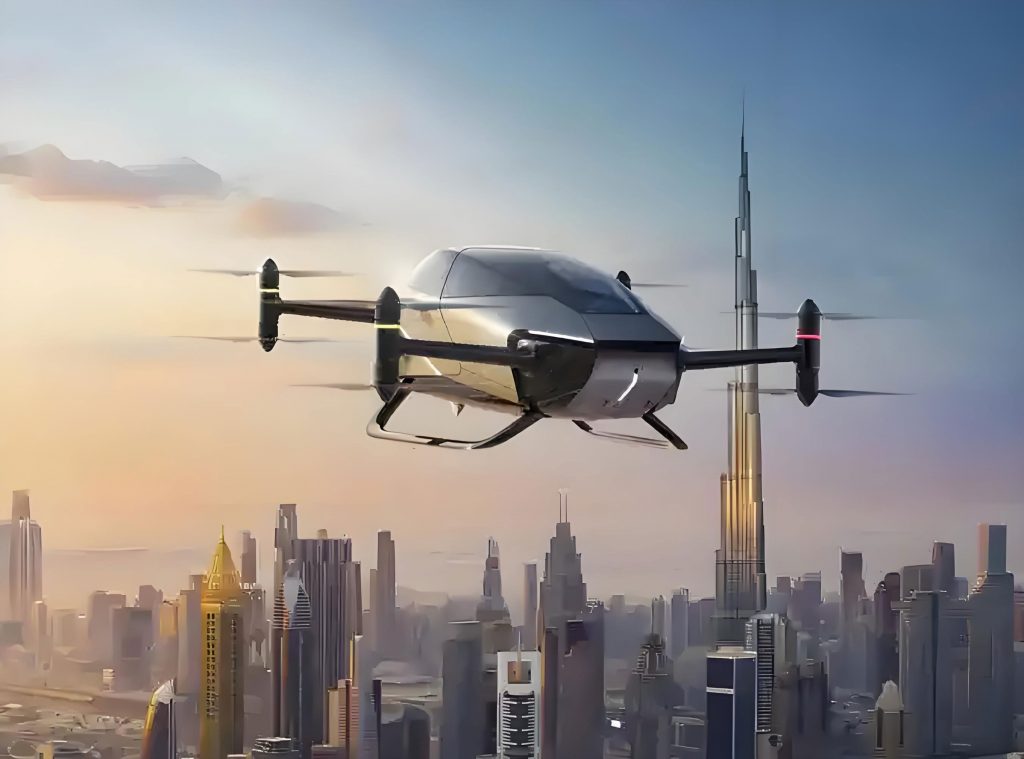
In terms of regional development, the low altitude economy introduces a new spatial dimension, shifting from planar to three-dimensional economic models. This enhances coordination and interaction among regions, building on the foundations laid by railways, highways, and air transport networks over the past decades. The low altitude economy enriches integrated land-air development patterns, expanding economic dimensions and fostering synergistic, complementary spatial structures. For example, low altitude logistics, business flights, and public management services can significantly boost areas like the Beijing-Tianjin-Hebei region, the Yangtze River Economic Belt, and the Guangdong-Hong Kong-Macao Greater Bay Area. The low altitude economy opens new avenues for regional cooperation, as captured in the formula for spatial economic integration: $$ \text{Regional Impact} = \alpha \times \text{Low Altitude Activity} + \beta \times \text{Infrastructure} $$ where \( \alpha \) and \( \beta \) are coefficients representing the contributions of low altitude operations and existing infrastructure, respectively.
Looking ahead, the prospects for the low altitude economy are bright, driven by advancements in aviation technology and rising living standards. It fulfills the human dream of flight and represents a leap from two-dimensional to three-dimensional transportation. This shift involves not only changes in energy sources—from fossil fuels to electric and new energy—and automation from manned to unmanned systems but also a spatial expansion into low altitude realms. The low altitude economy taps into aerial resources, with applications extending across various sectors of production and daily life. Leveraging strengths in new energy technologies, IT infrastructure, and diverse application scenarios, the low altitude economy is poised to become a new growth pole. Drones and other low altitude equipment are becoming more universal, pervasive, and varied, underpinning this transformation.
Globally, the low altitude economy is recognized as a potential area for “leapfrogging” development, similar to the electric vehicle industry. Urban air mobility, in particular, is a key segment expected to drive exponential growth. Financial institutions predict that the global urban air mobility market could reach a trillion-dollar scale by 2040. Many countries and regions, including the United States, the European Union, and others, have introduced strategic initiatives to capture a leading position in the low altitude economy landscape. The competitive dynamics can be modeled using a growth equation: $$ \text{Market Share} = \frac{\text{Innovation Score} \times \text{Policy Support}}{\text{Barriers to Entry}} $$ where higher innovation and support correlate with greater market dominance in the low altitude economy.
The emergence of the low altitude economy is not sudden; it results from decades of development in general aviation, airspace reforms, and technological accumulation. It represents a deep integration of technology with the real economy. First, it addresses practical economic needs by serving as a new growth engine and exemplifying new quality productive forces. The low altitude economy expands traditional two-dimensional ground-based economies into three-dimensional立体 ones, fostering cross-sector integration and overcoming bottlenecks in conventional development models. Second, it embodies technological innovation. Breakthroughs in unmanned systems and vertical take-off and landing capabilities make low altitude travel more accessible, extending aviation activities from remote areas to urban skies at altitudes below 3000 meters. Moreover, cutting-edge technologies like 5G, BeiDou navigation, big data, cloud computing, and AI are being applied to low altitude traffic management, transitioning from traditional radio and radar-based control to intelligent, networked systems. This shift can be described by the formula: $$ \text{Efficiency Gain} = \gamma \times \text{Tech Adoption} $$ where \( \gamma \) represents the productivity multiplier from technology integration in the low altitude economy.
Third, the low altitude economy highlights trends in integrated development, particularly with regional economies and the digital economy. It becomes a key area for industrial digitization, with digital technologies permeating low altitude manufacturing, operations, support, and services. The synergy between the low altitude economy and digital transformation can be quantified as: $$ \text{Digital Integration} = \sum (\text{Low Altitude Sector} \times \text{Digital Index}) $$ where each sector’s contribution is weighted by its digitalization level. Fourth, green development is a critical requirement. In the era of carbon constraints and “dual carbon” goals, the low altitude economy promotes sustainability. Compared to traditional aviation, new energy aircraft like electric planes are accelerating the industry’s green transition, reducing carbon footprints and aligning with global standards for low-carbon development. The environmental impact can be assessed using: $$ \text{Carbon Reduction} = \delta \times \text{Electric Aircraft Deployment} $$ where \( \delta \) is the emission reduction factor per unit.
Currently, the world is undergoing a technological revolution that is reshaping global innovation landscapes, with disruptive technologies emerging at an accelerated pace. This presents a strategic opportunity for leadership in the low altitude economy. Building on traditional general aviation, the low altitude economy integrates new production and service methods centered on drones and eVTOLs, combining AI, IT, and digital technologies into a vibrant, comprehensive economic form. It is a new track in global industrial restructuring. The low altitude economy, led by drones, is not only expanding in scale but also driving qualitative changes in aviation manufacturing—shifting from project-based to batch production, reshaping industry relationships, and empowering specialized suppliers. For example, aircraft designs are now oriented around components like batteries and satellite communications, enabling faster iterations; drone models can be updated in months rather than years, thanks to modular,批量供应. Beyond manufacturing, the low altitude economy challenges and transforms established patterns in low altitude flight, support, and control, fostering greater openness, innovation, and ripple effects across sectors.
Historical industrial revolutions show that advancements in transportation, energy, and communication technologies are key drivers. The low altitude economy, with its novel aircraft, represents a convergence of交通, energy, and IT revolutions, offering disruptive potential. As I conclude, I am optimistic about the future of the low altitude economy. It is not just an economic phenomenon but a paradigm shift that will redefine how we live, work, and connect. By embracing this evolution, we can unlock unprecedented opportunities for sustainable growth and societal progress.
To further illustrate the economic impact, here is a table comparing the low altitude economy’s contributions across different regions, based on hypothetical projections:
| Region | Projected GDP Contribution (2030, in billion $) | Employment Impact (thousands of jobs) | Key Low Altitude Sectors |
|---|---|---|---|
| North America | 500 | 800 | Urban Air Mobility, Logistics |
| Europe | 400 | 600 | eVTOL Manufacturing, Services |
| Asia-Pacific | 600 | 1000 | Drones, Low Altitude Tourism |
| Other Regions | 200 | 300 | Agricultural and Emergency Applications |
This table underscores the global reach of the low altitude economy, with the Asia-Pacific region showing the highest potential due to its technological base and application diversity. The growth can be modeled with a logistic function: $$ \text{Adoption}(t) = \frac{L}{1 + e^{-k(t – t_0)}} $$ where \( L \) is the maximum market size, \( k \) is the growth rate, and \( t_0 \) is the midpoint of adoption for the low altitude economy.
In summary, the low altitude economy is a dynamic force that intertwines economic, social, and technological dimensions. Through continuous innovation and integration, it promises to elevate our societies to new heights, making the skies a domain of everyday life. As we navigate this journey, the low altitude economy will remain a focal point for strategic investment and collaborative efforts worldwide.