
Quadrotor UAV drones have become ubiquitous in aerial photography, inspection, agriculture, and emergency response. The key to their widespread adoption lies in flight control technology that ensures stability and precision. In this article, I present a systematic approach to designing a Linear Quadratic Regulator (LQR) controller for quadrotor UAV drones, focusing on modeling, controller architecture, and simulation validation. The proposed cascaded LQR structure acts as a “balance brain,” enabling UAV drones to achieve smooth and accurate maneuvers even under challenging conditions.
1. Background and Motivation
Traditional helicopters require complex mechanical structures and high maintenance costs, while tilt-rotor vehicles demand intricate control logic. Quadrotor UAV drones, with four direct-drive motors, offer simplicity and ease of maintenance. However, they are inherently unstable, underactuated, and strongly coupled nonlinear systems. The six degrees of freedom (position and attitude) are controlled by only four motor speeds. External disturbances such as wind gusts and aerodynamic interactions between rotors further degrade flight quality. Therefore, a robust and optimal control law is essential for stable flight.
Linear Quadratic Regulator (LQR) is an optimal control method that balances state deviation and control effort. By tuning weighting matrices, we can achieve a trade-off between responsiveness and energy consumption. LQR has been widely applied in robotics, automotive, and aerospace systems. In the following sections, I detail how I built the flight dynamics model, designed the cascaded LQR controller, and validated its performance through simulation.
2. Quadrotor UAV Dynamic Modeling
To design the control “brain,” we first need to understand the motion laws of quadrotor UAV drones. The modeling process defines two coordinate systems: the inertial frame (earth-fixed) and the body frame (vehicle-fixed). Under the “flat Earth assumption,” the inertial frame is considered stationary with origin at the takeoff point, axes pointing north, east, and vertical (downward positive). The body frame originates at the center of gravity (CG) with axes along forward, right, and downward.
The transformation between frames uses a rotation matrix (Euler angles). For an X‑type quadrotor, I assume the following:
- The airframe is a rigid symmetric body with constant mass (electric propulsion).
- The CG coincides with the geometric center.
- All four motors and propellers are identical; only rotation directions differ.
The control inputs are the total thrust $F_z$ and the three moments $(\tau_\phi, \tau_\theta, \tau_\psi)$ corresponding to roll, pitch, and yaw. The thrust is proportional to the sum of squares of rotor speeds, while moments arise from differential thrust between opposite rotors and torque imbalance for yaw.
Neglecting aerodynamic drag at low speeds, the 6‑DOF dynamics are:
$$
\begin{aligned}
m \ddot{\mathbf{r}} &= -mg \mathbf{e}_z + R \begin{bmatrix}0 \\ 0 \\ F_z\end{bmatrix} \\
I \dot{\boldsymbol{\omega}} &= -\boldsymbol{\omega} \times I \boldsymbol{\omega} + \boldsymbol{\tau}
\end{aligned}
$$
where $\mathbf{r}=[x,y,z]^T$ is position in inertial frame, $R$ is rotation matrix, $\boldsymbol{\omega}=[p,q,r]^T$ are body angular rates, $I$ is inertia matrix, and $\boldsymbol{\tau}=[\tau_\phi,\tau_\theta,\tau_\psi]^T$.
For LQR design, I linearize the model around a hovering equilibrium (small attitude angles, zero velocity). The resulting linear state-space form is:
$$
\dot{\mathbf{x}} = A \mathbf{x} + B \mathbf{u}
$$
The state vector $\mathbf{x}$ contains position, velocity, Euler angles, and angular rates. The control vector $\mathbf{u}$ contains thrust and body moments. This linearized model enables efficient computation of the optimal feedback gain.
3. Linear Quadratic Regulator Design
For a continuous-time linear system, the LQR finds the optimal control law $\mathbf{u} = -K \mathbf{x}$ that minimizes a quadratic cost function:
$$
J = \int_0^\infty \left( \mathbf{x}^T Q \mathbf{x} + \mathbf{u}^T R \mathbf{u} \right) dt
$$
Here $Q$ and $R$ are symmetric positive semi‑definite weighting matrices. $Q$ penalizes state deviations, $R$ penalizes control effort. The optimal gain $K$ is obtained by solving the algebraic Riccati equation:
$$
A^T P + P A – P B R^{-1} B^T P + Q = 0
$$
where $P$ is the solution, and $K = R^{-1} B^T P$.
This approach tells the controller which deviations must be corrected quickly (large $Q$) and which control actions should be restrained (large $R$). For quadrotor UAV drones, typical weights are tuned for each control loop.
4. Cascaded LQR Controller Architecture
I propose a cascaded control structure with three loops: outer position loop, inner attitude loop, and innermost angular rate loop. This hierarchical decomposition simplifies the multivariable problem and aligns with the natural timescale separation in quadrotor dynamics.
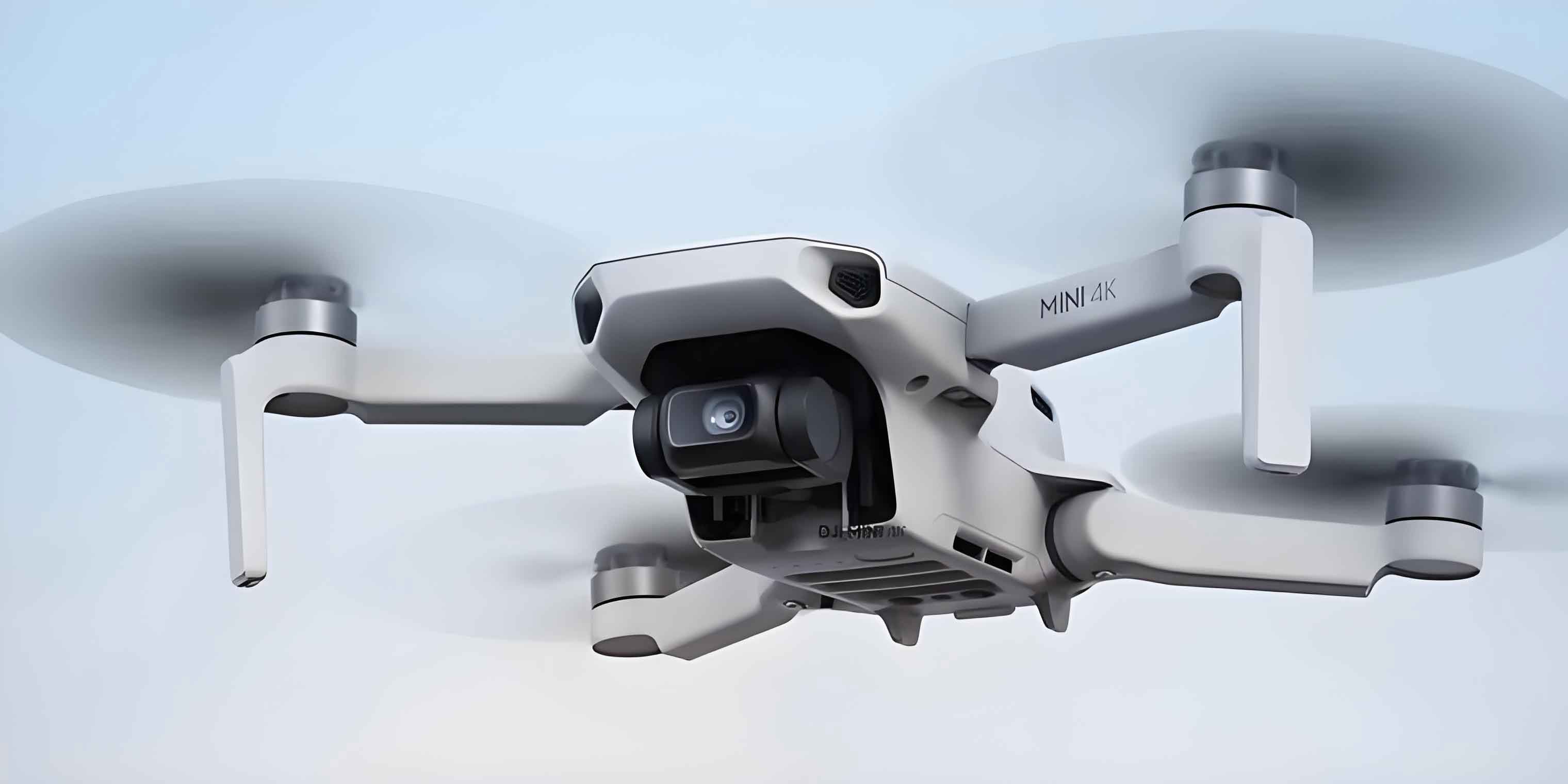
The position loop outputs desired roll and pitch angles to the attitude loop; the attitude loop outputs desired angular rates to the rate loop; the rate loop finally generates motor commands. Table 1 summarizes the weighting philosophy for each loop.
| Control Loop | Engineering Meaning of Weights |
|---|---|
| Position Control | Penalize $x,y,z$ position errors and velocities to reach target smoothly. |
| Attitude Control | Penalize pitch and roll angle errors for rapid but well-damped horizontal maneuvers. |
| Angular Rate Control | Penalize pitch and roll rates for fast, smooth attitude tracking. |
Each loop is designed separately using its own reduced-order sub‑model. For example, the position loop uses states $[x, y, z, \dot{x}, \dot{y}, \dot{z}]$ with control being desired acceleration; the attitude loop uses $[\phi, \theta, \dot{\phi}, \dot{\theta}]$; the rate loop uses $[p, q]$. This modular design reduces complexity while maintaining excellent tracking performance.
The overall controller is expressed as cascaded feedback:
$$
\mathbf{u}_{\text{pos}} \rightarrow \phi_{\text{des}}, \theta_{\text{des}} \rightarrow \mathbf{u}_{\text{att}} \rightarrow p_{\text{des}}, q_{\text{des}} \rightarrow \mathbf{u}_{\text{rate}} \rightarrow \text{motor speeds}
$$
5. Simulation Validation
I conducted a simulation on a typical electric quadrotor UAV drone. Key parameters include weight, inertia, and motor limits. The linearized matrix $A$ and $B$ were derived from these parameters. The simulation starts with the UAV hovering at altitude $z=-20\,\text{m}$ (20 m above ground). At $t=5\,\text{s}$, a target position $[100, 100, -50]\,\text{m}$ is commanded. The aircraft climbs, translates horizontally, then decelerates to hover at the target.
The yaw angle is held at zero (headless mode) and attitude limits are set to $\pm 25^\circ$ to avoid lift loss. The following figures (replaced by Tables 2-4 summarizing key performance metrics) illustrate the tracking performance.
| Axis | Settling Time (s) | Overshoot (%) | Average Speed (m/s) |
|---|---|---|---|
| Horizontal (x) | ~10 | <5 | ~15 |
| Horizontal (y) | ~10 | <5 | ~15 |
| Vertical (z) | ~5 | <2 | ~6 |
| Axis | Max Angle (deg) | Rise Time (0→25°) (s) | Overshoot |
|---|---|---|---|
| Pitch | 25 | ~0.7 | None |
| Roll | 25 | ~0.7 | None |
| Axis | Tracking Time (s) | Overshoot |
|---|---|---|
| Pitch rate | ~0.2 | None |
| Roll rate | ~0.2 | None |
From these results, the cascaded LQR controller enables the UAV drone to execute a coordinated climb-and-translate maneuver with minimal overshoot, fast convergence, and smooth attitude changes. The position errors converge within 5 s vertically and 10 s horizontally. The attitude commands stay within the $\pm 25^\circ$ limit, and angular rate tracking is precise with negligible lag. This demonstrates that the LQR “balance brain” can handle the coupled dynamics effectively.
6. Value and Impact of the Technology
6.1 For Everyday Users
The improved stability directly enhances the user experience in aerial photography, precision agriculture, delivery, and inspection. Quadrotor UAV drones equipped with LQR control exhibit less drift, steadier footage, and better positioning even in light wind conditions.
6.2 For Industry and Society
LQR control contributes to the industrialization of UAV drones by resolving the conflict between control accuracy, stability, and energy efficiency. It improves mission reliability in defense and civil applications and drives the development of components like motors, sensors, flight controllers, and payloads.
6.3 Advantages and Challenges
| Category | Description |
|---|---|
| Advantages | High control precision, fast response, optimal balance between stability and energy; clear structure easy to implement; adaptable to different drone parameters. |
| Challenges | Currently validated mainly in simulation; real‑world issues like wind disturbances, sensor noise, motor latency need further testing; weight tuning requires engineering experience; discrete implementation must be refined. |
7. Conclusion and Future Work
In this article, I have presented a complete design of a cascaded LQR controller for quadrotor UAV drones. Starting from the nonlinear dynamics, I linearized around hover and designed three nested LQR loops for position, attitude, and angular rate control. Simulation results confirm that the proposed method enables smooth, fast, and accurate maneuvers with minimal overshoot. The cascaded architecture suits the multi-timescale nature of UAV drone flight and is easy to implement in embedded flight controllers.
Looking ahead, over the next 1–3 years, I plan to focus on real‑world engineering validation, addressing wind gusts, sensor noise, motor delays, and discrete‑time implementation to reduce industrialization cost. In the 5–10 year horizon, adaptive weight tuning, disturbance rejection optimization, and integration with AI‑based path planning will further enhance the autonomy of quadrotor UAV drones. The LQR approach can serve as a fundamental building block for the next generation of reliable, high‑performance UAV drones in precision agriculture, emergency rescue, industrial surveying, and the emerging low‑altitude economy.
8. Frequently Asked Questions
- Can LQR control make UAV drones safer?
Yes. It helps the UAV drone recover quickly from disturbances like wind, and by limiting attitude angles, it reduces the risk of loss of control. - Is the industrialization threshold high for this LQR technology?
It is moderate. The main difficulties lie in engineering tuning, discrete implementation, and parameter adaptation for different drone models. - Can consumer‑grade drones benefit from this technology?
Absolutely. The clear structure and ease of implementation make it suitable for consumer UAV drones, improving their stabilization and positioning accuracy. - What is the noticeable difference between LQR and conventional control?
The most obvious difference is smoothness and accuracy. The position response is cleaner, attitude adjustments are softer, and the drone exhibits less drift during hover or maneuvering.