
In recent years, the rapid advancement of industrial internet and 5G technology has significantly propelled the integration of information and industrialization, with civil drones emerging as a pivotal tool in this transformation. As a researcher focused on cybersecurity and data governance, I have observed that civil drones, while offering immense benefits in sectors like agriculture, logistics, and surveillance, also introduce substantial risks to privacy and public safety. The proliferation of civil drones has led to increasing incidents of privacy infringement and illegal flights, commonly referred to as “black flights,” which threaten data security and social order. This paper delves into these challenges, analyzing existing legal frameworks and proposing enhancements to ensure sustainable development in the civil drone industry. Through a comparative study of domestic and international regulations, I aim to provide actionable recommendations that address the unique vulnerabilities associated with civil drones.
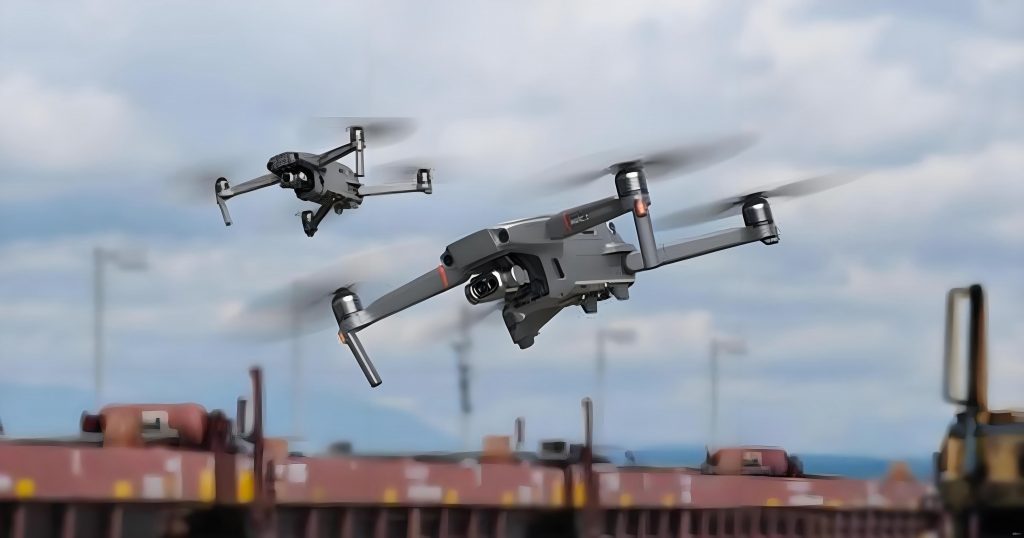
The integration of 5G technology with civil drones has unlocked new potentials in industrial applications, such as real-time monitoring and automated deliveries. However, this synergy amplifies risks related to data breaches and unauthorized surveillance. For instance, civil drones equipped with high-resolution cameras can easily intrude into private spaces, capturing sensitive information without consent. This not only violates individual privacy but also poses data security threats under frameworks like the Data Security Law. In my analysis, I have identified that the ease of操控 civil drones, combined with their ability to operate covertly, makes them particularly susceptible to misuse. The concept of “non-perceptive infringement” highlights how civil drones can invade privacy without the victim’s awareness, complicating legal recourse. To quantify this risk, I propose a model where the privacy infringement risk $R_p$ can be expressed as a function of drone capabilities and environmental factors: $$R_p = \alpha \cdot C_d + \beta \cdot E_f$$ where $C_d$ represents the drone’s surveillance capacity (e.g., camera resolution, flight range), $E_f$ denotes environmental factors (e.g., population density), and $\alpha$, $\beta$ are weighting coefficients derived from empirical data. This formula underscores the need for tailored regulations that account for the specific attributes of civil drones.
Another critical issue is the “black flight” phenomenon, where civil drones are operated without proper authorization or licenses. These incidents disrupt aviation safety and public秩序, as seen in cases where drones interfered with commercial flights. The lack of a comprehensive监管 system exacerbates this problem, as it allows operators to exploit loopholes in current laws. From my perspective, the root cause lies in fragmented regulations and insufficient enforcement mechanisms. For example, while China has introduced guidelines for drone registration and pilot certification, the implementation remains inconsistent. To illustrate the scope of these risks, I have compiled a table summarizing the primary concerns associated with civil drones:
| Risk Category | Description | Impact on Society |
|---|---|---|
| Privacy Infringement | Unauthorized data collection through surveillance, leading to exposure of personal information. | Erosion of trust, psychological distress, and potential data leaks. |
| Black Flights | Operations without licenses or in restricted zones, endangering aviation and public safety. | Disruption of air traffic, legal liabilities, and security threats. |
| Data Security | Inadequate protection of collected data, risking unauthorized access and misuse. | Violations of data confidentiality and integrity, as per data governance principles. |
In examining domestic legal frameworks, I find that China’s current regulations, such as the Civil Aviation Law and provisional rules on low-altitude airspace, lack specificity for civil drone-related privacy issues. These laws often use vague terms like “corresponding civil liability” without defining penalties or enforcement procedures. This ambiguity stems from the low legal hierarchy of drone-specific statutes and unclear departmental responsibilities. For instance, multiple agencies oversee drone activities, leading to coordination gaps and delayed responses. In contrast, the United States has established more robust systems, including the Civil Drone Privacy Guidelines and state-level laws that explicitly prohibit unauthorized recording. This comparative advantage highlights the urgency for China to elevate its legal standards. To model the effectiveness of regulatory improvements, I use an efficiency equation: $$E_r = \gamma \cdot L_c + \delta \cdot I_s$$ where $E_r$ is regulatory efficiency, $L_c$ represents legal clarity, $I_s$ denotes inter-agency coordination, and $\gamma$, $\delta$ are adjustment factors. This emphasizes that enhancing these variables can mitigate risks associated with civil drones.
Regarding privacy protection, I advocate for the adoption of a “reasonable expectation of privacy” principle in public spaces, similar to U.S. approaches. This would provide a legal basis for addressing intrusions by civil drones, even in areas traditionally considered open. Additionally, integrating data governance into drone operations is crucial. For example, operators should adhere to data minimization principles, collecting only essential information and ensuring encryption during transmission. The relationship between data security and drone usage can be expressed through a risk mitigation formula: $$S_d = \frac{1}{1 + \lambda \cdot D_e}$$ where $S_d$ is the data security level, $D_e$ is the exposure risk from civil drones, and $\lambda$ is a constant based on technological safeguards. By embedding such concepts into legislation, we can foster a culture of accountability among civil drone users.
To tackle “black flights,” I propose a multi-faceted approach that includes establishing a unified监管 platform leveraging 5G networks for real-time tracking of civil drones. This would involve mandatory实名认证 for all drones beyond micro categories, coupled with geofencing technologies to restrict access to sensitive zones. The probability of detecting illegal flights $P_d$ can be modeled as: $$P_d = \mu \cdot T_s + \nu \cdot R_a$$ where $T_s$ is the tracking system accuracy, $R_a$ is regulatory adherence, and $\mu$, $\nu$ are parameters reflecting technological and legal investments. Furthermore, revising existing laws to cover the entire lifecycle of civil drone operations—from purchase to flight application—would close existing gaps. A comparative table of legal measures across jurisdictions illustrates best practices:
| Jurisdiction | Key Regulations | Effectiveness in Mitigating Risks |
|---|---|---|
| China | Provisional rules on drone registration and pilot licensing; lacks privacy-specific clauses. | Moderate; reduces black flights but insufficient for data protection. |
| United States | Federal and state laws on privacy infringement; FAA requirements for drone registration and geo-awareness apps. | High; comprehensive coverage of privacy and flight safety for civil drones. |
| European Union | GDPR-inspired data protection rules applied to drone operations; strict no-fly zones. | High; emphasizes data security but varies in enforcement. |
In conclusion, the evolution of civil drones as part of the industrial internet necessitates a balanced approach that harnesses their benefits while addressing inherent risks. My analysis confirms that current legal frameworks in many regions, including China, are inadequate to handle the complexities of privacy infringement and black flights involving civil drones. By learning from international examples and incorporating technological solutions like 5G-based monitoring, we can develop robust laws that promote innovation without compromising safety. The continuous iteration of regulations, coupled with public education on responsible drone usage, will be key to securing the future of civil drones in our digitally transforming society. As we move forward, it is imperative to prioritize interdisciplinary collaboration among lawmakers, technologists, and cybersecurity experts to ensure that civil drones serve as a force for progress rather than a source of conflict.