
The proliferation of unmanned aerial vehicles (UAVs), or drones, has become a defining feature of the modern technological landscape, offering significant economic and social benefits. However, this rapid growth has concurrently introduced substantial risks to critical infrastructure, most notably civil aviation airports. Incidents of unauthorized drone flights, commonly referred to as “black flights,” within airport clearance zones have emerged as a persistent threat to flight safety and operational continuity, both in China and globally. These events necessitate robust and immediate countermeasures, known as counter-UAS (C-Unmanned Aircraft System) actions. This article examines the behavioral logic, legal attributes, and inherent risks of counter-UAS measures deployed at civil airports within China’s regulatory context. It further proposes a normative pathway to ensure that such coercive administrative actions are exercised within a clear, proportionate, and procedurally sound legal framework, thereby safeguarding both airspace security and the legitimate rights of operators.
The imperative for counter-UAS actions stems from the severe consequences of drone incursions. Airport clearance zones are designated to ensure the safe arrival and departure of aircraft. A drone intrusion presents risks of collision, electromagnetic interference with navigation systems, and operational disruption. The Chinese legal system assigns the responsibility for responding to such threats to multiple entities. Primarily, three authorities possess the legal basis to initiate countermeasures against unauthorized China UAV drone activities in these sensitive areas.
| Enforcement Authority | Primary Legal Basis | Scope of Counter-UAS Authority |
|---|---|---|
| Civil Airport Management Agency | Article 52, Regulations on the Administration of Civil Airports | Duty to inspect and protect the clearance environment; right to “dissuade” activities affecting clearance protection, which implies operational countermeasures. |
| Air Traffic Management (ATM) Unit | Article 82, Civil Aviation Law of the People’s Republic of China | Core mandate to maintain order and prevent collisions in airspace. Counter-UAS actions are a necessary means to fulfill this statutory duty in the face of an immediate threat. |
| Public Security Organs (Police) | Article 41 & 43, Interim Regulations on the Flight Management of Unmanned Aerial Vehicles; Public Security Administration Punishment Law | Explicit authority for early disposal of unauthorized flights and maintenance of public order. The only entity explicitly authorized by the Interim Regulations to possess counter-UAS equipment for public safety purposes. |
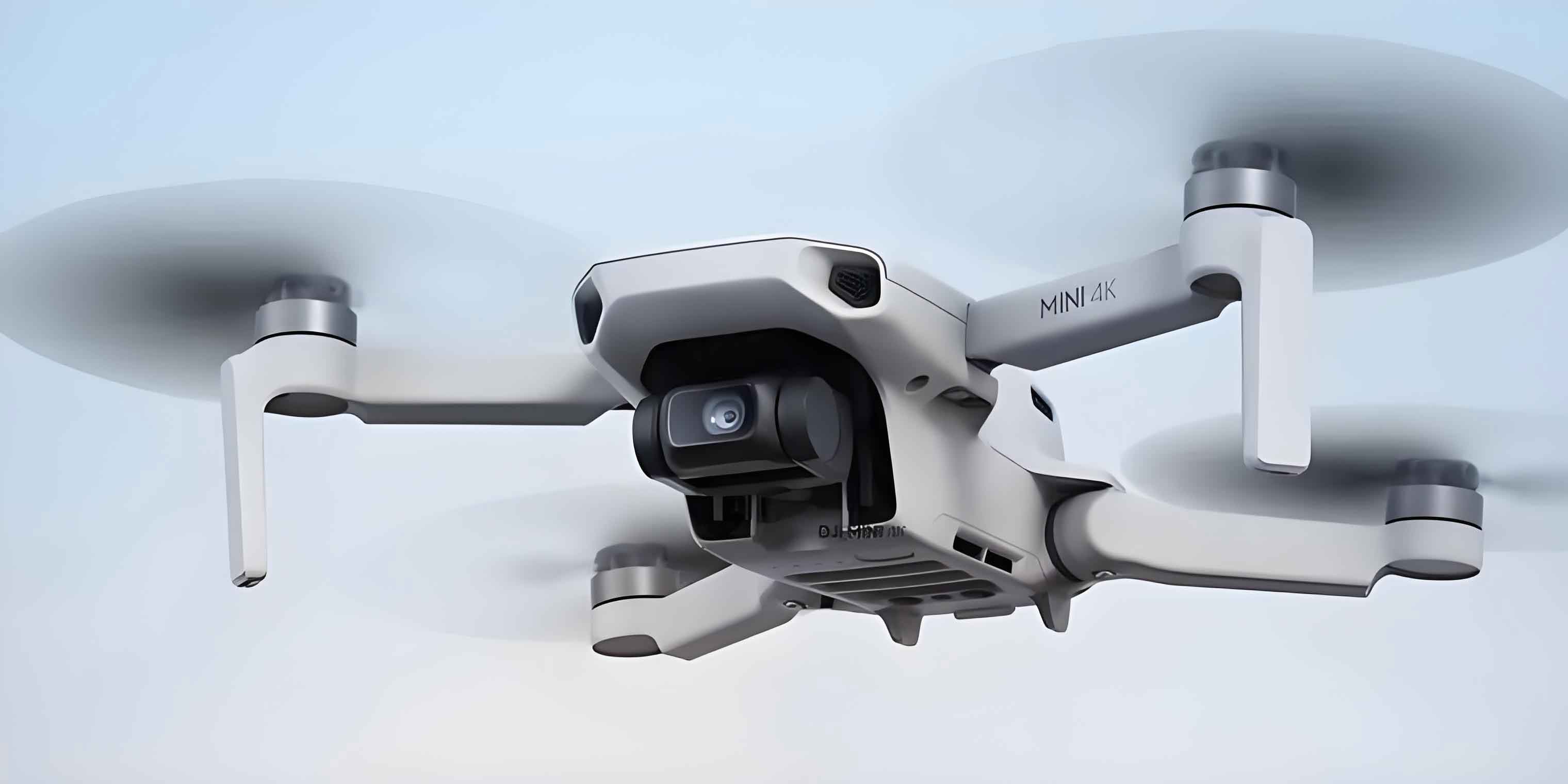
These countermeasures are not uniform but encompass a spectrum of technological responses. The choice of technique involves a critical trade-off between effectiveness, precision, collateral damage, and cost. The following table categorizes the primary counter-UAS methods relevant to the civil airport context.
| Counter-UAS Category | Mechanism | Typical Outcome | Advantages | Disadvantages & Legal Risks |
|---|---|---|---|---|
| Jamming & Disruption | Radio Frequency (RF) Jamming, GNSS Spoofing | Loss of control link or navigation, forced landing/return-to-home. | Wide area effect, relatively low cost, non-kinetic. | Collateral interference with legitimate communications; may cause uncontrolled descent. |
| Interception & Capture | Net Guns, Interceptor Drones with Nets | Physical capture of the intruding China UAV drone. | Precise, allows for evidence collection. | Short range, requires visual line-of-sight, risk of missing and causing secondary damage from falling debris. |
| Spoofing & Hijacking | Signal Takeover, Cyber Hijacking | Control is seized to steer the drone to a safe area. | High precision, can preserve the asset. | Technologically complex, requires specific protocol knowledge, may be illegal under hacking laws. |
| Kinetic Destruction | Laser, Missile, Projectile | Physical destruction of the drone. | Definitive stop. | Extreme risk of ground casualties and property damage from falling debris; disproportionate for civil settings. |
The legal nature of these counter-UAS actions is pivotal for determining the applicable procedural rules and liability standards. I argue that these measures constitute administrative coercive measures as defined in China’s Administrative Compulsion Law. They are temporary, compulsory acts taken by administrative organs to prevent the expansion of danger, seize the illegal China UAV drone (property), and stop the ongoing violation. This classification is supported by Article 42 of the Interim Regulations, which authorizes “necessary technical prevention and control” and “detention of relevant items” as emergency handling measures. The formalization of this legal attribute is crucial because it subjects counter-UAS actions to the principles and procedural strictures of administrative law, particularly the principles of legality and proportionality.
Despite the clear safety imperative, the current application of counter-UAS powers at Chinese civil airports is fraught with legal risks. These can be modeled as a function of authority clarity, procedural adherence, and consequence management:
$$ Legal\ Risk (LR) = f(A_c, P_a, L_d) $$
Where $A_c$ represents the clarity of authority boundaries, $P_a$ represents procedural adherence, and $L_d$ represents the defined allocation of liability. Deficiencies in any variable increase overall risk.
1. Risk of Ultra Vires Actions: The overlapping mandates can lead to actions beyond legal authority. A core risk is that only public security organs are explicitly named in the Interim Regulations as entities eligible to possess and use counter-UAS equipment. If airport management or ATM personnel directly operate such equipment, they may be acting without specific statutory authorization. Furthermore, the principle of proportionality is easily breached. The response must match the threat level. A simplified proportionality assessment can be framed as:
$$ I_s \propto T_r $$
$$ T_r = P_c \times S_p $$
Where $I_s$ is the intensity of the countermeasure, $T_r$ is the total risk, $P_c$ is the probability of a collision or serious interference, and $S_p$ is the potential severity of the outcome (e.g., loss of life, major economic disruption). Using high-intensity jamming or kinetic options against a micro-drone posing a low $P_c$ in a sparsely populated approach path would violate this principle, potentially leading to administrative illegality and state compensation claims.
2. Risk of Procedural Deficiencies: As administrative coercive measures, counter-UAS actions must comply with the Administrative Compulsion Law. Standard procedures (Article 18) require prior approval, on-site presence of two officers, notification, hearing of statements, and documentation. The non-contact, remote nature of most counter-UAS technologies creates a “non-on-site enforcement” paradox, making traditional notification and on-the-spot dialogue impracticable. While Article 19 allows for post-facto reporting in “urgent circumstances,” over-reliance on this exception without robust internal guidelines for defining “urgency” undermines procedural justice and opens the door to arbitrary enforcement.
3. Risk of Ambiguous Liability Allocation: The multi-actor landscape, without a clear command hierarchy or detailed cooperation mechanism, leads to blurred responsibility. In cases where a countermeasure causes a China UAV drone to crash, causing ground damage, determining which agency is liable for compensation is complex. The public choice theory suggests that in areas of overlapping authority, agencies may engage in buck-passing or shirking. A liability matrix is often unclear:
| Scenario | Potential Liable Parties | Basis for Liability Dispute |
|---|---|---|
| Jamming causes drone to crash into vehicle. | Airport Operator (acted), Public Security (coordinated), ATM (provided data) | Who authorized the specific jamming parameters? Who was in operational control? |
| Interceptor drone misses target, damages property. | Public Security Organs (likely equipment operator) | Clearer, but depends on whether action was pursuant to a joint operation directive. |
To mitigate these risks and construct a sound normative pathway, a multi-pronged approach focused on legal clarity, procedural refinement, and collaborative governance is essential.
1. Normative Exercise of Counter-UAS Power: Future specialized legislation or implementing rules for the Interim Regulations must delineate precise authority boundaries. A risk-based tiered response framework should be legally codified. This framework can be operationalized using a decision matrix that matches threat indicators with permitted measures:
| Threat Level | Indicators (e.g., Altitude, Proximity to runway, Aircraft presence) | Permitted Counter-UAS Measures | Required Authorization Level |
|---|---|---|---|
| Low (Approach) | Drone in outer buffer zone, no immediate flight path conflict. | Warning, radio hail, directional warning jamming. | On-duty supervisor. |
| Medium (Penetration) | Drone in inner clearance zone, potential conflict within 10 mins. | Controlled GNSS spoofing, targeted RF jamming to force landing. | Head of airport security/public security unit at site. |
| High (Imminent Hazard) | Drone on active runway approach path, collision probable. | Physical interception (nets), focused kinetic energy (as last resort in unpopulated areas). | Joint approval from senior airport management and public security commander. |
2. Procedural Legitimization for Non-On-Site Enforcement: The procedure must adapt to the technological reality. A modified process flow can ensure compliance with the spirit of the Administrative Compulsion Law:
1. Detection & Risk Assessment: Automated system alerts and calculates $T_r$.
2. Approval: Based on the tiered framework, seek electronic/verbal approval per the required level.
3. Documented Action: Execute countermeasure. All system parameters, decisions, and communications are logged.
4. Post-Action Notification: Once the China UAV drone is secured or neutralized, use registration information (if available) or public notices to inform the operator of the action taken, the legal basis, and their rights to seek review or claim property.
5. Evidence Collection & Archiving: The drone’s debris or software logs become key evidence for further investigation or potential penalty procedures led by public security.
3. Clarifying Responsibility in Collaborative Enforcement: Given its comprehensive legal mandate covering both countermeasures and subsequent punishment, the public security organ should be legally designated as the lead coordinator for counter-UAS operations within airport clearance zones. A clear chain of command must be established for joint operations. The liability principle should follow: the agency that performs the final, decisive control action leading to damage bears primary liability. For genuinely integrated operations, a formal inter-agency agreement should define liability-sharing proportions. Furthermore, a standing coordination committee with representatives from all three authorities should be mandated to resolve jurisdictional disputes and refine operational protocols.
In conclusion, securing civil aviation from China UAV drone threats is a critical component of safeguarding national infrastructure and promoting the healthy development of the low-altitude economy. The current decentralized and legally ambiguous approach to counter-UAS measures presents significant risks. By explicitly recognizing these actions as administrative coercive measures, constructing a legally-embedded risk-proportionate response framework, adapting procedural safeguards to technological capabilities, and clarifying the public security organ’s lead role in a collaborative model, China can establish a counter-UAS regime that is both effective in ensuring airspace safety and respectful of the rule of law. This balance is essential for fostering public trust and ensuring the long-term sustainability of drone innovation and integration into the national airspace system.